
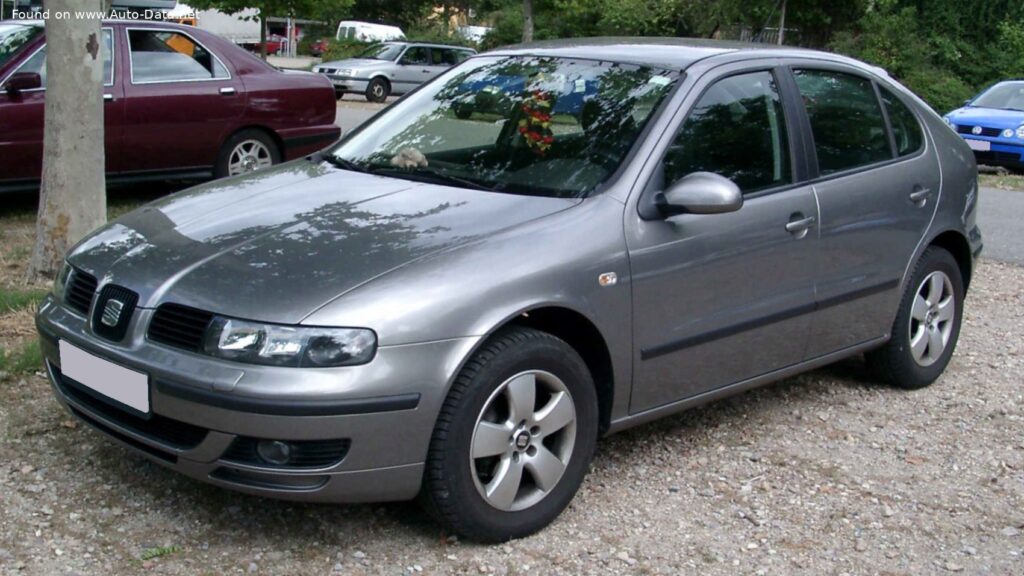
The Seat Leon I (1M) 1.9 TDI (90 Hp): A European Compact Car Stalwart
The Seat Leon I (1M) 1.9 TDI (90 Hp) represents a significant chapter in the history of SEAT, the Spanish automotive manufacturer known for its sporty and youthful vehicles within the larger Volkswagen Group. Launched in November 1999, the first-generation Leon, internally designated 1M, quickly established itself as a formidable competitor in Europe’s highly contested C-segment, or compact car class. Positioned as a more dynamic and emotionally charged alternative to its platform siblings—the Volkswagen Golf Mk4, Audi A3 (8L), and Skoda Octavia (1U)—the Leon I (1M) brought a distinct Spanish flair to the segment. This particular variant, equipped with the robust and highly efficient 1.9-liter TDI engine producing 90 horsepower, was a cornerstone of its success, offering a compelling blend of economy, practicality, and everyday performance that resonated deeply with European consumers.
The Leon I (1M) was designed with a clear emphasis on sporty aesthetics and driving dynamics, distinguishing it from its more conservative German counterparts. Its five-door hatchback body style provided excellent versatility, making it a popular choice for families and individuals alike who sought a practical vehicle without compromising on engaging performance. Production of this generation continued until October 2005, during which time it cemented SEAT’s reputation for building cars with “Auto Emoción” – a slogan encapsulating the brand’s commitment to emotional design and driving pleasure.
Engine and Performance: The Heart of the Seat Leon I (1M) 1.9 TDI (90 Hp)
At the core of the Seat Leon I (1M) 1.9 TDI (90 Hp) lies one of Volkswagen Group’s most legendary engines: the 1.9-liter Turbocharged Direct Injection (TDI) diesel unit. This particular iteration, often identified by engine codes like AGR or ALH, was renowned for its bulletproof reliability, impressive fuel economy, and strong low-end torque delivery, characteristics that made it immensely popular across the European market. The engine is configured as an inline four-cylinder, transversely mounted at the front of the vehicle, driving the front wheels.
With a displacement of 1896 cubic centimeters (115.7 cubic inches), the engine produces a respectable 90 horsepower at 4000 rpm. While 90 horsepower might seem modest by today’s standards, it was more than adequate for the vehicle’s size and intended purpose in the early 2000s. Crucially, the engine’s strength lay in its torque output: a robust 202 Nm (148.99 lb.-ft.) available at a remarkably low 1900 rpm. This low-rev torque made the Leon feel responsive and effortless in city driving and provided ample grunt for highway cruising and overtaking maneuvers, minimizing the need for frequent gear changes.
The engine’s architecture includes an OHC (Overhead Camshaft) valvetrain with two valves per cylinder, a direct injection fuel system, and is boosted by a turbocharger with an intercooler, optimizing air intake temperature for improved efficiency and power. The high compression ratio of 19.5:1 is typical for a diesel engine of this era, contributing to its excellent thermal efficiency. Power is channeled to the front wheels via a smooth-shifting 5-speed manual transmission, a common and reliable setup for compact cars of its time.
Performance figures for the Seat Leon I (1M) 1.9 TDI (90 Hp) reflect its balanced nature. It could accelerate from 0 to 60 mph in a computed 12.4 seconds (0-100 km/h in 13 seconds), and reach a top speed of 111.85 mph (180 km/h). These numbers placed it squarely within its competitive set, offering sufficient performance for daily commutes and longer journeys. Fuel economy was a major selling point, with a combined cycle rating of 46.1 US mpg (5.1 l/100 km), making it an exceptionally economical choice for drivers covering significant mileage.
Design and Features: Sporty Aesthetics Meets Practicality
The design of the Seat Leon I (1M) was a standout feature, penned by the legendary Italian designer Giorgetto Giugiaro. Its exterior boasted a distinctive, sporty aesthetic with sharp lines, a bold front grille, and a sculpted profile that gave it a more aggressive stance compared to its rivals. The five-door hatchback body type offered a perfect blend of style and everyday usability, making it a versatile option for various lifestyles.
Inside, the Leon I (1M) provided a driver-focused cabin with a clear, uncluttered dashboard layout. Despite its sporty pretensions, practicality was not overlooked. The vehicle comfortably accommodated five occupants, and the trunk space, ranging from 12.01 cubic feet (340 liters) with the rear seats up to 23.17 cubic feet (656 liters) with them folded, offered ample cargo capacity for groceries, luggage, or sports equipment. The interior materials, while not luxurious, were durable and well-assembled, reflecting Volkswagen Group’s reputation for solid build quality.
Key features for a vehicle of its era included standard equipment like power steering (hydraulic), and in many trims, power windows and air conditioning. Safety was addressed with the inclusion of an Anti-lock Braking System (ABS) as standard, a crucial active safety feature for the time. The suspension system, featuring a wishbone setup at the front and coil springs at the rear, provided a comfortable ride while maintaining the responsive handling characteristics that SEAT aimed for. Braking was handled by ventilated discs at the front and solid discs at the rear, offering confident stopping power.
Technical Specifications
| General Information | |
| Brand | Seat |
| Model | Leon |
| Generation | Leon I (1M) |
| Type (Engine) | 1.9 TDI (90 Hp) |
| Start of Production | November, 1999 year |
| End of Production | October, 2005 year |
| Powertrain Architecture | Internal Combustion engine |
| Body type | Hatchback |
| Seats | 5 |
| Doors | 5 |
| Performance Specifications | |
| Fuel consumption (economy) – urban | 6.7 l/100 km (35.1 US mpg) |
| Fuel consumption (economy) – extra urban | 4.2 l/100 km (56 US mpg) |
| Fuel consumption (economy) – combined | 5.1 l/100 km (46.1 US mpg) |
| Fuel Type | Diesel |
| Acceleration 0 – 60 mph | 12.4 sec |
| Maximum speed | 180 km/h (111.85 mph) |
| Weight-to-power ratio | 14.5 kg/Hp (68.9 Hp/tonne) |
| Weight-to-torque ratio | 6.5 kg/Nm (154.6 Nm/tonne) |
| Engine Specifications | |
| Power | 90 Hp @ 4000 rpm. |
| Power per liter | 47.5 Hp/l |
| Torque | 202 Nm @ 1900 rpm. (148.99 lb.-ft. @ 1900 rpm.) |
| Engine layout | Front, Transverse |
| Engine Model/Code | AGR, ALH |
| Engine displacement | 1896 cm3 (115.7 cu. in.) |
| Number of cylinders | 4 |
| Engine configuration | Inline |
| Cylinder Bore | 79.5 mm (3.13 in.) |
| Piston Stroke | 95.5 mm (3.76 in.) |
| Compression ratio | 19.5:1 |
| Number of valves per cylinder | 2 |
| Fuel injection system | Direct injection |
| Engine aspiration | Turbocharger, Intercooler |
| Valvetrain | OHC |
| Engine oil capacity | 4.5 l (4.76 US qt) |
| Coolant | 6 l (6.34 US qt) |
| Space, Volume and Weights | |
| Kerb Weight | 1307 kg (2881.44 lbs.) |
| Max. weight | 1775 kg (3913.21 lbs.) |
| Max load | 468 kg (1031.76 lbs.) |
| Trunk (boot) space – minimum | 340 l (12.01 cu. ft.) |
| Trunk (boot) space – maximum | 656 l (23.17 cu. ft.) |
| Fuel tank capacity | 55 l (14.53 US gal) |
| Dimensions | |
| Length | 4184 mm (164.72 in.) |
| Width | 1742 mm (68.58 in.) |
| Height | 1439 mm (56.65 in.) |
| Wheelbase | 2513 mm (98.94 in.) |
| Front track | 1513 mm (59.57 in.) |
| Rear (Back) track | 1492 mm (58.74 in.) |
| Drivetrain, Brakes and Suspension Specifications | |
| Drivetrain Architecture | The Internal combustion engine (ICE) drives the front wheels of the vehicle. |
| Drive wheel | Front wheel drive |
| Number of gears and type of gearbox | 5 gears, manual transmission |
| Front suspension | Wishbone |
| Rear suspension | Coil spring |
| Front brakes | Ventilated discs |
| Rear brakes | Disc |
| Assisting systems | ABS (Anti-lock braking system) |
| Steering type | Steering rack and pinion |
| Power steering | Hydraulic Steering |
| Tires size | 195/65 R15 |
Legacy and Market Impact of the Seat Leon I (1M)
The Seat Leon I (1M) 1.9 TDI (90 Hp), along with its more powerful variants, played a crucial role in shaping SEAT’s identity and market position in Europe. It successfully carved out a niche for itself as the “sporty” option within the highly competitive compact segment, offering a more engaging driving experience and a distinctive design compared to its Volkswagen Group stablemates. While the VW Golf Mk4 emphasized refinement and broad appeal, and the Audi A3 offered premium aspirations, the Leon I (1M) targeted buyers looking for performance and style with a slightly more accessible price point.
Its primary competitors in the European market included not only its platform siblings but also popular models such as the Ford Focus Mk1, Opel Astra G, Peugeot 307, and Renault Mégane. The Leon stood out with its sharp handling, Giugiaro styling, and the proven reliability and efficiency of its TDI engines. The 1.9 TDI (90 Hp) model, in particular, was a volume seller, appealing to a wide demographic due to its low running costs, robust nature, and sufficient performance for daily European driving conditions, where diesel engines were heavily favored for their fuel economy and lower CO2 emissions.
The Leon I (1M) established a solid foundation for future generations of the model, helping SEAT to solidify its image as a brand offering “Auto Emoción.” It proved that SEAT could deliver a compelling package of design, performance, and practicality, all underpinned by Volkswagen Group engineering. Its legacy is one of a well-engineered, reliable, and stylish compact car that offered excellent value and a distinctive character, contributing significantly to SEAT’s growth and brand recognition throughout the early 2000s.
