
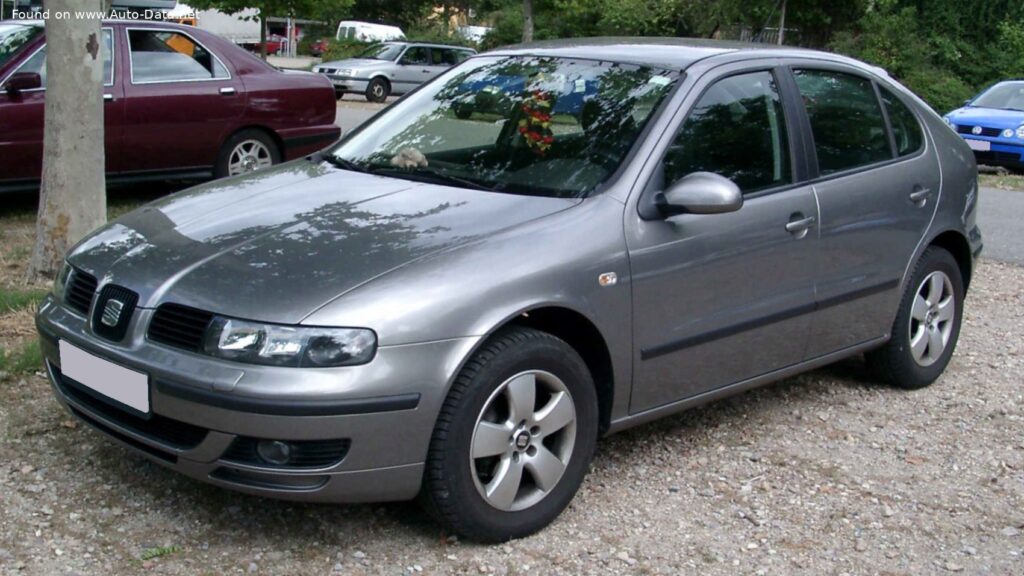
The Seat Leon I (1M) Cupra 2.8 V6 4: A European Hot Hatch with All-Wheel Drive Prowess
The Seat Leon I (1M) Cupra 2.8 V6 4 represents a significant performance variant within the first generation of Seat’s popular compact car, the Leon. Produced from October 2000 to April 2004, this particular model carved out a niche in the highly competitive European hot hatchback segment. While never officially sold in the United States, the Leon 1M, and especially its high-performance Cupra variants, were highly regarded across Europe for their blend of everyday usability, sporty handling, and robust Volkswagen Group engineering. The “Cupra” designation itself, derived from “Cup Racing,” signifies Seat’s commitment to delivering enthusiast-focused vehicles. The 2.8 V6 4 model stood out not only for its powerful six-cylinder engine but also for its sophisticated all-wheel-drive system, offering a compelling alternative to its front-wheel-drive rivals and even its more premium Volkswagen Group siblings.
Positioned at the pinnacle of the Leon 1M lineup, the Seat Leon I (1M) Cupra 2.8 V6 4 was a testament to Seat’s ambition to infuse its vehicles with a distinctive blend of Spanish flair and German engineering precision. Sharing its A4 (PQ34) platform with revered models like the Volkswagen Golf Mk4 and Audi A3, the Leon Cupra benefited from a solid foundation. However, Seat aimed to give its hot hatch a more aggressive and youthful character. This V6-powered, all-wheel-drive variant brought a level of sophistication and dynamic capability that elevated it beyond the typical hot hatch, offering a unique driving experience that combined exhilarating straight-line performance with confident grip in varied conditions.
Engine and Performance: The Heart of the Seat Leon I (1M) Cupra 2.8 V6 4
At the core of the Seat Leon I (1M) Cupra 2.8 V6 4‘s appeal was its formidable powertrain. Under the hood resided a naturally aspirated 2.8-liter V-engine, specifically the renowned VR6 unit from the Volkswagen Group (engine codes AUE, BDE). This compact six-cylinder engine, known for its smooth power delivery and distinctive exhaust note, generated an impressive 204 horsepower at 6200 rpm. The power output of 73.1 horsepower per liter was respectable for a naturally aspirated engine of its era.
Equally crucial to its performance was the torque figure: 195.45 lb-ft, available at a relatively low 3400 rpm. This broad torque band ensured strong acceleration from low revs, making the car responsive and engaging in everyday driving as well as spirited runs. Mated to a precise 6-speed manual transmission, the power was efficiently transferred to all four wheels via a sophisticated all-wheel-drive system, likely a Haldex-based setup common in Volkswagen Group vehicles of that period. This system intelligently distributed power between the front and rear axles, providing enhanced traction and stability, especially when accelerating hard or navigating challenging road conditions.
The performance figures underscore the Cupra 2.8 V6 4’s capabilities. It could sprint from 0 to 60 mph in a swift 6.9 seconds, a highly competitive time for a hot hatch in the early 2000s. Its top speed was rated at 146.02 mph (235 km/h), demonstrating its Autobahn-cruising prowess. Despite its performance orientation, the engine featured a multi-port manifold injection system and a DOHC valvetrain, contributing to its efficiency and refinement. Fuel economy, while not its primary selling point, was rated at an estimated 21.6 US mpg combined, with 15.2 US mpg in urban driving and a more economical 28.7 US mpg on the highway, reflecting the balanced engineering inherent in its design.
Design and Features: Sporty Aesthetics and Practicality
The Seat Leon I (1M), designed by the legendary Walter de Silva, introduced a more emotional and dynamic styling language for Seat. The Cupra 2.8 V6 4 variant amplified this with a series of subtle yet effective aesthetic enhancements that signaled its performance pedigree without being overtly aggressive. As a 5-door hatchback, it offered a compelling blend of sporty appeal and practical utility, making it suitable for both enthusiastic driving and daily family duties.
Externally, the Cupra model featured distinctive alloy wheels (225/45 R17 tires), a slightly lower stance, and specific badging to differentiate it from lesser Leon models. The overall silhouette was characterized by its flowing lines, prominent wheel arches, and a cohesive design that held up well over time. The five-door configuration provided easy access to both front and rear seats, accommodating up to five occupants.
Inside, the cabin of the Seat Leon I (1M) Cupra 2.8 V6 4 was driver-focused, featuring supportive sport seats, a leather-wrapped steering wheel, and aluminum accents that enhanced its performance ambiance. Standard features for the era included power steering (hydraulic rack and pinion), an anti-lock braking system (ABS) for enhanced safety, and power windows. The car’s robust construction and thoughtful ergonomics provided a comfortable and engaging environment for both driver and passengers. Practicality was further enhanced by a minimum trunk space of 9.53 cubic feet (270 liters), expandable to 23.17 cubic feet (656 liters) with the rear seats folded down, making it a versatile companion for various needs.
Technical Specifications
| Category | Specification |
|---|---|
| General Information | |
| Brand | Seat |
| Model | Leon I (1M) |
| Type (Engine) | Cupra 2.8 V6 4 (204 Hp) |
| Production Start | October, 2000 year |
| Production End | April, 2004 year |
| Body type | Hatchback |
| Seats | 5 |
| Doors | 5 |
| Performance Specs | |
| Fuel Consumption (Urban) | 15.5 l/100 km (15.2 US mpg) |
| Fuel Consumption (Extra Urban) | 8.2 l/100 km (28.7 US mpg) |
| Fuel Consumption (Combined) | 10.9 l/100 km (21.6 US mpg) |
| Fuel Type | Petrol (Gasoline) |
| Acceleration 0 – 60 mph | 6.9 sec |
| Maximum Speed | 235 km/h (146.02 mph) |
| Weight-to-power ratio | 7.6 kg/Hp (130.9 Hp/tonne) |
| Engine Specs | |
| Power | 204 Hp @ 6200 rpm |
| Torque | 265 Nm (195.45 lb.-ft.) @ 3400 rpm |
| Engine layout | Front, Transverse |
| Engine Model/Code | AUE, BDE |
| Engine displacement | 2792 cm3 (170.38 cu. in.) |
| Number of cylinders | 6 |
| Engine configuration | V-engine |
| Compression ratio | 10.5:1 |
| Number of valves per cylinder | 4 |
| Fuel injection system | Multi-port manifold injection |
| Engine aspiration | Naturally aspirated engine |
| Valvetrain | DOHC |
| Engine oil capacity | 5.5 l (5.81 US qt) |
| Coolant capacity | 9.2 l (9.72 US qt) |
| Space, Volume and Weights | |
| Kerb Weight | 1558 kg (3434.8 lbs) |
| Max. weight | 1993 kg (4393.81 lbs) |
| Max load | 435 kg (959.01 lbs) |
| Trunk (boot) space – minimum | 270 l (9.53 cu. ft.) |
| Trunk (boot) space – maximum | 656 l (23.17 cu. ft.) |
| Fuel tank capacity | 60 l (15.85 US gal) |
| Dimensions | |
| Length | 4184 mm (164.72 in.) |
| Width | 1742 mm (68.58 in.) |
| Height | 1439 mm (56.65 in.) |
| Wheelbase | 2513 mm (98.94 in.) |
| Front track | 1513 mm (59.57 in.) |
| Rear (Back) track | 1494 mm (58.82 in.) |
| Drivetrain, Brakes and Suspension Specs | |
| Drive wheel | All-wheel drive (4×4) |
| Number of gears and type of gearbox | 6 gears, manual transmission |
| Front suspension | Wishbone |
| Rear suspension | Coil spring |
| Front brakes | Ventilated discs |
| Rear brakes |

|