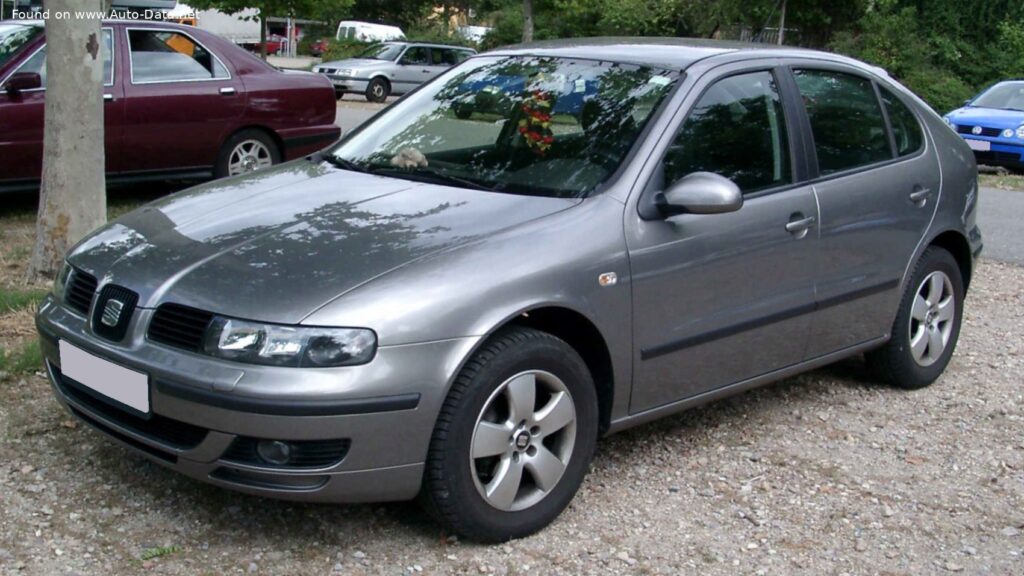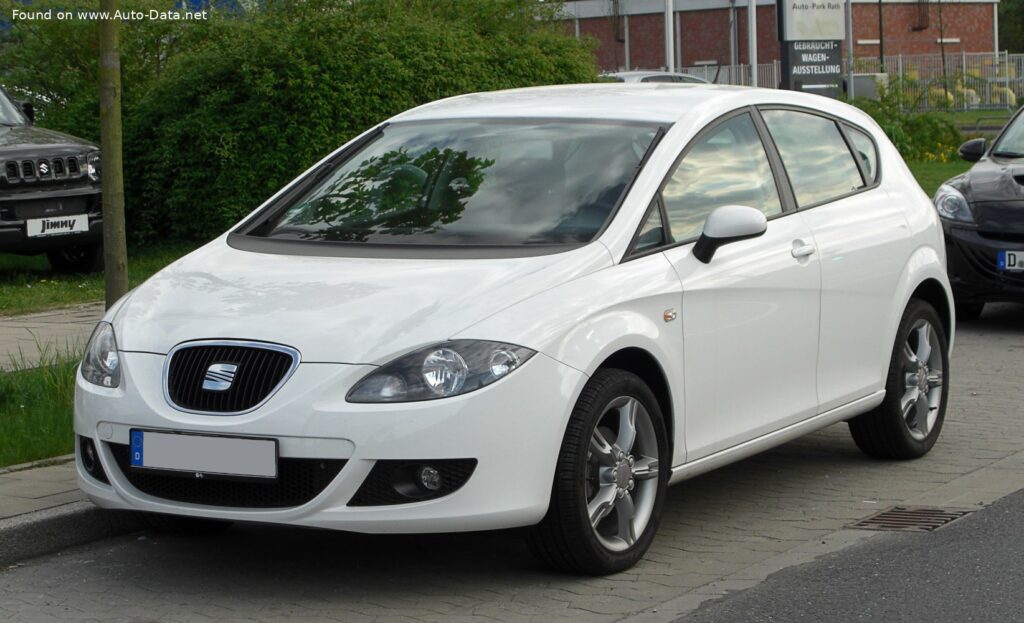
Introduction to the Seat Leon II (1P) 1.9 TDI (105 Hp) DPF Automatic
The Seat Leon II, internally designated as the 1P, represents the second generation of the compact hatchback produced by the Spanish automaker SEAT, a subsidiary of the Volkswagen Group. Launched in 2005, this generation of the Leon was a significant player in the highly competitive European C-segment, offering a sportier alternative to its platform siblings like the Volkswagen Golf V, Audi A3 (8P), and Skoda Octavia (1Z). The specific variant under review, the Seat Leon II (1P) 1.9 TDI (105 Hp) DPF Automatic, was produced between July 2007 and 2009. While SEAT vehicles are not typically sold in the United States, this particular model was a cornerstone of SEAT’s lineup in its primary European and other international markets, embodying the brand’s commitment to dynamic styling and efficient, robust powertrains. This model combined a proven diesel engine with an automatic transmission and a diesel particulate filter (DPF) to meet contemporary emission standards, making it a practical yet engaging option for European drivers.
The Seat Leon II (1P): A European Compact Contender
The second-generation Seat Leon, built on the Volkswagen Group’s A5 (PQ35) platform, marked a departure from the more understated design of its predecessor. Penned by Italian designer Walter de Silva, who later went on to design the Alfa Romeo 156 and Audi R8, the Leon II adopted a distinctive, more aggressive aesthetic. Its prominent “Dynamic Line” on the side, combined with the unique, vertically integrated rear door handles that gave it a coupe-like profile despite being a five-door hatchback, set it apart in its segment. This design philosophy aimed to infuse SEAT models with a youthful, passionate, and sporty character, reflecting the brand’s “Auto Emoción” slogan.
In the crowded European compact segment, where practicality and fuel efficiency are paramount, the Seat Leon II (1P) 1.9 TDI (105 Hp) DPF Automatic carved out its niche. It appealed to buyers seeking a vehicle that blended Volkswagen Group’s renowned build quality and engineering with a more emotive design and a slightly firmer, sportier ride. The choice of a diesel powertrain, particularly the 1.9-liter TDI, was a testament to the European market’s preference for diesel engines, valued for their torque characteristics and superior fuel economy compared to gasoline counterparts of similar output.
Engine & Performance
At the heart of this particular Leon II variant was the venerable 1.9-liter TDI (Turbocharged Direct Injection) engine, a powerplant that achieved legendary status within the Volkswagen Group for its reliability and efficiency. With an engine displacement of 1,896 cubic centimeters (115.7 cubic inches), this inline four-cylinder unit delivered 105 horsepower at 4,000 revolutions per minute. More significantly for a diesel, it produced a robust 184.39 lb.-ft. of torque at a low 1,900 rpm, providing excellent low-end pulling power crucial for city driving and highway cruising. The engine utilized a pump-nozzle (unit injector) fuel injection system, a characteristic technology of VW Group’s earlier TDI engines, known for precise fuel delivery.
Power was routed to the front wheels via a 6-speed automatic transmission, offering a balance of convenience and efficiency. This combination enabled the Leon II 1.9 TDI to accelerate from 0 to 60 mph in a respectable 11.1 seconds, with a top speed of 114.95 mph. While not a performance leader, these figures were competitive for a family-oriented compact diesel hatchback of its era. The inclusion of a Diesel Particulate Filter (DPF) was a crucial upgrade for this model, allowing it to meet the stringent Euro 4 emission standard, a key factor in its market viability during its production years. The engine also featured a turbocharger and intercooler, enhancing its power output and efficiency. With a compression ratio of 19:1, it was optimized for diesel combustion. The engine oil capacity was 4.54 US quarts, and the cooling system held 5.92 US quarts of coolant.
Design & Features
The Seat Leon II (1P) 1.9 TDI (105 Hp) DPF Automatic sported a five-door hatchback body, providing practical access to both front and rear seating for its five occupants. Its exterior dimensions were compact yet substantial for its class, measuring 169.88 inches in length, 69.61 inches in width, and 57.4 inches in height. The wheelbase of 101.5 inches contributed to a stable ride and ample interior space. The design was characterized by its distinctive “arrow” front end, prominent wheel arches, and the aforementioned concealed rear door handles, which gave it a sportier, almost two-door appearance.
Inside, the Leon II offered a functional and driver-focused cabin. While specific trim levels and optional features varied by market, standard equipment for a 2007-2009 European compact would typically include air conditioning, power windows, and a decent audio system. Safety features were a priority, with Anti-lock Braking System (ABS) being standard. The steering system was a responsive rack and pinion setup, augmented by electric power steering, which provided ease of maneuverability at low speeds and a more direct feel at higher velocities. The suspension system comprised an independent McPherson strut setup with coil springs and an anti-roll bar at the front, paired with a torsion beam rear axle, a common and cost-effective arrangement for front-wheel-drive compacts offering a good balance of comfort and handling. Braking was handled by ventilated discs at the front and solid discs at the rear, ensuring adequate stopping power. The car came equipped with 205/55 R16 tires on 6.5J x 16-inch wheel rims.
Practicality was further enhanced by a minimum trunk (boot) space of 12.04 cubic feet, expandable by folding the rear seats. The fuel tank capacity of 14.53 US gallons provided a good driving range, a significant advantage for a diesel vehicle. The vehicle’s kerb weight stood at 2,910.1 lbs., with a maximum permissible weight of 4,166.74 lbs., allowing for a maximum load of 1,256.63 lbs. It also had a respectable towing capacity of 3,086.47 lbs. with brakes, and 1,521.19 lbs. without brakes.
Technical Specifications
| General Information | |
| Brand | Seat |
| Model | Leon |
| Generation | Leon II (1P) |
| Type (Engine) | 1.9 TDI (105 Hp) DPF Automatic |
| Start of production | July, 2007 year |
| End of production | 2009 year |
| Powertrain Architecture | Internal Combustion engine |
| Body type | Hatchback |
| Seats | 5 |
| Doors | 5 |
| Performance Specs | |
| Fuel Type | Diesel |
| Acceleration 0 – 60 mph | 11.1 sec |
| Maximum speed | 114.95 mph (185 km/h) |
| Emission standard | Euro 4 |
| Weight-to-power ratio | 12.6 kg/Hp, 79.5 Hp/tonne |
| Weight-to-torque ratio | 5.3 kg/Nm, 189.4 Nm/tonne |
| Engine Specs | |
| Power | 105 Hp @ 4000 rpm. |
| Power per liter | 55.4 Hp/l |
| Torque | 184.39 lb.-ft. @ 1900 rpm. (250 Nm) |
| Engine layout | Front, Transverse |
| Engine Model/Code | EA188 / BXE |
| Engine displacement | 1.9 liters (1896 cm3 / 115.7 cu. in.) |
| Number of cylinders | 4 |
| Engine configuration | Inline |
| Cylinder Bore | 3.13 in. (79.5 mm) |
| Piston Stroke | 3.76 in. (95.5 mm) |
| Compression ratio | 19:1 |
| Number of valves per cylinder | 2 |
| Fuel injection system | Pump-nozzle (Unit Injector) |
| Engine aspiration | Turbocharger, Intercooler |
| Engine oil capacity | 4.54 US qt (4.3 l) |
| Engine oil specification | Not specified in data. |
| Coolant | 5.92 US qt (5.6 l) |
| Engine systems | Particulate filter |
| Space, Volume and Weights | |
| Kerb Weight | 2910.1 lbs. (1320 kg) |
| Max. weight | 4166.74 lbs. (1890 kg) |
| Max load | 1256.63 lbs. (570 kg) |
| Trunk (boot) space – minimum | 12.04 cu. ft. (341 l) |
| Fuel tank capacity | 14.53 US gal (55 l) |
| Max. roof load | 165.35 lbs. (75 kg) |
| Permitted trailer load with brakes (12%) | 3086.47 lbs. (1400 kg) |
| Permitted trailer load without brakes | 1521.19 lbs. (690 kg) |
| Dimensions | |
| Length | 169.88 in. (4315 mm) |
| Width | 69.61 in. (1768 mm) |
| Height | 57.4 in. (1458 mm) |
| Wheelbase | 101.5 in. (2578 mm) |
| Front track | 60.04 – 60.35 in. (1525-1533 mm) |
| Rear (Back) track | 59.41 – 59.72 in. (1509-1517 mm) |
| Front overhang | 37.36 in. (949 mm) |
| Rear overhang | 31.02 in. (788 mm) |
| Minimum turning circle (turning diameter) | 35.1 ft. (10.7 m) |
| Drivetrain, Brakes and Suspension Specs | |
| Drivetrain Architecture | The Internal combustion engine (ICE) drives the front wheels of the vehicle. |
| Drive wheel | Front wheel drive |
| Number of gears and type of gearbox | 6 gears, automatic transmission |
| Front suspension | Independent, type McPherson with coil spring and anti-roll bar |
| Rear suspension | Torsion |
| Front brakes | Ventilated discs |
| Rear brakes | Disc |
| Assisting systems | ABS (Anti-lock braking system) |
| Steering type | Steering rack and pinion |
| Power steering | Electric Steering |
| Tires size | 205/55 R16 |
| Wheel rims size | 6.5J x 16 |
Legacy & Market Impact
The Seat Leon II (1P) left a significant mark on the European compact car market, particularly in its home region. It successfully cemented SEAT’s reputation as the “sporty” brand within the Volkswagen Group, offering a more engaging driving experience and distinctive styling compared to its more conservative siblings. The Seat Leon II (1P) 1.9 TDI (105 Hp) DPF Automatic, in particular, was a highly practical and popular choice, embodying the quintessential European diesel hatchback. Its combination of the robust 1.9-liter TDI engine with an automatic transmission made it an attractive proposition for those seeking fuel efficiency, strong low-end torque, and driving convenience, especially in markets where diesel fuel was economically advantageous.
In its segment, the Leon II faced fierce competition from a multitude of rivals. Key competitors included the segment-defining Volkswagen Golf, the practical Skoda Octavia, the sophisticated Audi A3, and other European stalwarts like the Ford Focus, Opel Astra, Renault Megane, and Peugeot 307/308. What allowed the Leon to stand out was its unique blend of Spanish flair and German engineering. Its dynamic design, notably the hidden rear door handles, gave it a youthful appeal that resonated with a specific demographic looking for something beyond the mainstream.
The 1.9 TDI engine, known by its EA188 / BXE code in this specific application, was a workhorse for the Volkswagen Group for many years. Its reputation for durability and excellent fuel economy made it a preferred choice for high-mileage drivers and fleet operators across Europe. The introduction of the Diesel Particulate Filter (DPF) in this variant was a crucial technological advancement, allowing the engine to comply with the Euro 4 emission standards. This demonstrated SEAT’s commitment to environmental responsibility while continuing to leverage the economic benefits of diesel powertrains. The DPF system captured harmful soot particles from the exhaust gases, significantly reducing particulate matter emissions, a major concern for diesel engines.
Overall, the Seat Leon II (1P) 1.9 TDI (105 Hp) DPF Automatic was more than just a car; it was a statement of SEAT’s identity. It provided a compelling package of performance, efficiency, distinctive design, and Volkswagen Group reliability, solidifying the Leon’s place as a respected and popular compact hatchback in the European automotive landscape. Its legacy endures through subsequent generations of the Leon, which continue to build upon the foundation of sportiness and efficiency established by models like the 1P.