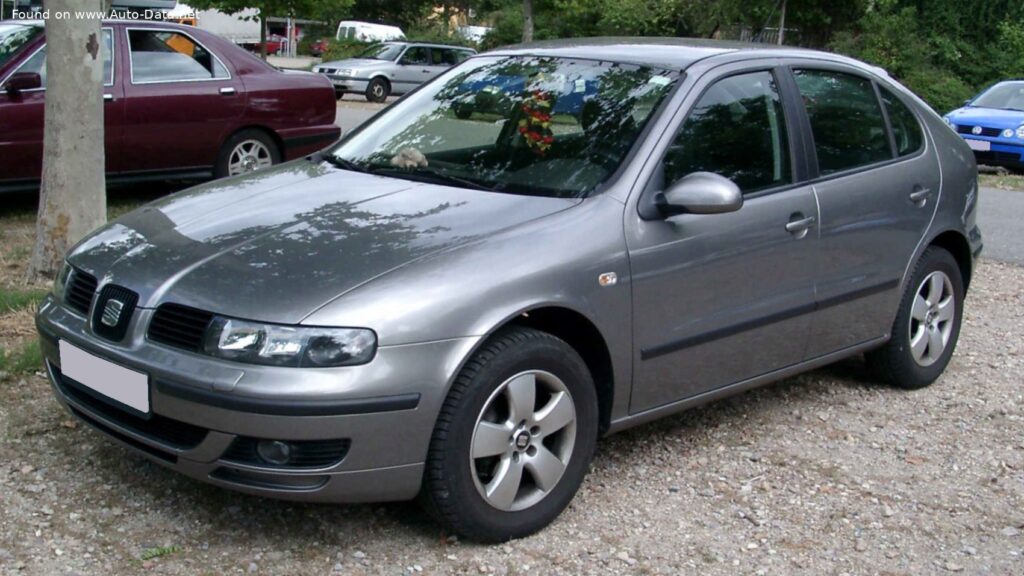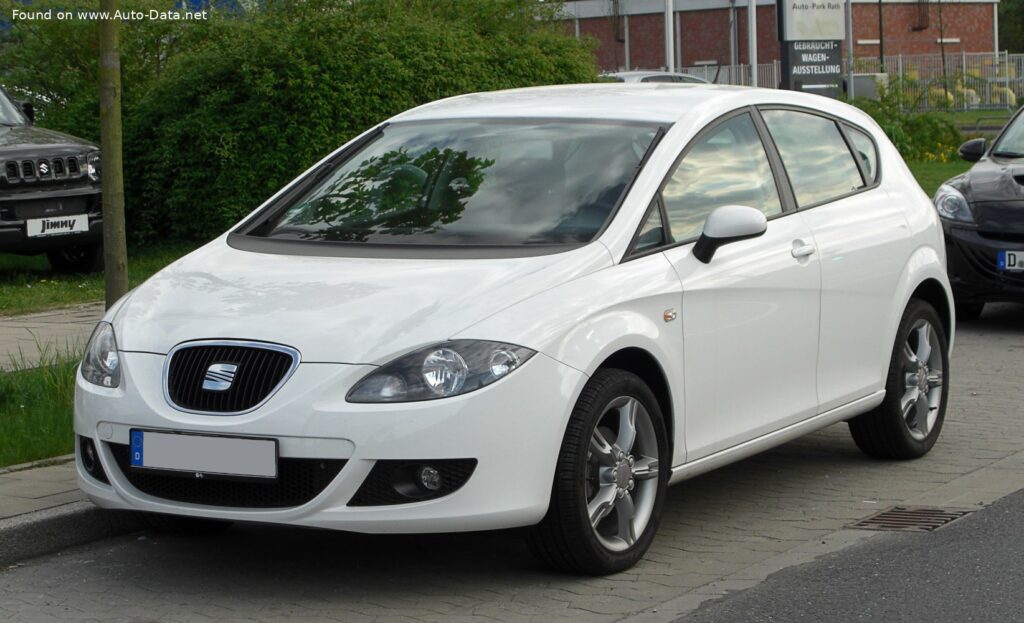
The Seat Leon II (1P) 2.0 FSI (150 Hp) represents a significant chapter in the evolution of Seat’s popular compact hatchback, a model primarily targeted at and highly successful within the European market. Launched in July 2005 as part of the second generation (1P) of the Leon series, this particular variant showcased a blend of performance, efficiency, and distinctive styling, positioning itself as a compelling option in the highly competitive C-segment. While never officially imported to the United States, the Leon II (1P) gained a strong following across Europe for its dynamic driving characteristics, practical five-door hatchback body, and its integration of advanced Volkswagen Group technologies, including its direct-injection FSI gasoline engine.
Engineering and Performance of the Seat Leon II (1P) 2.0 FSI (150 Hp)
At the heart of the Seat Leon II (1P) 2.0 FSI (150 Hp) lies a robust 2.0-liter, naturally aspirated inline-four engine, designated by codes such as BLR, BLY, BVY, and BVZ. This powerplant, featuring Fuel Stratified Injection (FSI) technology, was a hallmark of Volkswagen Group’s commitment to improved fuel efficiency and power delivery during the mid-2000s. The FSI system precisely atomizes fuel directly into the combustion chamber, allowing for a leaner burn and more efficient power generation compared to conventional port injection systems of the era. The engine delivers a respectable 150 horsepower at 6000 rpm, providing ample power for both urban commuting and spirited highway driving. Torque output stands at 147.51 lb.-ft. (200 Nm) at a relatively low 3500 rpm, ensuring responsive acceleration and flexibility across the rev range. This particular engine configuration offered a power-per-liter ratio of 75.6 horsepower, indicative of its well-tuned performance characteristics.
Power is channeled to the front wheels via a smooth and engaging 6-speed manual transmission, a common and preferred choice among European drivers for its direct feel and control. This drivetrain architecture, combined with the engine’s output, allows the Leon II (1P) 2.0 FSI to accelerate from 0 to 60 mph in a brisk 8.4 seconds, with a top speed reaching 130.49 mph (210 km/h). These figures placed it competitively within its segment, offering a sporty edge without sacrificing everyday usability. Fuel efficiency, a crucial factor in the European market, was commendable for its time, with a combined consumption rating of 28.7 US mpg (8.2 l/100 km). Urban driving yielded approximately 20.8 US mpg (11.3 l/100 km), while extra-urban cycles could achieve up to 36.8 US mpg (6.4 l/100 km). The vehicle met the Euro 4 emission standard, emitting 197 g/km of CO2, reflecting its adherence to the environmental regulations of its production period.
Design and Features
The second-generation Seat Leon, internally known as the 1P, was a product of the renowned automotive designer Walter de Silva, who was then head of design for the Volkswagen Group. His distinctive “dynamic line” design language heavily influenced the Leon’s aesthetics, setting it apart from its more conservative platform siblings like the Volkswagen Golf V and Audi A3. The Leon II (1P) 2.0 FSI (150 Hp) adopted a sleek, almost coupé-like profile despite being a practical five-door hatchback. Its characteristic “hidden” rear door handles, integrated into the C-pillar, contributed to its sporty, two-door illusion. The car’s dimensions, measuring 169.88 inches in length, 69.61 inches in width, and 57.4 inches in height, with a 101.5-inch wheelbase, provided a compact yet spacious interior.
Inside, the Leon II offered a driver-focused cockpit with clear instrumentation and ergonomic controls. The five-seat configuration provided comfortable accommodation for passengers, while the trunk offered a minimum of 12.04 cubic feet (341 liters) of cargo space, expandable by folding the rear seats, making it a versatile choice for families and individuals alike. Standard features for the era included power steering, an Anti-lock Braking System (ABS), and a chassis tuned for agile handling. The suspension system featured an independent McPherson setup with coil springs and an anti-roll bar at the front, paired with a torsion beam rear suspension, a common and cost-effective solution for compact cars that still delivered a balanced ride and responsive handling. Braking was handled by ventilated discs at the front and solid discs at the rear, providing confident stopping power. The vehicle came equipped with 225/45 R17 tires mounted on 7J x 17-inch wheel rims, further enhancing its sporty stance and roadholding capabilities.
Technical Specifications: Seat Leon II (1P) 2.0 FSI (150 Hp)
| Category | Specification |
|---|---|
| Brand | Seat |
| Model | Leon |
| Generation | Leon II (1P) |
| Type (Engine) | 2.0 FSI (150 Hp) |
| Start of Production | July, 2005 |
| End of Production | 2009 |
| Powertrain Architecture | Internal Combustion engine |
| Body Type | Hatchback |
| Seats | 5 |
| Doors | 5 |
| Fuel Consumption (Urban) | 11.3 l/100 km (20.8 US mpg) |
| Fuel Consumption (Extra Urban) | 6.4 l/100 km (36.8 US mpg) |
| Fuel Consumption (Combined) | 8.2 l/100 km (28.7 US mpg) |
| CO2 Emissions | 197 g/km |
| Fuel Type | Petrol (Gasoline) |
| Acceleration 0 – 60 mph | 8.4 sec |
| Acceleration 0 – 100 km/h | 8.8 sec |
| Maximum Speed | 210 km/h (130.49 mph) |
| Emission Standard | Euro 4 |
| Weight-to-Power Ratio | 9.1 kg/Hp (109.7 Hp/tonne) |
| Weight-to-Torque Ratio | 6.8 kg/Nm (146.3 Nm/tonne) |
| Power | 150 Hp @ 6000 rpm |
| Power per Liter | 75.6 Hp/l |
| Torque | 200 Nm (147.51 lb.-ft.) @ 3500 rpm |
| Engine Layout | Front, Transverse |
| Engine Model/Code | BLR, BLY, BVY, BVZ |
| Engine Displacement | 1984 cm3 (121.07 cu. in.) |
| Number of Cylinders | 4 |
| Engine Configuration | Inline |
| Cylinder Bore | 82.5 mm (3.25 in.) |
| Piston Stroke | 92.8 mm (3.65 in.) |
| Compression Ratio | 11.5:1 |
| Number of Valves per Cylinder | 4 |
| Fuel Injection System | Direct injection |
| Engine Aspiration | Naturally aspirated engine |
| Engine Oil Capacity | 5.3 l (5.6 US qt) |
| Kerb Weight | 1367 kg (3013.72 lbs.) |
| Max. Weight | 1830 kg (4034.46 lbs.) |
| Max Load | 463 kg (1020.74 lbs.) |
| Trunk (Boot) Space – Minimum | 341 l (12.04 cu. ft.) |
| Fuel Tank Capacity | 55 l (14.53 US gal) |
| Max. Roof Load | 75 kg (165.35 lbs.) |
| Permitted Trailer Load with Brakes (12%) | 1400 kg (3086.47 lbs.) |
| Permitted Trailer Load without Brakes | 660 kg (1455.05 lbs.) |
| Length | 4315 mm (169.88 in.) |
| Width | 1768 mm (69.61 in.) |
| Height | 1458 mm (57.4 in.) |
| Wheelbase | 2578 mm (101.5 in.) |
| Front Track | 1525-1533 mm (60.04 – 60.35 in.) |
| Rear (Back) Track | 1509-1517 mm (59.41 – 59.72 in.) |
| Front Overhang | 949 mm (37.36 in.) |
| Rear Overhang | 788 mm (31.02 in.) |
| Minimum Turning Circle (Diameter) | 10.7 m (35.1 ft.) |
| Drivetrain Architecture | Front-wheel drive. Internal Combustion engine. |
| Drive Wheel | Front wheel drive |
| Number of Gears and Type of Gearbox | 6 gears, manual transmission |
| Front Suspension | Independent, type McPherson with coil spring and anti-roll bar |
| Rear Suspension | Torsion |
| Front Brakes | Ventilated discs |
| Rear Brakes | Disc |
| Assisting Systems | ABS (Anti-lock braking system) |
| Steering Type | Steering rack and pinion |
| Power Steering | Electric Steering |
| Tires Size | 225/45 R17 |
| Wheel Rims Size | 7J x 17 |
Legacy and Market Impact of the Seat Leon II (1P)
The Seat Leon II (1P) 2.0 FSI (150 Hp) played a crucial role in enhancing Seat’s brand image as the “sporty” and “emotional” division within the Volkswagen Group, particularly in its primary European markets. Its distinctive styling, courtesy of Walter de Silva, helped it stand out in a crowded segment dominated by more conventionally styled competitors. The Leon II shared its robust PQ35 platform with highly successful models like the Volkswagen Golf V, Audi A3 (8P), and Skoda Octavia II, benefiting from shared engineering excellence, reliability, and access to a wide range of proven components. This platform commonality allowed Seat to offer a high-quality product with dynamic handling characteristics at a competitive price point.
In the European C-segment, the Leon II competed fiercely with established rivals such as the Ford Focus, Opel Astra, Renault Mégane, and Peugeot 307. Its 2.0 FSI engine, while not the most powerful in the lineup (which included turbocharged TSI and TDI variants), offered a balanced combination of performance and the then-modern FSI direct injection technology, appealing to buyers looking for a refined gasoline engine with good fuel economy for its class. The 150 Hp version was a popular mid-range choice, providing enough zest for enthusiastic driving without the higher running costs or insurance premiums associated with the more potent Cupra or FR models.
The Leon II (1P) generation, including the 2.0 FSI model, garnered a reputation for its engaging driving dynamics, solid build quality, and distinctive design. It was praised for its sharp steering, well-controlled body roll, and comfortable ride, making it a favorite among those who prioritized driving pleasure in a compact car. Its success solidified Seat’s position as a key player in the European market and laid the groundwork for future generations of the Leon, which continued to build upon its legacy of style, sportiness, and Volkswagen Group engineering. Although it never crossed the Atlantic, the Seat Leon II (1P) 2.0 FSI (150 Hp) remains an important example of European automotive design and engineering from the mid-2000s, showcasing the evolution of compact car technology and market segmentation.