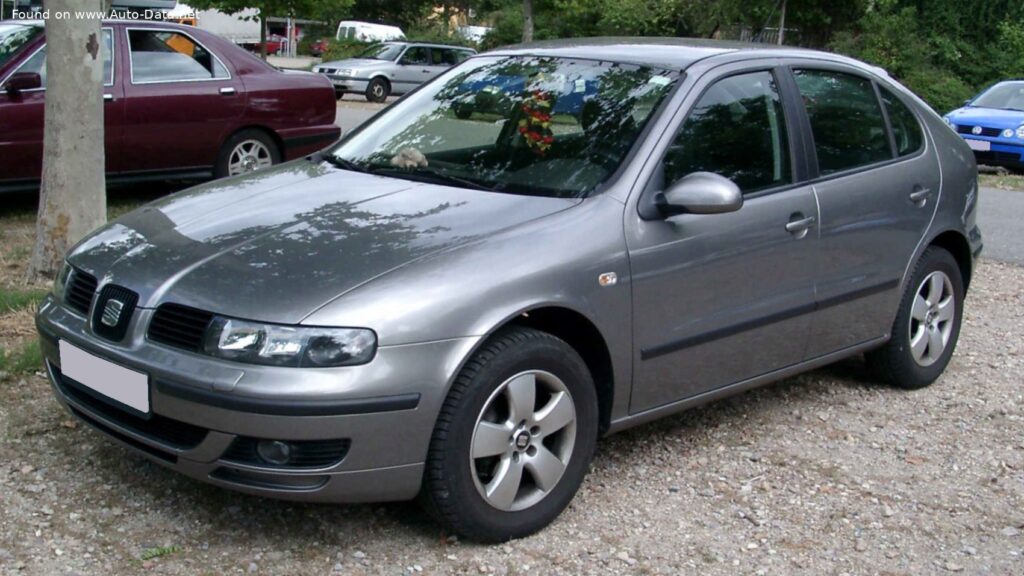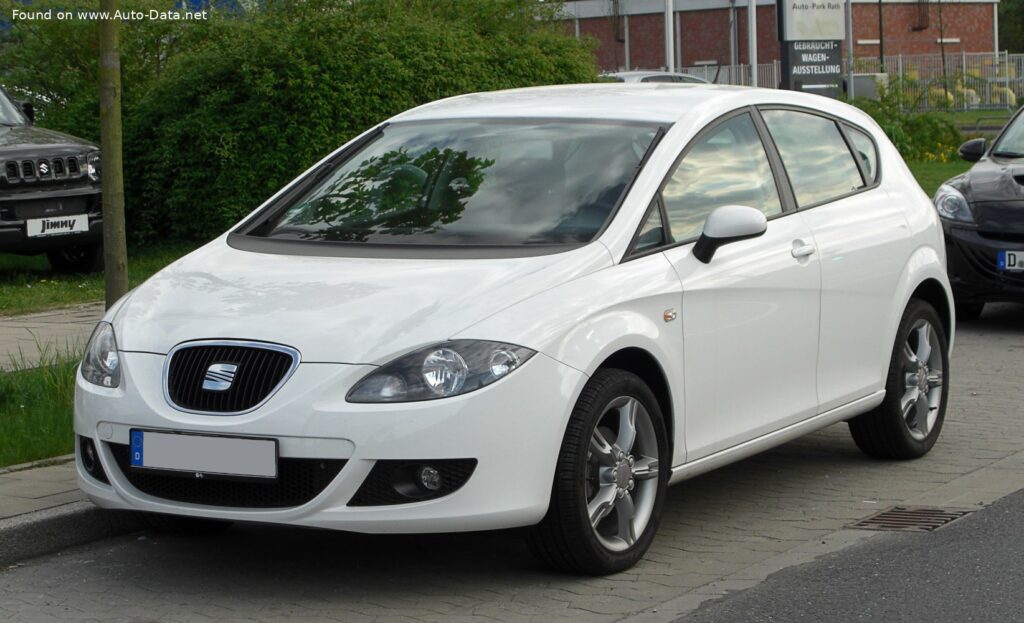
The Seat Leon II (1P) 2.0 FSI (150 Hp) Automatic represents a significant chapter in the Spanish automaker’s pursuit of a youthful and sporty identity within the highly competitive European compact car segment. Launched in July 2005, this second-generation Leon, internally designated 1P, built upon the success of its predecessor by offering a more distinctive design, enhanced technology, and a driving experience aimed at a dynamic audience. While never officially sold in the United States, the Leon II was a pivotal model for Seat, solidifying its position as the performance-oriented brand within the Volkswagen Group, often referred to as the “Spanish Alfa Romeo” for its passionate design and engaging dynamics. This particular variant, equipped with the 2.0-liter FSI engine and an automatic transmission, aimed to strike a balance between spirited performance and daily driving convenience.
The Seat Leon II (1P) 2.0 FSI (150 Hp) Automatic: A Dynamic Contender in Europe’s Compact Segment
The Seat Leon II (1P) 2.0 FSI (150 Hp) Automatic emerged during a period of intense competition in the European C-segment, where vehicles like the Volkswagen Golf, Ford Focus, and Opel Astra vied for market dominance. Seat, under the design leadership of Walter de Silva, sought to differentiate the Leon with a more emotional and expressive aesthetic. The 1P generation was built on the Volkswagen Group A5 (PQ35) platform, shared with its more conservative siblings, the Golf V and Audi A3, but infused with Seat’s distinct “Arrow Design” philosophy. This approach resulted in a visually striking hatchback that prioritized sharp lines, a bold front fascia, and a coupé-like profile despite its five-door, five-seat practicality. The 2.0 FSI variant, with its robust powertrain and automatic gearbox, positioned itself as an attractive option for buyers seeking a blend of performance, style, and ease of use in urban and highway environments across Europe.
Engine & Performance
At the heart of the Seat Leon II (1P) 2.0 FSI (150 Hp) Automatic is a sophisticated 2.0-liter (1984 cm3 or 121.07 cu. in.) naturally aspirated inline four-cylinder engine, part of the Volkswagen Group’s FSI (Fuel Stratified Injection) family. This direct injection technology was cutting-edge for its time, allowing for precise fuel delivery directly into the combustion chamber, leading to improved fuel efficiency and power output compared to conventional port injection systems. The engine, with codes like BLR, BLY, BVY, or BVZ, delivers a respectable 150 horsepower at 6000 rpm, providing a lively character for a compact hatchback. Torque peaks at 147.51 lb.-ft. (200 Nm) at a relatively accessible 3500 rpm, ensuring ample pulling power across the rev range.
Power is efficiently transmitted to the front wheels via a 6-speed automatic transmission, a choice that emphasized convenience and smooth operation, particularly in congested European city driving. This powertrain combination allows the Leon to accelerate from 0 to 60 mph in a swift 8.9 seconds (0-100 km/h in 9.4 seconds), with a top speed reaching 129.25 mph (208 km/h). While not a full-blown hot hatch like its Cupra siblings, this FSI variant offered a compelling balance of everyday usability and genuine driving enjoyment. Fuel economy figures, while calculated in European metrics, translate to an estimated 28 US mpg combined, with urban consumption at 19.6 US mpg and extra-urban at 37.3 US mpg, reflecting the FSI engine’s efficiency benefits. The vehicle also met the Euro 4 emission standard, demonstrating its compliance with environmental regulations of the mid-2000s.
Design & Features
The design of the Seat Leon II (1P) was a radical departure from its more conservatively styled predecessor. Its exterior, penned by Walter de Silva, was characterized by a distinct “mono-volume” profile, with the windshield extending forward to form a continuous line with the hood, creating a dynamic, almost MPV-like silhouette that retained a sporty stance. The concealed rear door handles, integrated into the C-pillar, gave the five-door hatchback an illusion of being a three-door coupé, further enhancing its athletic appeal. The front end featured Seat’s signature “Arrow Design” nose, with sharp headlights and a prominent grille that exuded aggression and character.
Inside, the Leon II offered a functional yet driver-focused cabin. While sharing some switchgear with its VW Group stablemates, Seat imbued the interior with its own flair, using sporty instrument graphics and a dashboard layout that emphasized ergonomics. The 5-door, 5-seat hatchback body type provided practical access and seating for passengers, complemented by a minimum trunk space of 12.04 cu. ft. (341 liters), expandable for larger loads. Standard features for its era included an independent McPherson front suspension with a coil spring and anti-roll bar, a torsion beam rear suspension for a balance of comfort and handling, ventilated disc brakes at the front and disc brakes at the rear, and essential safety systems like ABS (Anti-lock Braking System). The electric power steering system offered precise control and ease of maneuverability, contributing to the Leon’s agile driving dynamics. The vehicle rode on 225/45 R17 tires mounted on 7J x 17 wheel rims, providing a good grip and enhancing its sporty appearance.
Technical Specifications
| Category | Specification | US Equivalent / Notes |
|---|---|---|
| General Information | ||
| Brand | Seat | |
| Model | Leon | |
| Generation | Leon II (1P) | |
| Type (Engine) | 2.0 FSI (150 Hp) Automatic | |
| Start of production | July, 2005 year | |
| End of production | 2009 year | |
| Powertrain Architecture | Internal Combustion engine | |
| Body type | Hatchback | |
| Seats | 5 | |
| Doors | 5 | |
| Performance Specs | ||
| Fuel consumption (economy) – urban | 12 l/100 km | 19.6 US mpg |
| Fuel consumption (economy) – extra urban | 6.3 l/100 km | 37.3 US mpg |
| Fuel consumption (economy) – combined | 8.4 l/100 km | 28 US mpg |
| CO2 emissions | 201 g/km | |
| Fuel Type | Petrol (Gasoline) | |
| Acceleration 0 – 100 km/h | 9.4 sec | |
| Acceleration 0 – 60 mph | 8.9 sec | Calculated |
| Maximum speed | 208 km/h | 129.25 mph |
| Emission standard | Euro 4 | |
| Weight-to-power ratio | 8.7 kg/Hp | 115.4 Hp/tonne |
| Weight-to-torque ratio | 6.5 kg/Nm | 153.8 Nm/tonne |
| Engine Specs | ||
| Power | 150 Hp @ 6000 rpm. | |
| Power per litre | 75.6 Hp/l | |
| Torque | 200 Nm @ 3500 rpm. | 147.51 lb.-ft. @ 3500 rpm. |
| Engine layout | Front, Transverse | |
| Engine Model/Code | BLR, BLY, BVY, BVZ | |
| Engine displacement | 1984 cm3 | 121.07 cu. in. |
| Number of cylinders | 4 | |
| Engine configuration | Inline | |
| Cylinder Bore | 82.5 mm | 3.25 in. |
| Piston Stroke | 92.8 mm | 3.65 in. |
| Compression ratio | 11.5:1 | |
| Number of valves per cylinder | 4 | |
| Fuel injection system | Direct injection | |
| Engine aspiration | Naturally aspirated engine | |
| Engine oil capacity | 5.3 l | 5.6 US qt | 4.66 UK qt |
| Engine oil specification | Log in to see. | |
| Space, Volume and Weights | ||
| Kerb Weight | 1300 kg | 2866.01 lbs. |
| Max. weight | 1870 kg | 4122.64 lbs. |
| Max load | 570 kg | 1256.63 lbs. |
| Trunk (boot) space – minimum | 341 l | 12.04 cu. ft. |
| Fuel tank capacity | 55 l | 14.53 US gal | 12.1 UK gal |
| Max. roof load | 75 kg | 165.35 lbs. |
| Permitted trailer load with brakes (12%) | 1400 kg | 3086.47 lbs. |
| Permitted trailer load without brakes | 680 kg | 1499.14 lbs. |
| Dimensions | ||
| Length | 4315 mm | 169.88 in. |
| Width | 1768 mm | 69.61 in. |
| Height | 1458 mm | 57.4 in. |
| Wheelbase | 2578 mm | 101.5 in. |
| Front track | 1525-1533 mm | 60.04 – 60.35 in. |
| Rear (Back) track | 1509-1517 mm | 59.41 – 59.72 in. |
| Front overhang | 949 mm | 37.36 in. |
| Rear overhang | 788 mm | 31.02 in. |
| Minimum turning circle (turning diameter) | 10.7 m | 35.1 ft. |
| Drivetrain, Brakes and Suspension Specs | ||
| Drivetrain Architecture | The Internal combustion engine (ICE) drives the front wheels of the vehicle. | Front-wheel drive (FWD) |
| Drive wheel | Front wheel drive | |
| Number of gears and type of gearbox | 6 gears, automatic transmission | |
| Front suspension | Independent, type McPherson with coil spring and anti-roll bar | |
| Rear suspension | Torsion beam | |
| Front brakes | Ventilated discs | |
| Rear brakes | Disc | |
| Assisting systems | ABS (Anti-lock braking system) | |
| Steering type | Steering rack and pinion | |
| Power steering | Electric Steering | |
| Tires size | 225/45 R17 | |
| Wheel rims size | 7J x 17 | |
Legacy & Market Impact
The Seat Leon II (1P) 2.0 FSI (150 Hp) Automatic, during its production run from 2005 to 2009, carved out a distinct niche in the European compact market. It was positioned as a more emotionally charged and visually engaging alternative to its Volkswagen Group siblings, the Golf and Audi A3, offering a similar level of engineering sophistication but with a more accessible price point and a decidedly sportier character. Its competitors included the aforementioned Ford Focus, Opel Astra, Renault Mégane, and Peugeot 307/308, all vying for a share of the high-volume C-segment.
The 2.0 FSI automatic variant was particularly appealing to those who desired the Leon’s dynamic styling and handling prowess but preferred the convenience of an automatic transmission for daily commuting. It provided a refined yet spirited driving experience, making it a popular choice for young families and individuals who appreciated its blend of performance, practicality, and distinctive design. The Leon II helped solidify Seat’s brand image as a manufacturer of sporty, well-built cars that offered genuine driving pleasure. While it didn’t achieve the sales volumes of the ubiquitous Golf, it successfully established Seat as a credible and exciting player in the European market, laying the groundwork for future generations of the Leon and cementing its reputation as a “hot hatch” contender even in its more sedate automatic guise. Its legacy is one of a stylish, capable, and engaging European compact that brought a touch of Spanish flair to a segment often dominated by more conservative designs.