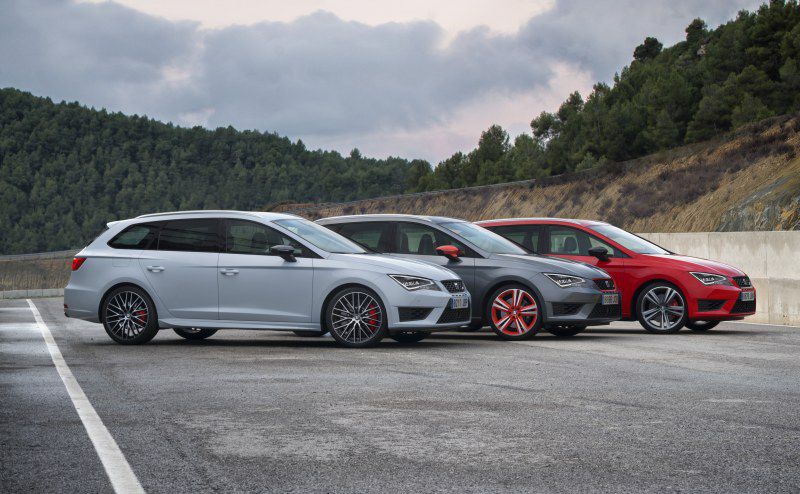
The third generation of the SEAT Leon, specifically the {original_title} variant, emerged as a highly competitive offering in the European compact segment, showcasing a blend of Spanish flair and German engineering precision. Launched in 2012, this iteration marked a significant evolution for the Leon, moving to the Volkswagen Group’s highly versatile MQB platform, which underpinned many of its successful siblings. While SEAT vehicles are not typically sold in the United States, the Leon III ST played a crucial role in SEAT’s strategy to expand its market share, particularly in the burgeoning station wagon (estate) segment across Europe. The “ST” designation stands for Sport Tourer, emphasizing its practical utility combined with a dynamic driving experience. This model, produced until 2016, was designed to appeal to families and individuals seeking a practical, efficient, and engaging vehicle without compromising on style or modern technology, including advanced powertrain innovations like Active Cylinder Technology (ACT).
The Seat Leon III ST 1.4 TSI (150 Hp) ACT Start/Stop DSD: Powertrain and Performance
At the heart of the Seat Leon III ST 1.4 TSI (150 Hp) ACT start/stop DSD lies a sophisticated 1.4-liter TSI (Turbocharged Stratified Injection) gasoline engine. This inline four-cylinder unit, with an engine code of CZEA or CZDA, is a prime example of Volkswagen Group’s commitment to “downsizing” – achieving impressive power and torque from a smaller displacement engine while simultaneously enhancing fuel efficiency and reducing emissions. It delivers a robust 150 horsepower, available across a broad rev range from 5000 to 6000 rpm, translating to a healthy power output of 107.5 Hp per liter. More importantly for daily driving, the engine generates a substantial 184.39 lb.-ft. of torque, accessible from a low 1500 rpm all the way up to 3500 rpm. This wide torque band ensures responsive acceleration and flexible in-gear performance, making the Leon ST feel lively in various driving conditions, from urban commutes to highway cruising.
A key technological highlight of this powertrain is the Active Cylinder Technology (ACT) system. This innovative feature, also known as cylinder deactivation, allows the engine to seamlessly shut down two of its four cylinders under light load conditions, such as when coasting or driving at a steady speed. By running on just two cylinders, the engine operates more efficiently, significantly reducing fuel consumption and CO2 emissions. The transition between two- and four-cylinder modes is virtually imperceptible to the driver, thanks to precise electronic control. Complementing ACT is the Start/Stop system, which automatically shuts off the engine when the vehicle is stationary (e.g., at a traffic light) and restarts it instantly when the driver releases the brake pedal. These systems collectively contribute to the Leon ST’s impressive combined fuel economy of 50 US mpg (4.7 l/100 km) and low CO2 emissions of 110 g/km, meeting the stringent Euro 6 emission standard.
Power is transmitted to the front wheels via a sophisticated 7-speed automatic transmission, referred to as a “DSD” in the provided data, but commonly known as a DSG (Direct-Shift Gearbox) within the Volkswagen Group. This dual-clutch gearbox is renowned for its rapid, smooth shifts and efficiency, offering both the convenience of an automatic and the engaging feel of a manual. The combination of the potent 1.4 TSI engine and the quick-shifting DSG allows the Leon III ST to accelerate from 0 to 60 mph in a brisk 7.7 seconds (0-100 km/h in 8.1 seconds), while its maximum speed reaches 133.59 mph (215 km/h). This performance profile positions the Leon ST as a spirited yet economical choice in its segment, offering more than adequate power for daily demands and longer journeys.
Design and Features of the Leon III ST
The SEAT Leon III ST adopted a sleek and dynamic design language, a hallmark of SEAT’s aesthetic philosophy. As a station wagon or “estate” as it’s known in Europe, it successfully blended the sporty lines of the Leon hatchback with the enhanced practicality demanded by this body style. Measuring 178.54 inches (4535 mm) in length, 71.5 inches (1816 mm) in width, and 57.13 inches (1451 mm) in height, the Leon ST presented a well-proportioned and visually appealing silhouette. The 103.78-inch (2636 mm) wheelbase contributed to a stable ride and generous interior space, particularly for rear passengers.
Practicality was a primary focus for the ST variant. It offered a substantial minimum trunk (boot) space of 20.73 cubic feet (587 liters), which could be expanded to an impressive 51.91 cubic feet (1470 liters) with the rear seats folded down. This cavernous cargo area made it an ideal choice for families, active individuals, or anyone needing significant hauling capacity, distinguishing it from its hatchback sibling. The five-door, five-seat configuration ensured easy access and comfortable accommodation for all occupants.
In terms of driver assistance and safety, the Leon III ST was equipped with essential systems for its era, including ABS (Anti-lock Braking System), enhancing braking control and stability. The steering system utilized a rack and pinion setup, providing precise and responsive feedback to the driver. The front-wheel-drive architecture, common for this segment, offered predictable handling and efficient power delivery. While specific advanced driver-assistance systems (ADAS) might have been optional or varied by trim level, the core package provided a solid foundation for safety and driver confidence.
Technical Specifications
| Brand | Seat |
| Model | Leon |
| Generation | Leon III ST |
| Type (Engine) | 1.4 TSI (150 Hp) ACT start/stop DSD |
| Start of production | 2012 year |
| End of production | 2016 year |
| Powertrain Architecture | Internal Combustion engine |
| Body type | Station wagon (estate) |
| Seats | 5 |
| Doors | 5 |
| Fuel consumption (economy) – combined | 4.7 l/100 km (50 US mpg) |
| CO2 emissions | 110 g/km |
| Fuel Type | Petrol (Gasoline) |
| Acceleration 0 – 60 mph | 7.7 sec |
| Maximum speed | 133.59 mph (215 km/h) |
| Emission standard | Euro 6 |
| Power | 150 Hp @ 5000-6000 rpm |
| Power per litre | 107.5 Hp/l |
| Torque | 184.39 lb.-ft. (250 Nm) @ 1500-3500 rpm |
| Engine layout | Front, Transverse |
| Engine Model/Code | CZEA, CZDA |
| Engine displacement | 1395 cm3 (85.13 cu. in.) |
| Number of cylinders | 4 |
| Engine configuration | Inline |
| Cylinder Bore | 2.93 in. (74.5 mm) |
| Piston Stroke | 3.15 in. (80 mm) |
| Compression ratio | 10.5:1 |
| Number of valves per cylinder | 4 |
| Fuel injection system | Direct injection |
| Engine aspiration | Turbocharger, Intercooler |
| Engine oil capacity | 4.23 US qt (4 l) |
| Engine oil specification | Not specified |
| Coolant | 8.45 US qt (8 l) |
| Engine systems | Start & Stop System, Cylinder deactivation system |
| Trunk (boot) space – minimum | 20.73 cu. ft. (587 l) |
| Trunk (boot) space – maximum | 51.91 cu. ft. (1470 l) |
| Length | 178.54 in. (4535 mm) |
| Width | 71.5 in. (1816 mm) |
| Height | 57.13 in. (1451 mm) |
| Wheelbase | 103.78 in. (2636 mm) |
| Front track | 60.98 in. (1549 mm) |
| Rear (Back) track | 59.84 in. (1520 mm) |
| Drivetrain Architecture | The Internal combustion engine (ICE) drives the front wheels of the vehicle. |
| Drive wheel | Front wheel drive |
| Number of gears and type of gearbox | 7 gears, automatic transmission DSG |
| Assisting systems | ABS (Anti-lock braking system) |
| Steering type | Steering rack and pinion |