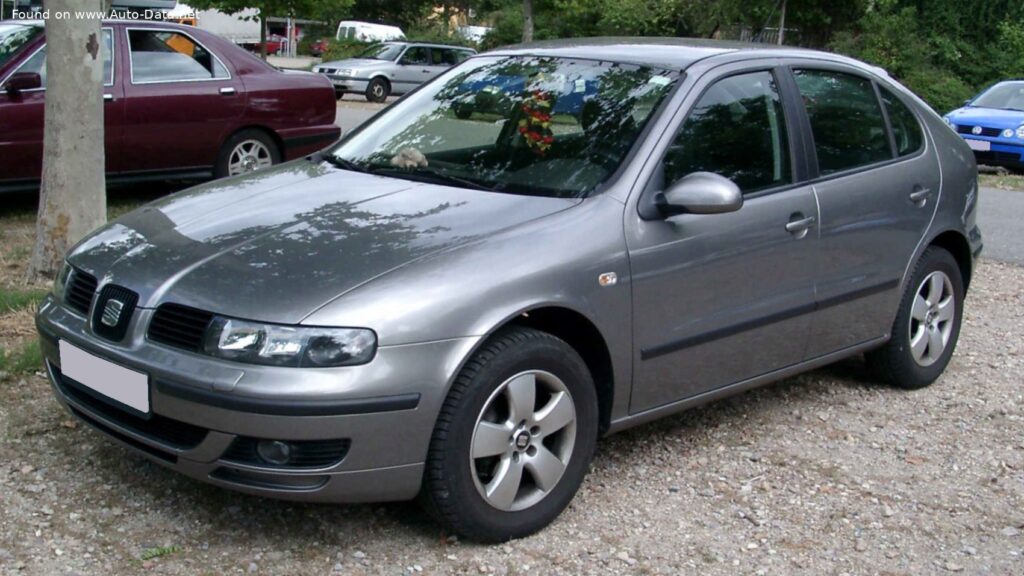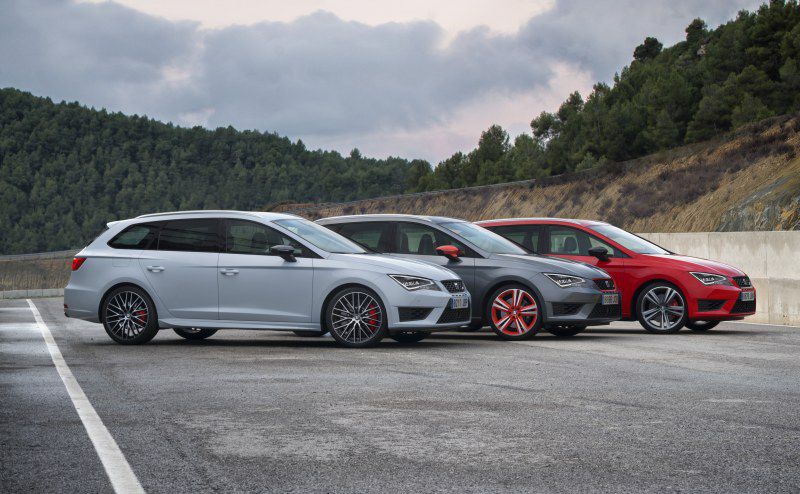
The Seat Leon III ST 1.8 TSI (180 Hp) start/stop, produced between 2013 and 2016, represents a significant offering within the European compact segment, specifically tailored for the station wagon (estate) market. As a product of SEAT, the Spanish marque within the Volkswagen Group, this vehicle embodies the brand’s commitment to delivering spirited driving dynamics, contemporary design, and practical utility. While SEAT vehicles are not typically sold in the United States, their engineering often reflects the robust platforms and advanced powertrains developed across the broader VW Group, making them relevant for understanding global automotive trends. The third-generation Leon, particularly in its ST (Sport Tourer) variant, was designed to appeal to buyers seeking the versatility of a station wagon without compromising on a sporty aesthetic or engaging performance. It carved out a niche in a highly competitive market by blending sharp styling with a potent turbocharged engine and efficient technologies like the start/stop system.
The Seat Leon III ST 1.8 TSI (180 Hp) start/stop: Engineering and Performance
At the heart of the 2013-2016 Seat Leon III ST 1.8 TSI (180 Hp) start/stop lies a sophisticated powertrain designed for a blend of performance and efficiency. The vehicle is propelled by an inline four-cylinder, 1.8-liter (1798 cm3 or 109.72 cu. in.) EA888 engine, specifically designated with the CJSA code. This engine, a staple in many Volkswagen Group vehicles, benefits from a DOHC valvetrain with four valves per cylinder and advanced fuel injection technology, combining both direct injection and multi-port manifold injection to optimize combustion across various operating conditions. Crucially, the engine is equipped with a turbocharger and intercooler, enabling it to produce a robust 180 horsepower (Hp) across a broad rev range from 5100 to 6200 rpm. This wide power band is complemented by an impressive 250 Nm (184.39 lb.-ft.) of torque, available from a remarkably low 1250 rpm and sustained up to 5000 rpm, ensuring strong acceleration and flexible in-gear performance.
The performance figures for the Seat Leon III ST 1.8 TSI are indicative of its energetic character. It can accelerate from 0 to 60 mph in a swift 7.4 seconds, with a top speed reaching 140.43 mph (226 km/h). These numbers place it firmly in the sporty end of the compact station wagon segment. The engine’s compression ratio stands at 9.6:1, further aiding its efficiency and power delivery. Power is delivered to the front wheels via a precise 6-speed manual transmission, offering an engaging driving experience for enthusiasts. The powertrain architecture is a traditional front, transverse engine layout, driving the front wheels, a configuration known for its packaging efficiency and predictable handling characteristics.
Efficiency is also a key aspect of this model, particularly with the integrated Start & Stop System, which automatically shuts off the engine when the vehicle is stationary and restarts it seamlessly when the driver intends to move. This system contributes to the car’s commendable fuel economy, achieving a combined rating of 39.2 US mpg (6 l/100 km). In urban driving, it manages 31.4 US mpg (7.5 l/100 km), while on extra-urban routes, it can reach an impressive 46.1 US mpg (5.1 l/100 km). Furthermore, the vehicle adheres to the stringent Euro 6 emission standard, with CO2 emissions rated at 138 g/km, reflecting SEAT’s commitment to environmental responsibility within its primary markets. The weight-to-power ratio of 7.1 kg/Hp (140.6 Hp/tonne) and a weight-to-torque ratio of 5.1 kg/Nm (195.3 Nm/tonne) underscore the car’s nimble feel relative to its power output and overall mass.
Design, Utility, and Driving Dynamics
The Seat Leon III ST is a station wagon (estate) body type, a highly popular and practical choice in Europe. Its design is characterized by SEAT’s signature sharp lines and dynamic proportions, giving it a sporty and modern appearance that belies its functional nature. With five doors and seating for five occupants, it offers excellent versatility for families or individuals with active lifestyles. The vehicle’s dimensions are well-proportioned for its segment, with a length of 178.54 inches (4535 mm), a width of 71.5 inches (1816 mm), and a height of 57.24 inches (1454 mm). The wheelbase measures 103.78 inches (2636 mm), contributing to both passenger comfort and stable handling.
Utility is a major strength of the Leon ST. The trunk (boot) space is generous, offering a minimum of 20.73 cu. ft. (587 liters) with all seats in place. When the rear seats are folded, this expands significantly to a maximum of 51.91 cu. ft. (1470 liters), allowing for the transport of larger items. The maximum load capacity is 1366.87 lbs. (620 kg), and the vehicle can tow substantial loads, with a permitted trailer load of 3968.32 lbs. (1800 kg) with brakes (at 8% incline) or 3306.93 lbs. (1500 kg) at 12% incline, and 1477.1 lbs. (670 kg) without brakes. A 13.21 US gallon (50-liter) fuel tank ensures a respectable cruising range.
Driving dynamics are a key differentiator for SEAT, and the Leon III ST lives up to this reputation. It features an independent McPherson front suspension with coil springs and an anti-roll bar, while the rear suspension utilizes an independent multi-link spring setup with a stabilizer. This sophisticated suspension configuration provides a balanced ride, combining comfort with agile handling. Stopping power is provided by ventilated disc brakes measuring 312×25 mm at the front and solid disc brakes measuring 272×10 mm at the rear. An Anti-lock Braking System (ABS) is standard, enhancing safety and control during emergency braking. The steering system is a rack and pinion type, complemented by electric power steering, which offers precise feedback and easy maneuverability, especially in urban environments, highlighted by a minimum turning circle of 33.79 feet (10.3 meters). The vehicle is typically fitted with 225/45 R17 or 225/40 R18 tires on 7.5J x 17 or 7.5J x 18 wheel rims, respectively, providing ample grip and contributing to its planted feel on the road. With a kerb weight of 2821.92 lbs. (1280 kg) and a maximum permissible weight of 4188.78 lbs. (1900 kg), the Leon ST maintains a solid and secure presence.
Technical Specifications
| Brand | Seat |
| Model | Leon |
| Generation | Leon III ST |
| Type (Engine) | 1.8 TSI (180 Hp) start/stop |
| Start of production | 2013 year |
| End of production | 2016 year |
| Powertrain Architecture | Internal Combustion engine |
| Body type | Station wagon (estate) |
| Seats | 5 |
| Doors | 5 |
| Fuel consumption (economy) – urban | 7.5 l/100 km (31.4 US mpg) |
| Fuel consumption (economy) – extra urban | 5.1 l/100 km (46.1 US mpg) |
| Fuel consumption (economy) – combined | 6 l/100 km (39.2 US mpg) |
| CO2 emissions | 138 g/km |
| Fuel Type | Petrol (Gasoline) |
| Acceleration 0 – 60 mph | 7.4 sec |
| Maximum speed | 226 km/h (140.43 mph) |
| Emission standard | Euro 6 |
| Weight-to-power ratio | 7.1 kg/Hp (140.6 Hp/tonne) |
| Weight-to-torque ratio | 5.1 kg/Nm (195.3 Nm/tonne) |
| Power | 180 Hp @ 5100-6200 rpm |
| Power per liter | 100.1 Hp/l |
| Torque | 250 Nm (184.39 lb.-ft.) @ 1250-5000 rpm |
| Engine layout | Front, Transverse |
| Engine Model/Code | EA888 / CJSA |
| Engine displacement | 1798 cm3 (1.8 l / 109.72 cu. in.) |
| Number of cylinders | 4 |
| Engine configuration | Inline |
| Cylinder Bore | 82.5 mm (3.25 in.) |
| Piston Stroke | 84.2 mm (3.31 in.) |
| Compression ratio | 9.6:1 |
| Number of valves per cylinder | 4 |
| Fuel injection system | Direct injection and Multi-port manifold injection |
| Engine aspiration | Turbocharger, Intercooler |
| Valvetrain | DOHC |
| Engine oil capacity | 5.2 l (5.49 US qt) |
| Engine oil specification | Not specified |
| Coolant | 10 l (10.57 US qt) |
| Engine systems | Start & Stop System |
| Kerb Weight | 1280 kg (2821.92 lbs.) |
| Max. weight | 1900 kg (4188.78 lbs.) |
| Max load | 620 kg (1366.87 lbs.) |
| Trunk (boot) space – minimum | 587 l (20.73 cu. ft.) |
| Trunk (boot) space – maximum | 1470 l (51.91 cu. ft.) |
| Fuel tank capacity | 50 l (13.21 US gal) |
| Max. roof load | 75 kg (165.35 lbs.) |
| Permitted trailer load with brakes (8%) | 1800 kg (3968.32 lbs.) |
| Permitted trailer load with brakes (12%) | 1500 kg (3306.93 lbs.) |
| Permitted trailer load without brakes | 670 kg (1477.1 lbs.) |
| Length | 4535 mm (178.54 in.) |
| Width | 1816 mm (71.5 in.) |
| Width including mirrors | 1975 mm (77.76 in.) |
| Height | 1454 mm (57.24 in.) |
| Wheelbase | 2636 mm (103.78 in.) |
| Front track | 1534 mm (60.39 in.) |
| Rear (Back) track | 1508-1511 mm (59.37 – 59.49 in.) |
| Front overhang | 853 mm (33.58 in.) |
| Rear overhang | 1046 mm (41.18 in.) |
| Minimum turning circle (turning diameter) | 10.3 m (33.79 ft.) |
| Drivetrain Architecture | The Internal combustion engine (ICE) drives the front wheels of the vehicle. |
| Drive wheel | Front wheel drive |
| Number of gears and type of gearbox | 6 gears, manual transmission |
| Front suspension | Independent, type McPherson with coil spring and anti-roll bar |
| Rear suspension | Independent multi-link spring suspension with stabilizer |
| Front brakes | Ventilated discs, 312×25 mm |
| Rear brakes | Disc, 272×10 mm |
| Assisting systems | ABS (Anti-lock braking system) |
| Steering type | Steering rack and pinion |
| Power steering | Electric Steering |
| Tires size | 225/45 R17; 225/40 R18 |
| Wheel rims size | 7.5J x 17; 7.5J x 18 |