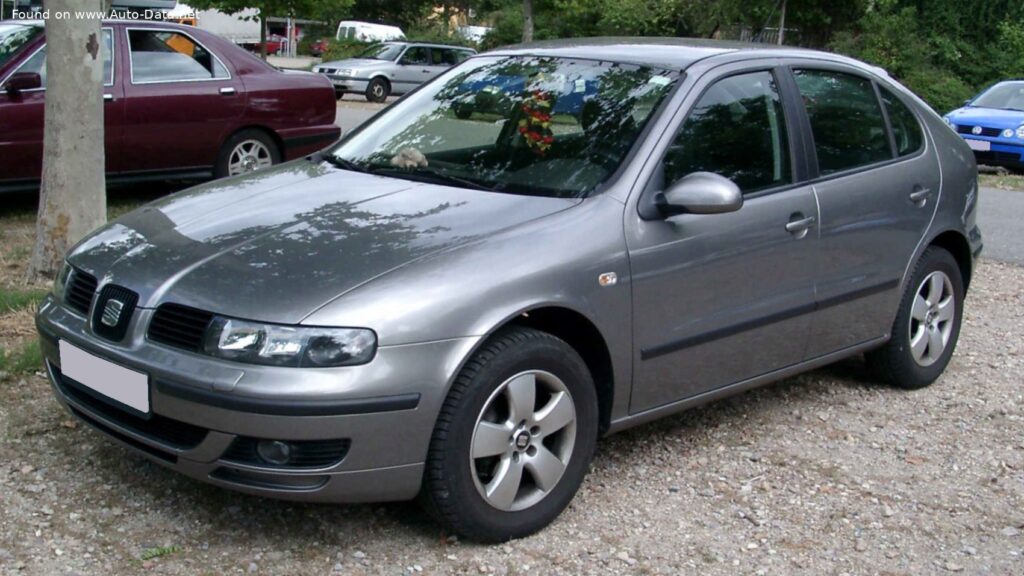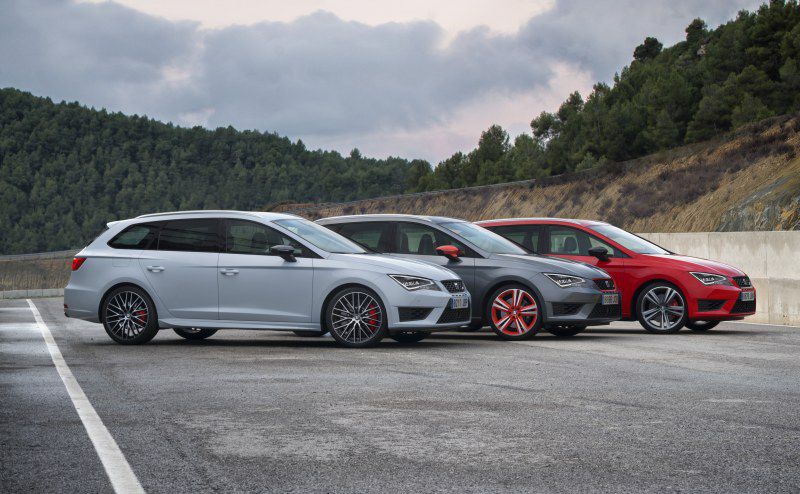
The Seat Leon III ST 2.0 TDI (150 Hp) start/stop represents a pivotal model within the Spanish automaker SEAT’s third-generation Leon lineup, specifically catering to the highly competitive European compact family car segment. Launched for the 2014 model year and produced through 2015, this variant distinguished itself as a versatile station wagon, or “Sport Tourer” (ST) as SEAT branded it, combining practicality with the brand’s signature sporty flair. While SEAT vehicles are not typically sold in the United States, the Leon III ST offered a compelling package of efficiency, performance, and utility that resonated strongly with European consumers seeking a dynamic yet economical daily driver. Built on the Volkswagen Group’s highly adaptable MQB platform, it benefited from advanced engineering shared across a broad range of successful models, delivering a sophisticated driving experience with a keen focus on fuel economy and reduced emissions, thanks in part to its advanced diesel powertrain and integrated start/stop technology.
The Seat Leon III ST: A European Workhorse
Market Positioning and Design Philosophy
The Seat Leon III ST carved out a significant niche in the crowded European C-segment, a category dominated by fierce competition from its Volkswagen Group stablemates and other major manufacturers. As SEAT’s answer to the demand for more spacious and versatile compact vehicles, the Leon ST extended the appeal of the popular Leon hatchback by offering enhanced cargo capacity without sacrificing the engaging driving dynamics the Leon nameplate had become known for. SEAT, often positioned as the “emotional” and “sporty” brand within the Volkswagen Group, infused the Leon ST with a distinctive design language characterized by sharp lines, angular headlights, and a sculpted body that gave it a more athletic stance compared to some of its utilitarian rivals. The station wagon body style was seamlessly integrated, ensuring the extended roofline and larger rear volume did not detract from the car’s overall aesthetic appeal. This careful balance of form and function was crucial for its success in markets where practicality and style are equally valued.
Beyond its exterior, the Leon III ST’s design philosophy extended to its interior, which prioritized ergonomics, material quality, and user-friendly technology. The cabin offered a well-appointed environment for five occupants, with supportive seating and intuitive controls. The driver-centric cockpit, a hallmark of SEAT’s design, provided easy access to infotainment and vehicle settings. Crucially for a station wagon, the Leon ST excelled in terms of cargo versatility. Its minimum trunk space of 20.73 cubic feet was generous for its class, expanding significantly to a cavernous 51.91 cubic feet with the rear seats folded down. This adaptability made it an ideal choice for families, active individuals, and anyone requiring substantial hauling capability without opting for a larger, less efficient SUV. Standard features for its era included essential safety systems like ABS (Anti-lock Braking System), contributing to the vehicle’s overall appeal as a secure and reliable option for everyday use.
Powertrain and Performance of the Seat Leon III ST 2.0 TDI (150 Hp) start/stop
Engine Architecture and Efficiency
At the heart of the Seat Leon III ST 2.0 TDI (150 Hp) start/stop was a highly regarded 2.0-liter (120.09 cubic inches) inline four-cylinder diesel engine, a sophisticated unit engineered for an optimal blend of power, efficiency, and refinement. This common rail direct injection engine, identified by codes such as CRBC, CKFC, CRLB, or CRMB, featured a turbocharger and intercooler, ensuring robust power delivery across a wide RPM range. It produced a respectable 150 horsepower at 3500-4000 rpm, translating to a power-per-liter output of 76.2 HP/l, underscoring its efficient design. More impressively, the engine generated a substantial 236.02 lb.-ft. of torque, available from a low 1750 rpm up to 3000 rpm. This broad torque band was instrumental in providing excellent low-end grunt and flexible acceleration, making the vehicle feel responsive and capable in various driving conditions, whether navigating urban traffic or cruising on the highway.
A key differentiator for this specific variant was the integrated start/stop system, a technology designed to automatically shut off the engine when the vehicle is stationary (e.g., at a traffic light) and instantly restart it when the driver is ready to move. This system, combined with the inherent efficiency of the diesel engine, played a crucial role in achieving the impressive fuel economy figures. The Leon III ST 2.0 TDI boasted a combined fuel consumption of 57.4 US mpg, with urban driving yielding 47 US mpg and extra-urban figures reaching an outstanding 65.3 US mpg. These figures, coupled with CO2 emissions of just 106 g/km, allowed the vehicle to meet the stringent Euro 5 emission standard, making it an environmentally conscious choice for the time. Performance-wise, the vehicle was no slouch, capable of accelerating from 0 to 60 mph in a brisk 8.2 seconds and reaching a maximum speed of 133.59 mph, demonstrating a compelling balance between spirited driving and exceptional fuel efficiency.
Drivetrain and Driving Dynamics
The powertrain architecture of the Seat Leon III ST 2.0 TDI (150 Hp) start/stop featured a front, transverse engine layout, driving the front wheels. This front-wheel-drive configuration, paired with a precise 6-speed manual transmission, offered a direct and engaging driving experience, characteristic of European compact cars. The manual gearbox allowed drivers to fully exploit the engine’s torque characteristics, providing a sense of control and involvement. The vehicle’s kerb weight of 2976.24 lbs. contributed to a favorable weight-to-power ratio of 9 kg/Hp and a weight-to-torque ratio of 4.2 kg/Nm, further enhancing its dynamic capabilities. The MQB platform, renowned for its rigidity and sophisticated suspension setup, provided the Leon ST with a composed ride and agile handling. The steering system, a rack and pinion type, offered precise feedback, making the car feel nimble and confidence-inspiring on winding roads. The inclusion of ABS as a standard assisting system underscored SEAT’s commitment to safety, ensuring effective braking performance in critical situations. This combination of an efficient diesel engine, a well-sorted chassis, and a driver-focused drivetrain solidified the Leon III ST’s reputation as a practical yet enjoyable vehicle for the European market.
Technical Specifications
| Brand | Seat |
| Model | Leon |
| Generation | Leon III ST |
| Type (Engine) | 2.0 TDI (150 Hp) start/stop |
| Start of production | 2014 year |
| End of production | 2015 year |
| Powertrain Architecture | Internal Combustion engine |
| Body type | Station wagon (estate) |
| Seats | 5 |
| Doors | 5 |
| Fuel consumption (economy) – urban | 47 US mpg (5 l/100 km) |
| Fuel consumption (economy) – extra urban | 65.3 US mpg (3.6 l/100 km) |
| Fuel consumption (economy) – combined | 57.4 US mpg (4.1 l/100 km) |
| CO2 emissions | 106 g/km |
| Fuel Type | Diesel |
| Acceleration 0 – 60 mph | 8.2 sec |
| Maximum speed | 133.59 mph (215 km/h) |
| Emission standard | Euro 5 |
| Weight-to-power ratio | 9 kg/Hp, 111.1 Hp/tonne |
| Weight-to-torque ratio | 4.2 kg/Nm, 237 Nm/tonne |
| Power | 150 Hp @ 3500-4000 rpm. |
| Power per liter | 76.2 Hp/l |
| Torque | 236.02 lb.-ft. @ 1750-3000 rpm. (320 Nm) |
| Engine layout | Front, Transverse |
| Engine Model/Code | CRBC, CKFC, CRLB, CRMB |
| Engine displacement | 2.0 l (120.09 cu. in. / 1968 cm3) |
| Number of cylinders | 4 |
| Engine configuration | Inline |
| Cylinder Bore | 3.19 in. (81 mm) |
| Piston Stroke | 3.76 in. (95.5 mm) |
| Compression ratio | 16:1 |
| Number of valves per cylinder | 4 |
| Fuel injection system | Diesel Commonrail |
| Engine aspiration | Turbocharger, Intercooler |
| Engine oil capacity | 4.86 US qt (4.6 l) |
| Coolant | 8.45 US qt (8 l) |
| Engine systems | Start & Stop System, Particulate filter |
| Kerb Weight | 2976.24 lbs. (1350 kg) |
| Max. weight | 4232.88 lbs. (1920 kg) |
| Max load | 1256.63 lbs. (570 kg) |
| Trunk (boot) space – minimum | 20.73 cu. ft. (587 l) |
| Trunk (boot) space – maximum | 51.91 cu. ft. (1470 l) |
| Length | 178.54 in. (4535 mm) |
| Width | 71.5 in. (1816 mm) |
| Height | 57.13 in. (1451 mm) |
| Wheelbase | 103.78 in. (2636 mm) |
| Front track | 60.98 in. (1549 mm) |
| Rear (Back) track | 59.84 in. (1520 mm) |
| Drivetrain Architecture | The Internal combustion engine (ICE) drives the front wheels of the vehicle. |
| Drive wheel | Front wheel drive |
| Number of gears and type of gearbox | 6 gears, manual transmission |
| Assisting systems | ABS (Anti-lock braking system) |
| Steering type | Steering rack and pinion |