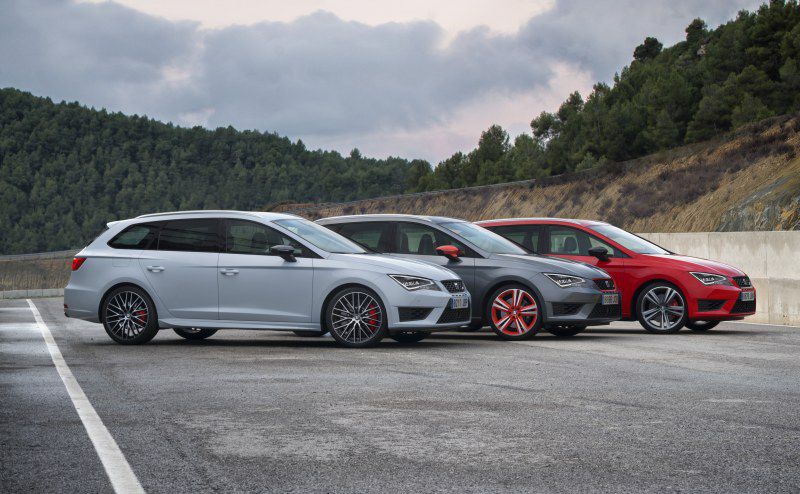
The Seat Leon III ST 2.0 TDI (150 Hp) start/stop DSG represents a key offering in the compact family car segment within the European market during its production run from 2015 to 2016. As a third-generation model, the Leon ST (Sport Tourer, or Station Wagon) was Seat’s entry into the highly competitive estate car category, building upon the successful Leon hatchback platform. This particular variant, equipped with the robust 2.0-liter TDI diesel engine and the advanced DSG automatic transmission, was engineered to blend efficiency, performance, and practicality for discerning European consumers. While the Seat brand is not typically sold in the United States, its vehicles, like the Leon III ST, are recognized globally for their blend of Volkswagen Group engineering, Spanish design flair, and a focus on dynamic driving characteristics often associated with its sportier positioning within the VW Group hierarchy. This model was designed to cater to families and individuals requiring ample cargo space without compromising on driving enjoyment or fuel economy, a common demand in European motoring.
Engine & Performance: The {Seat Leon III ST 2.0 TDI (150 Hp) start/stop DSG} Powertrain
At the heart of the Seat Leon III ST 2.0 TDI (150 Hp) start/stop DSG lies a highly efficient and potent 2.0-liter turbocharged direct injection (TDI) diesel engine, a staple of Volkswagen Group engineering known for its balance of power and fuel economy. Designated with engine codes CKFC or CRMB, this inline four-cylinder unit boasts a displacement of 1968 cubic centimeters, or approximately 120.09 cubic inches. Power output is a respectable 150 horsepower, achieved within a flexible rev range of 3500 to 4000 RPM. More critically for a diesel engine, it delivers a substantial 250.77 lb-ft of torque, available from a low 1750 RPM and sustained up to 3000 RPM. This broad torque band ensures strong, responsive acceleration and effortless cruising, particularly beneficial when the vehicle is loaded or navigating varied terrain.
The engine’s architecture features a front, transverse layout, optimizing packaging and contributing to the vehicle’s front-wheel-drive configuration. With a compression ratio of 16:1 and a sophisticated diesel commonrail fuel injection system, combustion is highly controlled and efficient. A turbocharger coupled with an intercooler further enhances performance by forcing more air into the cylinders, leading to greater power output and improved throttle response across the rev range. Each cylinder is equipped with four valves, promoting optimal airflow for both intake and exhaust cycles.
Performance figures underscore the engine’s capabilities: the Leon III ST 2.0 TDI accelerates from 0 to 60 mph in a swift 8.2 seconds, making it a lively performer for its class. Its maximum speed is rated at 131.11 mph, demonstrating its long-distance cruising prowess on European autobahns. The power-to-weight ratio stands at an impressive 108.7 HP per tonne (approximately 9.2 kg/Hp), while the torque-to-weight ratio is 246.4 Nm per tonne (approximately 4.1 kg/Nm), indicating strong pulling power relative to its curb weight of 3042.38 lbs. These metrics highlight the vehicle’s dynamic capabilities, offering a compelling blend of acceleration and efficiency.
Complementing the powerful engine is a sophisticated 6-speed automatic DSG (Direct Shift Gearbox) transmission. This dual-clutch system is renowned for its rapid, seamless gear changes, contributing significantly to both the vehicle’s performance and its fuel efficiency. The integration of a Start & Stop System, which automatically shuts off the engine when the vehicle is stationary and restarts it when the driver intends to move, further optimizes fuel consumption and reduces emissions in urban environments. Furthermore, the inclusion of a Particulate Filter ensures the vehicle meets stringent Euro 6 emission standards, reflecting a commitment to environmental responsibility.
Design & Features: Practicality Meets Style in the Leon III ST
The Seat Leon III ST, or Sport Tourer, embodies a compelling combination of practicality and Seat’s distinctive design language. As a station wagon (estate) body type, it prioritizes versatility and cargo capacity, making it an ideal choice for families and individuals with active lifestyles. The vehicle features five doors and comfortably accommodates five occupants, ensuring easy access to both front and rear seating areas. Its exterior dimensions are well-proportioned for the compact segment, with a length of 178.54 inches, a width of 71.5 inches, and a height of 57.13 inches. These dimensions contribute to a balanced aesthetic and manageable footprint for urban driving and parking, while a wheelbase of 103.78 inches helps provide a stable ride and generous interior space.
One of the most significant advantages of the station wagon body style is its expansive cargo area. The Leon III ST offers a substantial minimum trunk space of 20.73 cubic feet, which can be expanded to an impressive 51.91 cubic feet with the rear seats folded down. This flexibility allows for the easy transport of luggage, sports equipment, or larger items, underscoring its utility as a family vehicle. The design of the Leon III generation is characterized by sharp lines, angular headlights, and a distinctive grille, reflecting Seat’s sporty brand identity. While not explicitly detailed in the provided data, typical features for a car of this era and market segment would include alloy wheels, roof rails (common for station wagons), and body-colored exterior elements that enhance its contemporary appeal.
From a driver’s perspective, the Leon III ST offers a refined experience. The drivetrain architecture, with the internal combustion engine driving the front wheels, ensures predictable handling and efficiency. The vehicle is equipped with a steering rack and pinion system, providing direct and responsive steering feedback, which contributes to Seat’s reputation for engaging driving dynamics. Safety features are paramount, and the inclusion of ABS (Anti-lock Braking System) as a standard assisting system ensures stable and controlled braking performance, enhancing overall driver confidence. The interior would typically feature a well-laid-out dashboard, ergonomic controls, and comfortable seating, designed to make long journeys enjoyable. While specific infotainment or connectivity features are not listed, a 2015-2016 model would likely offer options for a touchscreen display, Bluetooth connectivity, and various driver assistance technologies standard for the European market at the time, aligning with modern expectations for comfort and convenience.
Technical Specifications
| Brand | Seat |
| Model | Leon |
| Generation | Leon III ST |
| Type (Engine) | 2.0 TDI (150 Hp) start/stop DSG |
| Start of production | 2015 year |
| End of production | 2016 year |
| Powertrain Architecture | Internal Combustion engine |
| Body type | Station wagon (estate) |
| Seats | 5 |
| Doors | 5 |
| Fuel Type | Diesel |
| Acceleration 0 – 60 mph | 8.2 sec |
| Maximum speed | 131.11 mph |
| Emission standard | Euro 6 |
| Weight-to-power ratio | 9.2 kg/Hp, 108.7 Hp/tonne |
| Weight-to-torque ratio | 4.1 kg/Nm, 246.4 Nm/tonne |
| Power | 150 Hp @ 3500-4000 rpm. |
| Power per liter | 76.2 Hp/l |
| Torque | 250.77 lb.-ft. @ 1750-3000 rpm. |
| Engine layout | Front, Transverse |
| Engine Model/Code | CKFC, CRMB |
| Engine displacement | 120.09 cu. in. (1968 cm3) |
| Number of cylinders | 4 |
| Engine configuration | Inline |
| Cylinder Bore | 3.19 in. (81 mm) |
| Piston Stroke | 3.76 in. (95.5 mm) |
| Compression ratio | 16:1 |
| Number of valves per cylinder | 4 |
| Fuel injection system | Diesel Commonrail |
| Engine aspiration | Turbocharger, Intercooler |
| Engine oil capacity | 4.86 US qt (4.6 l) |
| Coolant | 8.45 US qt (8 l) |
| Engine systems | Start & Stop System, Particulate filter |
| Kerb Weight | 3042.38 lbs. (1380 kg) |
| Max. weight | 4299.01 lbs. (1950 kg) |
| Max load | 1256.63 lbs. (570 kg) |
| Trunk (boot) space – minimum | 20.73 cu. ft. (587 l) |
| Trunk (boot) space – maximum | 51.91 cu. ft. (1470 l) |
| Length | 178.54 in. (4535 mm) |
| Width | 71.5 in. (1816 mm) |
| Height | 57.13 in. (1451 mm) |
| Wheelbase | 103.78 in. (2636 mm) |
| Front track | 60.98 in. (1549 mm) |
| Rear (Back) track | 59.84 in. (1520 mm) |
| Drivetrain Architecture | The Internal combustion engine (ICE) drives the front wheels of the vehicle. |
| Drive wheel | Front wheel drive |
| Number of gears and type of gearbox | 6 gears, automatic transmission DSG |
| Assisting systems | ABS (Anti-lock braking system) |
| Steering type | Steering rack and pinion |