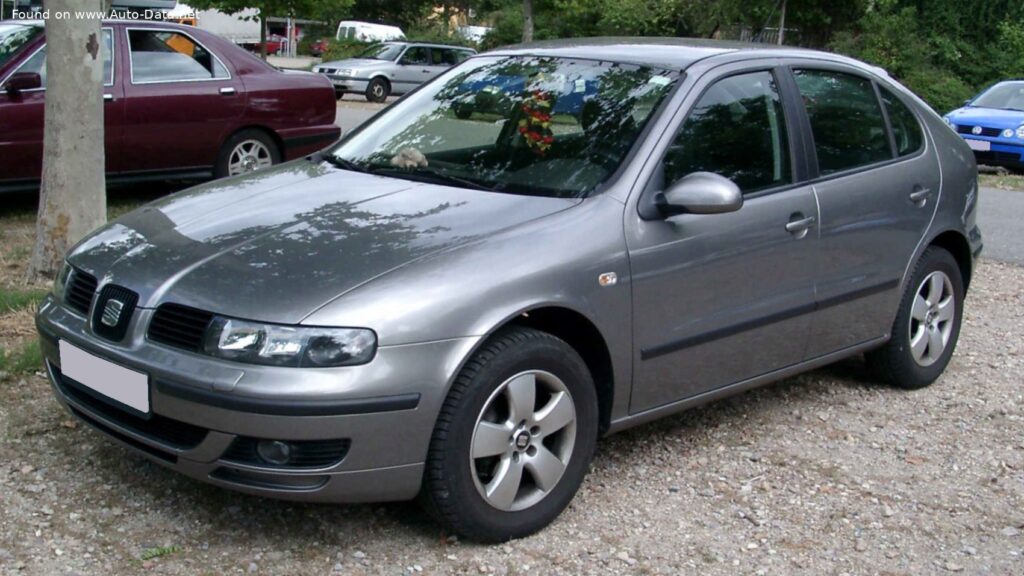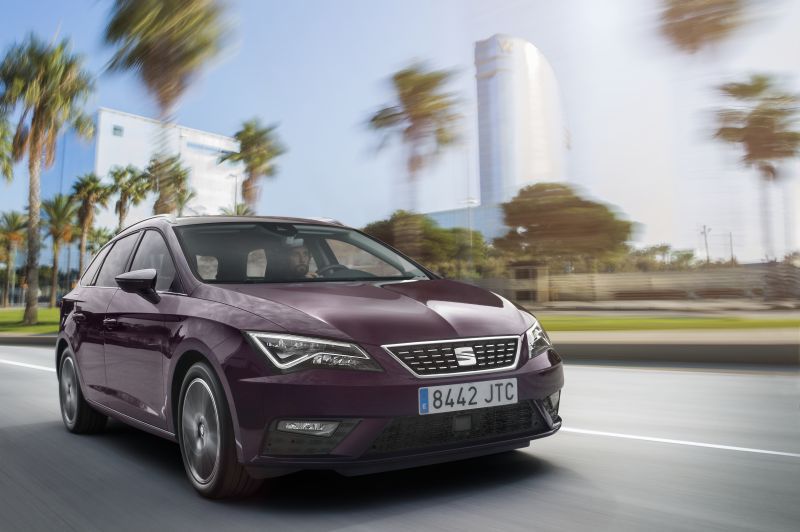
The Seat Leon III ST (facelift 2016) 1.2 TSI (110 Hp) represents a compelling offering within the highly competitive European compact family car segment. Manufactured by SEAT, the Spanish automotive brand under the Volkswagen Group, the Leon has consistently been lauded for its blend of dynamic styling, practical utility, and Volkswagen Group engineering prowess. The third-generation Leon, specifically in its “ST” (Sport Tourer, or station wagon) guise, received a significant facelift in 2016, enhancing its appeal with updated aesthetics, refined technology, and improved efficiency. This particular variant, powered by the economical yet spirited 1.2-liter TSI engine, was designed to cater to European families and individuals seeking a versatile and efficient vehicle that balances daily usability with an engaging driving experience. Produced from 2016 to 2018, this model solidified the Leon ST’s reputation as a smart choice for its primary market, emphasizing its role as a practical, well-equipped, and environmentally conscious compact station wagon.
Engine and Performance of the Seat Leon III ST (facelift 2016)
At the heart of the Seat Leon III ST (facelift 2016) 1.2 TSI (110 Hp) lies a meticulously engineered powertrain designed for optimal balance between efficiency and performance. This variant is equipped with a 1.2-liter (1197 cm3 or 73.05 cu. in.) turbocharged, intercooled, direct-injection gasoline engine. The inline four-cylinder configuration, designated with the engine code CYVB, is mounted transversely at the front, driving the front wheels. This layout is characteristic of many compact vehicles, optimizing interior space and contributing to predictable handling dynamics.
The engine delivers a respectable 110 horsepower (Hp) across a broad rev range, specifically from 4600 to 5600 rpm. This power output, combined with the engine’s relatively small displacement, results in an impressive power per liter figure of 91.9 Hp/l, showcasing the efficiency of its forced-induction design. More critically for daily driving, the engine produces a robust 129.07 lb.-ft. (175 Nm) of torque, available from a remarkably low 1400 rpm and sustained up to 4000 rpm. This wide torque band ensures strong pulling power from low engine speeds, minimizing the need for frequent gear changes and providing a responsive feel in city traffic and on the highway.
Power is transmitted to the front wheels via a precise 6-speed manual transmission, offering the driver direct control over the vehicle’s dynamics. This combination allows the Leon ST 1.2 TSI to accelerate from 0 to 60 mph in a brisk 9.6 seconds (0-100 km/h in 10.1 seconds), making it capable of confident merging and overtaking maneuvers. The maximum speed is rated at 120.55 mph (194 km/h), demonstrating its capability for sustained highway cruising. Despite its performance, the vehicle maintains excellent fuel economy, achieving a combined rating of 48 US mpg (4.9 l/100 km). This efficiency is further underscored by its CO2 emissions of 114 g/km, allowing it to meet the stringent Euro 6 emission standard, a crucial factor in European markets.
The engine’s design features four valves per cylinder and a compression ratio of 10.5:1, contributing to its efficient combustion process. The use of a turbocharger and intercooler significantly boosts the engine’s volumetric efficiency, allowing it to produce power levels typically associated with larger, naturally aspirated engines while maintaining the fuel economy benefits of a smaller displacement. The engine oil capacity is 4 US quarts (4 liters), and the coolant system holds 8.45 US quarts (8 liters), ensuring proper thermal management for sustained performance and reliability.
Design and Features of the Seat Leon III ST (facelift 2016)
The Seat Leon III ST (facelift 2016) adopts a station wagon (estate) body type, a highly popular and practical choice in European markets. This design provides a harmonious blend of dynamic styling and exceptional utility, making it an ideal family vehicle. The facelift introduced subtle yet effective enhancements, refining the Leon’s sharp, angular lines and distinctive LED lighting signatures that contribute to its modern and assertive road presence.
Measuring 179.09 inches (4549 mm) in length, 71.5 inches (1816 mm) in width, and 57.24 inches (1454 mm) in height, the Leon ST commands a balanced footprint. Its generous 103.78-inch (2636 mm) wheelbase contributes to a stable ride and ample interior space. The front track ranges from 60.55 to 60.98 inches (1538-1549 mm), and the rear track from 59.37 to 59.84 inches (1508-1520 mm), providing a confident stance on the road. Despite its size, the vehicle boasts a minimum turning circle of 33.79 feet (10.3 m), making it surprisingly agile in urban environments.
Inside, the Leon ST offers comfortable seating for five occupants across its five-door configuration. The facelift brought refinements to the cabin, including updated trim materials and potentially enhanced infotainment options (though specific details are not provided in the technical data, such advancements are typical for a mid-cycle refresh). A key highlight of the ST variant is its impressive cargo capacity. The trunk (boot) space offers a minimum of 20.73 cubic feet (587 liters), which is highly competitive within its class and provides ample room for luggage, groceries, or sports equipment. This practicality is further extended by a maximum load capacity of 1384.5 lbs (628 kg) and a permitted trailer load with brakes of 2866.01 lbs (1300 kg), underscoring its versatility as a workhorse or family hauler.
From a chassis and safety perspective, the Leon III ST is well-equipped. It features an independent McPherson-type front suspension with coil springs and an anti-roll bar, providing precise steering and good road holding. The rear employs a semi-independent suspension with coil springs, a cost-effective and space-efficient solution that balances comfort and stability. Braking is handled by ventilated discs at the front and solid discs at the rear, complemented by an Anti-lock Braking System (ABS) for enhanced stopping power and control in emergency situations. The steering system is a rack and pinion setup with electric power steering, offering light effort at low speeds for easy maneuvering and more feedback at higher speeds. The vehicle offers a range of tire sizes, including 195/65 R15, 205/55 R16, and 225/45 R17, paired with corresponding wheel rim sizes of 15, 16, or 17 inches, allowing for customization based on driving preferences and aesthetic considerations. With a kerb weight of 2583.82 lbs (1172 kg) and a maximum permissible weight of 3968.32 lbs (1800 kg), the Seat Leon III ST (facelift 2016) 1.2 TSI (110 Hp) is a robust and capable vehicle, delivering on its promise of practicality, efficiency, and a refined driving experience for its target market.
Technical Specifications
| Brand | Seat |
| Model | Leon |
| Generation | Leon III ST (facelift 2016) |
| Type (Engine) | 1.2 TSI (110 Hp) |
| Start of production | 2016 year |
| End of production | 2018 year |
| Powertrain Architecture | Internal Combustion engine |
| Body type | Station wagon (estate) |
| Seats | 5 |
| Doors | 5 |
| Fuel consumption (economy) – combined | 4.9 l/100 km (48 US mpg) |
| CO2 emissions | 114 g/km |
| Fuel Type | Petrol (Gasoline) |
| Acceleration 0 – 60 mph (Calculated) | 9.6 sec |
| Acceleration 0 – 100 km/h | 10.1 sec |
| Maximum speed | 120.55 mph (194 km/h) |
| Emission standard | Euro 6 |
| Weight-to-power ratio | 10.7 kg/Hp, 93.9 Hp/tonne |
| Weight-to-torque ratio | 6.7 kg/Nm, 149.3 Nm/tonne |
| Power | 110 Hp @ 4600-5600 rpm |
| Power per liter | 91.9 Hp/l |
| Torque | 129.07 lb.-ft. (175 Nm) @ 1400-4000 rpm |
| Engine layout | Front, Transverse |
| Engine Model/Code | CYVB |
| Engine displacement | 1.2 l (1197 cm3, 73.05 cu. in.) |
| Number of cylinders | 4 |
| Engine configuration | Inline |
| Cylinder Bore | 2.8 in. (71 mm) |
| Piston Stroke | 2.98 in. (75.6 mm) |
| Compression ratio | 10.5:1 |
| Number of valves per cylinder | 4 |
| Fuel injection system | Direct injection |
| Engine aspiration | Turbocharger, Intercooler |
| Engine oil capacity | 4.23 US qt (4 l) |
| Engine oil specification | Not specified |
| Coolant | 8.45 US qt (8 l) |
| Kerb Weight | 2583.82 lbs (1172 kg) |
| Max. weight | 3968.32 lbs (1800 kg) |
| Max load | 1384.5 lbs (628 kg) |
| Trunk (boot) space – minimum | 20.73 cu. ft. (587 l) |
| Fuel tank capacity | 13.21 US gal (50 l) |
| Permitted trailer load with brakes (12%) | 2866.01 lbs (1300 kg) |
| Length | 179.09 in. (4549 mm) |
| Width | 71.5 in. (1816 mm) |
| Height | 57.24 in. (1454 mm) |
| Wheelbase | 103.78 in. (2636 mm) |
| Front track | 60.55 – 60.98 in. (1538-1549 mm) |
| Rear (Back) track | 59.37 – 59.84 in. (1508-1520 mm) |
| Minimum turning circle (turning diameter) | 33.79 ft. (10.3 m) |
| Drivetrain Architecture | The Internal combustion engine (ICE) drives the front wheels of the vehicle. |
| Drive wheel | Front wheel drive |
| Number of gears and type of gearbox | 6 gears, manual transmission |
| Front suspension | Independent, type McPherson with coil spring and anti-roll bar |
| Rear suspension | Semi-independent, coil spring |
| Front brakes | Ventilated discs |
| Rear brakes | Disc |
| Assisting systems | ABS (Anti-lock braking system) |
| Steering type | Steering rack and pinion |
| Power steering | Electric Steering |
| Tires size | 195/65 R15; 205/55 R16; 225/45 R17 |
| Wheel rims size | 15; 16; 17 |