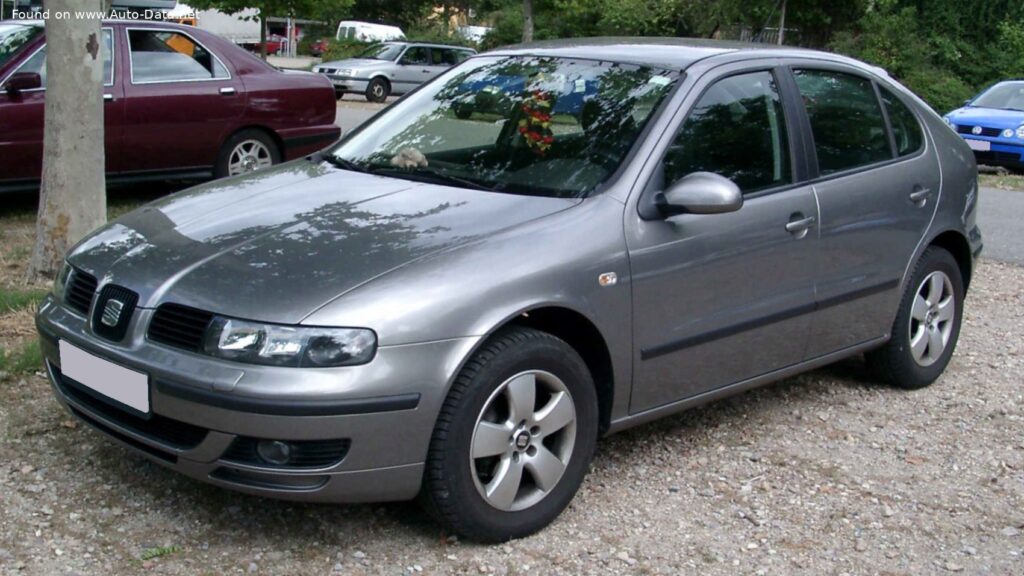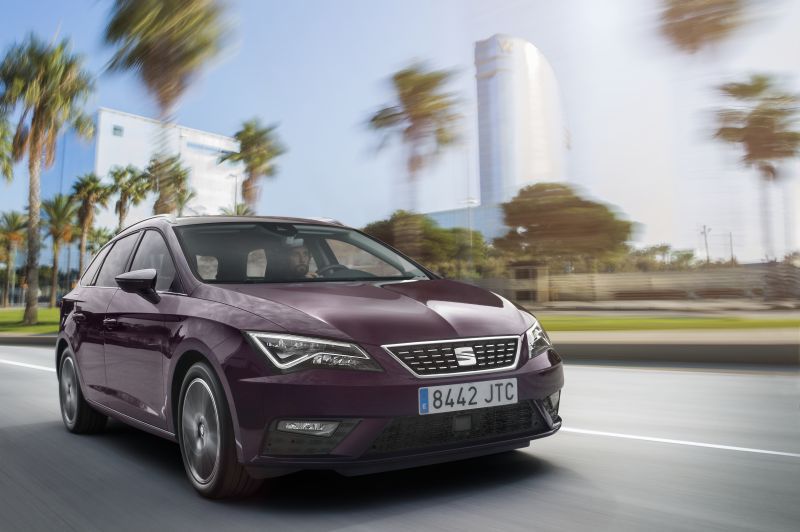
The Seat Leon III ST (facelift 2016) 1.4 TGI (110 Hp) CNG DSG represents a compelling blend of practicality, efficiency, and modern engineering within the European compact segment. As a product of Seat, the Spanish marque under the Volkswagen Group umbrella, this specific iteration of the Leon ST (Station Wagon) was primarily marketed in Europe, where its dual-fuel (gasoline and Compressed Natural Gas – CNG) powertrain offered significant advantages in terms of running costs and environmental impact. Produced between 2016 and 2018, this facelifted third-generation model showcased Seat’s commitment to versatile family transport, combining the sporty aesthetics characteristic of the brand with the utility of a station wagon body style. The TGI designation denotes its advanced bifuel capability, allowing drivers to switch seamlessly between conventional gasoline and more eco-friendly CNG, a feature particularly valued in markets with developed CNG infrastructure.
Engine and Performance: The Heart of the Seat Leon III ST (facelift 2016) 1.4 TGI (110 Hp) CNG DSG
At the core of the Seat Leon III ST (facelift 2016) 1.4 TGI (110 Hp) CNG DSG lies a sophisticated 1.4-liter (1395 cm³ or 85.13 cu. in.) turbocharged inline-four engine. This powertrain, identified by codes like CPWA or CZBA, is a testament to modern downsizing principles, delivering a respectable 110 horsepower between 4800 and 6000 rpm. Its power-per-liter ratio stands at 78.9 Hp/l, showcasing efficient power extraction from its displacement. More significantly for daily driving, the engine produces a robust 200 Nm (approximately 147.51 lb.-ft.) of torque, available across a broad and accessible rev range from 1500 to 3500 rpm. This wide torque band ensures responsive acceleration and flexible performance, whether navigating city streets or cruising on the highway.
The engine’s direct injection system and turbocharger are key enablers of its impressive efficiency and performance. Direct injection precisely meters fuel into the combustion chambers, optimizing efficiency and reducing emissions, while the turbocharger significantly boosts power output without increasing engine size. Power is channeled to the front wheels via a smooth and efficient 7-speed DSG automatic transmission. This dual-clutch gearbox is renowned for its rapid gear changes and contribution to both fuel economy and driving dynamics. The vehicle accelerates from 0 to 60 mph in a calculated 10.5 seconds (0-100 km/h in 11 seconds), reaching a maximum speed of 120.55 mph (194 km/h). These figures position the Leon ST TGI as a competent performer for its segment, prioritizing balanced performance with a strong emphasis on economical operation.
Design and Features: Practicality Meets Spanish Flair
The Seat Leon III ST (facelift 2016), with its station wagon body type, is designed for maximum utility without sacrificing aesthetic appeal. Measuring 179.09 inches (4549 mm) in length, 71.5 inches (1816 mm) in width, and 57.24 inches (1454 mm) in height, it strikes a balance between compact maneuverability and generous interior space. The 103.78-inch (2636 mm) wheelbase provides a stable ride and contributes to a spacious cabin for five occupants across its five doors. The facelift in 2016 brought subtle but effective updates, enhancing its contemporary look with revised lighting signatures, updated grille designs, and potentially new wheel options, keeping the Leon ST competitive in its segment.
Inside, the Leon ST offers a practical and well-appointed environment. The minimum trunk space of 17.02 cu. ft. (482 liters) is ample for family needs, expandable further with the rear seats folded down. This capacity, however, is slightly impacted by the integration of the CNG tanks beneath the cargo floor, a necessary compromise for the dual-fuel system. Standard features for the era would include a comprehensive infotainment system, likely with touchscreen interface, Bluetooth connectivity, and potentially smartphone integration (Apple CarPlay/Android Auto) depending on trim levels. Safety features are robust, including ABS (Anti-lock Braking System) as standard, along with multiple airbags and electronic stability control systems, typical of European compact cars of this vintage. The electric power steering system provides precise control and ease of maneuvering, especially in urban settings, while the suspension setup—McPherson struts with coil springs and an anti-roll bar at the front, and a semi-independent coil spring system at the rear—ensures a comfortable yet engaging ride.
The Eco-Conscious Engineering of the Seat Leon III ST (facelift 2016) 1.4 TGI (110 Hp) CNG DSG
Perhaps the most distinctive aspect of the Seat Leon III ST (facelift 2016) 1.4 TGI (110 Hp) CNG DSG is its advanced dual-fuel capability. Operating primarily on Compressed Natural Gas (CNG), the vehicle seamlessly switches to gasoline when the CNG supply is depleted. This bifuel approach offers significant environmental and economic benefits, particularly in European markets with strong CNG infrastructure and incentives. The combined fuel consumption on gasoline is rated at 5.4 l/100 km, translating to an impressive 43.6 US mpg. When running on CNG, the efficiency is equivalent, consuming 5.4 kg/100 km. These figures underscore the vehicle’s commitment to economical operation.
The environmental credentials are equally compelling. CO2 emissions are significantly lower when operating on CNG, rated at just 96 g/km, compared to 123 g/km on gasoline. This reduction in greenhouse gas emissions, coupled with compliance to the stringent Euro 6 emission standard, makes the Leon ST TGI an environmentally responsible choice. The vehicle carries a 13.21 US gallon (50 liter) gasoline tank alongside a 15 kg CNG cylinder capacity, providing an extended range and flexibility for long journeys. The lower cost of CNG in many European countries, combined with potential tax benefits for low-emission vehicles, makes the TGI model a financially attractive option for eco-conscious drivers and fleets. This focus on alternative fuels highlights Seat’s innovation within the compact segment, offering a practical solution for reducing both running costs and ecological footprint.
Chassis, Drivetrain, and Dimensions
The Leon III ST’s chassis is built upon the Volkswagen Group’s highly versatile MQB platform, known for its modularity and excellent balance of ride comfort and handling dynamics. The drivetrain architecture is front-wheel drive, with the internal combustion engine positioned transversely at the front, driving the front wheels. This configuration is typical for compact vehicles, optimizing interior space and offering predictable handling characteristics.
Suspension components are robust and well-tuned: an independent McPherson strut setup with coil springs and an anti-roll bar at the front provides precise steering and good road holding, while the rear features a semi-independent coil spring suspension, a cost-effective and space-efficient solution for this class of vehicle. Braking is handled by ventilated discs at the front and solid discs at the rear, ensuring confident stopping power, further augmented by the standard ABS. The electric power steering system, a rack and pinion type, offers variable assistance, making parking effortless at low speeds and providing better feedback at higher speeds. The vehicle offers a range of tire sizes from 195/65 R15 up to 225/40 R18, mounted on corresponding wheel rims from 15 to 18 inches, allowing for customization of ride and handling characteristics. Its minimum turning circle of 33.79 feet (10.3 meters) underscores its urban agility.
With a kerb weight of 2967.42 lbs (1346 kg) and a maximum permissible weight of 4188.78 lbs (1900 kg), the Leon ST TGI is a sturdy and capable vehicle. It boasts a maximum load capacity of 1221.36 lbs (554 kg) and can tow a braked trailer of up to 3086.47 lbs (1400 kg), demonstrating its versatility for both passenger and cargo transport.
Technical Specifications
| Brand | Seat |
| Model | Leon |
| Generation | Leon III ST (facelift 2016) |
| Type (Engine) | 1.4 TGI (110 Hp) CNG DSG |
| Start of production | 2016 year |
| End of production | 2018 year |
| Powertrain Architecture | Internal Combustion engine |
| Body type | Station wagon (estate) |
| Seats | 5 |
| Doors | 5 |
| Fuel consumption (economy) – combined | 5.4 l/100 km (43.6 US mpg) |
| Fuel consumption (economy) – combined (CNG) | 5.4 kg/100 km |
| CO2 emissions | 123 g/km |
| CO2 emissions (CNG) | 96 g/km |
| Fuel Type | Petrol / CNG |
| Acceleration 0 – 60 mph | 10.5 sec |
| Maximum speed | 120.55 mph (194 km/h) |
| Emission standard | Euro 6 |
| Power | 110 Hp @ 4800-6000 rpm |
| Power per litre | 78.9 Hp/l |
| Torque | 200 Nm (147.51 lb.-ft.) @ 1500-3500 rpm |
| Engine layout | Front, Transverse |
| Engine Model/Code | CPWA, CZBA |
| Engine displacement | 1395 cm³ (85.13 cu. in.) |
| Number of cylinders | 4 |
| Engine configuration | Inline |
| Cylinder Bore | 74.5 mm (2.93 in.) |
| Piston Stroke | 80 mm (3.15 in.) |
| Compression ratio | 10.5:1 |
| Number of valves per cylinder | 4 |
| Fuel injection system | Direct injection |
| Engine aspiration | Turbocharger |
| Engine oil capacity | 4 l (4.23 US qt) |
| Coolant | 8 l (8.45 US qt) |
| Kerb Weight | 1346 kg (2967.42 lbs) |
| Max. weight | 1900 kg (4188.78 lbs) |
| Max load | 554 kg (1221.36 lbs) |
| Trunk (boot) space – minimum | 482 l (17.02 cu. ft.) |
| Fuel tank capacity | 50 l (13.21 US gal) |
| CNG cylinder capacity | 15 kg |
| Permitted trailer load with brakes (12%) | 1400 kg (3086.47 lbs) |
| Length | 4549 mm (179.09 in.) |
| Width | 1816 mm (71.5 in.) |
| Height | 1454 mm (57.24 in.) |
| Wheelbase | 2636 mm (103.78 in.) |
| Front track | 1534-1549 mm (60.39 – 60.98 in.) |
| Rear (Back) track | 1508-1520 mm (59.37 – 59.84 in.) |
| Minimum turning circle (turning diameter) | 10.3 m (33.79 ft.) |
| Drivetrain Architecture | Front wheel drive |
| Drive wheel | Front wheel drive |
| Number of gears and type of gearbox | 7 gears, automatic transmission DSG |
| Front suspension | Independent, type McPherson with coil spring and anti-roll bar |
| Rear suspension | Semi-independent, coil spring |
| Front brakes | Ventilated discs |
| Rear brakes | Disc |
| Assisting systems | ABS (Anti-lock braking system) |
| Steering type | Steering rack and pinion |
| Power steering | Electric Steering |
| Tires size | 195/65 R15; 205/55 R16; 225/45 R17; 225/40 R18 |
| Wheel rims size | 15; 16; 17; 18 |