The SEAT Leon IV 1.5 TSI (272 Hp) e-Hybrid DSG, launched in July 2024, represents the fourth generation of SEAT’s popular compact hatchback. While SEAT is a Spanish automobile manufacturer, it is a subsidiary of the Volkswagen Group and primarily marketed in Europe. The Leon, in its various iterations, has become a mainstay in the European C-segment, competing with vehicles like the Volkswagen Golf, Ford Focus, and Peugeot 308. This particular variant focuses on combining petrol engine performance with the efficiency and reduced emissions of a plug-in hybrid electric vehicle (PHEV) powertrain, catering to increasingly stringent environmental regulations and consumer demand for fuel-efficient vehicles.
SEAT Leon IV 1.5 TSI e-Hybrid: A Detailed Overview
The Leon IV e-Hybrid distinguishes itself through its sophisticated powertrain and focus on practicality. It’s designed for drivers seeking a balance between sporty performance and everyday usability, offering the flexibility of all-electric driving for shorter commutes and the range of a petrol engine for longer journeys. The “e-Hybrid” designation signifies its plug-in hybrid capability, allowing for external charging of the battery pack. This model is positioned as a premium offering within the Leon range, featuring advanced technology and a refined driving experience.
Engine & Performance
At the heart of the Leon IV 1.5 TSI e-Hybrid lies a 1.5-liter turbocharged four-cylinder petrol engine producing 204 horsepower at 5000-6000 rpm and 250 Nm (184.39 lb.-ft.) of torque between 1500-4000 rpm. This engine is paired with an 116 Hp electric motor integrated between the engine and the seven-speed DSG (Direct-Shift Gearbox) automatic transmission. The combined system output reaches a substantial 272 horsepower and 330 Nm (243.4 lb.-ft.) of torque. This allows for a 0-60 mph (0-96 km/h) acceleration time of approximately 7.3 seconds and a 0-62 mph (0-100 km/h) time of 7.7 seconds, with a maximum speed of 136.7 mph (220 km/h). The powertrain architecture is front-wheel drive, prioritizing efficiency and reducing complexity. The engine features direct fuel injection, a turbocharger with intercooler, and a start & stop system to further optimize fuel consumption. The power-to-weight ratio is a respectable 5.9 kg/Hp, and the torque-to-weight ratio is 4.8 kg/Nm.
Design & Features
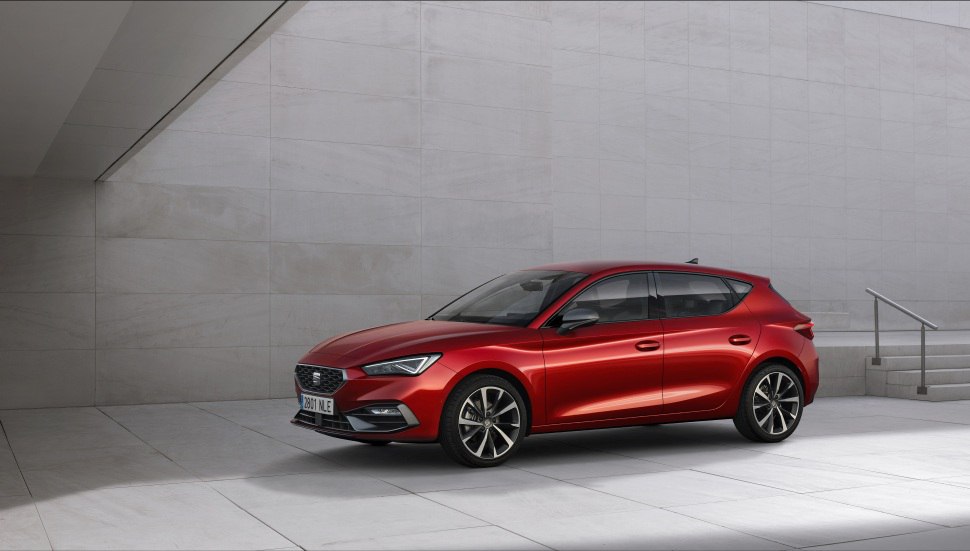
The SEAT Leon IV maintains the hatchback body style, offering five seats and five doors. Its exterior design is characterized by sharp lines, a sporty stance, and a modern aesthetic. The e-Hybrid variant doesn’t significantly deviate from the standard Leon IV in terms of exterior styling, but may include subtle badging to denote its hybrid status. Inside, the Leon IV boasts a contemporary interior with a focus on technology and driver comfort. Key features include a digital instrument cluster, a central touchscreen infotainment system, and advanced driver-assistance systems (ADAS). The trunk space offers 270 liters (9.53 cu. ft.) with the rear seats up and expands to 1187 liters (41.92 cu. ft.) with the seats folded down, providing ample cargo capacity for everyday use. Safety features are comprehensive, including ABS, and a suite of electronic stability control systems. The vehicle’s kerb weight is 1595 kg (3516.37 lbs), with a maximum permissible weight of 2130 kg (4695.85 lbs).
Hybrid System and Electric Range
The Leon IV 1.5 TSI e-Hybrid utilizes a 25.8 kWh gross (19.7 kWh net/usable) lithium-ion battery pack positioned under the floor and beneath the rear seats, minimizing intrusion into the passenger or cargo space. This battery capacity enables an all-electric range of 126-133 km (78.29 – 82.64 miles) according to WLTP testing. Energy consumption is rated at 15.6-16.2 kWh per 100 km (25.11 – 26.07 kWh per 100 miles), equating to approximately 134-129 MPGe. The vehicle supports charging via a standard charging port, allowing for convenient replenishment of the battery at home or public charging stations. The combined fuel consumption is an exceptionally low 0.4 l/100 km (588 US mpg, 706.2 UK mpg, 250 km/l), with CO2 emissions of just 8 g/km (Euro 6 EA emission standard).
Technical Specifications
| Brand | Seat |
| Model | Leon |
| Generation | Leon IV |
| Type (Engine) | 1.5 TSI (272 Hp) e-Hybrid DSG |
| Start of production | July, 2024 |
| Powertrain Architecture | PHEV (Plug-in Hybrid Electric Vehicle) |
| Body type | Hatchback |
| Seats | 5 |
| Doors | 5 |
| Combined fuel consumption (WLTP) | 0.4 l/100 km |
| CO2 emissions (WLTP) | 8 g/km |
| Fuel Type | Petrol / electricity |
| Acceleration 0 – 100 km/h | 7.7 sec |
| Acceleration 0 – 62 mph | 7.7 sec |
| Acceleration 0 – 60 mph | 7.3 sec |
| Maximum speed | 220 km/h (136.7 mph) |
| Gross battery capacity | 25.8 kWh |
| Net (usable) battery capacity | 19.7 kWh |
| Battery technology | Lithium-ion (Li-Ion) |
| All-electric range (WLTP) | 126-133 km (78.29 – 82.64 mi) |
| Average Energy consumption (WLTP) | 15.6-16.2 kWh/100 km |
| Electric motor power | 116 Hp |
| System power | 272 Hp |
| System torque | 330 Nm (243.4 lb.-ft.) |
| Engine Power | 204 Hp @ 5000-6000 rpm |
| Engine Torque | 250 Nm @ 1500-4000 rpm (184.39 lb.-ft.) |
| Engine displacement | 1498 cm3 (91.41 cu. in.) |
| Kerb Weight | 1595 kg (3516.37 lbs) |
| Max. weight | 2130 kg (4695.85 lbs) |
| Trunk (boot) space – minimum | 270 l (9.53 cu. ft.) |
| Trunk (boot) space – maximum | 1187 l (41.92 cu. ft.) |
| Fuel tank capacity | 40 l (10.57 US gal | 8.8 UK gal) |
| Length | 4368 mm (171.97 in.) |
| Width | 1799 mm (70.83 in.) |
| Height | 1460 mm (57.48 in.) |
| Wheelbase | 2682 mm (105.59 in.) |
| Number of gears and type of gearbox | 6 gears, automatic transmission DSG |
The SEAT Leon IV 1.5 TSI e-Hybrid DSG represents a compelling option for buyers seeking a practical, efficient, and technologically advanced compact hatchback. Its plug-in hybrid powertrain delivers a blend of performance and fuel economy, making it well-suited for both urban and long-distance driving.