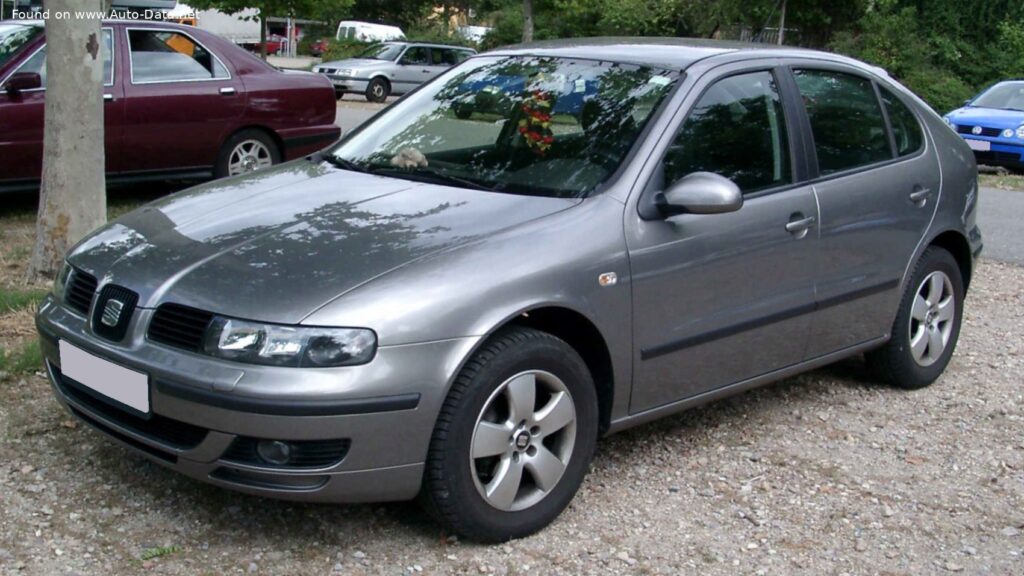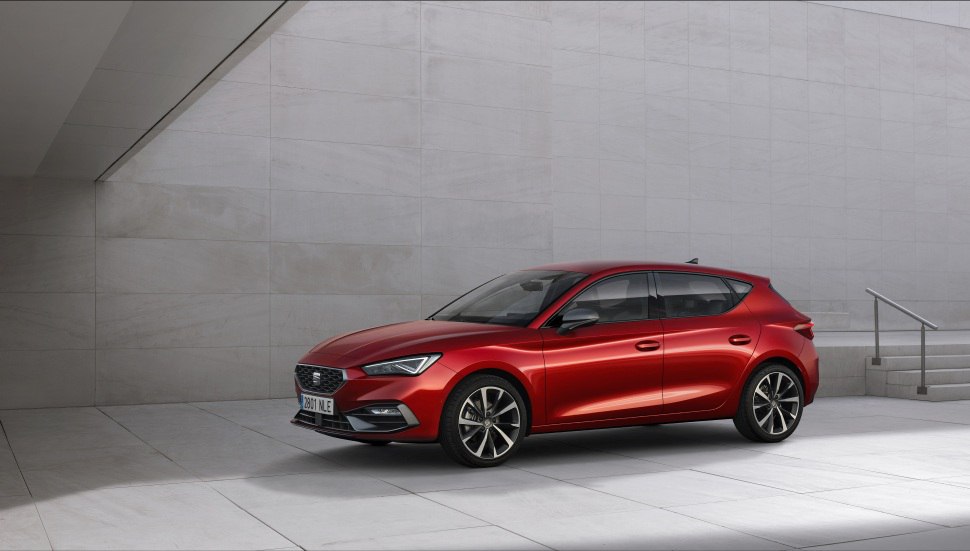
The SEAT Leon IV 2.0 TDI (150 Hp) DSG, launched in 2020, represents the fourth generation of SEAT’s popular compact hatchback. While SEAT is a Spanish automobile manufacturer, it operates as part of the Volkswagen Group and is particularly prominent in the European market. The Leon, in its various iterations, has been a key competitor in the C-segment, offering a blend of practicality, style, and value. This fourth generation builds upon that foundation with a focus on modern technology, improved efficiency, and a more refined driving experience. The 2.0 TDI model, equipped with a dual-clutch gearbox (DSG), caters to buyers seeking a balance between performance and fuel economy in a diesel-powered package.
SEAT Leon IV 2.0 TDI: A Detailed Overview
The Leon IV marked a significant step forward for SEAT, incorporating a new platform, updated styling, and a range of advanced driver-assistance systems. The 2.0 TDI variant specifically targets drivers who prioritize fuel efficiency and torque for everyday driving and longer journeys. It’s a vehicle designed for the practicalities of European roads, where diesel engines remain popular due to their economy and range, but increasingly incorporating technologies to meet stringent emissions standards. While not directly sold in the United States, understanding the Leon IV provides insight into Volkswagen Group’s broader strategy for the compact car segment globally.
Engine & Performance
At the heart of the SEAT Leon IV 2.0 TDI (150 Hp) DSG lies a 2.0-liter inline four-cylinder diesel engine. This engine produces 150 horsepower at 3,000-4,200 rpm and a substantial 360 Nm (265.52 lb.-ft.) of torque between 1,700 and 2,750 rpm. The turbocharger and intercooler work in concert to optimize power delivery and efficiency. The engine’s transverse mounting and front-wheel-drive configuration are typical for vehicles in this class. Power is transmitted to the front wheels via a sophisticated 7-speed dual-clutch transmission (DSG), which provides quick and seamless gear changes. This combination allows for a 0-60 mph (0-96 km/h) acceleration time of approximately 8.2 seconds and a top speed of 135.46 mph (218 km/h). The engine adheres to the EURO 6 DG emission standard, incorporating a particulate filter and Start & Stop system to minimize environmental impact. The engine displaces 1968 cm³ (120.09 cu. in.) and boasts a compression ratio of 16:1.
Design & Features
The SEAT Leon IV adopts a sleek and modern hatchback body style, characterized by sharp lines and a sporty stance. It’s a five-door vehicle with seating for five passengers. The interior is designed with a focus on practicality and technology, featuring a digital cockpit and a central infotainment touchscreen. Key features include advanced driver-assistance systems such as ABS (Anti-lock Braking System) and a comprehensive suite of safety technologies. The vehicle’s dimensions are 4368 mm (171.97 in) in length, 1800 mm (70.87 in) in width, and 1456 mm (57.32 in) in height, with a wheelbase of 2686 mm (105.75 in). The trunk offers a versatile 380 liters (13.42 cu. ft.) of space with the rear seats up, expanding to 1301 liters (45.94 cu. ft.) when folded down. The kerb weight of the vehicle is 1371 kg (3022.54 lbs), and it has a maximum permissible weight of 1980 kg (4365.15 lbs).
Technical Specifications
| Brand | Seat |
| Model | Leon |
| Generation | Leon IV |
| Type (Engine) | 2.0 TDI (150 Hp) DSG |
| Start of production | 2020 |
| Powertrain Architecture | Internal Combustion engine |
| Body type | Hatchback |
| Seats | 5 |
| Doors | 5 |
| Combined fuel consumption (WLTP) | 4.3-5.0 l/100 km (54.7 – 47 US mpg, 65.7 – 56.5 UK mpg, 23.3 – 20 km/l) |
| CO2 emissions (WLTP) | 114 – 132 g/km |
| Fuel Type | Diesel |
| Acceleration 0 – 100 km/h | 8.6 sec |
| Acceleration 0 – 62 mph | 8.6 sec |
| Acceleration 0 – 60 mph | 8.2 sec |
| Maximum speed | 218 km/h (135.46 mph) |
| Emission standard | EURO 6 DG |
| Weight-to-power ratio | 9.1 kg/Hp |
| Weight-to-torque ratio | 3.8 kg/Nm |
| Power | 150 Hp @ 3000-4200 rpm |
| Torque | 360 Nm @ 1700-2750 rpm (265.52 lb.-ft. @ 1700-2750 rpm) |
| Engine layout | Front, Transverse |
| Engine Model/Code | DSTB |
| Engine displacement | 1968 cm3 (120.09 cu. in.) |
| Number of cylinders | 4 |
| Engine configuration | Inline |
| Cylinder Bore | 81 mm (3.19 in.) |
| Piston Stroke | 95.5 mm (3.76 in.) |
| Compression ratio | 16:1 |
| Number of valves per cylinder | 4 |
| Fuel injection system | Diesel Commonrail |
| Engine aspiration | Turbocharger, Intercooler |
| Engine oil capacity | 5.5 l (5.81 US qt | 4.84 UK qt) |
| Coolant | 8 l (8.45 US qt | 7.04 UK qt) |
| Kerb Weight | 1371 kg (3022.54 lbs.) |
| Max. weight | 1980 kg (4365.15 lbs.) |
| Max load | 609 kg (1342.62 lbs.) |
| Trunk (boot) space – minimum | 380 l (13.42 cu. ft.) |
| Trunk (boot) space – maximum | 1301 l (45.94 cu. ft.) |
| Fuel tank capacity | 50 l (13.21 US gal | 11 UK gal) |
| Length | 4368 mm (171.97 in.) |
| Width | 1800 mm (70.87 in.) |
| Height | 1456 mm (57.32 in.) |
| Wheelbase | 2686 mm (105.75 in.) |
| Front track | 1545 mm (60.83 in.) |
| Rear (Back) track | 1516 mm (59.69 in.) |
| Minimum turning circle (turning diameter) | 10.5 m (34.45 ft.) |
| Drive wheel | Front wheel drive |
| Number of gears and type of gearbox | 7 gears, automatic transmission DSG |
| Front suspension | Independent, type McPherson with coil spring and anti-roll bar |
| Rear suspension | Independent multi-link suspension |
| Front brakes | Ventilated discs, 288 mm |
| Rear brakes | Disc, 272 mm |
| Tires size | 195/65 R15 91H; 205/55 R16 91V; 225/45 R17 91W; 225/40 R18 92Y |
| Wheel rims size | 6J x 15; 6; 5J x 16; 7J x 16; 7; 5J x 17; 7; 5J x 18 |