
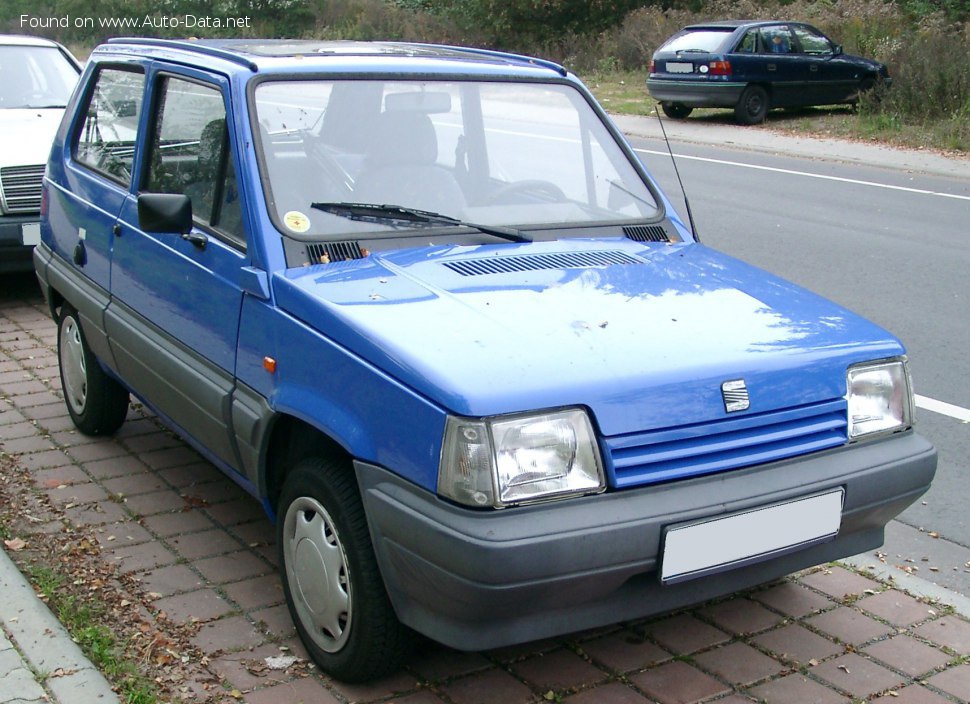
The SEAT Marbella is a small, city car produced by the Spanish automobile manufacturer SEAT between 1986 and 1998. Derived from the Fiat Panda, itself designed by Giorgetto Giugiaro, the Marbella represented SEAT’s entry into the burgeoning microcar segment in Europe. Crucially, it was one of the last models developed under SEAT’s independent ownership before Volkswagen Group took control in 1986. The Marbella, particularly the 0.9 CAT variant introduced in 1990, became a popular and affordable option for urban drivers, especially in Spain and Portugal, where it filled a niche for economical and practical transportation. While never officially sold in the United States, understanding the Marbella provides insight into the European automotive landscape of the late 20th century and the evolution of SEAT as a brand.
SEAT Marbella: A European City Car
The Marbella’s development stemmed from SEAT’s need for a modern, small car to replace the aging SEAT 600 and 127. Licensing the Fiat Panda design proved a cost-effective solution, allowing SEAT to quickly enter the market. The Marbella underwent several revisions during its production run, with the 0.9 CAT model representing a significant upgrade in terms of emissions control and refinement. The “CAT” designation refers to the catalytic converter fitted to the engine, a response to increasingly stringent European environmental regulations. The Marbella’s simplicity, low running costs, and compact size made it a favorite among first-time car buyers and those seeking a practical second vehicle for city use.
Engine & Performance
The 1990-1996 SEAT Marbella 0.9 CAT is powered by a naturally aspirated, 0.9-liter inline-four cylinder gasoline engine, designated the 09 NCB. This engine produces 40 horsepower. While modest by modern standards, this output was sufficient for the Marbella’s lightweight construction and intended purpose. The engine is characterized by its simplicity and durability, prioritizing fuel efficiency over outright performance. The Marbella’s drivetrain is a front-engine, front-wheel-drive configuration, typical for cars in its class. The gearbox is a four-speed manual transmission, offering a direct and engaging driving experience. Acceleration is leisurely, with a focus on providing adequate power for navigating urban streets and moderate highway speeds. The Marbella was not designed for high-speed cruising or long-distance travel; its strengths lie in its maneuverability and economy. The engine’s relatively low compression ratio and simple fuel delivery system contribute to its reliability and ease of maintenance.
Design & Features
The SEAT Marbella is a three-door hatchback, offering practical access to the rear seats. Its boxy, utilitarian design reflects the functional priorities of the time. The exterior styling is simple and unadorned, with a focus on maximizing interior space within a small footprint. The Marbella’s compact dimensions make it easy to park and maneuver in congested urban environments. Inside, the Marbella offers seating for five passengers, although rear legroom is limited. The interior trim is basic but functional, with durable materials designed to withstand everyday use. Safety features were relatively limited by the standards of the early 1990s, consisting primarily of seatbelts and a robust chassis construction. The Marbella’s large windows provide good visibility, enhancing driver awareness. The hatchback configuration allows for a reasonably sized cargo area, which can be expanded by folding down the rear seats. The Marbella’s design prioritized practicality and affordability, making it an accessible option for a wide range of buyers. The car’s simplicity also meant that repairs were relatively straightforward and inexpensive, contributing to its long-term ownership appeal.
The Marbella’s appeal wasn’t based on luxury or performance, but on its sheer usability. It was a car designed to get people from point A to point B reliably and economically. Its small size and nimble handling made it a favorite in crowded city centers, and its low running costs made it an attractive option for budget-conscious drivers. The Marbella’s enduring popularity in Spain and Portugal is a testament to its practicality and the needs of the local market.
Technical Specifications
| Brand | SEAT |
| Model | Marbella |
| Generation | Marbella (28) |
| Type (Engine) | 0.9 CAT (40 Hp) |
| Start of production | 1990 |
| End of production | 1996 |
| Powertrain Architecture | Internal Combustion engine |
| Body type | Hatchback |
| Seats | 5 |
| Doors | 3 |
| Fuel Type | Petrol (Gasoline) |
| Power | 40 Hp |
| Engine Model/Code | 09 NCB |
| Engine aspiration | Naturally aspirated engine |
| Engine oil capacity | 3.6 l (3.8 US qt | 3.17 UK qt) |
| Coolant capacity | 5.2 l (5.49 US qt | 4.58 UK qt) |
| Fuel tank capacity | 35 l (9.25 US gal | 7.7 UK gal) |
The SEAT Marbella, particularly the 0.9 CAT version, represents a significant chapter in the history of Spanish automotive manufacturing. It was a car born out of necessity, designed to provide affordable and practical transportation to a growing segment of the population. While it may not have been a technological marvel, its simplicity, reliability, and low running costs ensured its success in the European market. The Marbella’s legacy continues to this day, as a reminder of a time when cars were valued for their functionality and affordability rather than their extravagance and complexity.
