
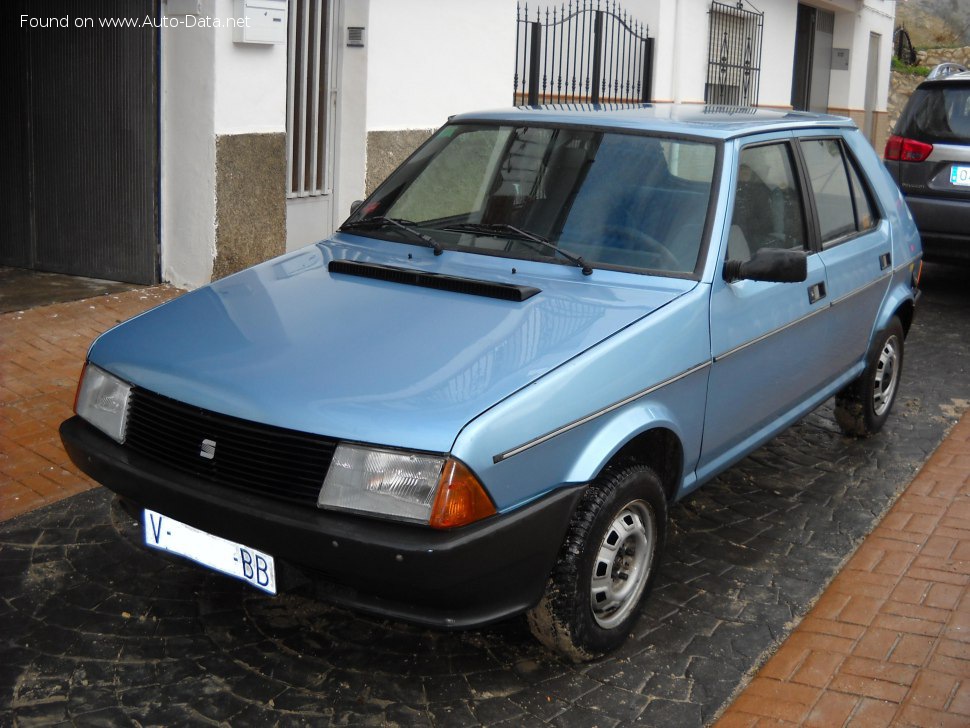
The SEAT Ronda is a small, front-wheel-drive hatchback that was produced by the Spanish automobile manufacturer SEAT between 1982 and 1986. Positioned as an affordable and practical family car, the Ronda was a significant model for SEAT, representing a move towards more modern designs and engineering. It was primarily sold in European markets, particularly Spain, and played a crucial role in SEAT’s domestic success during a period of economic and automotive change. The Ronda was based on the Fiat Ritmo, a collaboration stemming from SEAT’s historical ties with the Italian automaker, Fiat. While not officially sold in the United States, understanding the Ronda provides insight into the European automotive landscape of the early 1980s and SEAT’s development as a brand.
The SEAT Ronda: A European Compact
The Ronda emerged during a time when European manufacturers were increasingly focused on fuel efficiency and practicality in response to rising oil prices and changing consumer demands. SEAT, at the time a state-owned company, needed to modernize its lineup and offer vehicles that could compete with imports from Germany, France, and the United Kingdom. The Ronda aimed to fill the gap between smaller city cars and larger family sedans, offering a versatile and economical option for a broad range of buyers. Its design, while influenced by the Fiat Ritmo, incorporated distinct SEAT styling cues, establishing a visual identity for the Spanish brand.
Origins and Collaboration with Fiat
SEAT’s relationship with Fiat dates back to the 1950s, with SEAT initially manufacturing Fiat models under license. This collaboration continued with the Ronda, which utilized the Ritmo’s platform and mechanical components. However, SEAT made significant modifications to the Ritmo’s design, resulting in a car that was visually distinct and tailored to the preferences of European consumers. This partnership allowed SEAT to benefit from Fiat’s engineering expertise while maintaining a degree of independence in styling and marketing.
Engine & Performance
The SEAT Ronda 1.4, the focus of this article, was equipped with a naturally aspirated 1.4-liter gasoline engine producing 73 horsepower. This engine, while not particularly powerful by modern standards, was considered adequate for the Ronda’s size and weight. It was designed for fuel efficiency and reliability, prioritizing practicality over outright performance. The engine was paired with a four or five-speed manual transmission, delivering power to the front wheels. Acceleration was modest, with a 0 to 60 mph time estimated to be around 13-15 seconds, but the Ronda was not intended to be a sports car. Its strength lay in its ability to provide comfortable and economical transportation for everyday use.
The Ronda’s suspension system consisted of independent front suspension with MacPherson struts and a torsion beam rear axle. This setup provided a reasonable balance between ride comfort and handling, making the Ronda suitable for both city driving and longer journeys. Braking was accomplished with disc brakes on the front wheels and drum brakes on the rear, offering adequate stopping power for the vehicle’s weight and performance capabilities. The engine’s simplicity and robust construction contributed to its reliability, making the Ronda a relatively low-maintenance vehicle.
Design & Features
The SEAT Ronda featured a five-door hatchback body style, offering a practical and versatile layout. The design was characterized by clean lines and a relatively boxy shape, typical of European hatchbacks from the early 1980s. The interior was functional and straightforward, with seating for five passengers. The Ronda’s interior materials were durable and designed to withstand the rigors of daily use. While not luxurious, the cabin offered a comfortable and practical environment for both driver and passengers.
Standard features on the Ronda 1.4 included basic instrumentation, such as a speedometer, fuel gauge, and temperature gauge. Other features, depending on the trim level, could include a basic radio, heated rear window, and cloth upholstery. Safety features were relatively limited by the standards of the time, consisting primarily of seat belts. The Ronda’s focus was on providing affordable and reliable transportation, and as such, it did not offer the advanced features found on more expensive vehicles. The hatchback configuration provided a good level of cargo space, making the Ronda suitable for families and those who needed to transport larger items.
Technical Specifications
| Brand | Seat |
| Model | Ronda |
| Generation | Ronda (022A) |
| Type (Engine) | 1.4 (73 Hp) |
| Start of production | 1982 |
| End of production | 1986 |
| Powertrain Architecture | Internal Combustion engine |
| Body type | Hatchback |
| Seats | 5 |
| Doors | 5 |
| Fuel Type | Petrol (Gasoline) |
| Power | 73 Hp |
| Engine aspiration | Naturally aspirated engine |
| Fuel tank capacity | 50 l |
| Fuel tank capacity (US gal) | 13.21 US gal |
| Fuel tank capacity (UK gal) | 11 UK gal |
The SEAT Ronda, while not a groundbreaking vehicle, played an important role in the development of the Spanish automotive industry. It provided a modern and affordable option for European buyers, and helped to establish SEAT as a credible manufacturer in its own right. The Ronda’s legacy lies in its practicality, reliability, and its contribution to SEAT’s growth and evolution as a brand. Although it never reached the American market, the Ronda remains a significant example of European automotive engineering from the early 1980s, reflecting the priorities of the era – fuel efficiency, affordability, and functional design.
