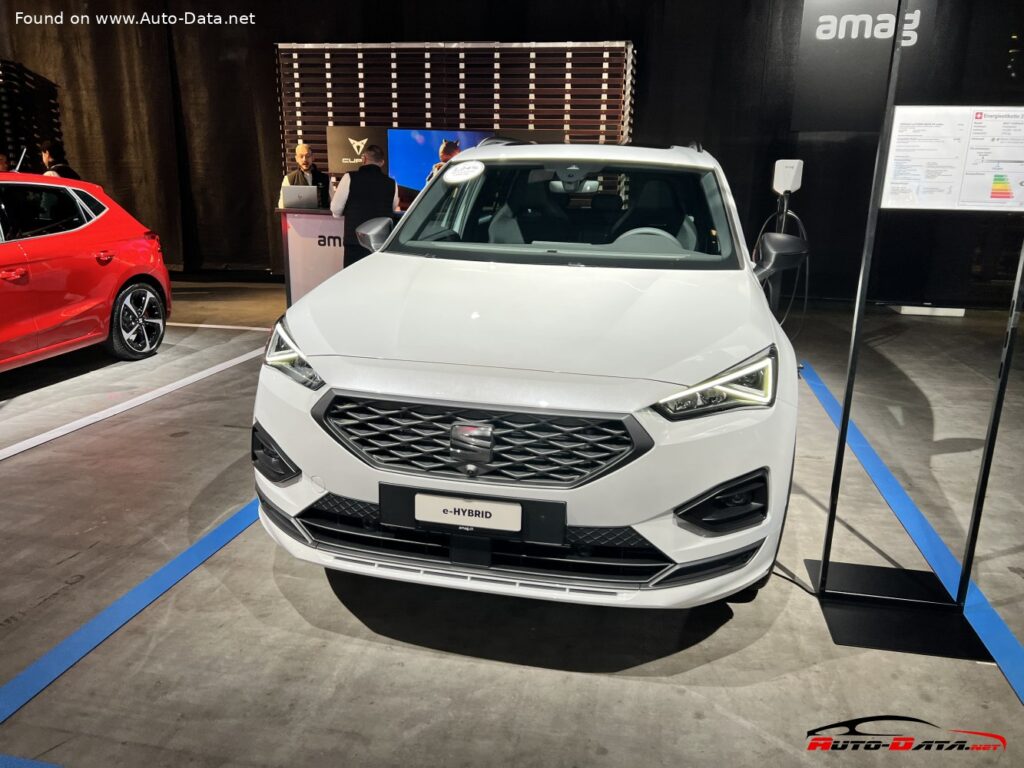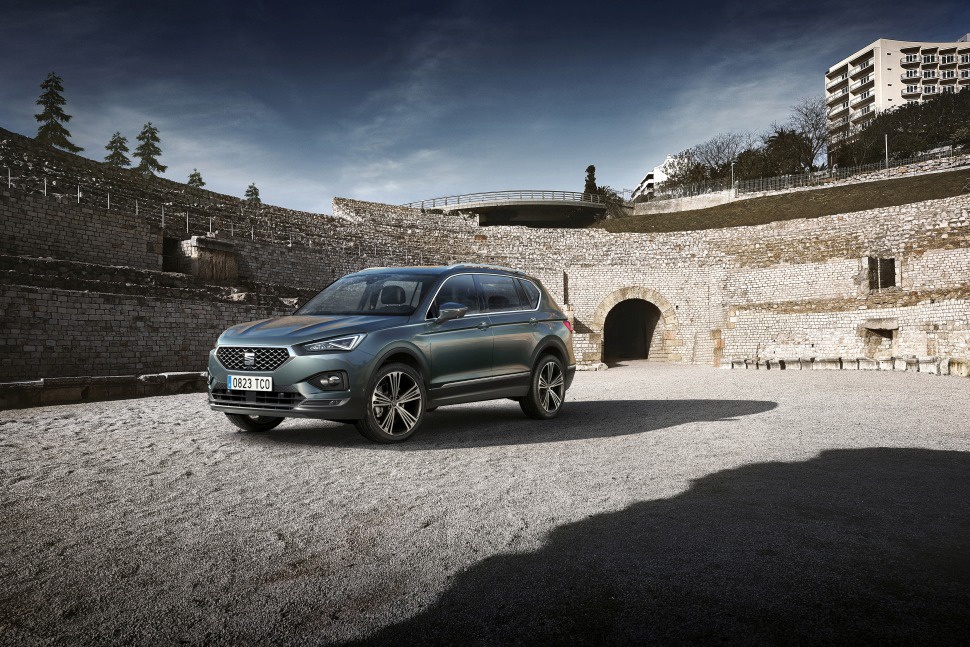
The SEAT Tarraco is a mid-size crossover SUV manufactured by the Spanish automobile manufacturer SEAT from 2018 to 2020. Positioned as the brand’s flagship SUV, the Tarraco was designed to compete in the highly popular family SUV segment, primarily within the European market. It’s notable as SEAT’s largest SUV, offering seven-passenger seating as standard. The Tarraco shares its platform with the Skoda Kodiaq and Volkswagen Tiguan Allspace, benefiting from the Volkswagen Group’s modular transverse matrix (MQB) architecture. While not officially sold in the United States, understanding the Tarraco provides insight into the evolving European SUV landscape and SEAT’s ambitions within it.
SEAT Tarraco 2.0 TDI (150 Hp) 7 Seat: Overview
The Tarraco 2.0 TDI (150 Hp) 7 Seat represents a key variant within the Tarraco lineup. It combines a fuel-efficient diesel engine with the practicality of seven-seat accommodation. This model aimed to appeal to families seeking a spacious and versatile vehicle for both daily commutes and longer journeys. The Tarraco’s design emphasizes a robust and modern aesthetic, while its interior focuses on comfort, technology, and safety features. The 2.0 TDI engine was a popular choice in Europe due to its balance of performance and economy, making the Tarraco a competitive option in its class.
Engine & Performance
The Tarraco 2.0 TDI (150 Hp) is powered by a 2.0-liter inline four-cylinder diesel engine, designated DFGA. This engine produces 150 horsepower at 3,500-4,000 rpm and 340 Nm (250.77 lb.-ft.) of torque between 1,750 and 3,000 rpm. The engine features a turbocharger and intercooler to enhance performance and efficiency. Power is delivered to the front wheels via a six-speed manual transmission. The Tarraco 2.0 TDI achieves a 0-100 km/h (0-62 mph) acceleration time of 9.8 seconds, and a 0-60 mph time of 9.3 seconds. Its maximum speed is electronically limited to 202 km/h (125.52 mph). The engine’s power-to-weight ratio is 11.1 kg/Hp, and the torque-to-weight ratio is 4.9 kg/Nm. Fuel consumption figures, measured using the WLTP cycle, range from 5.7 to 6.4 liters per 100 kilometers (41.3 to 36.8 US mpg), with CO2 emissions between 148 and 167 g/km.
Design & Features
The SEAT Tarraco is a five-door SUV with a distinctively modern design. Its exterior features sharp lines, a prominent front grille, and full LED headlights. The vehicle’s dimensions are 4,735 mm (186.42 in) in length, 1,839 mm (72.4 in) in width, and 1,674 mm (65.91 in) in height. The wheelbase measures 2,790 mm (109.84 in), providing ample interior space. A key feature of the Tarraco is its standard seven-seat configuration, offering flexibility for families. The interior is well-appointed, with a focus on practicality and comfort. Standard features include a touchscreen infotainment system, climate control, and a range of driver-assistance systems. Safety features include ABS, electronic stability control, and multiple airbags. The Tarraco also incorporates a Start & Stop system and a particulate filter to reduce emissions, meeting Euro 6 emission standards. Trunk space ranges from 230 liters (8.12 cu. ft.) with all seats in use to 700 liters (24.72 cu. ft.) with the third-row seats folded down.
Technical Specifications
| Brand | Seat |
| Model | Tarraco |
| Type (Engine) | 2.0 TDI (150 Hp) 7 Seat |
| Start of production | December, 2018 |
| End of production | November, 2020 |
| Powertrain Architecture | Internal Combustion engine |
| Body type | SUV |
| Seats | 7 |
| Doors | 5 |
| Combined fuel consumption (WLTP) | 5.7 – 6.4 l/100 km (41.3 – 36.8 US mpg) |
| CO2 emissions (WLTP) | 148 – 167 g/km |
| Fuel consumption (economy) – urban | 5.8 l/100 km (40.6 US mpg) |
| Fuel consumption (economy) – extra urban | 4.7 l/100 km (50 US mpg) |
| Fuel consumption (economy) – combined | 4.9 l/100 km (48 US mpg) |
| CO2 emissions | 129 g/km |
| Fuel Type | Diesel |
| Acceleration 0 – 100 km/h | 9.8 sec |
| Acceleration 0 – 62 mph | 9.8 sec |
| Acceleration 0 – 60 mph | 9.3 sec |
| Maximum speed | 202 km/h (125.52 mph) |
| Emission standard | Euro 6 |
| Weight-to-power ratio | 11.1 kg/Hp |
| Weight-to-torque ratio | 4.9 kg/Nm |
| Power | 150 Hp @ 3500-4000 rpm |
| Torque | 340 Nm @ 1750-3000 rpm (250.77 lb.-ft.) |
| Engine layout | Front, Transverse |
| Engine Model/Code | DFGA |
| Engine displacement | 1968 cm3 (120.09 cu. in.) |
| Number of cylinders | 4 |
| Engine configuration | Inline |
| Cylinder Bore | 81 mm (3.19 in.) |
| Piston Stroke | 95.5 mm (3.76 in.) |
| Compression ratio | 16.2:1 |
| Number of valves per cylinder | 4 |
| Fuel injection system | Diesel Commonrail |
| Engine aspiration | Turbocharger, Intercooler |
| Engine oil capacity | 5.3 l (5.6 US qt | 4.66 UK qt) |
| Coolant | 8 l (8.45 US qt | 7.04 UK qt) |
| Kerb Weight | 1660 kg (3659.67 lbs.) |
| Max. weight | 2410 kg (5313.14 lbs.) |
| Max load | 750 kg (1653.47 lbs.) |
| Trunk (boot) space – minimum | 230 l (8.12 cu. ft.) |
| Trunk (boot) space – maximum | 700 l (24.72 cu. ft.) |
| Fuel tank capacity | 58 l (15.32 US gal | 12.76 UK gal) |
| Permitted trailer load with brakes (8%) | 2200 kg (4850.17 lbs.) |
| Permitted trailer load with brakes (12%) | 2000 kg (4409.25 lbs.) |
| Permitted trailer load without brakes | 750 kg (1653.47 lbs.) |
| Length | 4735 mm (186.42 in.) |
| Width | 1839 mm (72.4 in.) |
| Width including mirrors | 2118 mm (83.39 in.) |
| Height | 1674 mm (65.91 in.) |
| Wheelbase | 2790 mm (109.84 in.) |
| Front track | 1585 mm (62.4 in.) |
| Rear (Back) track | 1574 mm (61.97 in.) |
| Ride height (ground clearance) | 192 mm (7.56 in.) |
| Minimum turning circle (turning diameter) | 11.9 m (39.04 ft.) |
| Number of gears and type of gearbox | 6 gears, manual transmission |