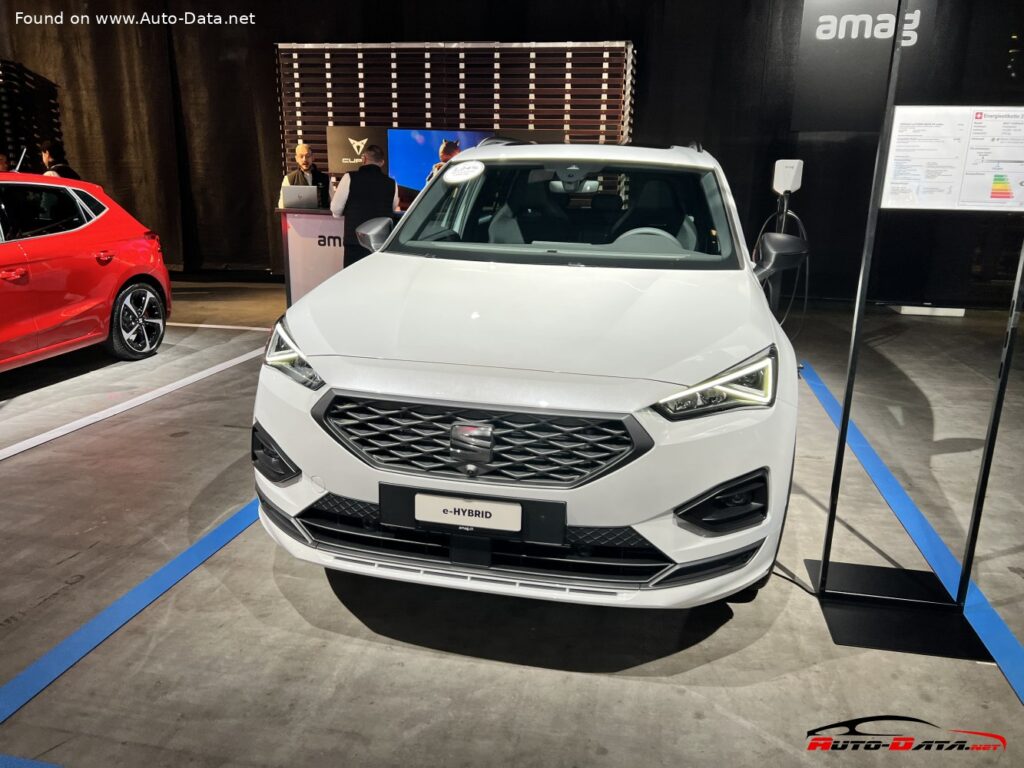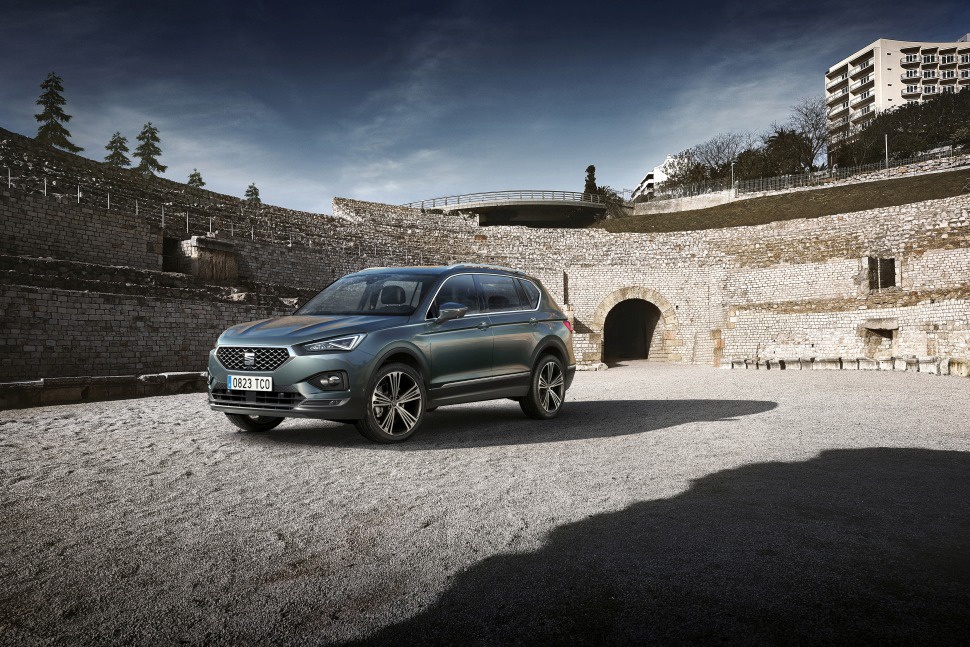
The SEAT Tarraco is a mid-size crossover SUV manufactured by the Spanish automobile manufacturer SEAT, a subsidiary of the Volkswagen Group. Introduced in 2018 as SEAT’s flagship SUV, the Tarraco aimed to compete in the popular European market segment dominated by vehicles like the Nissan X-Trail, Peugeot 5008, and Hyundai Santa Fe. While not officially sold in the United States, understanding the Tarraco provides insight into Volkswagen Group’s broader SUV strategy and the features demanded by European consumers. Production of the 2.0 TDI (150 Hp) DSG variant ran from November 2020 to June 2024, representing a key engine and transmission combination within the Tarraco lineup.
SEAT Tarraco 2.0 TDI (150 Hp) DSG: Overview
The Tarraco, named after a city in Catalonia, Spain, was designed to offer a spacious and practical SUV with a focus on family-oriented features. The 2.0 TDI (150 Hp) DSG model specifically targeted buyers seeking a balance between fuel efficiency, performance, and refinement. It utilizes a turbocharged diesel engine paired with a dual-clutch gearbox (DSG) for smooth and efficient power delivery. The Tarraco is a five-seater SUV, prioritizing passenger comfort and cargo capacity over optional third-row seating found in some competitors.
Engine & Performance
The heart of the Tarraco 2.0 TDI (150 Hp) DSG is a 2.0-liter inline-four cylinder diesel engine. This engine produces 150 horsepower at 3,000-4,200 rpm and 360 Nm (265.52 lb.-ft.) of torque between 1,600-2,750 rpm. The engine features a turbocharger and intercooler to enhance performance and efficiency. The engine’s transverse mounting and commonrail direct fuel injection contribute to its responsiveness and relatively low emissions. Paired with the seven-speed dual-clutch DSG transmission, the Tarraco achieves a 0-62 mph (0-100 km/h) acceleration time of 10.1 seconds and a top speed of 196 km/h (121.79 mph). Auto-Data.net calculates a 0-60 mph time of 9.6 seconds. The weight-to-power ratio is 11 kg/Hp, and the weight-to-torque ratio is 4.6 kg/Nm, indicating a reasonable balance between weight and performance.
Design & Features
The SEAT Tarraco boasts a contemporary SUV design, characterized by sharp lines, a prominent front grille, and full LED headlights. Its body style is a traditional five-door SUV, offering easy access for passengers and cargo. The interior is designed with practicality and comfort in mind, featuring high-quality materials and a user-friendly infotainment system. Standard features typically included a touchscreen display, smartphone integration (Apple CarPlay and Android Auto), and a range of driver-assistance systems. Safety features were a key focus, with the Tarraco equipped with ABS, electronic stability control, and multiple airbags. The Tarraco’s spacious interior offers 760 liters (26.84 cu. ft.) of trunk space with the rear seats up, expanding to a substantial volume when the seats are folded down. The vehicle’s dimensions – 4735 mm (186.42 in.) in length, 1839 mm (72.4 in.) in width, and 1674 mm (65.91 in.) in height – position it firmly within the mid-size SUV category.
Technical Specifications
| Brand | Seat |
| Model | Tarraco |
| Generation | Tarraco |
| Type (Engine) | 2.0 TDI (150 Hp) DSG |
| Start of production | November, 2020 |
| End of production | June, 2024 |
| Powertrain Architecture | Internal Combustion engine |
| Body type | SUV |
| Seats | 5 |
| Doors | 5 |
| Fuel Type | Diesel |
| Acceleration 0 – 100 km/h | 10.1 sec |
| Acceleration 0 – 62 mph | 10.1 sec |
| Acceleration 0 – 60 mph | 9.6 sec |
| Maximum speed | 196 km/h (121.79 mph) |
| Emission standard | Euro 6 |
| Weight-to-power ratio | 11 kg/Hp |
| Weight-to-torque ratio | 4.6 kg/Nm |
| Power | 150 Hp @ 3000-4200 rpm |
| Power per litre | 76.2 Hp/l |
| Torque | 360 Nm @ 1600-2750 rpm (265.52 lb.-ft. @ 1600-2750 rpm) |
| Engine layout | Front, Transverse |
| Engine Model/Code | DTSB |
| Engine displacement | 1968 cm3 (120.09 cu. in.) |
| Number of cylinders | 4 |
| Engine configuration | Inline |
| Cylinder Bore | 81 mm (3.19 in.) |
| Piston Stroke | 95.5 mm (3.76 in.) |
| Compression ratio | 16:1 |
| Number of valves per cylinder | 4 |
| Fuel injection system | Diesel Commonrail |
| Engine aspiration | Turbocharger, Intercooler |
| Engine oil capacity | 5.5 l (5.81 US qt | 4.84 UK qt) |
| Coolant | 8 l (8.45 US qt | 7.04 UK qt) |
| Kerb Weight | 1653 kg (3644.24 lbs.) |
| Max. weight | 2270 kg (5004.49 lbs.) |
| Max load | 617 kg (1360.25 lbs.) |
| Trunk (boot) space – minimum | 760 l (26.84 cu. ft.) |
| Fuel tank capacity | 58 l (15.32 US gal | 12.76 UK gal) |
| Permitted trailer load with brakes (8%) | 2200 kg (4850.17 lbs.) |
| Permitted trailer load with brakes (12%) | 2000 kg (4409.25 lbs.) |
| Permitted trailer load without brakes | 750 kg (1653.47 lbs.) |
| Length | 4735 mm (186.42 in.) |
| Width | 1839 mm (72.4 in.) |
| Height | 1674 mm (65.91 in.) |
| Wheelbase | 2790 mm (109.84 in.) |
| Front track | 1585 mm (62.4 in.) |
| Rear (Back) track | 1574 mm (61.97 in.) |
| Front overhang | 926 mm (36.46 in.) |
| Rear overhang | 1019 mm (40.12 in.) |
| Minimum turning circle (turning diameter) | 11.9 m (39.04 ft.) |
| Drivetrain Architecture | The Internal combustion engine (ICE) drives the front wheels of the vehicle. |
| Drive wheel | Front wheel drive |
| Number of gears and type of gearbox | 7 gears, automatic transmission DSG |
| Front suspension | Independent type McPherson |
| Rear suspension | Independent multi-link suspension |
| Front brakes | Ventilated discs, 314×30 mm |
| Rear brakes | Disc, 300×12 mm |
| Assisting systems | ABS (Anti-lock braking system) |
| Steering type | Steering rack and pinion |
| Power steering | Electric Steering |
| Tires size | 215/65 R17 99V; 235/55 R18 100V; 235/50 R19 99V; 255/45 R19 100V; 235/45 R20 100V; 255/40 R20 101V |
| Wheel rims size | 7J x 17; 7J x 18; 7J x 19; 8.5J x 19; 8J x 20; 8.5J x 20 |
The SEAT Tarraco 2.0 TDI (150 Hp) DSG represented a compelling offering in the European mid-size SUV market, combining practicality, efficiency, and a comfortable driving experience. While not available in the US, it exemplifies the features and technologies that define the modern SUV segment in Europe.