
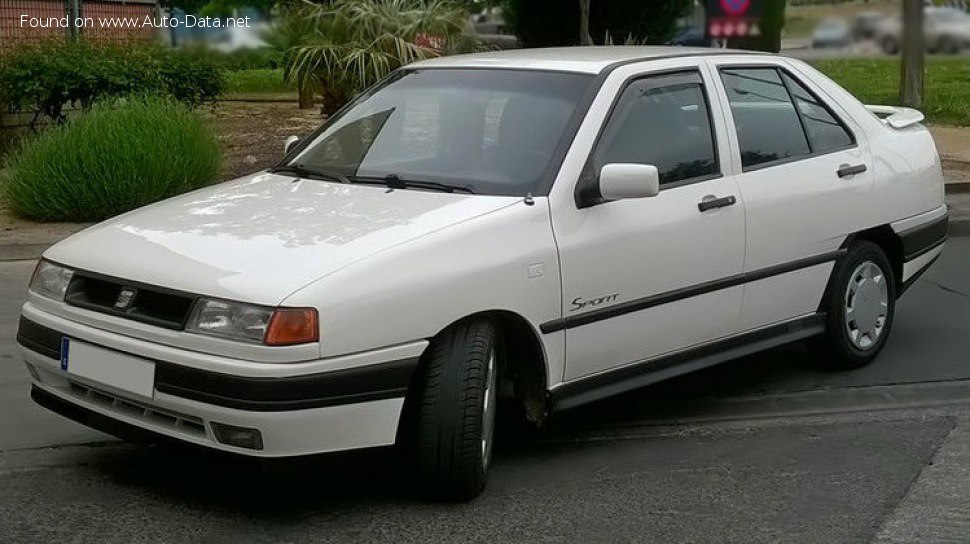
The SEAT Toledo I (1L), specifically the 1.8 16V variant producing 133 horsepower, represents a pivotal moment for the Spanish automaker. Introduced in May 1991 and continuing production through November 1992, this first-generation Toledo was SEAT’s initial foray into the compact sedan market, designed to offer a more sophisticated and modern alternative to the aging SEAT Malaga and SEAT Marbella. While SEAT was historically a manufacturer focused on smaller, more utilitarian vehicles, the Toledo signaled a shift towards broader market appeal and a desire to compete with established European brands. Importantly, the Toledo was one of the first models developed after Volkswagen Group’s majority stake acquisition in SEAT in 1986, benefiting from German engineering expertise and quality control. The Toledo I was not officially sold in the United States, but it played a significant role in establishing SEAT’s brand identity within Europe.
SEAT Toledo I (1L): A New Direction for SEAT
The Toledo I was based on the SEAT Ibiza’s platform, but significantly stretched to accommodate a full sedan body style. This platform sharing allowed SEAT to leverage existing development costs and streamline production. The 1.8 16V engine was a key component of the Toledo’s appeal, offering a substantial power upgrade over the smaller engines available in the Ibiza. This engine, designated the KR, was a naturally aspirated inline-four cylinder, representing a move towards more performance-oriented offerings from SEAT. The Toledo I aimed to bridge the gap between affordable family transportation and a more aspirational vehicle, offering a blend of practicality, comfort, and a degree of sporting character.
Engine & Performance
The heart of the Toledo I 1.8 16V is its 1781cc (1.8 Liter) inline-four cylinder engine, internally known as the KR. This engine is naturally aspirated, meaning it relies solely on atmospheric pressure to draw air into the cylinders, rather than utilizing a turbocharger or supercharger. Despite lacking forced induction, the 16-valve cylinder head and optimized fuel injection system allowed it to produce a respectable 133 horsepower. This power output, while modest by modern standards, was considered quite competitive for a compact sedan in the early 1990s. The engine’s torque characteristics provided adequate acceleration for everyday driving, making it suitable for both city commutes and longer highway journeys.
The Toledo I’s powertrain was typically paired with a five-speed manual transmission, although an optional four-speed automatic transmission was also available. The front-wheel-drive configuration was standard. Performance figures for the 1.8 16V Toledo I are estimated to include a 0-60 mph time of around 9.5 seconds and a top speed of approximately 125 mph. While not a sports car, the Toledo I offered a reasonably engaging driving experience, particularly with the manual transmission. The suspension setup, featuring MacPherson struts in the front and a torsion beam rear axle, provided a balance between ride comfort and handling stability. The engine’s reliability and relatively straightforward mechanical design contributed to its longevity and ease of maintenance.
Design & Features
The SEAT Toledo I presented a distinctly European aesthetic, characterized by clean lines and a relatively understated design. The four-door sedan body style was a departure from SEAT’s previous offerings, signaling a desire to appeal to a broader customer base. The Toledo’s design incorporated elements of contemporary automotive trends, such as a sloping roofline and integrated headlights. While not overtly sporty, the Toledo’s proportions conveyed a sense of dynamism and modernity.
Inside, the Toledo I offered a practical and comfortable cabin. The interior was designed to accommodate five passengers, with adequate legroom and headroom for most occupants. The dashboard layout was functional and ergonomically designed, with clearly labeled controls and gauges. Standard features typically included power steering, central locking, and electric windows. Higher trim levels offered additional amenities such as air conditioning, a sunroof, and upgraded upholstery. Safety features were relatively basic by today’s standards, but included seatbelts and a collapsible steering column. The Toledo I’s trunk offered a generous amount of cargo space, making it a practical choice for families and individuals who frequently needed to transport luggage or other items. The overall design philosophy prioritized practicality, comfort, and a degree of sophistication, making the Toledo I a compelling option in the competitive compact sedan segment.
Technical Specifications
| General Information | |
| Brand | SEAT |
| Model | Toledo |
| Generation | Toledo I (1L) |
| Type (Engine) | 1.8 16V (133 Hp) |
| Start of production | May, 1991 |
| End of production | November, 1992 |
| Powertrain Architecture | Internal Combustion engine |
| Body type | Sedan |
| Seats | 5 |
| Doors | 4 |
| Performance Specs | |
| Fuel Type | Petrol (Gasoline) |
| Power | 133 Hp |
| Engine Model/Code | KR |
| Engine aspiration | Naturally aspirated engine |
| Fluid Capacities | |
| Engine oil capacity | 4 l (4.23 US qt | 3.52 UK qt) |
| Coolant capacity | 7 l (7.4 US qt | 6.16 UK qt) |
| Fuel tank capacity | 55 l (14.53 US gal | 12.1 UK gal) |
The SEAT Toledo I (1L) 1.8 16V, while not a landmark vehicle in terms of groundbreaking innovation, holds a significant place in SEAT’s history. It represented a crucial step in the company’s evolution, demonstrating its ability to develop and produce a competitive compact sedan. The Toledo I laid the foundation for future SEAT models and helped establish the brand as a viable player in the European automotive market. Its blend of practicality, comfort, and reasonable performance made it a popular choice among European buyers, and its legacy continues to influence SEAT’s design and engineering philosophy today.
