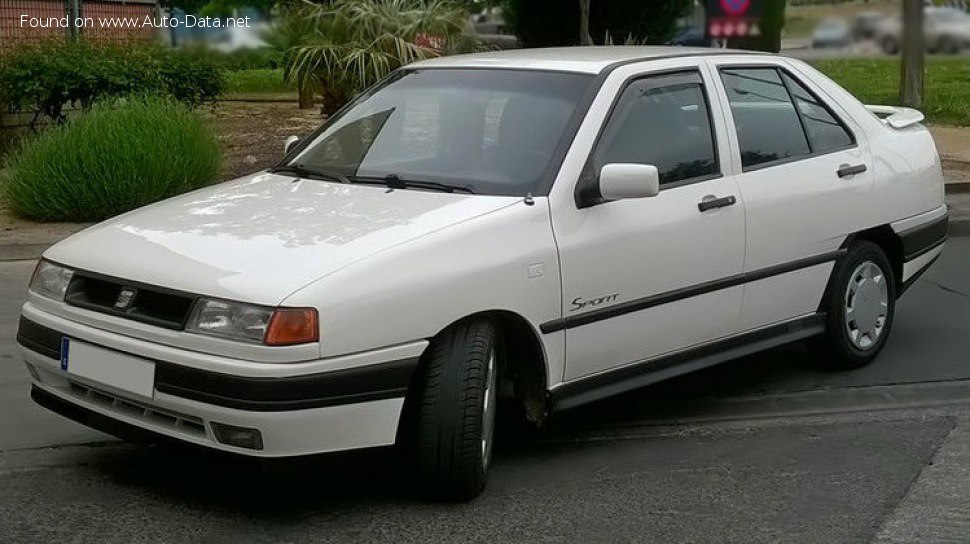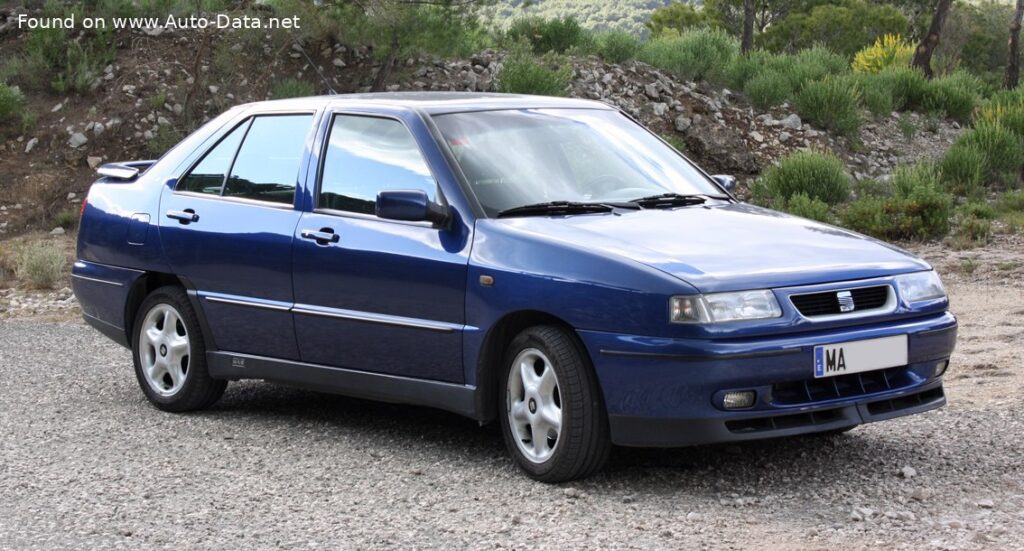
The SEAT Toledo I (1L), particularly the facelifted version produced from 1998 to 1999, represents a significant model in the Spanish automaker’s history. Positioned as a compact sedan, the Toledo aimed to offer a practical and stylish alternative to more established European brands. While not officially sold in the United States, the Toledo was a key player in the European market, competing with vehicles like the Ford Escort and Opel Astra. This article details the 1.8 20V variant, a popular engine choice for the Toledo, focusing on its technical specifications and characteristics.
SEAT Toledo I (1L, Facelift 1995) 1.8 20V: An Overview
The first generation SEAT Toledo, internally designated 1L, was launched in 1991 as SEAT’s initial foray into the compact sedan segment following its partnership with Volkswagen Group. The 1995 facelift brought revised styling and mechanical improvements, enhancing the car’s appeal. The 1.8 20V engine, introduced during this period, provided a notable performance upgrade over the earlier engine options. The Toledo I was designed to appeal to buyers seeking a blend of practicality, affordability, and a touch of sporty styling, a formula that proved successful in its target markets.
Engine & Performance
The heart of the 1998-1999 SEAT Toledo I 1.8 20V is a 1.8-liter, inline-four cylinder gasoline engine. This engine, designated AGN, produces 125 horsepower at 6000 rpm and 170 Nm (125.39 lb.-ft.) of torque at 4200 rpm. The engine features a multi-port fuel injection system and a double overhead camshaft (DOHC) valvetrain with five valves per cylinder, contributing to its relatively high power output for its displacement – 70.2 horsepower per liter. Power is delivered to the front wheels via a five-speed manual transmission. Performance figures include a 0-100 km/h (0-62 mph) acceleration time of 10.5 seconds and a maximum speed of 200 km/h (124.27 mph). The weight-to-power ratio of 9.8 kg/Hp and weight-to-torque ratio of 7.2 kg/Nm indicate a reasonably responsive driving experience for its time.
Design & Features
The SEAT Toledo I is a four-door, five-seater sedan with a traditional notchback design. The 1995 facelift brought subtle but noticeable changes to the front and rear fascias, including revised headlights and taillights, and a more streamlined appearance. The interior offered a functional and relatively spacious cabin for its class. Key features included hydraulic power steering, ventilated front disc brakes, and disc brakes on the rear axle. An Anti-lock Braking System (ABS) was also included as a safety feature. The Toledo’s trunk offered a generous 550 liters of space (19.42 cu. ft.) which could be expanded to 1360 liters (48.03 cu. ft.) with the rear seats folded down, providing considerable cargo capacity. The vehicle’s dimensions are 4321 mm (170.12 in.) in length, 1662 mm (65.43 in.) in width, and 1424 mm (56.06 in.) in height.
Technical Specifications
| Brand | Seat |
| Model | Toledo |
| Generation | Toledo I (1L, facelift 1995) |
| Type (Engine) | 1.8 20V (125 Hp) |
| Start of production | October, 1998 |
| End of production | June, 1999 |
| Powertrain Architecture | Internal Combustion engine |
| Body type | Sedan |
| Seats | 5 |
| Doors | 4 |
| Fuel consumption (urban) | 11.8 l/100 km (19.9 US mpg / 23.9 UK mpg) |
| Fuel consumption (extra urban) | 6.4 l/100 km (36.8 US mpg / 44.1 UK mpg) |
| Fuel Type | Petrol (Gasoline) |
| Acceleration 0 – 100 km/h | 10.5 sec |
| Acceleration 0 – 62 mph | 10.5 sec |
| Acceleration 0 – 60 mph | 10 sec |
| Maximum speed | 200 km/h (124.27 mph) |
| Weight-to-power ratio | 9.8 kg/Hp |
| Weight-to-torque ratio | 7.2 kg/Nm |
| Power | 125 Hp @ 6000 rpm |
| Power per litre | 70.2 Hp/l |
| Torque | 170 Nm @ 4200 rpm (125.39 lb.-ft. @ 4200 rpm) |
| Engine layout | Front, Transverse |
| Engine Model/Code | AGN |
| Engine displacement | 1781 cm3 (108.68 cu. in.) |
| Number of cylinders | 4 |
| Engine configuration | Inline |
| Cylinder Bore | 81 mm (3.19 in.) |
| Piston Stroke | 86.4 mm (3.4 in.) |
| Compression ratio | 10.3:1 |
| Number of valves per cylinder | 5 |
| Fuel injection system | Multi-port manifold injection |
| Engine aspiration | Naturally aspirated |
| Valvetrain | DOHC |
| Engine oil capacity | 4 l (4.23 US qt | 3.52 UK qt) |
| Coolant capacity | 6.2 l (6.55 US qt | 5.46 UK qt) |
| Kerb Weight | 1225 kg (2700.66 lbs.) |
| Max. weight | 1750 kg (3858.09 lbs.) |
| Max load | 525 kg (1157.43 lbs.) |
| Trunk (boot) space – minimum | 550 l (19.42 cu. ft.) |
| Trunk (boot) space – maximum | 1360 l (48.03 cu. ft.) |
| Fuel tank capacity | 55 l (14.53 US gal | 12.1 UK gal) |
| Length | 4321 mm (170.12 in.) |
| Width | 1662 mm (65.43 in.) |
| Height | 1424 mm (56.06 in.) |
| Wheelbase | 2471 mm (97.28 in.) |
| Front track | 1429 mm (56.26 in.) |
| Rear track | 1422 mm (55.98 in.) |
| Drivetrain Architecture | Front wheel drive |
| Number of gears | 5 gears, manual transmission |
| Front suspension | Wishbone |
| Rear suspension | Coil spring |
| Front brakes | Ventilated discs |
| Rear brakes | Disc |
| Assisting systems | ABS (Anti-lock braking system) |
| Steering type | Steering rack and pinion |
| Power steering | Hydraulic |
| Tires size | 195/65 R15 |
The SEAT Toledo I 1.8 20V, while not a performance car in the modern sense, offered a compelling package of practicality, style, and reasonable performance for European buyers in the late 1990s. It played a crucial role in establishing SEAT as a viable and competitive brand within the Volkswagen Group and the broader automotive market.