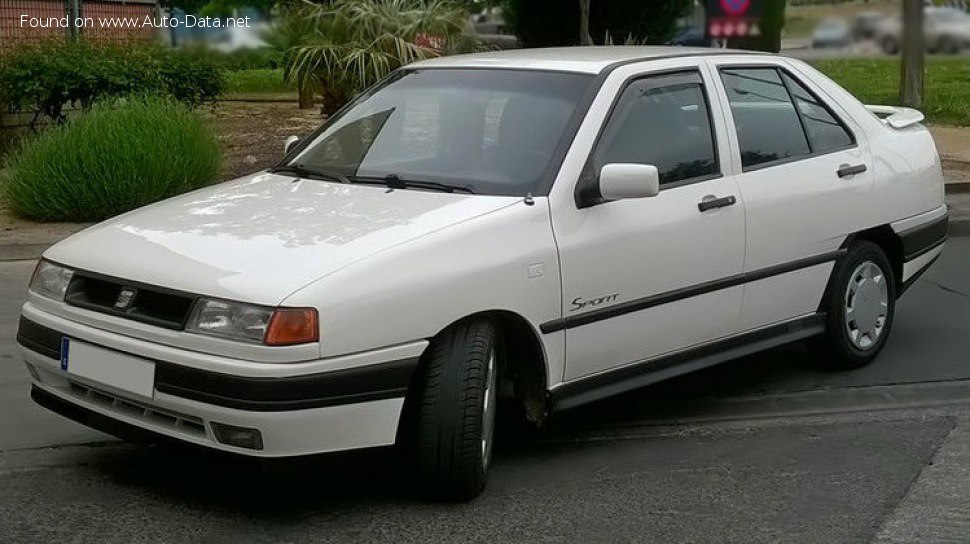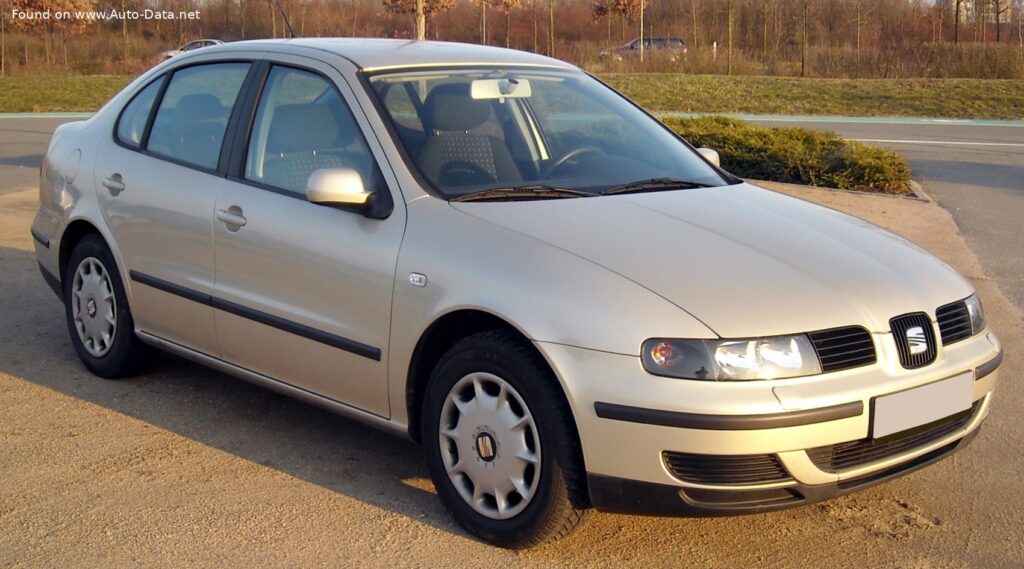
The SEAT Toledo II (1M2), specifically the 1.9 TDI variant producing 150 horsepower, represents a significant offering from the Spanish automaker during the early 2000s. Positioned as a compact sedan, the Toledo II aimed to provide a practical and stylish alternative within the European market, competing with vehicles like the Ford Focus, Opel Astra, and Volkswagen Golf. While SEAT has limited direct presence in the United States, understanding the Toledo II provides insight into the brand’s engineering capabilities and its role as a key player in the Volkswagen Group’s portfolio. This model bridged the gap between affordability and a more sophisticated driving experience, leveraging Volkswagen’s platform technology and diesel engine expertise.
SEAT Toledo II (1M2) 1.9 TDI: A Detailed Overview
The Toledo II, produced from 2000 to 2004, was the second generation of the Toledo nameplate. It marked a departure from the earlier, more hatchback-oriented design, adopting a traditional sedan body style. This shift was intended to broaden the Toledo’s appeal and attract buyers seeking a more conventional family car. The 1.9 TDI engine, a mainstay of Volkswagen Group’s diesel offerings, was a key component of the Toledo II’s success, providing a balance of fuel efficiency and respectable performance. The vehicle was primarily sold in Europe, where diesel engines held a much larger market share than in North America.
Engine & Performance
The heart of the Toledo II 1.9 TDI is its 1.9-liter, inline-four cylinder diesel engine, designated the ARL engine code. This engine is a turbocharged diesel, employing a pump-nozzle (unit injector) fuel injection system and an intercooler to enhance performance. It produces 150 horsepower at 4000 rpm and a substantial 320 Nm (236.02 lb.-ft.) of torque at 1900 rpm. This torque output, available at relatively low engine speeds, provides strong acceleration and effortless cruising. The engine’s power-to-liter ratio is an impressive 79.1 hp/liter.
Performance figures demonstrate the engine’s capabilities. Acceleration from 0 to 100 km/h (0-62 mph) takes 8.9 seconds, while 0 to 60 mph is achieved in a calculated 8.5 seconds. The top speed is rated at 215 km/h (133.59 mph). The weight-to-power ratio of 8.7 kg/Hp and weight-to-torque ratio of 4.1 kg/Nm further highlight the engine’s efficiency. Power is delivered to the front wheels via a six-speed manual transmission, offering precise gear changes and contributing to the car’s engaging driving experience. Fuel economy is a strong point, with urban consumption at 7.1 l/100 km (33.1 US mpg), and extra-urban consumption at 4.3 l/100 km (54.7 US mpg).
Design & Features
The SEAT Toledo II 1.9 TDI is a four-door sedan with a relatively conservative, yet modern design for its time. Its dimensions are 4439 mm (174.76 in) in length, 1742 mm (68.58 in) in width, and 1436 mm (56.54 in) in height, with a wheelbase of 2513 mm (98.94 in). The car offers seating for five passengers and a trunk capacity of 500 liters (17.66 cu. ft.).
While not laden with cutting-edge technology by today’s standards, the Toledo II offered a reasonable level of equipment for its price point. Standard safety features included ABS (Anti-lock Braking System). The car’s suspension consists of a spring strut setup at the front and a coil spring arrangement at the rear, providing a comfortable ride. Steering is handled by a hydraulic power steering rack and pinion system. The vehicle rides on 205/55 R16 tires. The interior focused on practicality and durability, with a functional dashboard layout and comfortable seating. The Toledo II prioritized providing a solid, reliable, and affordable transportation solution for families and individuals.
Technical Specifications
| Brand | Seat |
| Model | Toledo |
| Generation | Toledo II (1M2) |
| Type (Engine) | 1.9 TDI (150 Hp) |
| Start of production | October, 2000 |
| End of production | July, 2004 |
| Powertrain Architecture | Internal Combustion engine |
| Body type | Sedan |
| Seats | 5 |
| Doors | 4 |
| Fuel consumption (urban) | 7.1 l/100 km (33.1 US mpg) |
| Fuel consumption (extra urban) | 4.3 l/100 km (54.7 US mpg) |
| Fuel Type | Diesel |
| Acceleration 0 – 100 km/h | 8.9 sec |
| Acceleration 0 – 62 mph | 8.9 sec |
| Acceleration 0 – 60 mph | 8.5 sec |
| Maximum speed | 215 km/h (133.59 mph) |
| Weight-to-power ratio | 8.7 kg/Hp |
| Weight-to-torque ratio | 4.1 kg/Nm |
| Power | 150 Hp @ 4000 rpm |
| Torque | 320 Nm @ 1900 rpm (236.02 lb.-ft. @ 1900 rpm) |
| Engine layout | Front, Transverse |
| Engine Model/Code | ARL |
| Engine displacement | 1896 cm3 (115.7 cu. in.) |
| Number of cylinders | 4 |
| Engine configuration | Inline |
| Cylinder Bore | 79.5 mm (3.13 in.) |
| Piston Stroke | 95.5 mm (3.76 in.) |
| Compression ratio | 18.5:1 |
| Number of valves per cylinder | 2 |
| Fuel injection system | Pump-nozzle (Unit Injector) |
| Engine aspiration | Turbocharger, Intercooler |
| Valvetrain | OHC |
| Engine oil capacity | 4.3 l (4.54 US qt | 3.78 UK qt) |
| Coolant | 6 l (6.34 US qt | 5.28 UK qt) |
| Kerb Weight | 1312 kg (2892.46 lbs.) |
| Max. weight | 1822 kg (4016.82 lbs.) |
| Max load | 510 kg (1124.36 lbs.) |
| Trunk (boot) space – minimum | 500 l (17.66 cu. ft.) |
| Fuel tank capacity | 55 l (14.53 US gal | 12.1 UK gal) |
| Length | 4439 mm (174.76 in.) |
| Width | 1742 mm (68.58 in.) |
| Height | 1436 mm (56.54 in.) |
| Wheelbase | 2513 mm (98.94 in.) |
| Front track | 1513 mm (59.57 in.) |
| Rear (Back) track | 1492 mm (58.74 in.) |
| Drivetrain Architecture | Front wheel drive |
| Number of gears and type of gearbox | 6 gears, manual transmission |
| Front suspension | Spring Strut |
| Rear suspension | Coil spring |
| Front brakes | Ventilated discs |
| Rear brakes | Disc |
| Assisting systems | ABS (Anti-lock braking system) |
| Steering type | Steering rack and pinion |
| Power steering | Hydraulic Steering |
| Tires size | 205/55 R16 |