
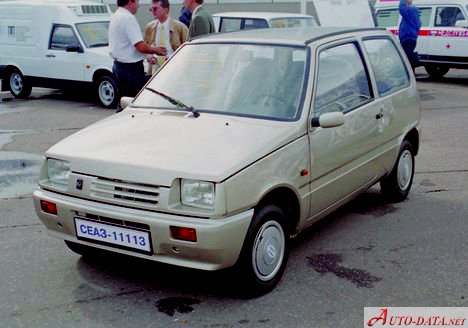
The SeAZ 1111, specifically the 11113 variant producing 33 horsepower, was a small, front-wheel-drive hatchback manufactured by the Severny Automotive Plant (SeAZ) in Russia between 1997 and 2006. This model represented a significant step in affordable personal transportation for the post-Soviet market, offering a relatively modern design and features at a competitive price point. The 11113 occupied the entry-level position within the 1111 series, catering to buyers prioritizing economy and basic functionality. It was based on the original 1111 design, which itself was heavily influenced by the Fiat 127, but underwent several revisions and updates throughout its production run.
SeAZ 11113: Powertrain & Engine Architecture
The heart of the SeAZ 11113 is the B6113E engine, a 750cc (45.77 cubic inches) inline two-cylinder, four-stroke petrol engine. This engine, while small, was designed for reliability and fuel efficiency rather than outright performance. It featured a carburettor fuel injection system, a relatively simple and cost-effective technology for the time. The engine employed a single overhead camshaft (SOHC) valvetrain with two valves per cylinder. The compression ratio was set at 9.9:1. The engine’s modest output of 33 hp at 5600 rpm and 38.35 lb-ft of torque at 3200 rpm was sufficient for urban driving, but limited its capabilities on highways or when fully loaded.
The 11113 was exclusively equipped with a four-speed manual transmission. This transmission was chosen for its simplicity, durability, and contribution to the vehicle’s overall affordability. The gearbox was directly connected to the front wheels, making the 11113 a front-wheel-drive vehicle. The engine was mounted transversely in the front of the vehicle, a common configuration for maximizing interior space in compact cars.
Engine Specifications
The B6113E engine’s small displacement and two-cylinder configuration resulted in a distinctive engine note and a noticeable amount of vibration. While not known for refinement, the engine proved to be remarkably durable and relatively easy to maintain, particularly in regions with limited access to specialized automotive repair facilities. Engine oil capacity was 2.5 liters (2.64 US quarts / 2.2 UK quarts), and the recommended oil specification information is available upon login to the SeAZ service database.
Driving Characteristics
The SeAZ 11113’s driving experience was characterized by its modest performance. Acceleration from 0 to 62 mph (0-100 km/h) took approximately 24 seconds, and the vehicle had a top speed of around 80.78 mph (130 km/h). The four-speed manual transmission required frequent shifting to maintain optimal engine speed, especially when climbing hills or overtaking. The gear ratios were geared towards maximizing fuel economy rather than providing spirited acceleration. The weight-to-power ratio of 20.5 kg/hp and weight-to-torque ratio of 13 kg/Nm further emphasized the vehicle’s focus on efficiency over performance.
Handling was adequate for city driving, but the 11113’s suspension was not designed for high-speed cornering. The front-wheel-drive layout provided reasonable traction in most conditions, but could exhibit understeer when pushed hard. Overall, the driving experience was best described as functional and economical, rather than engaging or sporty.
Equipment & Trim Levels
The SeAZ 11113 was offered with a very basic level of standard equipment. It typically included cloth upholstery, a simple dashboard layout with analog gauges, and manually operated windows and door locks. Safety features were minimal, generally limited to seatbelts. Optional extras were limited, but could include a radio, upgraded seat covers, and occasionally, a more sophisticated instrument cluster. The interior was designed for practicality and durability, with hard-wearing materials used throughout.
The 11113’s trim level was essentially a single specification, with limited opportunities for customization. The focus was on providing a basic, affordable vehicle that met the essential transportation needs of its target market.
Chassis & Braking
The SeAZ 11113 featured a relatively simple chassis design. The front suspension utilized coil springs, while the rear suspension also employed coil springs. The front brakes were disc brakes, providing adequate stopping power for the vehicle’s weight and performance. However, the rear brakes were drum brakes, which offered less stopping power and were more prone to fading under heavy use. The steering system was a steering rack and pinion, providing reasonably precise steering control.
The vehicle rode on 135/80 R12 tires, which were chosen for their affordability and suitability for a variety of road conditions. The front and rear track widths were 1210 mm (47.64 in) and 1200 mm (47.24 in) respectively, contributing to the vehicle’s relatively narrow stance.
Market Reception & Comparison
The SeAZ 11113 was generally well-received in the Russian market as an affordable and reliable means of transportation. Critics acknowledged its basic nature but praised its durability and low running costs. Compared to other vehicles in its class, such as the Lada Oka, the 11113 offered a slightly more modern design and a more comfortable interior. However, it lacked the performance and refinement of more expensive models like the Lada Samara.
Fuel economy was a key selling point for the 11113, with reported urban fuel consumption of 6.4 l/100 km (36.8 US mpg / 44.1 UK mpg / 15.6 km/l). Reliability was also considered to be good, particularly given the challenging road conditions prevalent in many parts of Russia. However, the vehicle’s limited performance and basic features meant that it appealed primarily to budget-conscious buyers.
Technical Specifications
| Brand | SeAZ |
| Model | 1111 |
| Generation | 1111 |
| Type (Engine) | 11113 (33 Hp) |
| Start of production | 1997 year |
| End of production | 2006 year |
| Powertrain Architecture | Internal Combustion engine |
| Body type | Hatchback |
| Seats | 4 |
| Doors | 3 |
| Fuel consumption (urban) | 6.4 l/100 km (36.8 US mpg, 44.1 UK mpg, 15.6 km/l) |
| Fuel Type | Petrol (Gasoline) |
| Acceleration 0 – 100 km/h | 24 sec |
| Acceleration 0 – 62 mph | 24 sec |
| Acceleration 0 – 60 mph | 22.8 sec |
| Maximum speed | 130 km/h (80.78 mph) |
| Weight-to-power ratio | 20.5 kg/Hp |
| Weight-to-torque ratio | 13 kg/Nm |
| Power | 33 Hp @ 5600 rpm |
| Torque | 52 Nm @ 3200 rpm (38.35 lb.-ft. @ 3200 rpm) |
| Engine layout | Front, Transverse |
| Engine Model/Code | B6113E |
| Engine displacement | 750 cm3 (45.77 cu. in.) |
| Number of cylinders | 2 |
| Engine configuration | Inline |
| Cylinder Bore | 82 mm (3.23 in.) |
| Piston Stroke | 71 mm (2.8 in.) |
| Compression ratio | 9.9:1 |
| Number of valves per cylinder | 2 |
| Fuel injection system | Carburettor |
| Engine aspiration | Naturally aspirated engine |
| Engine oil capacity | 2.5 l (2.64 US qt | 2.2 UK qt) |
| Kerb Weight | 675 kg (1488.12 lbs.) |
| Max. weight | 985 kg (2171.55 lbs.) |
| Max load | 310 kg (683.43 lbs.) |
| Trunk (boot) space – minimum | 210 l (7.42 cu. ft.) |
| Trunk (boot) space – maximum | 650 l (22.95 cu. ft.) |
| Fuel tank capacity | 30 l (7.93 US gal | 6.6 UK gal) |
| Length | 3200 mm (125.98 in.) |
| Width | 1420 mm (55.91 in.) |
| Height | 1400 mm (55.12 in.) |
| Wheelbase | 2180 mm (85.83 in.) |
| Front track | 1210 mm (47.64 in.) |
| Rear (Back) track | 1200 mm (47.24 in.) |
| Minimum turning circle | 9.2 m (30.18 ft.) |
| Drivetrain Architecture | Front wheel drive |
| Number of gears and type of gearbox | 4 gears, manual transmission |
| Front suspension | Coil spring |
| Rear suspension | Coil spring |
| Front brakes | Disc |
| Rear brakes | Drum |
| Steering type | Steering rack and pinion |
| Tires size | 135/80 R12 |
Legacy
The SeAZ 11113, while now largely absent from the roads, remains a recognizable vehicle in Russia and other former Soviet republics. Its simple design and robust engine contributed to its longevity, and many examples are still in use today, often as second or third cars. The B6113E engine, while not known for its sophistication, proved to be remarkably durable and relatively easy to repair, making it a popular choice for those seeking affordable and reliable transportation. In the used car market, the 11113 commands very low prices, appealing to buyers seeking a basic, inexpensive vehicle for short trips or as a project car. Its legacy lies in providing affordable mobility to a large segment of the population during a period of economic transition.
