
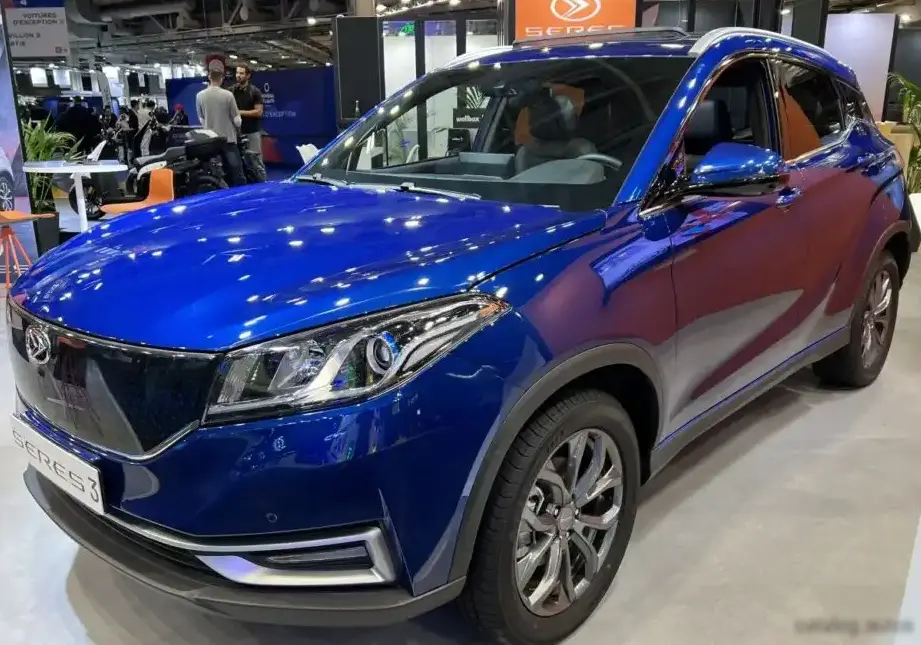
The Seres 3 53.6 kWh (163 Hp) E-shift is a battery electric vehicle (BEV) SUV produced by Seres Group, entering production in 2021. Positioned as a mainstream electric crossover, it represents Seres’ initial foray into the rapidly expanding global EV market. The vehicle is primarily targeted towards consumers seeking a practical, affordable, and technologically equipped electric SUV for urban and suburban driving. It utilizes a front-wheel-drive configuration and a single-speed “E-shift” automatic transmission, designed for ease of use and efficient energy management. The 53.6 kWh variant is the base model within the Seres 3 lineup, offering a balance between range and cost.
Technical Specifications
| Brand | Seres |
| Model | 3 |
| Generation | 3 |
| Type (Engine) | 53.6 kWh (163 Hp) E-shift |
| Start of production | 2021 |
| Powertrain Architecture | BEV (Electric Vehicle) |
| Body type | SUV |
| Seats | 5 |
| Doors | 5 |
| Fuel Type | Electricity |
| Acceleration 0 – 100 km/h | 8.9 sec |
| Acceleration 0 – 62 mph | 8.9 sec |
| Acceleration 0 – 60 mph | 8.5 sec |
| Maximum speed | 155 km/h (96.31 mph) |
| Weight-to-power ratio | 10.8 kg/Hp, 92.4 Hp/tonne |
| Weight-to-torque ratio | 5.9 kg/Nm, 170 Nm/tonne |
| Gross battery capacity | 53.6 kWh |
| Battery technology | Lithium iron phosphate (LiFePO4) |
| Battery location | Below the floor |
| All-electric range (WLTP) | 301 km (187.03 mi) |
| All-electric range (NEDC) | 405 km (251.66 mi) |
| Average Energy consumption (WLTP) | 18 kWh/100 km (28.97 kWh/100 mi, 116 MPGe, 5.6 km/kWh, 3.5 mi/kWh) |
| Electric motor | 1 |
| Electric motor type | Synchronous |
| System power | 163 Hp |
| System torque | 300 Nm (221.27 lb.-ft.) |
| Kerb Weight | 1765 kg (3891.16 lbs.) |
| Max. weight | 2065 kg (4552.55 lbs.) |
| Max load | 300 kg (661.39 lbs.) |
| Trunk (boot) space – minimum | 380 l (13.42 cu. ft.) |
| Trunk (boot) space – maximum | 1200 l (42.38 cu. ft.) |
| Length | 4385 mm (172.64 in.) |
| Width | 1850 mm (72.83 in.) |
| Height | 1650 mm (64.96 in.) |
| Wheelbase | 2655 mm (104.53 in.) |
| Front track | 1580 mm (62.2 in.) |
| Rear (Back) track | 1582 mm (62.28 in.) |
| Ride height (ground clearance) | 180 mm (7.09 in.) |
| Drive wheel | Front wheel drive |
| Number of gears and type of gearbox | automatic transmission E-shift |
| Front suspension | Independent type McPherson |
| Rear suspension | independent torsion suspension |
| Front brakes | Ventilated discs |
| Assisting systems | ABS (Anti-lock braking system) |
| Power steering | Electric Steering |
| Tires size | 225/55 R18 |
Powertrain & Engine Architecture
The Seres 3 53.6 kWh E-shift utilizes a single synchronous electric motor driving the front wheels. This motor produces 163 horsepower and 300 Nm (221 lb-ft) of torque. The battery pack, with a gross capacity of 53.6 kWh, employs Lithium Iron Phosphate (LiFePO4) chemistry. LiFePO4 batteries are known for their thermal stability, longer lifespan, and improved safety characteristics compared to Nickel Manganese Cobalt (NMC) batteries, although they generally offer slightly lower energy density. The battery is positioned under the vehicle floor, contributing to a lower center of gravity and improved handling. The “E-shift” transmission is not a traditional multi-gear automatic; rather, it’s a single-speed reduction gear optimized for efficiency and smooth acceleration. The vehicle’s power electronics manage the flow of energy between the battery, motor, and other vehicle systems.
Driving Characteristics
The Seres 3 53.6 kWh delivers adequate performance for everyday driving. Acceleration from 0-60 mph takes approximately 8.5 seconds, and the top speed is limited to 155 km/h (96 mph). The instant torque characteristic of electric motors provides brisk acceleration from a standstill, making it well-suited for urban environments. Compared to potential higher-powered variants of the Seres 3, this base model prioritizes efficiency over outright speed. The single-speed transmission provides a linear power delivery, without the gear changes experienced in conventional automatic transmissions. The front-wheel-drive configuration offers predictable handling, but may exhibit some torque steer under hard acceleration.
Equipment & Trim Levels
The standard equipment level for the Seres 3 53.6 kWh E-shift includes features such as a touchscreen infotainment system, Bluetooth connectivity, air conditioning, power windows, and basic safety systems like ABS and airbags. Interior upholstery typically consists of cloth seats, although leatherette options may have been available. Optional extras could include a panoramic sunroof, upgraded audio system, and advanced driver-assistance systems (ADAS) like adaptive cruise control and lane-keeping assist. The dashboard layout is modern and minimalist, focusing on the central touchscreen display.
Chassis & Braking
The Seres 3 utilizes an independent McPherson strut suspension at the front and an independent torsion beam suspension at the rear. This setup provides a comfortable ride quality and reasonable handling characteristics. The front brakes are ventilated discs, while the rear brakes are typically solid discs. Electric power steering is standard, offering light and precise steering feel. The vehicle’s relatively low weight, thanks to the battery pack’s placement and the use of lightweight materials, contributes to its agility.
Market Reception & Comparison
The Seres 3 53.6 kWh E-shift was generally well-received as an affordable and practical electric SUV. Critics praised its spacious interior, comfortable ride, and decent range for its price point. However, some reviewers noted that the interior materials felt somewhat basic compared to competitors. In terms of fuel economy, the Seres 3 achieves an average energy consumption of 18 kWh/100 km (116 MPGe), which is competitive with other EVs in its class. Compared to potential higher-range variants of the Seres 3, the 53.6 kWh model offers a more accessible entry price but at the expense of overall range.
Legacy
The Seres 3 53.6 kWh E-shift represents an important step for Seres Group in establishing itself as a player in the global EV market. The LiFePO4 battery technology used in this model contributes to its long-term reliability and safety. As a used vehicle, the Seres 3 53.6 kWh is becoming increasingly attractive to buyers seeking an affordable and environmentally friendly transportation option. The longevity of the battery pack and the availability of replacement parts will be key factors in determining its long-term value in the used car market. The vehicle’s relatively simple powertrain design should contribute to lower maintenance costs compared to more complex internal combustion engine vehicles.
