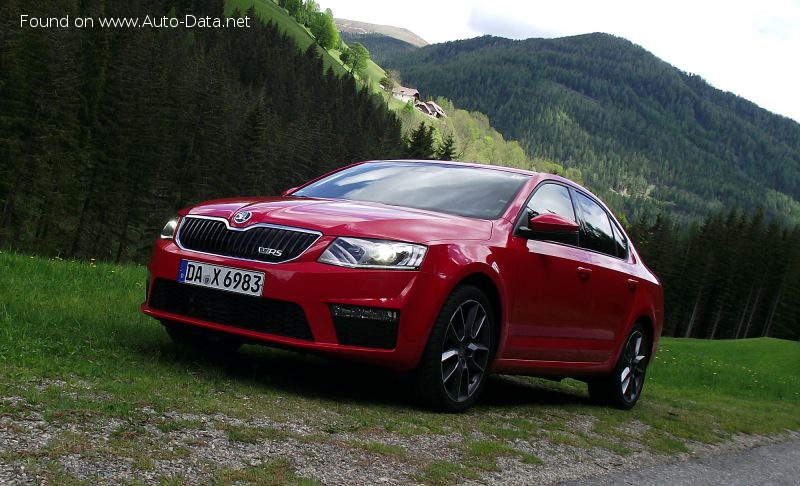
Introduction to the Skoda Octavia III 2.0 TDI (184 Hp) DSG 4×4
The Skoda Octavia III 2.0 TDI (184 Hp) DSG 4×4 represents a compelling chapter in the history of Skoda Auto, particularly within its third generation (2013-2017). As a product of the Volkswagen Group, the Octavia has long been a cornerstone of Skoda’s lineup, renowned for its pragmatic blend of space, value, and robust engineering. While not officially sold in the United States market, the Octavia holds significant sway in its primary European and Asian markets, where it competes fiercely in the compact family car segment, often blurring the lines with larger mid-size vehicles due to its generous interior volume.
The third-generation Octavia, launched in 2013, built upon the success of its predecessors by adopting the Volkswagen Group’s highly versatile MQB platform, shared with contemporaries like the VW Golf VII and Audi A3. This particular variant, the 2.0 TDI (184 Hp) DSG 4×4, stood out as a performance-oriented yet highly efficient offering. It combined a potent diesel engine with a sophisticated dual-clutch automatic transmission and an all-wheel-drive system, catering to drivers seeking strong acceleration, secure handling in diverse conditions, and impressive fuel economy – a hallmark of European diesel powertrains. Its five-door hatchback body style offered exceptional practicality, further cementing its appeal as a versatile daily driver for families and professionals alike.
Engine and Performance: The Heart of the Skoda Octavia III 2.0 TDI (184 Hp) DSG 4×4
At the core of this particular Skoda Octavia III lies a robust and highly efficient 2.0-liter TDI (Turbocharged Direct Injection) inline-four diesel engine. Coded EA288 / CUNA, CUPA, DJGA, this powerplant was a testament to Volkswagen Group’s expertise in diesel technology, offering a superb balance of power, torque, and fuel efficiency. It delivered a healthy 184 horsepower, peaking between 3500 and 4000 rpm, and a substantial 280.27 lb.-ft. of torque, available across a broad rev range from 1750 to 3250 rpm. This wide torque band ensured strong, flexible acceleration in almost any driving scenario, making it particularly well-suited for both city driving and sustained highway cruising.
Power was seamlessly transmitted to all four wheels via a sophisticated 6-speed DSG (Direct Shift Gearbox) automatic transmission. This dual-clutch unit was celebrated for its lightning-fast and smooth gear changes, contributing significantly to both the vehicle’s performance and its refined driving characteristics. The all-wheel-drive (4×4) system, utilizing an electrically or mechanically operated clutch, ensured optimal traction, driving the front wheels permanently and engaging the rear wheels only when necessary, such as during acceleration, cornering, or in slippery conditions. This intelligent system enhanced stability and grip, a significant advantage over front-wheel-drive counterparts, especially in regions prone to challenging weather.
Performance figures for the Skoda Octavia III 2.0 TDI (184 Hp) DSG 4×4 were genuinely impressive for a family hatchback. It could sprint from 0 to 60 mph in a brisk 6.7 seconds, placing it firmly in hot-hatch territory, while its top speed reached 141.67 mph. Despite its performance capabilities, the vehicle maintained remarkable fuel economy, achieving a combined (NEDC) rating of 48 US mpg (4.9 l/100 km). Urban consumption stood at 42 US mpg (5.6 l/100 km), and extra-urban at an even more impressive 53.5 US mpg (4.4 l/100 km). With CO2 emissions of 129 g/km, it met the stringent Euro 6 emission standard, highlighting its environmental consciousness for the era. The engine’s DOHC valvetrain, Commonrail fuel injection, and turbocharger with intercooler all contributed to its refined operation and efficient power delivery.
Design and Features
The Skoda Octavia III embraced a more assertive and contemporary design language compared to its predecessors, characterized by sharper lines, a prominent grille, and distinct headlamp clusters. Its five-door hatchback body style was a masterclass in practical design, offering the visual appeal of a sedan with the superior versatility of a hatchback. With five seats, the interior was thoughtfully designed to maximize passenger comfort and cargo capacity, a hallmark of the Octavia’s “Simply Clever” philosophy.
Measuring 183.43 inches in length, 71.42 inches in width (79.41 inches including mirrors), and 57.48 inches in height, the Octavia III struck a balance between a compact footprint and expansive interior space. Its 105.51-inch wheelbase contributed to a stable ride and generous legroom for rear passengers. One of the Octavia’s standout features was its cavernous trunk space, offering a minimum of 20.84 cubic feet (590 liters) with the rear seats up, expanding to an astounding 55.8 cubic feet (1580 liters) when the rear seats were folded down. This capacity rivaled, and often surpassed, many vehicles from the segment above, making it incredibly practical for families, long trips, or hauling bulky items.
Technological features were abundant for its time. The vehicle came equipped with an electric power steering system, offering precise control and ease of maneuvering. Standard safety features included ABS (Anti-lock Braking System), a fundamental component of modern vehicle safety. The drivetrain architecture, with its Haldex-type all-wheel-drive system, provided enhanced stability and grip. Comfort features, while not extensively detailed in the provided data, typically included a range of infotainment options, climate control, and various driver assistance systems, depending on the trim level. The inclusion of a Start & Stop System and a Particulate filter further underscored its modern approach to efficiency and emissions control. The Octavia also offered a choice of tire sizes, from 205/55 R16 to 225/35 R19, allowing for customization of ride comfort and handling characteristics.
Technical Specifications
| Category | Specification | Value (Metric/US) |
|---|---|---|
General Information |
||
| Brand | Skoda | |
| Model | Octavia | |
| Generation | Octavia III | |
| Type (Engine) | 2.0 TDI (184 Hp) DSG 4×4 | |
| Start of Production | 2013 year | |
| End of Production | 2017 year | |
| Powertrain Architecture | Internal Combustion engine | |
| Body type | Hatchback | |
| Seats | 5 | |
| Doors | 5 | |
Performance Specs |
||
| Fuel consumption (economy) – urban (NEDC) | 5.6 l/100 km | 42 US mpg | |
| Fuel consumption (economy) – extra urban (NEDC) | 4.4 l/100 km | 53.5 US mpg | |
| Fuel consumption (economy) – combined (NEDC) | 4.9 l/100 km | 48 US mpg | |
| CO2 emissions (NEDC) | 129 g/km | |
| Fuel Type | Diesel | |
| Acceleration 0 – 60 mph | 6.7 sec | |
| Maximum speed | 228 km/h | 141.67 mph | |
| Emission standard | Euro 6 | |
| Weight-to-power ratio | 7.5 kg/Hp | 132.6 Hp/tonne | |
| Weight-to-torque ratio | 3.7 kg/Nm | 273.8 Nm/tonne | |
Engine Specs |
||
| Power | 184 Hp @ 3500-4000 rpm | |
| Power per liter | 93.5 Hp/l | |
| Torque | 380 Nm | 280.27 lb.-ft. @ 1750-3250 rpm | |
| Engine layout | Front, Transverse | |
| Engine Model/Code | EA288 / CUNA, CUPA, DJGA | |
| Engine displacement | 1968 cm3 | 2.0 liters | 120.09 cu. in. | |
| Number of cylinders | 4 | |
| Engine configuration | Inline | |
| Cylinder Bore | 81 mm | 3.19 in. | |
| Piston Stroke | 95.5 mm | 3.76 in. | |
| Compression ratio | 15.8:1 | |
| Number of valves per cylinder | 4 | |
| Fuel injection system | Diesel Commonrail | |
| Engine aspiration | Turbocharger, Intercooler | |
| Valvetrain | DOHC | |
| Engine oil capacity | 4.6 l | 4.86 US qt | |
| Coolant | 11.6 l | 12.26 US qt | |
Engine Systems |
||
| Start & Stop System | Yes | |
| Particulate filter | Yes | |
Space, Volume and Weights |
||
| Kerb Weight | 1388 kg | 3060.02 lbs. | |
| Max. weight | 1973 kg | 4349.72 lbs. | |
| Max load | 585 kg | 1289.7 lbs. | |
| Trunk (boot) space – minimum | 590 l | 20.84 cu. ft. | |
| Trunk (boot) space – maximum | 1580 l | 55.8 cu. ft. | |
| Fuel tank capacity | 50 l | 13.21 US gal | |
| Max. roof load | 75 kg | 165.35 lbs. | |
| Permitted trailer load with brakes (12%) | 1800 kg | 3968.32 lbs. | |
| Permitted trailer load without brakes | 730 kg | 1609.37 lbs. | |
| Permitted towbar download | 75 kg | 165.35 lbs. | |
Dimensions |
||
| Length | 4659 mm | 183.43 in. | |
| Width | 1814 mm | 71.42 in. | |
| Width including mirrors | 2017 mm | 79.41 in. | |
| Height | 1460 mm | 57.48 in. | |
| Wheelbase | 2680 mm | 105.51 in. | |
| Front track | 1543 mm | 60.75 in. | |
| Rear (Back) track | 1512 mm | 59.53 in. | |
| Ride height (ground clearance) | 140 mm | 5.51 in. | |
| Drag coefficient (Cd) | 0.298 | |
| Minimum turning circle (turning diameter) | 11.04 m | 36.22 ft. | |
| Approach angle | 14° | |
| Departure angle | 12.3° | |
Drivetrain, Brakes and Suspension Specs |
||
| Drivetrain Architecture | The Internal combustion engine (ICE) drives the front wheels permanently, and the rear wheels are driven through an electrically or mechanically operated clutch if necessary. | |
| Drive wheel | All wheel drive (4×4) | |
| Number of gears and type of gearbox | 6 gears, automatic transmission DSG | |
| Front suspension | Independent, type McPherson with coil spring and anti-roll bar | |
| Rear suspension | Independent multi-link spring suspension with stabilizer | |
| Front brakes | Ventilated discs | |
| Rear brakes | Disc | |
Assisting Systems |
||
| ABS (Anti-lock braking system) | Yes | |
| Steering type | Steering rack and pinion | |
| Power steering | Electric Steering | |
| Tires size | 205/55 R16; 225/45 R17; 225/40 R18; 225/35 R19 | |
| Wheel rims size | 6.5J x 16; 7.5J x 17; 7.5J x 18; 7.5J x 19 | |
Legacy and Market Impact
The Skoda Octavia III, and particularly the 2.0 TDI (184 Hp) DSG 4×4 variant, played a pivotal role in solidifying Skoda’s modern reputation. Under the stewardship of the Volkswagen Group, Skoda transitioned from a perceived budget brand to a highly respected mainstream automaker known for its exceptional value, robust build quality, and ingenious “Simply Clever” features. The third generation Octavia perfectly encapsulated this transformation, offering a sophisticated driving experience wrapped in an understated yet elegant package.
In its primary European markets, the Octavia III faced a crowded and competitive landscape. Its main rivals included established players like the Volkswagen Golf (its platform sibling), Ford Focus, Opel Astra, Peugeot 308, Mazda3, and Hyundai i30. What set the Octavia apart was its unique proposition: it offered interior space and trunk capacity that often rivaled vehicles from the D-segment (mid-size cars) while maintaining a C-segment (compact car) footprint and pricing. This made it an incredibly attractive option for families and fleet buyers who prioritized practicality without sacrificing quality or driving dynamics.
The 2.0 TDI (184 Hp) DSG 4×4 model specifically carved out a niche for itself. It appealed to buyers who needed the all-weather capability of all-wheel drive, the long-distance economy and torque of a powerful diesel engine, and the convenience of an automatic transmission, all within a highly practical hatchback body. Its strong performance figures meant it could also be considered a discreet “driver’s car” for those who appreciated efficient power delivery and secure handling. This combination made it particularly popular in countries with varied climates or those where towing capacity was a consideration.
Historically, the Octavia III represented a maturation of the Skoda brand. It demonstrated that Skoda could deliver advanced technology, impressive performance, and high levels of refinement, all while staying true to its core values of practicality and affordability. The success of this generation paved the way for Skoda’s continued growth and its current strong standing in the global automotive landscape, even if its specific models like this powerful diesel 4×4 remained a European delight, never officially gracing the showrooms of the United States. Its legacy is one of smart engineering, market relevance, and a quiet but undeniable impact on how consumers perceive value and capability in the compact car segment.