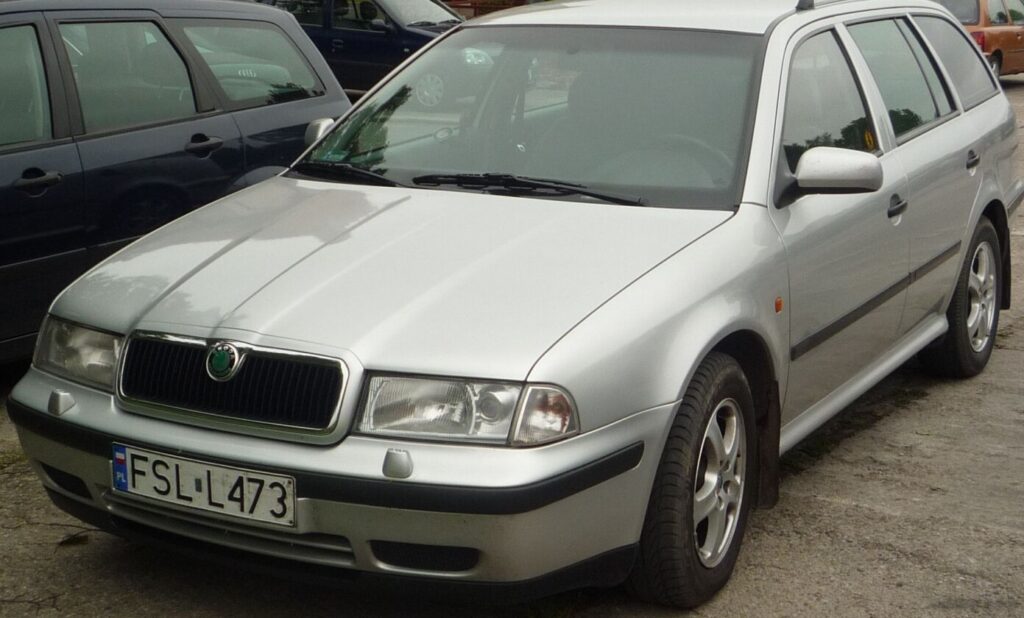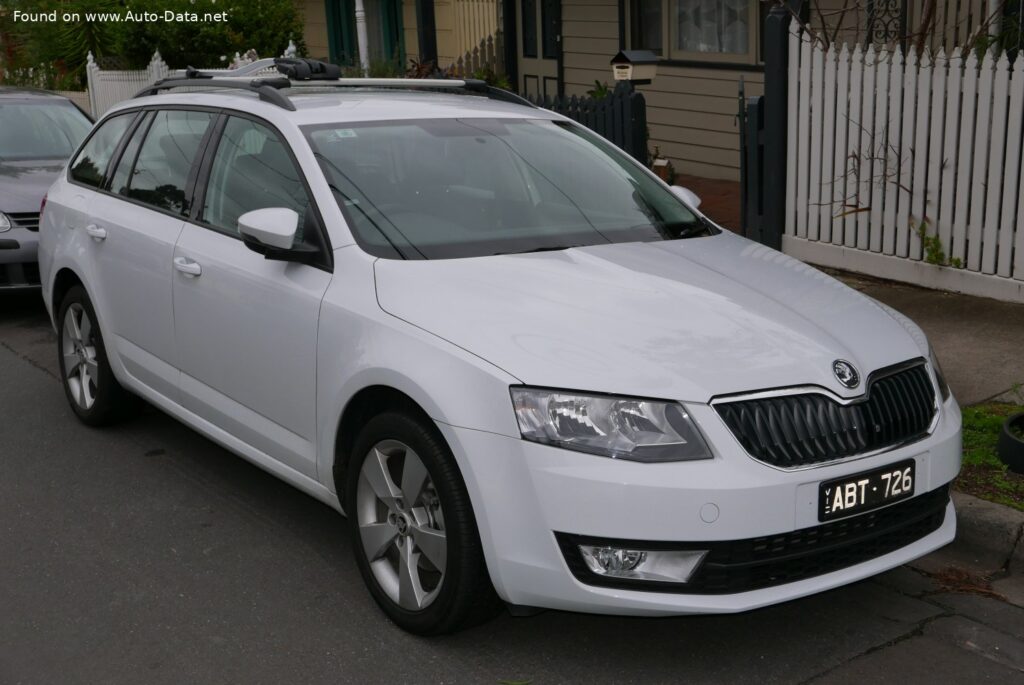
Introduction: The Skoda Octavia III Combi 1.4 TSI (140 Hp)
The Skoda Octavia III Combi, specifically the 1.4 TSI (140 Hp) variant produced between 2013 and 2015, represents a pivotal model in the Czech automaker’s modern history. As a cornerstone of the Volkswagen Group’s diverse portfolio, Skoda has long been recognized for offering exceptional value, practicality, and robust engineering, often leveraging shared platforms and powertrains with its German counterparts. The third-generation Octavia, launched in 2013, cemented this reputation, particularly in its Combi (station wagon) form, which became a favorite across Europe for families and fleet operators alike.
Positioned primarily in the C-segment, though often perceived as offering D-segment space, the Octavia III Combi was built on the highly versatile MQB platform, shared with vehicles like the Volkswagen Golf and Audi A3. This common architecture allowed Skoda to deliver sophisticated driving dynamics, improved safety, and advanced technology at a more accessible price point. The 1.4 TSI (140 Hp) engine variant, a popular choice, offered a compelling blend of performance and fuel efficiency, making the Skoda Octavia III Combi 1.4 TSI (140 Hp) a highly competitive and desirable option in its primary European market. While not officially sold in the United States, its design philosophy and engineering prowess reflect global automotive trends towards downsizing, turbocharging, and enhanced practicality.
Engineering and Performance: The Heart of the Skoda Octavia III Combi
Powertrain Details
At the core of the Skoda Octavia III Combi 1.4 TSI (140 Hp) is a modern, turbocharged gasoline engine that exemplifies the trend of engine downsizing without compromising performance. This 1.4-liter (1395 cm3 or 85.13 cu. in.) inline four-cylinder engine, part of the EA211 family (Engine Model/Code: EA211 / CHPA), features direct fuel injection and a sophisticated DOHC (Double Overhead Camshaft) valvetrain with four valves per cylinder. The integration of a turbocharger and intercooler allows this relatively small displacement engine to produce a robust 140 horsepower, available across a broad rev range from 4500 to 6000 rpm. This impressive power density of 100.4 Hp per liter is a testament to contemporary engine design.
Equally significant is the torque output: 250 Nm (184.39 lb.-ft.) delivered impressively early, from a low 1500 rpm and sustained up to 3500 rpm. This wide torque band contributes significantly to the vehicle’s drivability, offering strong pulling power even at low engine speeds, which is particularly beneficial for a family-oriented station wagon. The engine’s front, transverse layout, coupled with a front-wheel-drive architecture, is a standard configuration for efficiency and packaging in this segment. A 10:1 compression ratio further optimizes combustion efficiency.
The powertrain for the Skoda Octavia III Combi 1.4 TSI (140 Hp) typically comes paired with a precise 6-speed manual transmission, providing engaging control for the driver. Modern features like a Start & Stop System were standard, contributing to reduced fuel consumption and lower emissions, particularly in urban driving scenarios. The engine oil capacity is 4 liters (4.23 US qt), and the cooling system holds 10.4 liters (10.99 US qt) of coolant, ensuring efficient thermal management.
Performance Metrics
Despite its practical family car designation, the 1.4 TSI engine imbues the Octavia III Combi with respectable performance. The vehicle can accelerate from 0 to 100 km/h (0-62 mph) in a brisk 8.5 seconds, with a calculated 0-60 mph time of 8.1 seconds. Its maximum speed is 212 km/h (131.73 mph), making it capable of comfortable long-distance cruising on European highways.
Fuel economy was a key selling point. According to NEDC (New European Driving Cycle) figures, the combined fuel consumption stands at 5.3 liters per 100 km (44.4 US mpg, 53.3 UK mpg). Urban driving yielded 6.5 l/100 km (36.2 US mpg), while extra-urban cycles achieved an impressive 4.6 l/100 km (51.1 US mpg). These figures highlight the engine’s efficiency, further underscored by CO2 emissions of 121 g/km, meeting the Euro 5 emission standard. The vehicle’s weight-to-power ratio is a commendable 8.6 kg/Hp (116.5 Hp/tonne), and its weight-to-torque ratio is 4.8 kg/Nm (208 Nm/tonne), indicating a well-balanced power-to-weight characteristic for its segment.
Design, Practicality, and Features
Exterior and Interior Design
The Skoda Octavia III Combi’s design language, penned by Jozef Kabaň, was a significant step forward for the brand. It adopted sharper lines, a more assertive grille, and a generally more sophisticated aesthetic compared to its predecessor. Measuring 4659 mm (183.43 in.) in length, 1814 mm (71.42 in.) in width (2017 mm or 79.41 in. including mirrors), and 1465 mm (57.68 in.) in height, the Combi presented a substantial yet elegant profile. The wheelbase of 2686 mm (105.75 in.) was particularly generous for the segment, contributing to both interior space and ride comfort. Its drag coefficient (Cd) of 0.311 was competitive, aiding in both fuel efficiency and reduced wind noise.
The station wagon body type is intrinsically linked to practicality, and the Octavia III Combi excelled in this regard. With five doors and five seats, it was designed as a versatile family vehicle. The interior was characterized by a logical layout, high-quality materials for its price point, and excellent ergonomics.
Practicality and Comfort
Where the Skoda Octavia III Combi truly shone was in its cargo capacity. It offered a cavernous minimum trunk space of 610 liters (21.54 cu. ft.) with the rear seats in place, expanding to an enormous 1740 liters (61.45 cu. ft.) when the rear seats were folded down. This made it one of the most capacious vehicles in its class, often rivaling larger D-segment cars. The kerb weight of 1202 kg (2649.96 lbs.) and a maximum permissible weight of 1847 kg (4071.94 lbs.) allowed for a substantial maximum load of 645 kg (1421.98 lbs.). Furthermore, it boasted a fuel tank capacity of 50 liters (13.21 US gal), providing a good driving range.
The chassis setup featured an independent McPherson strut front suspension with coil springs and an anti-roll bar, while the rear utilized a coil spring torsion beam setup. This combination provided a comfortable ride quality balanced with competent handling. Braking duties were handled by ventilated discs at the front and disc brakes at the rear, supported by an Anti-lock Braking System (ABS) for enhanced safety. The electric power steering system offered light and precise control, making urban maneuvers and parking effortless, with a minimum turning circle of 11.05 meters (36.25 ft). Various tire and wheel options were available, ranging from 195/65 R15 to 225/45 R17, allowing for customization of ride and handling characteristics.
Technical Specifications: Skoda Octavia III Combi 1.4 TSI (140 Hp)
| Category | Specification |
|---|---|
| Brand | Skoda |
| Model | Octavia |
| Generation | Octavia III Combi |
| Engine Type | 1.4 TSI (140 Hp) |
| Production Start | 2013 year |
| Production End | 2015 year |
| Powertrain Architecture | Internal Combustion Engine |
| Body Type | Station wagon (estate) |
| Seats | 5 |
| Doors | 5 |
| Fuel Consumption (Urban, NEDC) | 6.5 l/100 km (36.2 US mpg) |
| Fuel Consumption (Extra Urban, NEDC) | 4.6 l/100 km (51.1 US mpg) |
| Fuel Consumption (Combined, NEDC) | 5.3 l/100 km (44.4 US mpg) |
| CO2 Emissions (NEDC) | 121 g/km |
| Fuel Type | Petrol (Gasoline) |
| Acceleration 0 – 100 km/h | 8.5 sec |
| Acceleration 0 – 62 mph | 8.5 sec |
| Acceleration 0 – 60 mph (Calculated) | 8.1 sec |
| Maximum Speed | 212 km/h (131.73 mph) |
| Emission Standard | Euro 5 |
| Weight-to-Power Ratio | 8.6 kg/Hp (116.5 Hp/tonne) |
| Weight-to-Torque Ratio | 4.8 kg/Nm (208 Nm/tonne) |
| Power | 140 Hp @ 4500-6000 rpm |
| Power per Liter | 100.4 Hp/l |
| Torque | 250 Nm @ 1500-3500 rpm (184.39 lb.-ft.) |
| Engine Layout | Front, Transverse |
| Engine Model/Code | EA211 / CHPA |
| Engine Displacement | 1395 cm3 (85.13 cu. in.) |
| Number of Cylinders | 4 |
| Engine Configuration | Inline |
| Cylinder Bore | 74.5 mm (2.93 in.) |
| Piston Stroke | 80 mm (3.15 in.) |
| Compression Ratio | 10:1 |
| Valves per Cylinder | 4 |
| Fuel Injection System | Direct injection |
| Engine Aspiration | Turbocharger, Intercooler |
| Valvetrain | DOHC |
| Engine Oil Capacity | 4 l (4.23 US qt) |
| Coolant Capacity | 10.4 l (10.99 US qt) |
| Engine Systems | Start & Stop System |
| Kerb Weight | 1202 kg (2649.96 lbs.) |
| Max. Weight | 1847 kg (4071.94 lbs.) |
| Max. Load | 645 kg (1421.98 lbs.) |
| Trunk Space (Min) | 610 l (21.54 cu. ft.) |
| Trunk Space (Max) | 1740 l (61.45 cu. ft.) |
| Fuel Tank Capacity | 50 l (13.21 US gal) |
| Max. Roof Load | 75 kg (165.35 lbs.) |
| Permitted Trailer Load with Brakes (12%) | 1500 kg (3306.93 lbs.) |
| Permitted Trailer Load without Brakes | 630 kg (1388.91 lbs.) |
| Permitted Towbar Download | 75 kg (165.35 lbs.) |
| Length | 4659 mm (183.43 in.) |
| Width | 1814 mm (71.42 in.) |
| Width including Mirrors | 2017 mm (79.41 in.) |
| Height | 1465 mm (57.68 in.) |
| Wheelbase | 2686 mm (105.75 in.) |
| Front Track | 1534 mm (60.39 in.) |
| Rear Track | 1514 mm (59.61 in.) |
| Front Overhang | 886 mm (34.88 in.) |
| Rear Overhang | 1087 mm (42.8 in.) |
| Ride Height (Ground Clearance) | 140 mm (5.51 in.) |
| Drag Coefficient (Cd) | 0.311 |
| Minimum Turning Circle | 11.05 m (36.25 ft) |
| Approach Angle | 13.9° |
| Departure Angle | 12.2° |
| Drivetrain Architecture | Front-wheel drive, Internal Combustion Engine |
| Drive Wheel | Front wheel drive |
| Gearbox | 6 gears, manual transmission |
| Front Suspension | Independent, McPherson with coil spring and anti-roll bar |
| Rear Suspension | Coil spring, Torsion beam |
| Front Brakes | Ventilated discs |
| Rear Brakes | Disc |
| Assisting Systems | ABS (Anti-lock braking system) |
| Steering Type | Rack and pinion |
| Power Steering | Electric Steering |
| Tire Sizes | 195/65 R15; 205/55 R16; 225/45 R17 |
| Wheel Rim Sizes | 6J x 15; 6.5J x 16; 7.5J x 17 |
Legacy and Market Impact in Europe
The Skoda Octavia III Combi 1.4 TSI (140 Hp) left a significant mark on the European automotive landscape during its production run from 2013 to 2015. It was a testament to Skoda’s successful strategy of offering Volkswagen Group engineering and quality in a more practical, value-oriented package. In its primary markets across Europe, particularly in Central and Eastern Europe where Skoda enjoys immense brand loyalty, the Octavia Combi was a perennial bestseller, often outselling its platform siblings due to its compelling combination of space, efficiency, and affordability.
Its main competitors included other C-segment station wagons such as the Volkswagen Golf Variant, Ford Focus Estate, Opel Astra Sports Tourer, and Renault Megane Estate. However, the Octavia often stood out due to its superior trunk space, which frequently blurred the lines between the C- and D-segments, offering near-Passat levels of cargo capacity at a Golf price point. This “more car for your money” philosophy resonated strongly with pragmatic European buyers.
The 1.4 TSI (140 Hp) engine variant, in particular, was lauded for its excellent balance. It provided ample power for both city driving and long-distance highway cruising, while maintaining impressive fuel economy, crucial for markets with high fuel prices. Its Euro 5 emission standard compliance also reflected a commitment to environmental responsibility for its time. The reliability associated with Volkswagen Group powertrains further bolstered its reputation, making it a favorite among private owners and large corporate fleets alike.
The Octavia III Combi, including the 1.4 TSI (140 Hp) model, cemented Skoda’s position as a serious contender in the mainstream automotive market, dispelling any lingering perceptions of the brand as merely a budget option. It demonstrated that practicality, sophisticated engineering, and appealing design could coexist with an attractive price tag. Its success paved the way for future generations of Skoda vehicles, reinforcing the brand’s identity as a smart, sensible, and spacious choice for discerning European consumers. Its impact continues to be felt in the robust used car market, where these models remain highly sought after for their enduring qualities.