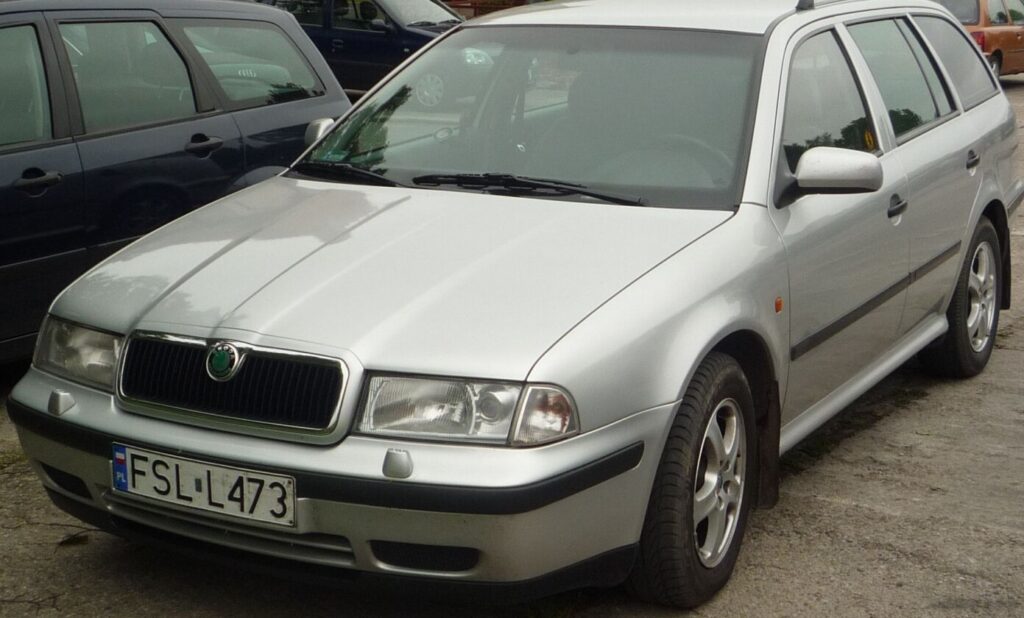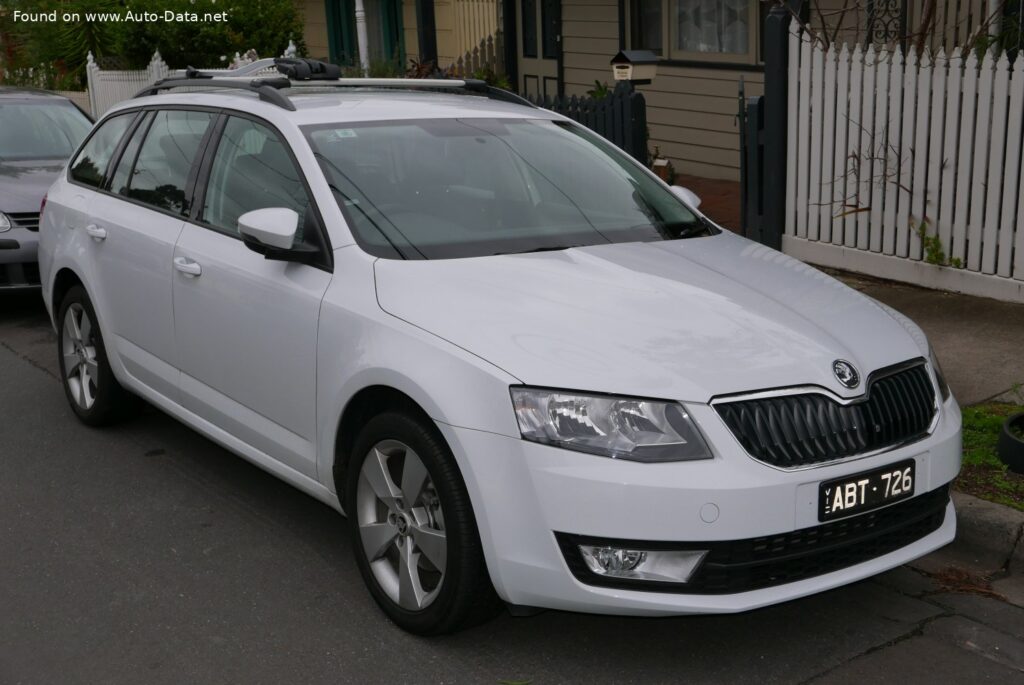
Skoda Octavia III Combi 1.6 TDI (105 Hp) DSG
The Skoda Octavia III Combi 1.6 TDI (105 Hp) DSG represents a pivotal model in the Czech automaker’s modern history, showcasing Skoda’s evolution from a niche Eastern European brand to a formidable player within the Volkswagen Group. Launched in 2013 and produced through 2015, this third-generation Octavia Combi (station wagon) was a cornerstone of Skoda’s strategy, offering exceptional practicality, efficiency, and value in the highly competitive European C-segment. While never officially sold in the United States, the Octavia Combi gained significant traction across Europe, particularly favored by families and fleet operators for its cavernous cargo space, robust build quality, and impressive fuel economy, especially in this diesel variant paired with an advanced automatic transmission. It embodied Skoda’s “Simply Clever” philosophy, delivering intelligent solutions and a premium feel at a more accessible price point than its Volkswagen siblings.
Engine and Performance: The Efficient 1.6 TDI in the Skoda Octavia III Combi 1.6 TDI (105 Hp) DSG
At the heart of this particular Octavia Combi lies the venerable 1.6-liter TDI (Turbocharged Direct Injection) diesel engine, specifically the EA288 / CLHA code, a powerplant renowned for its balance of efficiency and usable torque. This inline four-cylinder engine, featuring a DOHC (Double Overhead Camshaft) valvetrain and 16 valves, utilizes a common rail fuel injection system, a turbocharger, and an intercooler to produce its output. It delivers a respectable 105 horsepower at a broad range of 3000-4000 rpm, making it a flexible performer in everyday driving scenarios. More importantly for a diesel, it generates a robust 184.39 lb.-ft. of torque, available from a low 1500 rpm all the way up to 2750 rpm. This wide torque band ensures confident acceleration from a standstill and strong mid-range pull, ideal for highway cruising or hauling heavy loads.
Power is channeled to the front wheels through a sophisticated 7-speed DSG (Direct Shift Gearbox) automatic transmission. This dual-clutch unit is a hallmark of Volkswagen Group engineering, celebrated for its rapid, smooth gear changes and its significant contribution to fuel efficiency. The combination of the 1.6 TDI engine and the DSG transmission allows the Octavia Combi to accelerate from 0 to 60 mph in a brisk 10.5 seconds, reaching a top speed of 118.68 mph.
However, where this powertrain truly shines is in its fuel economy. Under the NEDC (New European Driving Cycle) testing, the Octavia III Combi 1.6 TDI (105 Hp) DSG achieved an impressive combined fuel consumption of 58.8 US mpg (4 liters per 100 km). Urban driving saw figures of 49 US mpg, while highway cruising pushed efficiency to an outstanding 65.3 US mpg. These figures, coupled with CO2 emissions of just 104 g/km and compliance with the Euro 5 emission standard, underscore its environmental credentials for its time. Further enhancing its efficiency are features like a Start & Stop system, which automatically shuts off the engine when the vehicle is stationary, and a particulate filter, which reduces harmful emissions.
Design and Features
The Skoda Octavia III Combi, with its station wagon body type, was designed with practicality and spaciousness at its core. Measuring 183.43 inches in length, 71.42 inches in width (79.41 inches including mirrors), and 57.68 inches in height, it commanded a significant road presence for its class. The 105.75-inch wheelbase contributed to a stable ride and generous interior volume. The exterior design, overseen by Jozef Kabaň, was characterized by clean lines, sharp creases, and a more assertive front fascia compared to its predecessor, aligning with the contemporary design language of the Volkswagen Group. Its aerodynamic profile, boasting a drag coefficient (Cd) of 0.301, further aided fuel efficiency and reduced wind noise.
Inside, the Octavia Combi offered comfortable seating for five adults, with a focus on ergonomics and durable materials. The true highlight, however, was its cargo capacity. With the rear seats in place, the trunk provided a remarkable 21.54 cubic feet (610 liters) of space. Folding the rear seats expanded this to an enormous 61.45 cubic feet (1740 liters), making it one of the most capacious vehicles in its segment and a genuine alternative to larger, more expensive station wagons. This practicality was further enhanced by a maximum roof load of 165.35 lbs. and the ability to tow a braked trailer up to 3306.93 lbs.
Standard features for a 2013 model in Europe would typically include power steering, a rack and pinion steering system with electric assist, and a comprehensive suite of safety technologies. Anti-lock Braking System (ABS) was standard, working in conjunction with ventilated discs at the front and solid discs at the rear to provide confident stopping power. The suspension system comprised an independent McPherson strut setup with coil springs and an anti-roll bar at the front, complemented by a torsion beam with coil springs at the rear, a common and cost-effective solution for front-wheel-drive compacts that still delivered a comfortable and composed ride.
Technical Specifications
| Category | Specification | Value |
|---|---|---|
General Information |
||
| Brand | Skoda | |
| Model | Octavia | |
| Generation | Octavia III Combi | |
| Type (Engine) | 1.6 TDI (105 Hp) DSG | |
| Start of Production | 2013 year | |
| End of Production | 2015 year | |
| Powertrain Architecture | Internal Combustion engine | |
| Body type | Station wagon (estate) | |
| Seats | 5 | |
| Doors | 5 | |
Performance Specs |
||
| Fuel consumption (economy) – urban (NEDC) | 49 US mpg (4.8 l/100 km) | |
| Fuel consumption (economy) – extra urban (NEDC) | 65.3 US mpg (3.6 l/100 km) | |
| Fuel consumption (economy) – combined (NEDC) | 58.8 US mpg (4 l/100 km) | |
| CO2 emissions (NEDC) | 104 g/km | |
| Fuel Type | Diesel | |
| Acceleration 0 – 60 mph | 10.5 sec | |
| Maximum speed | 118.68 mph (191 km/h) | |
| Emission standard | Euro 5 | |
| Weight-to-power ratio | 12.1 kg/Hp | |
| Weight-to-torque ratio | 5.1 kg/Nm | |
Engine Specs |
||
| Power | 105 Hp @ 3000-4000 rpm | |
| Power per liter | 65.7 Hp/l | |
| Torque | 184.39 lb.-ft. @ 1500-2750 rpm (250 Nm) | |
| Engine layout | Front, Transverse | |
| Engine Model/Code | EA288 / CLHA | |
| Engine displacement | 97.52 cu. in. (1598 cm3) | |
| Number of cylinders | 4 | |
| Engine configuration | Inline | |
| Cylinder Bore | 3.13 in. (79.5 mm) | |
| Piston Stroke | 3.17 in. (80.5 mm) | |
| Compression ratio | 16:1 | |
| Number of valves per cylinder | 4 | |
| Fuel injection system | Diesel Commonrail | |
| Engine aspiration | Turbocharger, Intercooler | |
| Valvetrain | DOHC | |
| Engine oil capacity | 4.86 US qt (4.6 l) | |
| Engine oil specification | Not specified | |
| Coolant | 8.88 US qt (8.4 l) | |
Engine Systems |
||
| Start & Stop System | Yes | |
| Particulate filter | Yes | |
Space, Volume and Weights |
||
| Kerb Weight | 2793.26 lbs. (1267 kg) | |
| Max. weight | 4215.24 lbs. (1912 kg) | |
| Max load | 1421.98 lbs. (645 kg) | |
| Trunk (boot) space – minimum | 21.54 cu. ft. (610 l) | |
| Trunk (boot) space – maximum | 61.45 cu. ft. (1740 l) | |
| Fuel tank capacity | 13.21 US gal (50 l) | |
| Max. roof load | 165.35 lbs. (75 kg) | |
| Permitted trailer load with brakes (12%) | 3306.93 lbs. (1500 kg) | |
| Permitted trailer load without brakes | 1455.05 lbs. (660 kg) | |
| Permitted towbar download | 165.35 lbs. (75 kg) | |
Dimensions |
||
| Length | 183.43 in. (4659 mm) | |
| Width | 71.42 in. (1814 mm) | |
| Width including mirrors | 79.41 in. (2017 mm) | |
| Height | 57.68 in. (1465 mm) | |
| Wheelbase | 105.75 in. (2686 mm) | |
| Front track | 60.98 in. (1549 mm) | |
| Rear (Back) track | 59.84 in. (1520 mm) | |
| Front overhang | 34.88 in. (886 mm) | |
| Rear overhang | 42.8 in. (1087 mm) | |
| Ride height (ground clearance) | 5.51 in. (140 mm) | |
| Drag coefficient (Cd) | 0.301 | |
| Minimum turning circle (turning diameter) | 36.25 ft. (11.05 m) | |
| Approach angle | 13.9° | |
| Departure angle | 12.2° | |
Drivetrain, Brakes and Suspension Specs |
||
| Drivetrain Architecture | The Internal combustion engine (ICE) drives the front wheels of the vehicle. | |
| Drive wheel | Front wheel drive | |
| Number of gears and type of gearbox | 7 gears, automatic transmission DSG | |
| Front suspension | Independent, type McPherson with coil spring and anti-roll bar | |
| Rear suspension | Coil spring, Torsion | |
| Front brakes | Ventilated discs | |
| Rear brakes | Disc | |
| Assisting systems | ABS (Anti-lock braking system) | |
| Steering type | Steering rack and pinion | |
| Power steering | Electric Steering | |
| Tires size | 195/65 R15; 205/55 R16 | |
| Wheel rims size | 6J x 15; 6.5J x 16 | |
Legacy and Market Impact
The Skoda Octavia III Combi 1.6 TDI (105 Hp) DSG played a crucial role in solidifying Skoda’s reputation as a purveyor of practical, high-quality, and value-oriented vehicles in the European market. Positioned as a direct competitor to popular C-segment station wagons like the Ford Focus Wagon, Opel Astra Sports Tourer, and its platform-mate, the Volkswagen Golf Variant, the Octavia Combi consistently managed to offer superior interior and cargo space without a significant price premium. This “more for less” philosophy resonated strongly with buyers, making it a particularly attractive option for families requiring versatility and for businesses seeking cost-effective and reliable fleet vehicles.
Its impact was significant: the Octavia, and especially the Combi variant, became Skoda’s best-selling model, demonstrating the brand’s ability to compete head-on with established Western European marques. The 1.6 TDI engine, paired with the DSG transmission, was a particularly popular choice, embodying the ideal combination of low running costs, robust performance for daily driving, and environmental compliance (Euro 5). This powertrain proved to be a workhorse, capable of high mileage with consistent reliability, further enhancing the Octavia’s appeal.
The third-generation Octavia also moved Skoda further upmarket in terms of perceived quality and technology. While still maintaining its value proposition, the interior appointments, available features, and overall driving dynamics were considerably improved, bringing it closer to its Volkswagen Group stablemates. Its legacy is one of smart engineering, practical design, and a testament to Skoda’s successful strategy of offering “Simply Clever” solutions that genuinely meet the needs of a broad range of consumers. The Octavia III Combi helped cement Skoda’s position as a respected and integral part of the European automotive landscape, a reputation it continues to build upon today.