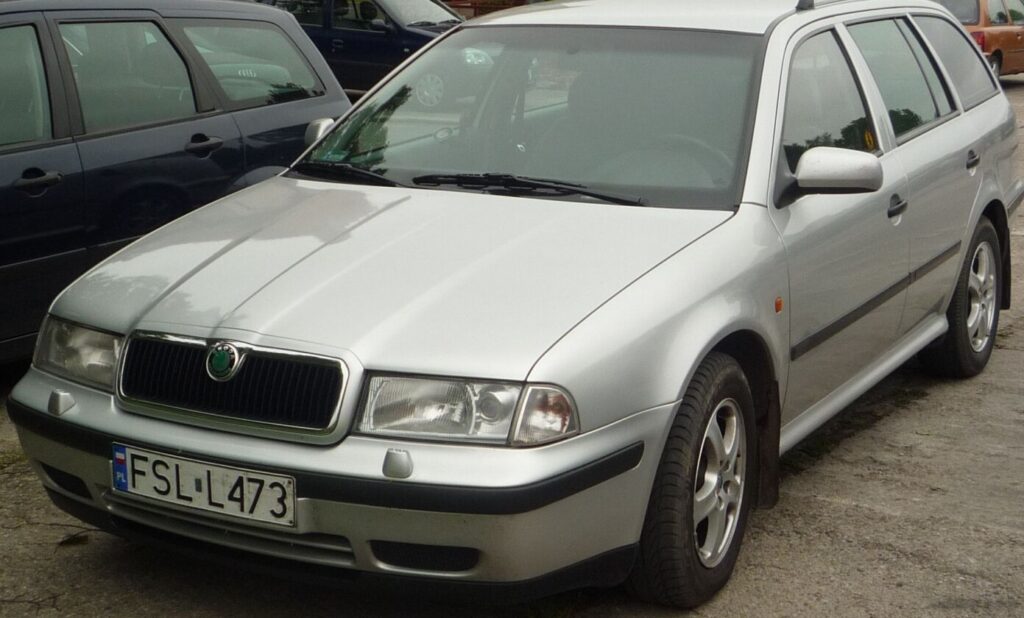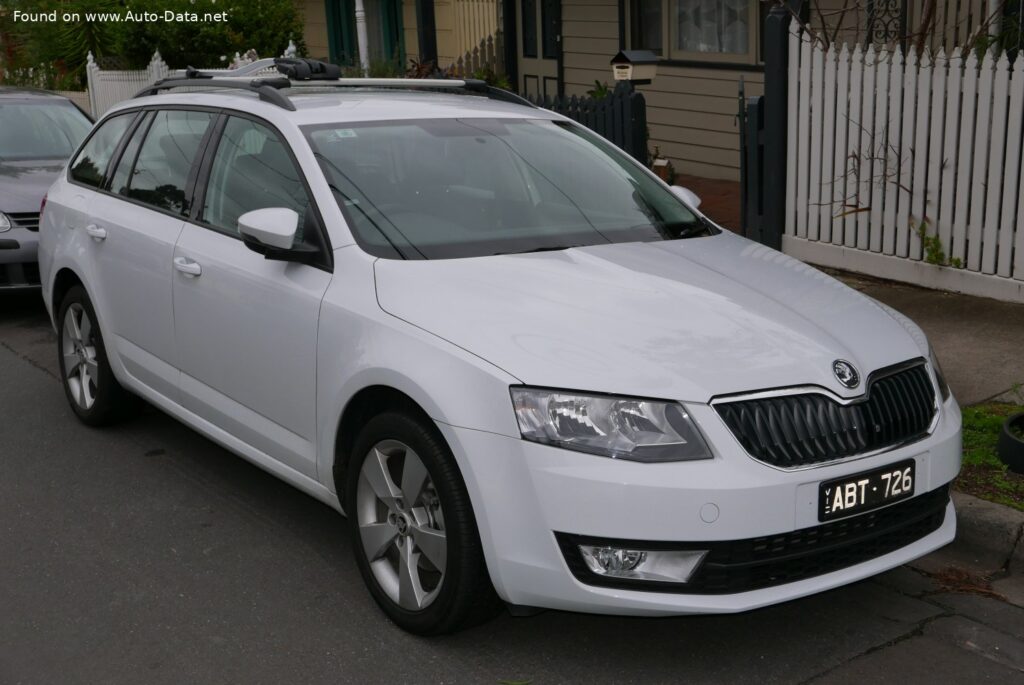
The Skoda Octavia III Combi 1.8 TSI (180 Hp): A European Workhorse
The Skoda Octavia, a cornerstone of the Czech automaker’s lineup, has long been celebrated for its exceptional blend of practicality, value, and robust engineering. The third-generation model, specifically the
Skoda Octavia III Combi 1.8 TSI (180 Hp)
variant, produced from 2013 to 2017, exemplifies this philosophy. While the Skoda brand, and particularly the Octavia, remains a familiar sight across European roads, it was never officially sold in the United States. This model, known as a “station wagon” in the US or “estate” in Europe, occupied the crucial compact family car segment, offering a compelling alternative to more premium German rivals by leveraging its Volkswagen Group underpinnings. The 1.8 TSI engine option represented a strong performance offering within the range, balancing spirited driving dynamics with commendable fuel efficiency, making it a highly attractive proposition for families and business users alike in its primary markets.
Engine and Performance: Powering the Skoda Octavia III Combi
At the heart of the
Skoda Octavia III Combi 1.8 TSI (180 Hp)
lies a sophisticated 1.8-liter (1798 cm³ or 109.72 cu. in.) turbocharged inline-four gasoline engine, internally designated as EA888 / CJSA. This powertrain architecture, a hallmark of Volkswagen Group engineering, features a dual fuel injection system, combining both direct injection and multi-port manifold injection to optimize fuel delivery across various operating conditions. This setup, coupled with a turbocharger and intercooler, ensures a broad and accessible powerband.
The engine produces a robust 180 horsepower (Hp) delivered between 5100 and 6200 revolutions per minute (rpm), providing ample power for both daily commuting and longer highway journeys. More critically for a family-oriented vehicle, the torque output is a substantial 184.39 lb.-ft. (250 Nm), available across an impressively wide range from a low 1250 rpm all the way up to 5000 rpm. This flat torque curve translates into excellent low-end grunt and flexible in-gear acceleration, reducing the need for frequent downshifts.
Mated to a precise 6-speed manual transmission, the engine drives the front wheels, offering an engaging driving experience. Performance figures underscore its capability: the Octavia III Combi 1.8 TSI accelerates from 0 to 60 mph in a brisk 7 seconds, with 0-62 mph (100 km/h) taking 7.4 seconds. Its top speed is rated at 142.29 mph (229 km/h), making it a capable performer on the German Autobahn or other unrestricted European highways.
Efficiency was also a key focus, with the engine meeting the stringent Euro 6 emission standard. The vehicle incorporates a Start & Stop system, further enhancing fuel economy, particularly in urban environments. Combined fuel consumption is an impressive 38.6 US mpg (6.1 l/100 km), while extra-urban driving can see figures as high as 46.1 US mpg (5.1 l/100 km). Even in city driving, it achieves a respectable 30.2 US mpg (7.8 l/100 km), demonstrating a strong balance between performance and economy. The CO2 emissions are kept to 141 g/km, reflecting its relatively clean operation for its power output.
Design and Features: Practicality Meets Modernity
The Skoda Octavia III Combi represents a significant step forward in design and packaging for the brand. Its station wagon (estate) body type is inherently practical, offering a cavernous interior volume without the bulk of an SUV. The design language, shared with other Volkswagen Group products of the era, is characterized by sharp lines, precise creases, and a clean, understated aesthetic. At 183.43 inches (4659 mm) long, 71.42 inches (1814 mm) wide (79.41 inches or 2017 mm including mirrors), and 57.68 inches (1465 mm) tall, it strikes a balance between interior space and maneuverability. The wheelbase of 105.51 inches (2680 mm) contributes to a stable ride and generous passenger room.
Inside, the Octavia III Combi is designed for comfort and utility. The five-seat configuration provides ample room for adults, and the materials and build quality are typically robust, reflecting Skoda’s commitment to durability. The true highlight, however, is the cargo capacity. With the rear seats in place, the trunk offers a substantial 21.54 cubic feet (610 liters) of space. Folding the rear seats down expands this to an enormous 61.45 cubic feet (1740 liters), making it a class leader and highly adaptable for hauling luggage, sports equipment, or even furniture. The low drag coefficient of 0.308 also aids in fuel efficiency and reduces wind noise at highway speeds.
Underneath, the Octavia III Combi features a sophisticated suspension setup, with an independent McPherson strut system at the front, complemented by coil springs and an anti-roll bar. The rear utilizes an independent multi-link spring suspension with a stabilizer, a more advanced setup typically found in higher-segment vehicles, which contributes to its composed ride quality and agile handling. Braking is handled by ventilated discs at the front and solid discs at the rear, supported by an Anti-lock Braking System (ABS) for enhanced safety. The electric power steering system provides precise feedback and light effort at low speeds, aiding in urban driving and parking. The vehicle offered various tire and wheel size options, ranging from 205/55 R16 to more aggressive 225/40 R18 setups.
Technical Specifications
| Category | Specification |
|---|---|
| General Information | |
| Brand | Skoda |
| Model | Octavia |
| Generation | Octavia III Combi |
| Engine Type | 1.8 TSI (180 Hp) |
| Production Start | 2013 |
| Production End | 2017 |
| Body Type | Station wagon (estate) |
| Seats | 5 |
| Doors | 5 |
| Powertrain Architecture | Internal Combustion engine |
| Performance Specs | |
| Fuel Consumption (Urban) | 7.8 l/100 km (30.2 US mpg) |
| Fuel Consumption (Extra Urban) | 5.1 l/100 km (46.1 US mpg) |
| Fuel Consumption (Combined) | 6.1 l/100 km (38.6 US mpg) |
| CO2 Emissions | 141 g/km |
| Fuel Type | Petrol (Gasoline) |
| Acceleration 0-60 mph (Calculated) | 7 seconds |
| Acceleration 0-100 km/h | 7.4 seconds |
| Maximum Speed | 229 km/h (142.29 mph) |
| Emission Standard | Euro 6 |
| Weight-to-Power Ratio | 7 kg/Hp (142.1 Hp/tonne) |
| Weight-to-Torque Ratio | 5.1 kg/Nm (197.3 Nm/tonne) |
| Engine Specs | |
| Power | 180 Hp @ 5100-6200 rpm |
| Power per liter | 100.1 Hp/l |
| Torque | 250 Nm (184.39 lb.-ft.) @ 1250-5000 rpm |
| Engine Layout | Front, Transverse |
| Engine Model/Code | EA888 / CJSA |
| Engine Displacement | 1798 cm³ (1.8 liters / 109.72 cu. in.) |
| Number of Cylinders | 4 |
| Engine Configuration | Inline |
| Cylinder Bore | 82.5 mm (3.25 in.) |
| Piston Stroke | 84.2 mm (3.31 in.) |
| Compression Ratio | 9.6:1 |
| Valves per Cylinder | 4 |
| Fuel Injection System | Direct injection and Multi-port manifold injection |
| Engine Aspiration | Turbocharger, Intercooler |
| Valvetrain | DOHC |
| Engine Oil Capacity | 5.2 l (5.49 US qt) |
| Coolant Capacity | 7.8 l (8.24 US qt) |
| Engine Systems | Start & Stop System |
| Space, Volume & Weights | |
| Kerb Weight | 1267 kg (2793.26 lbs) |
| Max. Weight | 1852 kg (4082.96 lbs) |
| Max Load | 585 kg (1289.7 lbs) |
| Trunk (Boot) Space – Minimum | 610 l (21.54 cu. ft.) |
| Trunk (Boot) Space – Maximum | 1740 l (61.45 cu. ft.) |
| Fuel Tank Capacity | 50 l (13.21 US gal) |
| Max. Roof Load | 75 kg (165.35 lbs) |
| Permitted Trailer Load with Brakes (12%) | 1600 kg (3527.4 lbs) |
| Permitted Trailer Load without Brakes | 660 kg (1455.05 lbs) |
| Permitted Towbar Download | 75 kg (165.35 lbs) |
| Dimensions | |
| Length | 4659 mm (183.43 in.) |
| Width | 1814 mm (71.42 in.) |
| Width Including Mirrors | 2017 mm (79.41 in.) |
| Height | 1465 mm (57.68 in.) |
| Wheelbase | 2680 mm (105.51 in.) |
| Front Track | 1543 mm (60.75 in.) |
| Rear Track | 1512 mm (59.53 in.) |
| Ride Height (Ground Clearance) | 140 mm (5.51 in.) |
| Drag Coefficient (Cd) | 0.308 |
| Minimum Turning Circle | 11.04 m (36.22 ft.) |
| Approach Angle | 13.9° |
| Departure Angle | 12.2° |
| Drivetrain, Brakes & Suspension | |
| Drivetrain Architecture | Front-wheel drive, Internal Combustion engine |
| Drive Wheel | Front-wheel drive |
| Number of Gears & Gearbox Type | 6 gears, manual transmission |
| Front Suspension | Independent, McPherson with coil spring and anti-roll bar |
| Rear Suspension | Independent multi-link spring suspension with stabilizer |
| Front Brakes | Ventilated discs |
| Rear Brakes | Disc |
| Assisting Systems | ABS (Anti-lock braking system) |
| Steering Type | Steering rack and pinion |
| Power Steering | Electric Steering |
| Tire Sizes | 205/55 R16; 225/45 R17; 225/40 R18 |
| Wheel Rim Sizes | 6.5J x 16; 7J x 17; 7.5J x 18 |
Legacy and Market Impact of the Skoda Octavia III Combi
The Skoda Octavia III Combi, particularly in its 1.8 TSI (180 Hp) guise, played a pivotal role in solidifying Skoda’s reputation as a purveyor of high-quality, practical, and well-engineered vehicles within the competitive European market. For decades, Skoda had worked to shed its post-communist era image, and models like the Octavia III were instrumental in this transformation. By leveraging the Volkswagen Group’s MQB platform, the Octavia offered a level of sophistication, safety, and driving dynamics that rivaled its more expensive stablemates, such as the Volkswagen Golf Variant and Audi A3 Sportback, but at a more accessible price point.
In Europe, the Octavia Combi was a perennial best-seller, often outselling its hatchback sibling due to its unparalleled cargo capacity and family-friendly appeal. Its primary competitors included other popular compact wagons like the Ford Focus Estate, Opel Astra Sports Tourer, Peugeot 308 SW, and Renault Megane Sport Tourer. The 1.8 TSI variant, with its strong performance and relatively good fuel economy, was particularly appealing to private buyers and fleet operators who desired more power than the smaller 1.4 TSI, but didn’t need the higher running costs of the 2.0 TSI or diesel engines.
The Octavia’s success was not just about sales volume; it was about perception. It proved that a Skoda could be just as refined, reliable, and technologically advanced as any other mainstream European car. Its ‘Simply Clever’ features, robust build, and understated elegance resonated with a broad demographic seeking sensible, no-nonsense transportation without sacrificing quality or driving pleasure.
Despite its widespread success in Europe, the
Skoda Octavia III Combi 1.8 TSI (180 Hp)
and indeed the entire Skoda brand, remained absent from the North American market. This can be attributed to several factors, including Volkswagen’s existing brand portfolio in the US (VW, Audi), the high cost of establishing a new brand presence, and differing consumer preferences that increasingly favored SUVs and crossovers over traditional sedans and station wagons. For American automotive enthusiasts, the Octavia Combi represents an intriguing “forbidden fruit” – a testament to European automotive engineering that prioritizes practicality and efficiency in a way not always seen on US shores. Its legacy is one of quiet competence, a vehicle that consistently delivered more than expected for its segment, firmly establishing Skoda as a formidable player in the global automotive landscape.