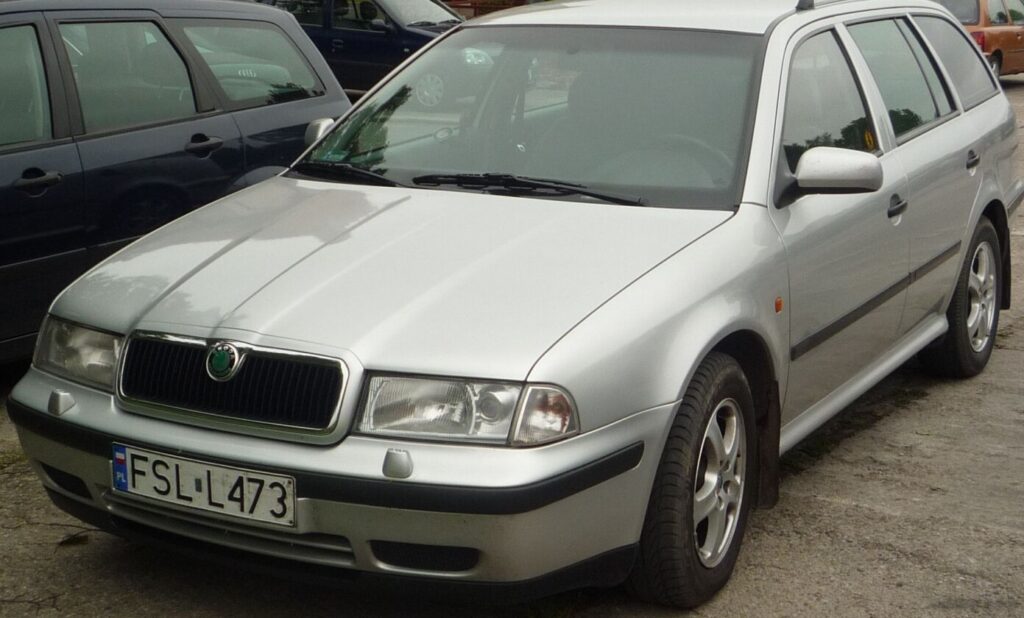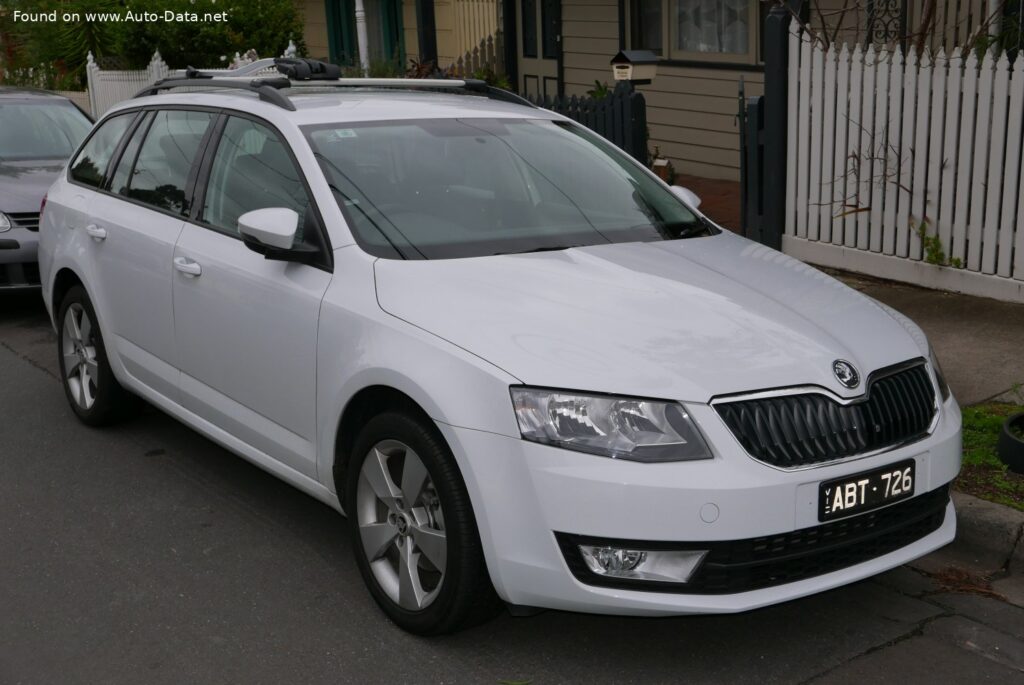
Skoda Octavia III Combi 2.0 TDI (150 Hp)
The Skoda Octavia III Combi 2.0 TDI (150 Hp) represents a crucial offering from the Czech automaker Skoda, a subsidiary of the Volkswagen Group, during its production run from 2013 to 2017. As the third generation of the highly successful Octavia line, the Combi (station wagon) variant was designed to cater to the European market’s demand for spacious, practical, and fuel-efficient family vehicles. While never officially sold in the United States, the Octavia III Combi was a cornerstone of Skoda’s strategy to provide “more car for the money,” blending Volkswagen Group’s robust engineering with Skoda’s renowned emphasis on interior space and pragmatic features. This particular model, equipped with the 2.0-liter TDI diesel engine, was lauded for its compelling balance of performance, exceptional fuel economy, and environmental consciousness, making it a popular choice for families and business users across Europe.
Engine and Performance: The Heart of the Skoda Octavia III Combi 2.0 TDI (150 Hp)
Under the hood, the Skoda Octavia III Combi 2.0 TDI (150 Hp) featured a sophisticated powertrain designed for efficiency and responsiveness. The internal combustion engine architecture was a front, transverse-mounted 2.0-liter (1968 cm³ or 120.09 cu. in.) inline four-cylinder diesel unit, part of Volkswagen Group’s EA288 engine family (specifically models CKFC, CRMB, CYKA). This engine utilized a DOHC (Double Overhead Camshaft) valvetrain with four valves per cylinder, a common rail direct fuel injection system, and was significantly enhanced by a turbocharger and intercooler. These technologies combined to produce a respectable 150 horsepower at 3500-4000 rpm, delivering a power-per-liter output of 76.2 Hp/l.
More impressively for a diesel, the engine generated a robust 236.02 lb.-ft. (320 Nm) of torque, available across a wide and accessible range from 1750 to 3000 rpm. This ample torque provided excellent pulling power, crucial for a family station wagon, especially when laden with passengers and cargo or when towing. Mated to a precise 6-speed manual transmission, the power was sent to the front wheels, contributing to the vehicle’s straightforward and predictable driving dynamics.
Performance figures underscored the Octavia’s capability. It could accelerate from 0 to 60 mph in a swift 8.2 seconds (0-100 km/h in 8.6 seconds) and reach a top speed of 134.22 mph (216 km/h). These numbers positioned it competitively within its segment, offering more than adequate performance for highway cruising and overtaking maneuvers.
Fuel efficiency was a major highlight, a hallmark of modern European diesel engines. The Octavia III Combi 2.0 TDI achieved remarkable NEDC (New European Driving Cycle) fuel consumption figures: 46.1 US mpg (5.1 l/100 km) in urban conditions, an outstanding 63.6 US mpg (3.7 l/100 km) on extra-urban cycles, and a combined average of 56 US mpg (4.2 l/100 km). This exceptional economy, coupled with a 13.21 US gallon (50 l) fuel tank, granted the Octavia an impressive cruising range. Furthermore, with CO2 emissions of just 110 g/km and compliance with the Euro 5 emission standard, it was considered a very environmentally conscious choice for its time, featuring a Start & Stop System and a Particulate filter to reduce its ecological footprint. The vehicle’s weight-to-power ratio stood at 8.5 kg/Hp (117.5 Hp/tonne), reflecting its efficient design.
Design and Features
The Skoda Octavia III Combi adopted a clean, crisp, and functional design language, characteristic of Skoda’s pragmatic approach. As a 5-door station wagon (estate), its primary design objective was practicality and maximizing interior volume. Measuring 183.43 inches (4659 mm) in length, 71.42 inches (1814 mm) in width (79.41 inches or 2017 mm including mirrors), and 57.68 inches (1465 mm) in height, the Octavia Combi offered substantial exterior dimensions for its class. The 105.75-inch (2686 mm) wheelbase contributed directly to a remarkably spacious cabin, comfortably seating five occupants.
One of the Octavia Combi’s most compelling features was its cavernous cargo capacity. With the rear seats in place, it boasted a minimum trunk space of 21.54 cu. ft. (610 liters), which could expand to a massive 61.45 cu. ft. (1740 liters) with the rear seats folded down. This made it one of the most practical vehicles in its segment, easily accommodating luggage, sports equipment, or large shopping hauls. Maximum payload capacity was 1421.98 lbs. (645 kg), and it could tow up to 3527.4 lbs. (1600 kg) with brakes, further cementing its utility.
From a chassis perspective, the Octavia III Combi featured an independent McPherson strut front suspension with coil springs and an anti-roll bar, paired with a torsion beam rear suspension with coil springs. This setup provided a balanced ride, absorbing road imperfections effectively while maintaining stable handling. Braking duties were handled by ventilated discs at the front and solid discs at the rear, complemented by an Anti-lock Braking System (ABS) for enhanced safety. The electric power steering system, a rack and pinion type, offered light and precise control, making urban maneuvering and highway driving effortless. The turning circle was a reasonable 36.25 ft. (11.05 m).
Standard tire sizes ranged from 195/65 R15 to 225/45 R17, mounted on corresponding wheel rims. The vehicle’s aerodynamic efficiency was respectable for a station wagon, with a drag coefficient (Cd) of 0.304, contributing to its excellent fuel economy and reduced wind noise. For its era, the Octavia III Combi featured a suite of modern amenities and safety features expected in a contemporary family car, though specific details beyond ABS and engine systems were not provided in the raw data.
Technical Specifications
| Category | Specification |
|---|---|
| Brand | Skoda |
| Model | Octavia |
| Generation | Octavia III Combi |
| Type (Engine) | 2.0 TDI (150 Hp) |
| Start of production | 2013 year |
| End of production | 2017 year |
| Powertrain Architecture | Internal Combustion Engine |
| Body type | Station wagon (estate) |
| Seats | 5 |
| Doors | 5 |
| Performance Specs | |
| Fuel consumption (urban, NEDC) | 5.1 l/100 km (46.1 US mpg) |
| Fuel consumption (extra urban, NEDC) | 3.7 l/100 km (63.6 US mpg) |
| Fuel consumption (combined, NEDC) | 4.2 l/100 km (56 US mpg) |
| CO2 emissions (NEDC) | 110 g/km |
| Fuel Type | Diesel |
| Acceleration 0 – 60 mph | 8.2 sec |
| Acceleration 0 – 100 km/h | 8.6 sec |
| Maximum speed | 134.22 mph (216 km/h) |
| Emission standard | Euro 5 |
| Weight-to-power ratio | 8.5 kg/Hp (117.5 Hp/tonne) |
| Weight-to-torque ratio | 4 kg/Nm (250.6 Nm/tonne) |
| Engine Specs | |
| Power | 150 Hp @ 3500-4000 rpm |
| Power per liter | 76.2 Hp/l |
| Torque | 236.02 lb.-ft. (320 Nm) @ 1750-3000 rpm |
| Engine layout | Front, Transverse |
| Engine Model/Code | EA288 / CKFC, CRMB, CYKA |
| Engine displacement | 120.09 cu. in. (1968 cm³) |
| Number of cylinders | 4 |
| Engine configuration | Inline |
| Cylinder Bore | 3.19 in. (81 mm) |
| Piston Stroke | 3.76 in. (95.5 mm) |
| Compression ratio | 16.2:1 |
| Number of valves per cylinder | 4 |
| Fuel injection system | Diesel Commonrail |
| Engine aspiration | Turbocharger, Intercooler |
| Valvetrain | DOHC |
| Engine oil capacity | 4.86 US qt (4.6 l) |
| Coolant | 12.26 US qt (11.6 l) |
| Engine systems | Start & Stop System, Particulate filter |
| Space, Volume and Weights | |
| Kerb Weight | 2815.3 lbs. (1277 kg) |
| Max. weight | 4237.28 lbs. (1922 kg) |
| Max load | 1421.98 lbs. (645 kg) |
| Trunk (boot) space – minimum | 21.54 cu. ft. (610 l) |
| Trunk (boot) space – maximum | 61.45 cu. ft. (1740 l) |
| Fuel tank capacity | 13.21 US gal (50 l) |
| Max. roof load | 165.35 lbs. (75 kg) |
| Permitted trailer load with brakes (12%) | 3527.4 lbs. (1600 kg) |
| Permitted trailer load without brakes | 1477.1 lbs. (670 kg) |
| Permitted towbar download | 165.35 lbs. (75 kg) |
| Dimensions | |
| Length | 183.43 in. (4659 mm) |
| Width | 71.42 in. (1814 mm) |
| Width including mirrors | 79.41 in. (2017 mm) |
| Height | 57.68 in. (1465 mm) |
| Wheelbase | 105.75 in. (2686 mm) |
| Front track | 60.75 in. (1543 mm) |
| Rear (Back) track | 59.61 in. (1514 mm) |
| Front overhang | 34.88 in. (886 mm) |
| Rear overhang | 42.8 in. (1087 mm) |
| Ride height (ground clearance) | 5.51 in. (140 mm) |
| Drag coefficient (Cd) | 0.304 |
| Minimum turning circle (turning diameter) | 36.25 ft. (11.05 m) |
| Approach angle | 13.9° |
| Departure angle | 12.2° |
| Drivetrain, Brakes and Suspension Specs | |
| Drivetrain Architecture | Front-wheel drive, Internal Combustion Engine |
| Drive wheel | Front wheel drive |
| Number of gears and type of gearbox | 6 gears, manual transmission |
| Front suspension | Independent, type McPherson with coil spring and anti-roll bar |
| Rear suspension | Coil spring, Torsion |
| Front brakes | Ventilated discs |
| Rear brakes | Disc |
| Assisting systems | ABS (Anti-lock braking system) |
| Steering type | Steering rack and pinion |
| Power steering | Electric Steering |
| Tires size | 195/65 R15; 205/55 R16; 225/45 R17 |
| Wheel rims size | 6J x 15; 6.5J x 16; 7.5J x 17 |
Legacy and Market Impact
The Skoda Octavia III Combi 2.0 TDI (150 Hp) played a pivotal role in solidifying Skoda’s reputation as a smart, value-driven brand within the highly competitive European automotive landscape. As a core model for Skoda, the Octavia, particularly in its Combi form, consistently ranked among the best-selling vehicles in many European countries. Its appeal stemmed from its unique positioning: offering near-midsize space and practicality at a compact car price point, all underpinned by the proven engineering and reliability of the Volkswagen Group.
In its primary market, the Octavia III Combi competed fiercely against established rivals such as the Volkswagen Golf Variant, Ford Focus Estate, Opel Astra Sports Tourer, and the Renault Megane Estate. What distinguished the Octavia was its superior interior volume and cargo capacity, often surpassing even larger vehicles. This “Simply Clever” philosophy, as Skoda termed it, resonated deeply with European consumers who prioritized utility, low running costs, and robust build quality.
The 2.0 TDI (150 Hp) variant, in particular, was highly regarded for its blend of performance and astounding fuel efficiency. It catered to a broad spectrum of buyers, from young families needing versatile transport to fleet operators seeking economical and reliable vehicles. Its low CO2 emissions and excellent mpg figures were significant selling points in markets with stringent environmental regulations and high fuel prices. The manual transmission offered an engaging driving experience, while the front-wheel-drive architecture ensured predictable handling in various conditions.
Historically, the Octavia III Combi represented a maturation of the Skoda brand. It shed any lingering perceptions of being a budget-only option, instead establishing itself as a sophisticated, well-engineered, and highly practical alternative to its more expensive Volkswagen Group siblings. Its success contributed significantly to Skoda’s growth and helped the brand expand its presence across Europe and other global markets, even if it remained an unfulfilled aspiration for American consumers. The Skoda Octavia III Combi 2.0 TDI (150 Hp) stands as a testament to intelligent automotive design, prioritizing real-world usability and efficiency, and leaving a lasting legacy as a benchmark for compact family station wagons.