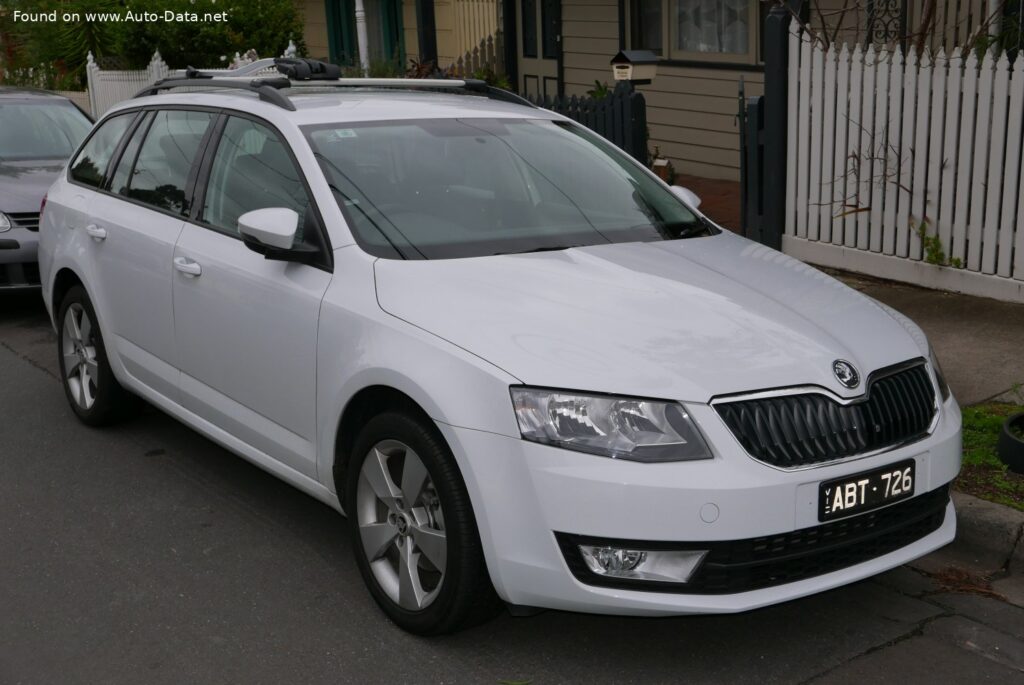
The Skoda Octavia III Combi 2.0 TDI (184 Hp) DSG 4×4: A Deep Dive into European Practicality and Performance
The Skoda Octavia III Combi 2.0 TDI (184 Hp) DSG 4×4 represents a pivotal offering from the Czech automaker, Skoda, a brand renowned for its blend of practicality, value, and robust engineering derived from its parent company, Volkswagen Group. Produced between 2013 and 2017, this particular variant of the third-generation Octavia Combi (station wagon) was a highly capable and versatile vehicle, primarily targeting the demanding European market. While the Skoda brand is not sold in the United States, understanding its role and technical prowess provides valuable insight into the global automotive landscape and the diverse needs of international consumers. This model combined a powerful yet efficient turbodiesel engine with an advanced automatic transmission and all-wheel drive, making it a compelling choice for families, business users, and those living in regions with challenging weather conditions.
Positioned in the competitive compact family car segment, the Octavia III Combi distinguished itself with its cavernous cargo space, comfortable ride, and sophisticated powertrain. The 2.0 TDI engine, a staple of the Volkswagen Group, delivered a remarkable balance of performance and fuel economy, while the DSG (Direct Shift Gearbox) offered seamless gear changes. The addition of a 4×4 drivetrain further enhanced its appeal, providing superior traction and stability, a feature not commonly found in its direct competitors within this segment at the time. This article will delve into the technical specifications, design philosophy, and market impact of this significant European vehicle.
Engine and Performance of the Skoda Octavia III Combi 2.0 TDI (184 Hp) DSG 4×4
At the heart of the Skoda Octavia III Combi 2.0 TDI (184 Hp) DSG 4×4 lies the acclaimed EA288 family 2.0-liter turbodiesel engine, a four-cylinder inline unit featuring a DOHC valvetrain and a sophisticated common rail fuel injection system. This powerplant was engineered for both robust performance and impressive efficiency, characteristics highly valued in the European market. It produced a substantial 184 horsepower (Hp) at 3500-4000 rpm, delivering a power-per-liter ratio of 93.5 Hp/l. More importantly for real-world driving, the engine generated a commanding 280.27 lb.-ft. (380 Nm) of torque, available across a broad rev range from 1750 to 3250 rpm. This ample torque ensured strong acceleration and effortless cruising, even when fully loaded or towing.
Power was expertly managed by a 6-speed DSG automatic transmission, known for its rapid and smooth gear changes, contributing significantly to both the car’s dynamic performance and its fuel efficiency. This sophisticated dual-clutch gearbox allowed the Octavia Combi to accelerate from 0 to 60 mph in a brisk 6.8 seconds, with a top speed reaching 140.43 mph (226 km/h). These figures placed it among the quicker options in its class, especially for a diesel-powered station wagon.
The “4×4” designation signifies a capable all-wheel-drive system, which in this architecture, typically means a Haldex-type setup. This system primarily drives the front wheels, engaging the rear wheels via an electrically or mechanically operated clutch only when additional traction is needed. This on-demand approach optimizes fuel efficiency during normal driving conditions while providing enhanced grip on slippery surfaces or during spirited driving.
Despite its performance capabilities, the 2.0 TDI engine was remarkably frugal. It achieved an impressive combined fuel economy of 48 US mpg (4.9 l/100 km) according to the NEDC standard, with urban consumption at 42 US mpg (5.6 l/100 km) and extra-urban at 53.5 US mpg (4.4 l/100 km). This efficiency was further aided by features such as a Start & Stop System and a Particulate Filter, which also ensured compliance with the strict Euro 6 emission standard, emitting only 129 g/km of CO2. The vehicle’s weight-to-power ratio of 7.7 kg/Hp (130.5 Hp/tonne) and weight-to-torque ratio of 3.7 kg/Nm (269.5 Nm/tonne) underscore its well-engineered balance of mass and motive force.
Design and Features
The Skoda Octavia III Combi adopted a clean, contemporary design language that emphasized practicality and understated elegance, characteristic of its Volkswagen Group stablemates. As a five-door station wagon (known as an “estate” in many markets), its body style was inherently focused on maximizing interior volume and cargo capacity. Measuring 183.43 inches (4659 mm) in length, 71.42 inches (1814 mm) in width (79.41 inches or 2017 mm including mirrors), and 57.6 inches (1463 mm) in height, the Octavia Combi offered substantial exterior dimensions for its class. Its wheelbase of 105.51 inches (2680 mm) contributed to a stable ride and generous passenger space.
One of the Octavia Combi’s most compelling features was its exceptional cargo capacity. With the rear seats in place, it offered a voluminous 21.54 cubic feet (610 liters) of trunk space. When the rear seats were folded down, this expanded to an cavernous 61.45 cubic feet (1740 liters), making it one of the most practical vehicles in its segment for hauling luggage, groceries, or larger items. The design also incorporated a relatively low loading sill, enhancing ease of use.
The interior, while not overtly luxurious, was designed with ergonomics and functionality in mind. High-quality materials and solid build quality were evident throughout the cabin, ensuring a durable and comfortable environment for occupants. Standard features for the generation included power steering with electric assistance, a rack and pinion steering type, and a robust braking system comprising ventilated discs at the front and disc brakes at the rear, complemented by an Anti-lock Braking System (ABS). The suspension setup, with an independent McPherson strut system at the front and a multi-link independent suspension at the rear, provided a well-judged balance between ride comfort and agile handling. This sophisticated rear suspension, often reserved for higher-end models, further underscored Skoda’s commitment to quality.
The vehicle’s aesthetic was further enhanced by a range of available tire and wheel sizes, from 205/55 R16 to more aggressive 225/35 R19 options on corresponding rim sizes. Its drag coefficient (Cd) of 0.306 was competitive for a station wagon, contributing to its fuel efficiency and reduced wind noise at higher speeds. With a ground clearance of 5.51 inches (140 mm), and decent approach and departure angles (13.9° and 12.2° respectively), the 4×4 variant offered a degree of capability beyond paved roads, suitable for light off-road excursions or navigating rough terrain.
Technical Specifications
| Category | Specification | Value |
|---|---|---|
General Information |
||
| Brand | Skoda | |
| Model | Octavia | |
| Generation | Octavia III Combi | |
| Type (Engine) | 2.0 TDI (184 Hp) DSG 4×4 | |
| Production Start | 2013 | |
| Production End | 2017 | |
| Powertrain Architecture | Internal Combustion engine | |
| Body type | Station wagon (estate) | 5 Doors, 5 Seats |
Performance Specifications |
||
| Fuel Consumption (Urban, NEDC) | 5.6 l/100 km (42 US mpg) | |
| Fuel Consumption (Extra Urban, NEDC) | 4.4 l/100 km (53.5 US mpg) | |
| Fuel Consumption (Combined, NEDC) | 4.9 l/100 km (48 US mpg) | |
| CO2 Emissions (NEDC) | 129 g/km | |
| Fuel Type | Diesel | |
| Acceleration 0 – 60 mph | 6.8 seconds | |
| Maximum Speed | 140.43 mph (226 km/h) | |
| Emission Standard | Euro 6 | |
| Weight-to-Power Ratio | 7.7 kg/Hp (130.5 Hp/tonne) | |
| Weight-to-Torque Ratio | 3.7 kg/Nm (269.5 Nm/tonne) | |
Engine Specifications |
||
| Power | 184 Hp @ 3500-4000 rpm | |
| Power per liter | 93.5 Hp/l | |
| Torque | 280.27 lb.-ft. (380 Nm) @ 1750-3250 rpm | |
| Engine Layout | Front, Transverse | |
| Engine Model/Code | EA288 / CUNA, CUPA, DJGA | |
| Engine Displacement | 120.09 cu. in. (1968 cm3) | |
| Number of Cylinders | 4 | Inline |
| Cylinder Bore | 3.19 in. (81 mm) | |
| Piston Stroke | 3.76 in. (95.5 mm) | |
| Compression Ratio | 15.8:1 | |
| Valves per Cylinder | 4 | |
| Fuel Injection System | Diesel Commonrail | |
| Engine Aspiration | Turbocharger, Intercooler | |
| Valvetrain | DOHC | |
| Engine Oil Capacity | 4.86 US qt (4.6 l) | |
| Coolant Capacity | 12.26 US qt (11.6 l) | |
| Engine Systems | Start & Stop System, Particulate filter | |
Space, Volume and Weights |
||
| Kerb Weight | 3108.52 lbs. (1410 kg) | |
| Max. Weight | 4515.07 lbs. (2048 kg) | |
| Max Load | 1406.55 lbs. (638 kg) | |
| Trunk (Boot) Space – Minimum | 21.54 cu. ft. (610 l) | |
| Trunk (Boot) Space – Maximum | 61.45 cu. ft. (1740 l) | |
| Fuel Tank Capacity | 13.21 US gal (50 l) | |
| Max. Roof Load | 165.35 lbs. (75 kg) | |
| Permitted Trailer Load with Brakes (12%) | 3968.32 lbs. (1800 kg) | |
| Permitted Trailer Load without Brakes | 1609.37 lbs. (730 kg) | |
| Permitted Towbar Download | 165.35 lbs. (75 kg) | |
Dimensions |
||
| Length | 183.43 in. (4659 mm) | |
| Width | 71.42 in. (1814 mm) | |
| Width including mirrors | 79.41 in. (2017 mm) | |
| Height | 57.6 in. (1463 mm) | |
| Wheelbase | 105.51 in. (2680 mm) | |
| Front Track | 60.75 in. (1543 mm) | |
| Rear (Back) Track | 59.53 in. (1512 mm) | |
| Ride Height (Ground Clearance) | 5.51 in. (140 mm) | |
| Drag Coefficient (Cd) | 0.306 | |
| Minimum Turning Circle | 36.22 ft. (11.04 m) | |
| Approach Angle | 13.9° | |
| Departure Angle | 12.2° | |
Drivetrain, Brakes and Suspension |
||
| Drivetrain Architecture | The Internal combustion engine (ICE) drives the front wheels permanently, and the rear wheels are driven through an electrically or mechanically operated clutch if necessary. | |
| Drive Wheel | All-wheel drive (4×4) | |
| Number of Gears and Type of Gearbox | 6 gears, automatic transmission DSG | |
| Front Suspension | Independent, type McPherson with coil spring and anti-roll bar | |
| Rear Suspension | Independent multi-link spring suspension with stabilizer | |
| Front Brakes | Ventilated discs | |
| Rear Brakes | Disc | |
| Assisting Systems | ABS (Anti-lock braking system) | |
| Steering Type | Steering rack and pinion | |
| Power Steering | Electric Steering | |
| Tire Sizes | 205/55 R16; 225/45 R17; 225/40 R18; 225/35 R19 | |
| Wheel Rim Sizes | 6.5J x 16; 7.5J x 17; 7.5J x 18; 7.5J x 19 | |
Legacy and Market Impact
The Skoda Octavia, particularly in its Combi (station wagon) form, has long been a cornerstone of Skoda’s success in Europe and other international markets. The third-generation model, produced from 2013 to 2017, further solidified Skoda’s reputation for delivering exceptional value, robust engineering, and unparalleled practicality. The Skoda Octavia III Combi 2.0 TDI (184 Hp) DSG 4×4 variant specifically carved out a niche for itself by offering a combination of performance, efficiency, and all-weather capability that was rare in its segment.
In the highly competitive European C-segment, where compact cars and their derivatives vie for market share