The Skoda Octavia III Combi (facelift 2017) 1.4 TSI (150 Hp) DSG: A Practical European Workhorse
The Skoda Octavia has long been a cornerstone of the Czech automaker’s lineup, a testament to its blend of practicality, value, and robust engineering. The third generation, designated Octavia III, received a significant facelift in 2017, further refining its aesthetics and technological offerings. This article delves into the specific variant, the Skoda Octavia III Combi (facelift 2017) 1.4 TSI (150 Hp) DSG, a station wagon configuration powered by a highly efficient 1.4-liter turbocharged gasoline engine paired with a sophisticated dual-clutch automatic transmission. While Skoda is not a brand widely available in the United States, the Octavia holds immense importance in its primary European markets, where it is revered for offering Volkswagen Group quality and technology at a more accessible price point. Produced between 2017 and 2018 in this particular powertrain configuration, this model represented a compelling option in the competitive C-segment, catering to families and fleet buyers seeking a spacious, economical, and well-equipped vehicle.
Engine and Performance: The Heart of the Skoda Octavia III Combi (facelift 2017)
At the core of the Skoda Octavia III Combi (facelift 2017) 1.4 TSI (150 Hp) DSG lies a modern and efficient powertrain designed for a balance of spirited performance and impressive fuel economy. This variant is equipped with a 1.4-liter (1395 cm3 or 85.13 cu. in.) turbocharged, direct-injection gasoline engine, identified by internal codes CHPB or CZDA. This inline four-cylinder unit, with a compression ratio of 10:1 and four valves per cylinder, delivers a respectable 150 horsepower, translating to a power output of 107.5 HP per liter. The engine’s layout is front, transverse, driving the front wheels, a common and efficient configuration for this class of vehicle.
The addition of a turbocharger and intercooler ensures a broad torque band and responsive acceleration, making the Octavia feel eager both in city traffic and on the open highway. Power is seamlessly managed by a 7-speed automatic DSG (Direct Shift Gearbox) transmission. This sophisticated dual-clutch unit is renowned for its rapid and smooth gear changes, contributing significantly to both the car’s dynamic performance and its fuel efficiency.
Performance figures for the Skoda Octavia III Combi (facelift 2017) 1.4 TSI (150 Hp) DSG are quite competitive for its segment. It can accelerate from 0 to 60 mph in approximately 8 seconds, reaching a maximum speed of 134.22 mph (216 km/h). Despite its lively performance, the Octavia maintains excellent fuel economy, reflecting its modern engineering and Euro 6 emission compliance. The combined fuel consumption is rated at an impressive 47 US mpg (5 liters per 100 km), with urban driving yielding 37.9 US mpg (6.2 l/100 km) and extra-urban driving achieving 53.5 US mpg (4.4 l/100 km). With CO2 emissions of just 117 g/km, it stands as an environmentally conscious choice within its category. The vehicle’s weight-to-power ratio is 8.1 kg/Hp, or 123.4 Hp/tonne, underscoring its efficient use of power relative to its curb weight of 2680.82 lbs (1216 kg).
Design and Features: Practicality Meets Refinement
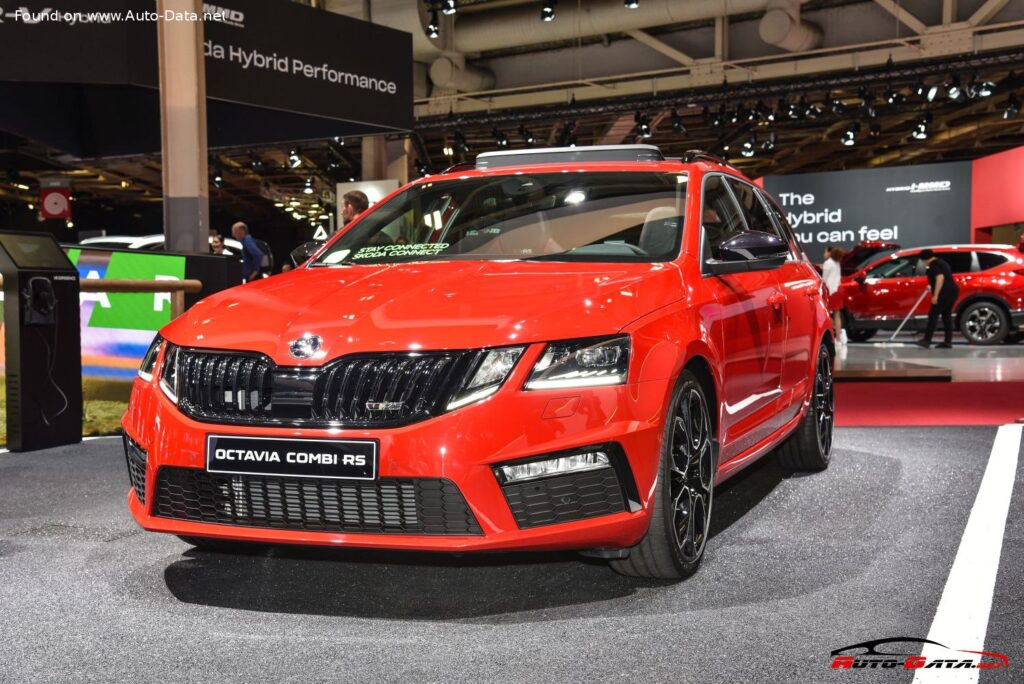
The Skoda Octavia III Combi (facelift 2017), a five-door, five-seat station wagon, is a masterclass in functional design. The 2017 facelift introduced a refreshed front fascia, most notably characterized by its distinctive split-headlight design, which gave the Octavia a more assertive and modern appearance. The updated grille and bumper also contributed to a sharper, more contemporary look, aligning it with Skoda’s evolving design language.
However, where the Octavia Combi truly excels is in its unparalleled practicality. Its dimensions — a length of 183.74 inches (4667 mm), a width of 71.42 inches (1814 mm), and a height of 57.68 inches (1465 mm) — provide a remarkably spacious interior for both passengers and cargo. The generous wheelbase of 105.75 inches (2686 mm) ensures ample legroom for rear occupants, a hallmark of the Octavia’s family-friendly appeal.
The station wagon body style is designed for maximum utility. The trunk space is cavernous, starting at 21.54 cu. ft. (610 liters) with all seats in place, and expanding to an impressive 61.45 cu. ft. (1740 liters) when the rear seats are folded down. This class-leading cargo capacity makes the Octavia Combi an ideal choice for hauling luggage, sports equipment, or even small furniture. Additional practical features include a maximum roof load of 165.35 lbs (75 kg) and a permitted trailer load of 3306.93 lbs (1500 kg) with brakes, highlighting its versatility.
Inside, the Octavia offers a well-appointed cabin with a focus on ergonomics and user-friendliness. While specific trim levels and features can vary, the 2017 facelift typically brought updated infotainment systems with larger touchscreens, smartphone integration (Apple CarPlay and Android Auto), and a range of driver-assistance technologies. Standard safety features include ABS (Anti-lock Braking System), and given its model year, it would also incorporate multiple airbags, electronic stability control, and potentially more advanced systems like automatic emergency braking or adaptive cruise control, depending on the trim. The steering system is a precise electric power-assisted rack and pinion setup, providing comfortable and responsive handling. The car rides on 205/55 R16 tires with 16-inch wheel rims, complemented by ventilated disc brakes at the front and disc brakes at the rear, ensuring confident stopping power.
Technical Specifications
| Category | Specification | Value |
|---|---|---|
| General Information | Brand | Skoda |
| Model | Octavia | |
| Generation | Octavia III Combi (facelift 2017) | |
| Type (Engine) | 1.4 TSI (150 Hp) DSG | |
| Start of production | 2017 year | |
| End of production | 2018 year | |
| Powertrain Architecture | Internal Combustion engine | |
| Body type | Station wagon (estate) | |
| Seats | 5 | |
| Doors | 5 | |
| Performance Specs | ||
| Fuel consumption (economy) – urban | 6.2 l/100 km (37.9 US mpg) | |
| Fuel consumption (economy) – extra urban | 4.4 l/100 km (53.5 US mpg) | |
| Fuel consumption (economy) – combined | 5 l/100 km (47 US mpg) | |
| CO2 emissions | 117 g/km | |
| Fuel Type | Petrol (Gasoline) | |
| Acceleration 0 – 60 mph | 8 sec | |
| Acceleration 0 – 100 km/h | 8.4 sec | |
| Maximum speed | 216 km/h (134.22 mph) | |
| Emission standard | Euro 6 | |
| Weight-to-power ratio | 8.1 kg/Hp (123.4 Hp/tonne) | |
| Engine Specs | ||
| Power | 150 Hp | |
| Power per liter | 107.5 Hp/l | |
| Engine layout | Front, Transverse | |
| Engine Model/Code | CHPB, CZDA | |
| Engine displacement | 1395 cm3 (85.13 cu. in.) | |
| Number of cylinders | 4 | |
| Engine configuration | Inline | |
| Cylinder Bore | 74.5 mm (2.93 in.) | |
| Piston Stroke | 80 mm (3.15 in.) | |
| Compression ratio | 10:1 | |
| Number of valves per cylinder | 4 | |
| Fuel injection system | Direct injection | |
| Engine aspiration | Turbocharger, Intercooler | |
| Engine oil capacity | 4 l (4.23 US qt) | |
| Coolant | 10.4 l (10.99 US qt) | |
| Space, Volume and Weights | ||
| Kerb Weight | 1216 kg (2680.82 lbs) | |
| Max. weight | 1861 kg (4102.8 lbs) | |
| Max load | 645 kg (1421.98 lbs) | |
| Trunk (boot) space – minimum | 610 l (21.54 cu. ft.) | |
| Trunk (boot) space – maximum | 1740 l (61.45 cu. ft.) | |
| Fuel tank capacity | 50 l (13.21 US gal) | |
| Max. roof load | 75 kg (165.35 lbs) | |
| Permitted trailer load with brakes (12%) | 1500 kg (3306.93 lbs) | |
| Permitted trailer load without brakes | 640 kg (1410.96 lbs) | |
| Dimensions | ||
| Length | 4667 mm (183.74 in.) | |
| Width | 1814 mm (71.42 in.) | |
| Height | 1465 mm (57.68 in.) | |
| Wheelbase | 2686 mm (105.75 in.) | |
| Front track | 1543 mm (60.75 in.) | |
| Rear (Back) track | 1534 mm (60.39 in.) | |
| Minimum turning circle (turning diameter) | 10.61 m (34.81 ft.) | |
| Drivetrain, Brakes and Suspension Specs | ||
| Drivetrain Architecture | The Internal combustion engine (ICE) drives the front wheels of the vehicle. | |
| Drive wheel | Front wheel drive | |
| Number of gears and type of gearbox | 7 gears, automatic transmission DSG | |
| Front brakes | Ventilated discs | |
| Rear brakes | Disc | |
| Assisting systems | ABS (Anti-lock braking system) | |
| Steering type | Steering rack and pinion | |
| Power steering | Electric Steering | |
| Tires size | 205/55 R16 | |
| Wheel rims size | 16 | |
Legacy and Market Impact
The Skoda Octavia, and specifically the third-generation Combi with the 1.4 TSI DSG powertrain, left a significant mark on the European automotive landscape. Its reputation was built on a foundation of offering exceptional value for money without compromising on quality or engineering, thanks to its integration within the Volkswagen Group. The Octavia has consistently been praised for its “simply clever” solutions, combining thoughtful design with practical features that genuinely enhance the ownership experience.
In its primary markets, the Skoda Octavia III Combi (facelift 2017) 1.4 TSI (150 Hp) DSG was a formidable competitor in the compact station wagon segment. It directly challenged established rivals such as the Volkswagen Golf Variant (with which it shared many underpinnings), Ford Focus Estate, Opel Astra Sports Tourer, Peugeot 308 SW, and Renault Megane Estate. What set the Octavia apart was its ability to offer a larger interior volume and trunk space, often surpassing competitors from the segment above, while maintaining the compact footprint and agile handling of a C-segment vehicle. This unique proposition made it incredibly appealing to families requiring more space than a hatchback but without the bulk or cost of a larger SUV or D-segment sedan.
Historically, the Octavia has been a cornerstone of Skoda’s modern resurgence since its acquisition by Volkswagen in the early 1990s. The third generation, in particular, cemented Skoda’s position as a serious player in the mainstream market, shedding any lingering perceptions of being a budget brand. The facelifted model further underscored Skoda’s commitment to continuous improvement, integrating contemporary design cues and technological advancements. Its blend of a punchy yet economical engine, a smooth and efficient DSG transmission, and unparalleled practicality ensured strong sales, particularly within fleet markets and among private buyers who prioritized sensible, reliable, and capacious transportation.
The 1.4 TSI (150 Hp) DSG variant, specifically, was a sweet spot in the Octavia lineup, offering a compelling balance of performance and efficiency that resonated with a wide audience. Its success contributed to the Octavia’s enduring legacy as one of Europe’s most beloved and respected family cars, a symbol of intelligent automotive design and engineering from a brand that consistently delivers more for less.