Skoda Octavia III Combi (facelift 2017) 1.6 MPI (110 Hp): A Comprehensive Overview
The Skoda Octavia III Combi (facelift 2017) 1.6 MPI (110 Hp) represents a crucial iteration of Skoda’s highly successful compact family car, specifically tailored for the European and Asian markets. As a stalwart in the C-segment, the Octavia has consistently carved out a niche for itself by offering exceptional practicality, robust engineering, and remarkable value within the Volkswagen Group’s diverse portfolio. This particular model, produced between 2018 and 2019, showcases the refinements introduced with the third generation’s mid-cycle refresh, focusing on enhanced aesthetics, updated technology, and continued mechanical reliability.
While the Skoda brand itself is not widely available in the United States, its Octavia model is a household name across Europe, frequently praised for its spacious interior, cavernous trunk, and sensible approach to motoring. The “Combi” designation signifies its station wagon body style, a highly popular choice for families and professionals seeking versatility without the bulk of an SUV. The 1.6 MPI (Multi-Point Injection) engine variant, with its 110 horsepower output, was positioned as an accessible and economical option, balancing adequate performance with sensible running costs, making it a common sight on European roads.
Evolution and Market Positioning of the Skoda Octavia III Combi (facelift 2017)
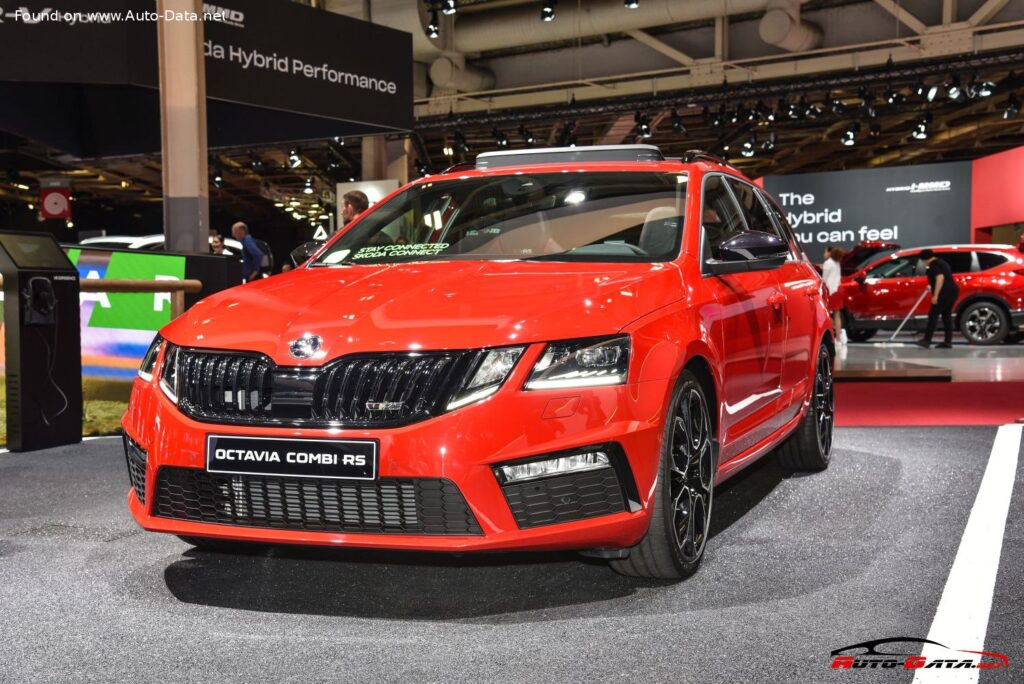
The third generation Skoda Octavia, internally designated Typ 5E, first debuted in 2012, building upon the success of its predecessors by offering a more sophisticated platform based on the Volkswagen Group’s modular MQB architecture. The facelifted model, introduced in late 2016 for the 2017 model year onwards, brought about a series of cosmetic and technological updates designed to keep the Octavia competitive. Key visual changes included a distinctive quad-headlight design, revised bumpers, and updated interior trim options, giving the car a more modern and assertive presence.
The Skoda Octavia III Combi (facelift 2017) 1.6 MPI (110 Hp) continued Skoda’s tradition of offering “more car for your money.” It competed fiercely with other popular C-segment vehicles like the Volkswagen Golf Variant, Ford Focus Estate, Opel Astra Sports Tourer, and Renault Mégane Estate. Its strength lay in its ability to offer near-D-segment space (like a Passat or Mondeo) within a C-segment footprint, all while maintaining a price point that often undercut its direct rivals. This made it an attractive proposition for private buyers and fleet operators alike, solidifying its reputation as a smart and pragmatic choice.
Engine and Performance: The 1.6 MPI Powertrain
Under the hood, the Skoda Octavia III Combi (facelift 2017) 1.6 MPI (110 Hp) featured a robust and well-proven internal combustion engine. This naturally aspirated 1.6-liter (1598 cm³ or 97.52 cu. in.) inline-four cylinder gasoline engine, bearing the engine code CWVA, delivered 110 horsepower at 5800 rpm. Its power per liter was a respectable 68.8 Hp/l for a non-turbocharged unit of its era. Torque output stood at 114.32 lb.-ft. (155 Nm), available across a useful band from 3800 to 4000 rpm, which contributed to its tractable nature in everyday driving.
The engine’s layout was front, transverse, driving the front wheels through a 5-speed manual transmission. This powertrain architecture is characteristic of most compact cars and prioritizes efficiency and packaging. The multi-port manifold injection system, coupled with a particulate filter, ensured compliance with contemporary European emission standards, reflecting the focus on environmental responsibility even for gasoline engines. The naturally aspirated design meant a linear power delivery, often preferred by drivers seeking predictable response without the sudden surge of a turbocharger.
In terms of performance, the 1.6 MPI engine provided adequate acceleration for a family station wagon. The vehicle could accelerate from 0 to 60 mph in a calculated 10.4 seconds (0-100 km/h in 10.9 seconds), making it capable of merging onto highways and overtaking safely. Its maximum speed was 117.44 mph (189 km/h). While not a performance powerhouse, the Octavia 1.6 MPI was designed for reliable, economical, and comfortable long-distance travel, where its smooth operation and sufficient power for cruising were more important than outright speed. The curb weight of 2744.76 lbs (1245 kg) contributed to a weight-to-power ratio of 11.3 kg/Hp, indicating a balanced approach to its segment.
Design and Features: Practicality Meets Refinement
The Skoda Octavia III Combi’s design philosophy centered on maximizing interior space and practicality within a sleek, understated aesthetic. The facelift in 2017 brought a sharper, more defined look to the front fascia, with the controversial but distinctive split-headlight design that gave it a unique visual signature. Measuring 183.74 inches (4667 mm) in length, 71.42 inches (1814 mm) in width (79.41 inches including mirrors), and 57.68 inches (1465 mm) in height, the Octavia Combi possessed a substantial footprint for its class, translating directly into generous interior volume.
The station wagon body type, with its five doors and seating for five occupants, was the cornerstone of its appeal. The wheelbase of 105.75 inches (2686 mm) ensured ample legroom for both front and rear passengers, a common accolade for the Octavia. However, it was the cargo capacity that truly set the Octavia Combi apart. With a minimum trunk space of 21.54 cu. ft. (610 liters) with the rear seats up, expanding to a massive 61.45 cu. ft. (1740 liters) with the rear seats folded down, it offered cargo-hauling capabilities that rivaled vehicles from higher segments. This made it an ideal choice for families, outdoor enthusiasts, and anyone needing significant luggage space.
Inside, the facelifted Octavia featured an updated infotainment system, improved materials, and a generally more refined cabin ambiance. While the 1.6 MPI variant typically came with more basic trim levels compared to higher-end models, it still benefited from Skoda’s ergonomic design and “Simply Clever” features, such as an ice scraper in the fuel filler flap or an umbrella under the passenger seat (depending on trim). Safety features were comprehensive for its time, including ABS (Anti-lock Braking System) as standard, along with front ventilated disc brakes and rear disc brakes providing confident stopping power. The electric power steering system offered light and precise control, enhancing maneuverability, especially in urban environments and during parking. The vehicle rode on 205/55 R16 tires with 16-inch wheel rims, a common and comfortable setup for a family car.
Technical Specifications
| Category | Specification | US Equivalent / Notes |
|---|---|---|
| General Information | ||
| Brand | Skoda | |
| Model | Octavia | |
| Generation | Octavia III Combi (facelift 2017) | |
| Type (Engine) | 1.6 MPI (110 Hp) | |
| Start of Production | 2018 year | |
| End of Production | 2019 year | |
| Powertrain Architecture | Internal Combustion engine | |
| Body type | Station wagon (estate) | |
| Seats | 5 | |
| Doors | 5 | |
| Performance Specs | ||
| Fuel Type | Petrol (Gasoline) | |
| Acceleration 0 – 60 mph | 10.4 sec | Calculated by Auto-Data.net |
| Acceleration 0 – 100 km/h | 10.9 sec | |
| Maximum speed | 189 km/h | 117.44 mph |
| Weight-to-power ratio | 11.3 kg/Hp | 88.4 Hp/tonne |
| Weight-to-torque ratio | 8 kg/Nm | 124.5 Nm/tonne |
| Engine Specs | ||
| Power | 110 Hp @ 5800 rpm | |
| Power per liter | 68.8 Hp/l | |
| Torque | 155 Nm @ 3800-4000 rpm | 114.32 lb.-ft. @ 3800-4000 rpm |
| Engine layout | Front, Transverse | |
| Engine Model/Code | CWVA | |
| Engine displacement | 1598 cm³ | 1.6 liters / 97.52 cu. in. |
| Number of cylinders | 4 | |
| Engine configuration | Inline | |
| Number of valves per cylinder | 4 | |
| Fuel injection system | Multi-port manifold injection | |
| Engine aspiration | Naturally aspirated engine | |
| Engine oil capacity | 4 l | 4.23 US qt |
| Engine systems | Particulate filter | |
| Space, Volume and Weights | ||
| Kerb Weight | 1245 kg | 2744.76 lbs |
| Trunk (boot) space – minimum | 610 l | 21.54 cu. ft. |
| Trunk (boot) space – maximum | 1740 l | 61.45 cu. ft. |
| Fuel tank capacity | 50 l | 13.21 US gal |
| Dimensions | ||
| Length | 4667 mm | 183.74 in. |
| Width | 1814 mm | 71.42 in. |
| Width including mirrors | 2017 mm | 79.41 in. |
| Height | 1465 mm | 57.68 in. |
| Wheelbase | 2686 mm | 105.75 in. |
| Front track | 1549 mm | 60.98 in. |
| Rear (Back) track | 1540 mm | 60.63 in. |
| Ride height (ground clearance) | 141 mm | 5.55 in. |
| Minimum turning circle (turning diameter) | 10.6 m | 34.78 ft. |
| Approach angle | 14.0° | |
| Departure angle | 12.4° | |
| Drivetrain, Brakes and Suspension Specs | ||
| Drivetrain Architecture | The Internal combustion engine (ICE) drives the front wheels of the vehicle. | Front-wheel drive |
| Drive wheel | Front wheel drive | |
| Number of gears and type of gearbox | 5 gears, manual transmission | |
| Front brakes | Ventilated discs | |
| Rear brakes | Disc | |
| Assisting systems | ABS (Anti-lock braking system) | |
| Steering type | Steering rack and pinion | |
| Power steering | Electric Steering | |
| Tires size | 205/55 R16 | |
| Wheel rims size | 16 | |
Legacy and Market Impact
The Skoda Octavia III Combi (facelift 2017) 1.6 MPI (110 Hp) played a significant role in solidifying Skoda’s reputation as a purveyor of high-quality, practical, and affordable automobiles in its core markets. It continued the legacy of the Octavia nameplate, which, since its modern reintroduction in 1996, has been synonymous with robust engineering, vast space, and excellent value, often outshining its more expensive Volkswagen Group siblings in terms of sheer utility per dollar.
In the fiercely competitive European C-segment, where compact cars and their station wagon derivatives are immensely popular, the Octavia Combi consistently performed well. Its primary competitors included the aforementioned Volkswagen Golf Variant, Ford Focus Estate, Opel Astra Sports Tourer, and various Asian offerings like the Hyundai i30 Wagon and Kia Ceed Sportswagon. The Octavia differentiated itself with its class-leading trunk space, a slightly more conservative but refined driving experience, and a strong emphasis on reliability and low running costs, especially with the naturally aspirated 1.6 MPI engine.
The 1.6 MPI engine, while perhaps not the most exciting in terms of performance, was a workhorse. It was known for its longevity and straightforward maintenance, making it a favorite among drivers who prioritized durability over outright speed. Its naturally aspirated design meant fewer complex components compared to turbocharged engines, potentially leading to lower long-term repair costs. This contributed to the Octavia’s strong residual values in many markets, further enhancing its appeal as a sensible purchase.
The facelifted third-generation Octavia, including this 1.6 MPI Combi variant, helped Skoda navigate a period of intense technological change, bridging the gap between traditional internal combustion engines and the nascent electrified powertrains that would follow. It represented the peak of the conventional, practical family station wagon before the widespread SUV boom truly took hold. Its impact is still felt today, as the Octavia remains one of Skoda’s best-selling models globally, continuing to uphold the brand’s core values of practicality, quality, and clever design.