The Skoda Octavia III Combi (facelift 2017) 1.6 TDI (116 Hp) DSG: A European Mainstay
The Skoda Octavia, a cornerstone of the Czech automaker’s lineup, has long been celebrated for its blend of practicality, value, and robust engineering, largely thanks to its integration within the Volkswagen Group. The third-generation Octavia, particularly its Combi (station wagon) variant, received a significant facelift in 2017, enhancing its appeal in the highly competitive European C-segment. The model under consideration, the Skoda Octavia III Combi (facelift 2017) 1.6 TDI (116 Hp) DSG, represents a popular configuration that prioritizes fuel efficiency and everyday usability. While Skoda vehicles are not officially sold in the United States market, the Octavia plays a crucial role in Europe and other international markets, offering a compelling alternative to more premium brands by delivering Volkswagen Group technology at a more accessible price point. This particular iteration, produced from 2017 to 2019, showcases the brand’s commitment to refinement and economical performance, making it a favorite among families and business users across the continent.
Engine and Performance of the Skoda Octavia III Combi (facelift 2017)
At the heart of this particular Skoda Octavia III Combi lies a 1.6-liter TDI (Turbocharged Direct Injection) diesel engine, designated with the model code DDYA. This inline four-cylinder unit, positioned transversely at the front, is a testament to modern diesel engineering, focusing on a balance of power, torque, and exceptional fuel economy. With a displacement of 1598 cm3 (97.52 cu. in.), the engine delivers a respectable 116 horsepower, translating to a power-per-liter output of 72.6 Hp/l. More importantly for daily driving, the engine generates a substantial 250 Nm (184.39 lb.-ft.) of torque, available across a broad and usable rev range from 1500 to 3200 rpm. This wide torque band ensures responsive acceleration and effortless cruising, even when the vehicle is loaded.
Power is channeled to the front wheels via a sophisticated 7-speed DSG (Direct Shift Gearbox) automatic transmission. This dual-clutch gearbox is renowned for its rapid and smooth shifts, contributing significantly to both driving comfort and efficiency. The combination of the 1.6 TDI engine and the DSG transmission allows the Octavia Combi to accelerate from 0 to 60 mph in a brisk 9.8 seconds (0-100 km/h in 10.3 seconds) and achieve a top speed of 124.27 mph (200 km/h).
Fuel efficiency is a key highlight of this powertrain. The 1.6 TDI DSG model boasts impressive figures: an urban consumption of 4.2 l/100 km (56 US mpg), an extra-urban consumption of 3.8 l/100 km (61.9 US mpg), and a combined cycle consumption of 3.9 l/100 km (60.3 US mpg). These figures underscore the vehicle’s economical nature, making it a cost-effective choice for long-distance travel. Furthermore, with CO2 emissions of just 103 g/km and compliance with the Euro 6 emission standard, the Octavia III Combi demonstrates a strong commitment to environmental responsibility, a critical factor in the European automotive landscape. The engine also features a particulate filter, reducing harmful emissions.
Design and Features
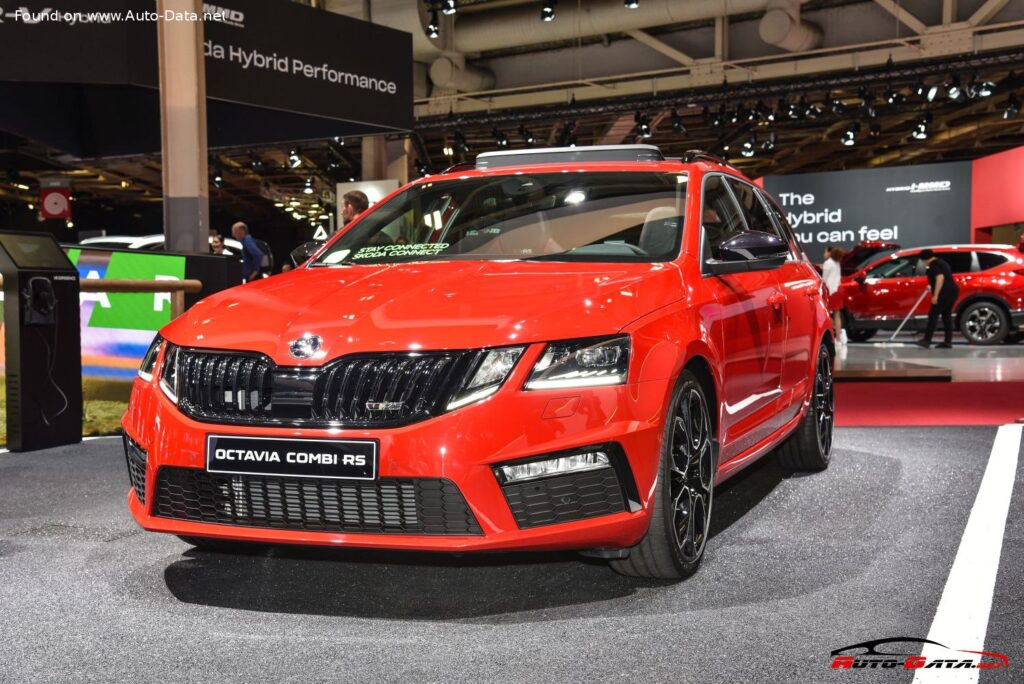
The Skoda Octavia III Combi, particularly after its 2017 facelift, presents a refined and modern aesthetic that belies its practical underpinnings. The “Combi” designation signifies its station wagon body type, a highly popular and functional choice in Europe. The facelift brought updated styling cues, including a redesigned front fascia with a distinctive split headlight design (often referred to as ‘quad-headlights’), a wider grille, and refreshed bumper designs, giving the car a more assertive and contemporary appearance. At 183.74 inches (4667 mm) in length, 71.42 inches (1814 mm) in width, and 57.68 inches (1465 mm) in height, the Octavia Combi strikes an excellent balance between exterior compactness and interior spaciousness. Its wheelbase measures 105.75 inches (2686 mm), contributing to a stable ride and generous cabin room.
Inside, the Octavia Combi offers a well-appointed cabin designed for comfort and utility. With seating for five occupants across five doors, it excels as a family vehicle. The true strength of the Combi lies in its cargo capacity. It offers a substantial minimum trunk space of 610 liters (21.54 cu. ft.), which expands to an impressive 1740 liters (61.45 cu. ft.) with the rear seats folded down. This cavernous cargo area makes it exceptionally versatile for hauling luggage, sports equipment, or even furniture. The interior materials are of good quality, and the layout is ergonomic, typical of Volkswagen Group vehicles. The facelift also often included upgrades to the infotainment system, offering larger touchscreens and improved connectivity options, reflecting the modern driver’s expectations.
Safety features for the 2017 model year would typically include a comprehensive suite of airbags, ABS (Anti-lock Braking System), and various electronic stability aids. The vehicle’s robust chassis and advanced braking system, featuring ventilated discs at the front and disc brakes at the rear, ensure confident stopping power. The electric power steering system provides precise control and ease of maneuverability, with a minimum turning circle of 34.81 ft (10.61 m). The vehicle comes standard with 205/55 R16 tires mounted on 16-inch wheel rims, providing a comfortable ride and adequate grip.
Technical Specifications: Skoda Octavia III Combi (facelift 2017) 1.6 TDI (116 Hp) DSG
| Category | Specification | Metric (Primary) | US/Imperial (Conversion) |
|---|---|---|---|
| General Information | |||
| Brand | Skoda | ||
| Model | Octavia | ||
| Generation | Octavia III Combi (facelift 2017) | ||
| Type (Engine) | 1.6 TDI (116 Hp) DSG | ||
| Start of production | 2017 year | ||
| End of production | 2019 year | ||
| Powertrain Architecture | Internal Combustion engine | ||
| Body type | Station wagon (estate) | ||
| Seats | 5 | ||
| Doors | 5 | ||
| Performance Specs | |||
| Fuel consumption (economy) – urban | 4.2 l/100 km | 56 US mpg | |
| Fuel consumption (economy) – extra urban | 3.8 l/100 km | 61.9 US mpg | |
| Fuel consumption (economy) – combined | 3.9 l/100 km | 60.3 US mpg | |
| CO2 emissions | 103 g/km | ||
| Fuel Type | Diesel | ||
| Acceleration 0 – 60 mph | 9.8 sec (Calculated) | ||
| Acceleration 0 – 100 km/h | 10.3 sec | ||
| Maximum speed | 200 km/h | 124.27 mph | |
| Emission standard | Euro 6 | ||
| Weight-to-power ratio | 10.9 kg/Hp | 91.6 Hp/tonne | |
| Weight-to-torque ratio | 5.1 kg/Nm | 197.3 Nm/tonne | |
| Engine Specs | |||
| Power | 116 Hp | ||
| Power per liter | 72.6 Hp/l | ||
| Torque | 250 Nm @ 1500-3200 rpm | 184.39 lb.-ft. @ 1500-3200 rpm | |
| Engine layout | Front, Transverse | ||
| Engine Model/Code | DDYA | ||
| Engine displacement | 1598 cm3 | 97.52 cu. in. | |
| Number of cylinders | 4 | ||
| Engine configuration | Inline | ||
| Cylinder Bore | 79.5 mm | 3.13 in. | |
| Piston Stroke | 80.5 mm | 3.17 in. | |
| Compression ratio | 16.2:1 | ||
| Number of valves per cylinder | 4 | ||
| Fuel injection system | Diesel Commonrail | ||
| Engine aspiration | Turbocharger, Intercooler | ||
| Engine oil capacity | 4.6 l | 4.86 US qt | |
| Engine oil specification | Not specified | ||
| Engine systems | Particulate filter | ||
| Space, Volume and Weights | |||
| Kerb Weight | 1267 kg | 2793.26 lbs. | |
| Max. weight | 1912 kg | 4215.24 lbs. | |
| Max load | 645 kg | 1421.98 lbs. | |
| Trunk (boot) space – minimum | 610 l | 21.54 cu. ft. | |
| Trunk (boot) space – maximum | 1740 l | 61.45 cu. ft. | |
| Fuel tank capacity | 50 l | 13.21 US gal | |
| Max. roof load | 75 kg | 165.35 lbs. | |
| Permitted trailer load with brakes (12%) | 1500 kg | 3306.93 lbs. | |
| Permitted trailer load without brakes | 660 kg | 1455.05 lbs. | |
| Dimensions | |||
| Length | 4667 mm | 183.74 in. | |
| Width | 1814 mm | 71.42 in. | |
| Height | 1465 mm | 57.68 in. | |
| Wheelbase | 2686 mm | 105.75 in. | |
| Front track | 1549 mm | 60.98 in. | |
| Rear (Back) track | 1540 mm | 60.63 in. | |
| Minimum turning circle (turning diameter) | 10.61 m | 34.81 ft. | |
| Drivetrain, Brakes and Suspension Specs | |||
| Drivetrain Architecture | The Internal combustion engine (ICE) drives the front wheels of the vehicle. | ||
| Drive wheel | Front wheel drive | ||
| Number of gears and type of gearbox | 7 gears, automatic transmission DSG | ||
| Front brakes | Ventilated discs | ||
| Rear brakes | Disc | ||
| Assisting systems | ABS (Anti-lock braking system) | ||
| Steering type | Steering rack and pinion | ||
| Power steering | Electric Steering | ||
| Tires size | 205/55 R16 | ||
| Wheel rims size | 16 | ||
Legacy and Market Impact
The Skoda Octavia, particularly in its Combi form, has carved out a formidable reputation as a highly competent and reliable vehicle in its primary European markets. The third-generation model, and specifically the facelifted version from 2017, continued this legacy, reinforcing Skoda’s position as a brand offering exceptional value within the Volkswagen Group. Before Skoda’s resurgence under VW ownership, the brand was often associated with utilitarian, no-frills vehicles. However, the Octavia III Combi (facelift 2017) definitively showcased Skoda’s transformation into a producer of sophisticated, well-engineered, and aesthetically pleasing cars that offer premium features without the premium price tag.
In the bustling European C-segment, the Octavia Combi faced stiff competition from a diverse range of rivals. Key competitors included other mainstream station wagons like the Volkswagen Golf Variant (sharing many underlying components but positioned slightly higher), the Ford Focus Estate, Opel Astra Sports Tourer, Renault Mégane Estate, and the Hyundai i30 Wagon. The Octavia consistently stood out due to its class-leading interior space, particularly the cavernous trunk, and its robust build quality. Its diesel powertrains, like the 1.6 TDI (116 Hp) DSG, were particularly attractive to fleet buyers and long-distance commuters due to their impressive fuel economy and low running costs.
The 2017 facelift helped keep the Octavia fresh against newer rivals, incorporating modern styling cues and technology updates that were crucial for maintaining its competitive edge. The car’s strong residual values and reputation for reliability further solidified its appeal. The Octavia’s success has been instrumental in changing perceptions of the Skoda brand globally, demonstrating that it can deliver vehicles that are not only practical and affordable but also desirable and technologically advanced. Its historical significance lies in its role as a volume seller that successfully bridged the gap between economy and quality, proving that “Simply Clever” solutions and Volkswagen Group engineering could be delivered in an appealing, value-driven package. Even though it never graced American showrooms, the Skoda Octavia III Combi remains a significant chapter in modern automotive history, particularly for its impact on the European automotive landscape.