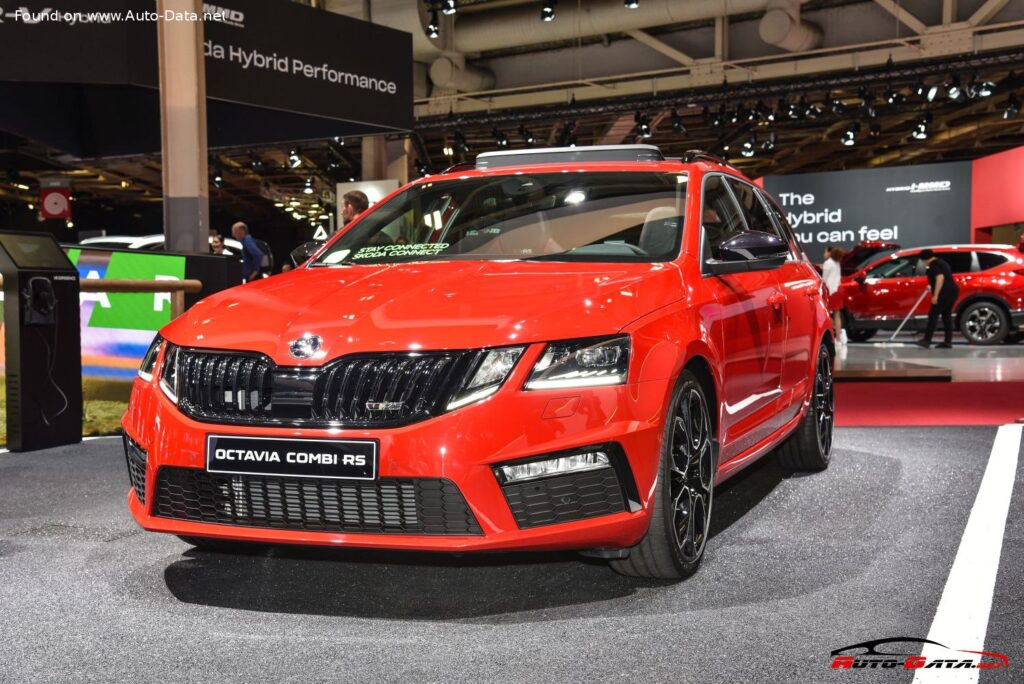
The Skoda Octavia III Combi (facelift 2017) 2.0 TDI (143 Hp): A European Workhorse
The Skoda Octavia, a cornerstone of the Czech automaker’s lineup, has long been revered in its primary European markets for its exceptional blend of practicality, value, and robust engineering. Positioned within the highly competitive compact segment (C-segment), the Octavia often bridges the gap between traditional compact cars and larger mid-size vehicles due to its generous interior and cargo space. This article delves into the specific iteration of the third-generation Octavia, specifically the facelifted 2017 Combi (station wagon) model, powered by the efficient 2.0 TDI (Turbocharged Direct Injection) diesel engine delivering 143 horsepower. Produced between 2018 and 2019, this particular variant exemplifies Skoda’s commitment to delivering a well-rounded vehicle that caters to both families and fleet operators, prioritizing efficiency, reliability, and everyday usability. While not officially sold in the United States, the Octavia’s global significance as a prime example of Volkswagen Group’s engineering prowess, offered at a more accessible price point, is undeniable.
Engine & Performance: The Efficient Diesel Powertrain
At the heart of the Skoda Octavia III Combi (facelift 2017) lies a proven 2.0-liter TDI diesel engine, a testament to modern diesel technology’s ability to combine performance with impressive fuel economy. This inline four-cylinder unit, identified by engine codes CKFB or CRVC, features a 16-valve configuration and employs a sophisticated common rail direct injection system. Boosted by a turbocharger and an intercooler, the engine delivers a respectable 143 horsepower at a broad range of 3500-4000 rpm. More critically for a vehicle designed for practicality and hauling, it generates a substantial 236.02 lb.-ft. of torque, available from a low 1750 rpm up to 3000 rpm. This wide torque band ensures robust acceleration and effortless cruising, even when the vehicle is fully loaded.
Power is transmitted to the front wheels via a precise 6-speed manual transmission, offering engaging control for the driver while optimizing fuel efficiency. The powertrain architecture is a classic front-transverse engine layout driving the front wheels, a common and effective setup for compact and mid-size vehicles. In terms of performance, the Octavia 2.0 TDI accelerates from 0 to 60 mph in a brisk 8.4 seconds, with a top speed of 131.73 mph. These figures underscore its capability for highway merging and comfortable long-distance travel. The vehicle also incorporates a particulate filter, crucial for meeting stringent European emissions standards, showcasing its commitment to environmental responsibility. With a healthy power-to-weight ratio of 105.4 Hp per tonne and a torque-to-weight ratio of 235.8 Nm per tonne, the Octavia feels more agile than its station wagon body style might suggest, providing a confident and secure driving experience.
Design & Features: Practicality Meets Refinement
The Skoda Octavia III Combi, particularly in its facelifted 2017 guise, embodies a design philosophy centered on understated elegance and maximum utility. The station wagon body style, known as “Combi” in many European markets and “estate” in others, is inherently designed for spaciousness and cargo versatility. The facelift introduced subtle but effective updates, including revised headlight designs, a subtly reshaped grille, and updated taillights, giving the car a fresher, more contemporary appearance while maintaining its characteristic Skoda identity.
Measuring 183.74 inches in length, 71.42 inches in width (79.41 inches including mirrors), and 57.68 inches in height, with a generous wheelbase of 105.75 inches, the Octavia Combi provides ample room for five occupants. Its true strength, however, lies in its cargo capacity. With the rear seats in place, the trunk offers a substantial 21.54 cubic feet (610 liters) of space, which expands to an impressive 61.45 cubic feet (1740 liters) when the rear seats are folded down. This cavernous cargo area makes it an ideal choice for families, outdoor enthusiasts, or professionals requiring significant hauling capability.
From a functional standpoint, the Octavia is equipped with features aimed at enhancing comfort, safety, and driving dynamics. Standard assisting systems include ABS (Anti-lock Braking System) for controlled stopping. The steering system features a rack and pinion setup with electric power steering, providing precise feedback and ease of maneuverability, particularly in urban environments with a minimum turning circle of 34.78 feet. The suspension setup, with ventilated discs at the front and disc brakes at the rear, ensures confident stopping power. The vehicle rides on 205/55 R16 tires fitted to 16-inch wheel rims, offering a balance of ride comfort and handling stability. The curb weight of 2991.67 lbs. (1357 kg) further contributes to its stable road manners and efficient performance.
Technical Specifications for the Skoda Octavia III Combi (facelift 2017) 2.0 TDI (143 Hp)
| Category | Specification | Value (US Units) |
|---|---|---|
| General Information | ||
| Brand | Skoda | |
| Model | Octavia | |
| Generation | Octavia III Combi (facelift 2017) | |
| Engine Type | 2.0 TDI (143 Hp) | |
| Start of Production | 2018 year | |
| End of Production | 2019 year | |
| Powertrain Architecture | Internal Combustion engine | |
| Body type | Station wagon (estate) | |
| Seats | 5 | |
| Doors | 5 | |
| Performance Specs | ||
| Fuel Type | Diesel | |
| Acceleration 0 – 60 mph | 8.4 sec | |
| Maximum speed | 212 km/h | 131.73 mph |
| Weight-to-power ratio | 9.5 kg/Hp | 105.4 Hp/tonne |
| Weight-to-torque ratio | 4.2 kg/Nm | 235.8 Nm/tonne |
| Engine Specs | ||
| Power | 143 Hp @ 3500-4000 rpm | |
| Power per liter | 72.7 Hp/l | |
| Torque | 320 Nm @ 1750-3000 rpm | 236.02 lb.-ft. @ 1750-3000 rpm |
| Engine layout | Front, Transverse | |
| Engine Model/Code | CKFB, CRVC | |
| Engine displacement | 1968 cm3 | 120.09 cu. in. |
| Number of cylinders | 4 | |
| Engine configuration | Inline | |
| Number of valves per cylinder | 4 | |
| Fuel injection system | Diesel Commonrail | |
| Engine aspiration | Turbocharger, Intercooler | |
| Engine oil capacity | 4.6 l | 4.86 US qt |
| Coolant capacity | 11.6 l | 12.26 US qt |
| Engine systems | Particulate filter | |
| Space, Volume and Weights | ||
| Kerb Weight | 1357 kg | 2991.67 lbs. |
| Trunk (boot) space – minimum | 610 l | 21.54 cu. ft. |
| Trunk (boot) space – maximum | 1740 l | 61.45 cu. ft. |
| Fuel tank capacity | 50 l | 13.21 US gal |
| Dimensions | ||
| Length | 4667 mm | 183.74 in. |
| Width | 1814 mm | 71.42 in. |
| Width including mirrors | 2017 mm | 79.41 in. |
| Height | 1465 mm | 57.68 in. |
| Wheelbase | 2686 mm | 105.75 in. |
| Front track | 1543 mm | 60.75 in. |
| Rear (Back) track | 1534 mm | 60.39 in. |
| Ride height (ground clearance) | 141 mm | 5.55 in. |
| Minimum turning circle (diameter) | 10.6 m | 34.78 ft. |
| Approach angle | 14.0° | |
| Departure angle | 12.4° | |
| Drivetrain, Brakes and Suspension Specs | ||
| Drivetrain Architecture | The Internal combustion engine (ICE) drives the front wheels of the vehicle. | |
| Drive wheel | Front wheel drive | |
| Number of gears and type of gearbox | 6 gears, manual transmission | |
| Front brakes | Ventilated discs | |
| Rear brakes | Disc | |
| Assisting systems | ABS (Anti-lock braking system) | |
| Steering type | Steering rack and pinion | |
| Power steering | Electric Steering | |
| Tires size | 205/55 R16 | |
| Wheel rims size | 16 inches | |
Legacy & Market Impact of the Skoda Octavia III Combi
The Skoda Octavia has cemented its reputation as a highly respected and successful model within the European automotive landscape, and the third-generation Combi, particularly with its efficient 2.0 TDI engine, played a crucial role in this ongoing success. Following Skoda’s integration into the Volkswagen Group, the Octavia became a flagship model in demonstrating the brand’s transformation from a budget-oriented Eastern European manufacturer to a producer of high-quality, reliable, and value-packed vehicles.
In its primary markets, the Octavia Combi is celebrated for its exceptional blend of space, comfort, and low running costs, making it a perennial favorite among both private buyers and corporate fleet managers. Its direct competitors include other European compact station wagons such as the Volkswagen Golf Variant (with which it shares many underlying components), the Ford Focus Estate, Opel Astra Sports Tourer, Peugeot 308 SW, and Kia Ceed Sportswagon. The Octavia consistently stands out by offering interior and cargo volume often comparable to vehicles from the class above, all while maintaining competitive pricing and excellent fuel economy, especially with the TDI diesel powertrains.
The 2.0 TDI engine variant specifically contributed to the Octavia’s legacy as a long-distance cruiser and a practical family vehicle, offering the torque and efficiency needed for extended highway journeys and heavy loads. Its robust build quality, proven Volkswagen Group mechanicals, and strong resale value further underscore its appeal. The facelifted 2017 model, with its refreshed aesthetics and updated technology, helped maintain the Octavia’s competitive edge in a rapidly evolving market. It represents a period where Skoda successfully balanced traditional brand strengths – practicality and value – with modern design and engineering, solidifying the Octavia’s status as a true workhorse and a smart choice for discerning buyers across Europe. Its impact on Skoda’s brand image and market share cannot be overstated, positioning the company as a credible and formidable player in the global automotive arena.