Introduction to the Skoda Octavia III Combi (facelift 2017) 2.0 TDI (150 Hp) 4×4
The Skoda Octavia has long been a cornerstone of the European automotive market, renowned for its pragmatic approach, robust engineering, and exceptional value. The third-generation Octavia, introduced in 2012, received a significant facelift in 2017, further solidifying its position in the highly competitive compact family car segment. This article focuses specifically on the Skoda Octavia III Combi (facelift 2017) 2.0 TDI (150 Hp) 4×4, a versatile station wagon variant produced from 2017 to 2019. While never officially sold in the United States, this model represents a compelling package of efficiency, practicality, and all-weather capability that made it a favorite across Europe and other international markets.
Positioned within the Volkswagen Group, Skoda benefits from shared platforms and powertrains, offering Volkswagen-level engineering with a distinctive “Simply Clever” philosophy that emphasizes usability and thoughtful design. The Octavia III Combi, particularly in its facelifted form, maintained its reputation as an intelligent choice for families and fleet operators alike, blending generous interior space with economical diesel power and the added assurance of all-wheel drive. This combination made the 2.0 TDI (150 Hp) 4×4 a particularly appealing option for drivers in regions experiencing varied climates or requiring enhanced traction.
Engineering and Performance of the Skoda Octavia III Combi (facelift 2017) 2.0 TDI (150 Hp) 4×4
Powertrain and Efficiency
At the heart of the Skoda Octavia III Combi (facelift 2017) 2.0 TDI (150 Hp) 4×4 lies a highly regarded 2.0-liter TDI (Turbocharged Direct Injection) diesel engine. This inline-four cylinder unit, with its common rail fuel injection system, was engineered for a balance of power, refinement, and outstanding fuel economy. It generates a respectable 150 horsepower, delivered smoothly across the rev range, and a substantial 250.77 pound-feet of torque available from a low 1750 rpm up to 3000 rpm. This broad torque band is crucial for effortless acceleration and strong pulling power, particularly when the vehicle is loaded or navigating challenging terrain.
The engine’s efficiency is one of its standout features, a hallmark of modern diesel powertrains. The official combined fuel consumption rating is an impressive 4.7 liters per 100 kilometers, which translates to approximately 50 US miles per gallon. Even in urban environments, it achieves around 41.3 US mpg, while extra-urban driving pushes this figure to an exceptional 56 US mpg. These figures, combined with a 14.53 US gallon fuel tank, provide a considerable driving range, a significant advantage for long-distance commuters and travelers. Furthermore, the 2.0 TDI engine complies with the stringent Euro 6 emission standard, featuring a particulate filter to reduce harmful emissions, with CO2 output rated at 124 grams per kilometer.
Performance and Drivetrain
Power is channeled through a precise 6-speed manual transmission, offering engaging control for the driver. The Octavia’s performance figures are quite competitive for its class, especially considering its family-friendly nature and all-wheel-drive system. The vehicle can accelerate from 0 to 60 mph in a brisk 8.2 seconds, with 0 to 100 km/h achieved in 8.6 seconds. Its maximum speed is rated at 132.35 mph (213 km/h), demonstrating its capability for sustained highway cruising.
The “4×4” designation indicates an all-wheel-drive system, which is a key differentiator for this specific Octavia variant. This system provides enhanced traction and stability, making it particularly well-suited for adverse weather conditions such as snow or ice, as well as for light off-road excursions on gravel or unpaved roads. The front, transverse engine layout, combined with the all-wheel-drive system, ensures balanced handling and confident road manners, a characteristic often sought after in European markets where varying road conditions are common. The vehicle’s weight-to-power ratio stands at 9.2 kg/Hp (108.5 Hp/tonne), underlining its efficient power delivery relative to its curb weight of 3048.99 pounds (1383 kg).
Design and Features of the Octavia III Combi (facelift 2017)
Exterior and Dimensions
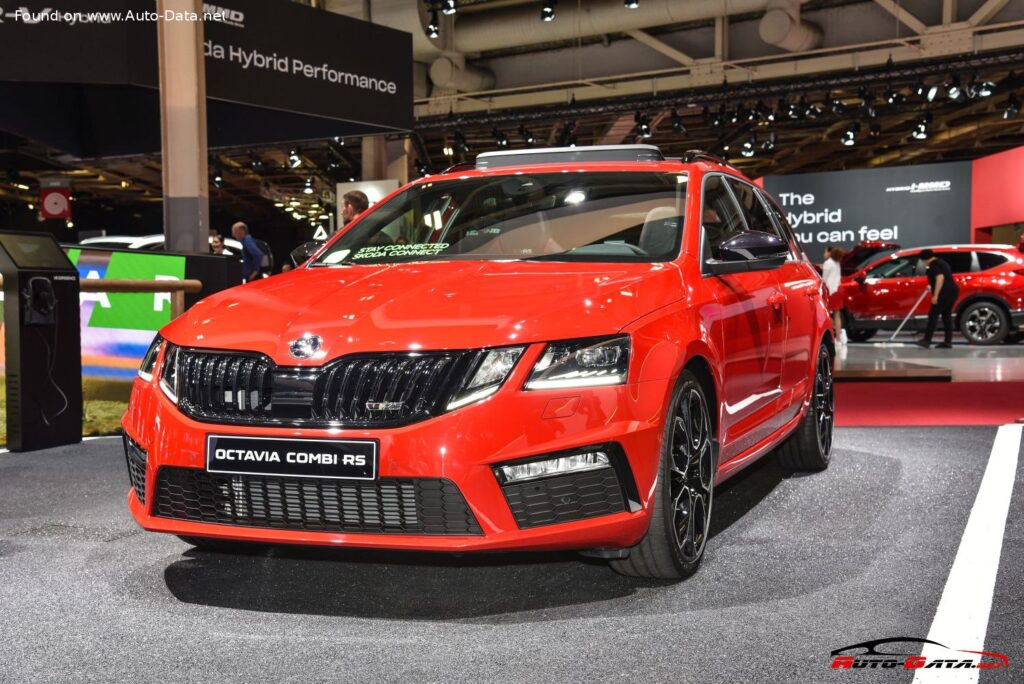
The 2017 facelift brought several notable aesthetic changes to the Octavia III, most prominently a revised front fascia. The most discussed design element was the new split headlight arrangement, which gave the car a more distinctive and modern appearance, though it was a polarizing feature among some enthusiasts. Complementing this were updated bumpers and grille designs, subtly enhancing the car’s visual appeal. The Octavia III Combi maintains its sleek and practical station wagon profile, measuring 183.74 inches (4667 mm) in length, 71.42 inches (1814 mm) in width, and 57.68 inches (1465 mm) in height. Its wheelbase of 105.51 inches (2680 mm) contributes to a stable ride and generous interior space. The minimum turning circle of 34.74 feet (10.59 meters) highlights its maneuverability in urban settings despite its substantial length.
Interior, Practicality, and Safety
Inside, the Octavia III Combi (facelift 2017) is a testament to Skoda’s “Simply Clever” philosophy. The cabin is designed with ergonomics and user-friendliness in mind, featuring high-quality materials and a logical layout. While specific infotainment features are not detailed in the raw data, a 2017 facelifted model would typically include modern connectivity options, touchscreen interfaces, and driver-assistance systems common for the segment at the time. The primary focus of the Combi (station wagon) body style is practicality, and in this regard, the Octavia excels. It offers an enormous trunk (boot) space of 21.54 cubic feet (610 liters) with the rear seats up, expanding to a cavernous 61.45 cubic feet (1740 liters) when the rear seats are folded down. This class-leading cargo capacity makes it an ideal choice for families, tradespeople, or anyone needing significant hauling capability.
Safety features for this generation of Octavia included standard ABS (Anti-lock Braking System), a fundamental active safety component. The steering system is a rack and pinion type with electric power steering, providing precise control and ease of maneuverability at low speeds. The braking system comprises ventilated discs at the front and solid discs at the rear, ensuring effective stopping power. The vehicle rides on 205/55 R16 tires mounted on 16-inch wheel rims, a sensible choice balancing comfort, grip, and cost-effectiveness. The maximum roof load capacity of 165.35 pounds (75 kg) further enhances its utility for carrying bicycles, roof boxes, or other equipment.
Technical Specifications: Skoda Octavia III Combi (facelift 2017) 2.0 TDI (150 Hp) 4×4
| Category | Specification | Value |
|---|---|---|
General Information |
||
| Brand | Skoda | Octavia |
| Model | Generation | Octavia III Combi (facelift 2017) |
| Type (Engine) | 2.0 TDI (150 Hp) 4×4 | |
| Start of production | 2017 year | |
| End of production | 2019 year | |
| Powertrain Architecture | Internal Combustion engine | |
| Body type | Station wagon (estate) | |
| Seats | 5 | |
| Doors | 5 | |
Performance Specifications |
||
| Fuel consumption (economy) – urban | 5.7 l/100 km (41.3 US mpg) | |
| Fuel consumption (economy) – extra urban | 4.2 l/100 km (56 US mpg) | |
| Fuel consumption (economy) – combined | 4.7 l/100 km (50 US mpg) | |
| CO2 emissions | 124 g/km | |
| Fuel Type | Diesel | |
| Acceleration 0 – 60 mph | 8.2 sec | |
| Acceleration 0 – 100 km/h | 8.6 sec | |
| Maximum speed | 132.35 mph (213 km/h) | |
| Emission standard | Euro 6 | |
| Weight-to-power ratio | 9.2 kg/Hp (108.5 Hp/tonne) | |
| Weight-to-torque ratio | 4.1 kg/Nm (245.8 Nm/tonne) | |
Engine Specifications |
||
| Power | 150 Hp | |
| Power per liter | 76.2 Hp/l | |
| Torque | 250.77 lb.-ft. (340 Nm) @ 1750-3000 rpm | |
| Engine layout | Front, Transverse | |
| Engine Model/Code | CKFC, CRMB | |
| Engine displacement | 120.09 cu. in. (1968 cm3) | |
| Number of cylinders | 4 | |
| Engine configuration | Inline | |
| Cylinder Bore | 3.19 in. (81 mm) | |
| Piston Stroke | 3.76 in. (95.5 mm) | |
| Number of valves per cylinder | 4 | |
| Fuel injection system | Diesel Commonrail | |
| Engine aspiration | Turbocharger, Intercooler | |
| Engine oil capacity | 4.86 US qt (4.6 l) | |
| Engine systems | Particulate filter | |
Space, Volume and Weights |
||
| Kerb Weight | 3048.99 lbs. (1383 kg) | |
| Trunk (boot) space – minimum | 21.54 cu. ft. (610 l) | |
| Trunk (boot) space – maximum | 61.45 cu. ft. (1740 l) | |
| Fuel tank capacity | 14.53 US gal (55 l) | |
| Max. roof load | 165.35 lbs. (75 kg) | |
Dimensions |
||
| Length | 183.74 in. (4667 mm) | |
| Width | 71.42 in. (1814 mm) | |
| Height | 57.68 in. (1465 mm) | |
| Wheelbase | 105.51 in. (2680 mm) | |
| Front track | 60.75 in. (1543 mm) | |
| Rear (Back) track | 60.71 in. (1542 mm) | |
| Minimum turning circle (turning diameter) | 34.74 ft. (10.59 m) | |
Drivetrain, Brakes and Suspension Specs |
||
| Drive wheel | All wheel drive (4×4) | |
| Number of gears and type of gearbox | 6 gears, manual transmission | |
| Front brakes | Ventilated discs | |
| Rear brakes | Disc | |
| Assisting systems | ABS (Anti-lock braking system) | |
| Steering type | Steering rack and pinion | |
| Power steering | Electric Steering | |
| Tires size | 205/55 R16 | |
| Wheel rims size | 16 | |
Legacy and Market Impact
The Skoda Octavia, particularly its Combi (station wagon) variant, holds a significant and respected position in the European automotive landscape. The third-generation, especially after its 2017 facelift, continued to build upon Skoda’s reputation for delivering robust, practical, and incredibly cost-effective vehicles. The Skoda Octavia III Combi (facelift 2017) 2.0 TDI (150 Hp) 4×4 epitomized this ethos, offering a blend of efficiency, space, and all-weather capability that resonated strongly with a broad spectrum of buyers.
In its primary markets, the Octavia competed fiercely with other established compact station wagons such as the Volkswagen Golf Variant (its platform mate), Ford Focus Estate, Opel Astra Sports Tourer, Peugeot 308 SW, and the SEAT Leon ST. What set the Octavia apart was its ability to offer near-midsize practicality at a compact-segment price point, often outclassing its rivals in terms of sheer cargo volume and rear passenger space. The availability of the 2.0 TDI engine with 150 horsepower, combined with the 4×4 drivetrain, further enhanced its appeal, especially in countries with challenging winter conditions or a demand for vehicles capable of towing or light rural duties. This specific configuration made it a popular choice for families living in mountainous regions, as well as for fleet managers seeking reliable and economical vehicles for their sales and service teams.
The Octavia’s historical significance lies in its role in transforming Skoda’s brand image. Once perceived as a budget manufacturer, Skoda, under Volkswagen Group ownership, evolved into a reputable mainstream brand known for its intelligent engineering, solid build quality, and “Simply Clever” features. The Octavia III, with its modern design, advanced powertrains, and comprehensive feature set (for its time), was instrumental in this evolution. It showcased that practicality and value did not have to come at the expense of quality or driving dynamics.
Even after its production concluded in 2019, paving the way for the fourth-generation model, the facelifted Octavia III Combi 2.0 TDI (150 Hp) 4×4 remained a highly sought-after used vehicle. Its reputation for reliability, low running costs, and enduring practicality ensures its continued presence on European roads. It stands as a testament to Skoda’s successful strategy of offering well-engineered, no-nonsense vehicles that meet the real-world needs of consumers, reinforcing its legacy as a smart and dependable choice in the global automotive market.