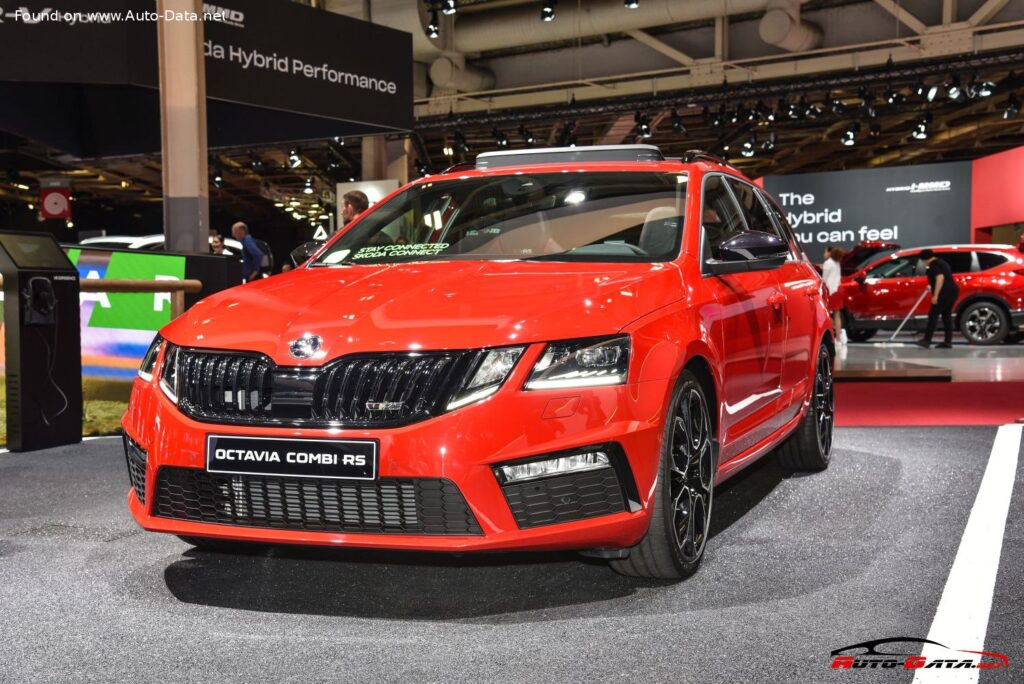
Skoda Octavia III Combi (facelift 2017) 2.0 TDI (150 Hp) 6 DSG: A European Workhorse
The Skoda Octavia, a cornerstone of the Czech automaker’s lineup, has long been celebrated for its exceptional blend of practicality, value, and robust engineering, all underpinned by Volkswagen Group technology. The third generation, introduced in 2012, received a significant refresh in 2017, known as the facelifted Octavia III. This particular variant, the Skoda Octavia III Combi (facelift 2017) 2.0 TDI (150 Hp) 6 DSG, represents the epitome of a sensible, efficient, and versatile family station wagon (known as an estate in Europe) designed primarily for the European market. While Skoda vehicles are not officially sold in the United States, the Octavia’s success across Europe, Asia, and other global markets highlights its universal appeal as a well-rounded C-segment contender. Produced from 2017 to 2018 in this specific configuration, this model combined a potent diesel engine with a smooth automatic transmission, offering a compelling package for long-distance travel and daily utility.
Powertrain and Performance of the Skoda Octavia III Combi (facelift 2017)
Under the hood, the Skoda Octavia III Combi (facelift 2017) 2.0 TDI (150 Hp) 6 DSG featured a highly regarded 2.0-liter turbocharged direct injection (TDI) diesel engine. This four-cylinder inline powerplant, part of the EA288 family (specifically engine codes EA288 / CKFC, CRMB), was engineered for a balance of power, torque, and remarkable fuel efficiency. It delivered a respectable 150 horsepower (Hp) at a broad range of 3500-4000 rpm, ensuring ample power for various driving conditions. More impressively, the engine produced a robust 250.77 lb.-ft. (340 Nm) of torque, available from a low 1750 rpm up to 3000 rpm. This wide torque band was crucial for effortless acceleration, particularly when fully loaded or overtaking on highways, a characteristic highly valued in European driving.
Power was sent to the front wheels via a sophisticated 6-speed DSG (Direct Shift Gearbox) automatic transmission. This dual-clutch unit was renowned for its lightning-fast and seamless gear changes, contributing significantly to both the car’s dynamic performance and its fuel economy. The combination allowed the Octavia Combi to accelerate from 0 to 60 mph in a brisk 8.2 seconds, with a top speed of 132.35 mph (213 km/h).
Fuel efficiency was a major highlight, especially for European consumers facing higher fuel prices. The vehicle achieved an impressive combined fuel economy of 51.1 – 52.3 US mpg (4.5-4.6 l/100 km). Even in urban settings, it managed 44.4 – 45.2 US mpg, while extra-urban driving pushed it to an outstanding 56 – 57.4 US mpg. These figures, coupled with its Euro 6 emission standard compliance and integrated Start & Stop System and Particulate Filter, underscored Skoda’s commitment to environmental responsibility and cost-effective motoring.
Design and Features: Practicality Meets Refinement
The Octavia III Combi (facelift 2017) maintained its reputation as a supremely practical station wagon. The facelift brought subtle yet effective aesthetic enhancements, including a redesigned front fascia with split headlights that gave it a more distinctive and modern appearance. The overall silhouette remained sleek and purposeful, emphasizing its capacious interior. With a length of 183.74 inches (4667 mm) and a width of 71.42 inches (1814 mm), it struck a balance between maneuverability and interior space.
Inside, the Octavia was designed with user-friendliness and comfort in mind. It offered seating for five adults, with generous legroom and headroom, particularly for a vehicle in its segment. The true highlight, however, was its cargo capacity. The Combi variant boasted a minimum trunk space of 21.54 cu. ft. (610 liters) with the rear seats up, which expanded to an cavernous 61.45 cu. ft. (1740 liters) when the rear seats were folded down. This made it one of the most practical vehicles in its class, capable of swallowing significant amounts of luggage, groceries, or sports equipment.
Standard features for the facelifted model often included modern infotainment systems with touchscreens, connectivity options, and a range of safety technologies. While specific trim levels dictated the full suite of features, the Octavia typically offered amenities like automatic climate control, cruise control, and various driver-assistance systems. The robust chassis, featuring an independent McPherson strut front suspension and a torsion beam rear suspension (for this front-wheel-drive variant), provided a comfortable yet composed ride, making it ideal for long journeys across diverse European road networks. Safety was further bolstered by ventilated disc brakes at the front, disc brakes at the rear, and standard ABS (Anti-lock braking system).
Technical Specifications: Skoda Octavia III Combi (facelift 2017) 2.0 TDI (150 Hp) 6 DSG
| Category | Specification |
|---|---|
| General Information | |
| Brand | Skoda |
| Model | Octavia |
| Generation | Octavia III Combi (facelift 2017) |
| Type (Engine) | 2.0 TDI (150 Hp) 6 DSG |
| Production Start | 2017 year |
| Production End | 2018 year |
| Powertrain Architecture | Internal Combustion engine |
| Body type | Station wagon (estate) |
| Seats | 5 |
| Doors | 5 |
| Performance Specs | |
| Fuel consumption (economy) – urban (NEDC) | 45.2 – 44.4 US mpg (5.2-5.3 l/100 km) |
| Fuel consumption (economy) – extra urban (NEDC) | 57.4 – 56 US mpg (4.1-4.2 l/100 km) |
| Fuel consumption (economy) – combined (NEDC) | 52.3 – 51.1 US mpg (4.5-4.6 l/100 km) |
| CO2 emissions (NEDC) | 118-120 g/km |
| Fuel Type | Diesel |
| Acceleration 0 – 60 mph | 8.2 sec |
| Acceleration 0 – 100 km/h | 8.6 sec |
| Maximum speed | 132.35 mph (213 km/h) |
| Emission standard | Euro 6 |
| Weight-to-power ratio | 8.7 kg/Hp, 115.5 Hp/tonne |
| Weight-to-torque ratio | 3.8 kg/Nm, 261.7 Nm/tonne |
| Engine Specs | |
| Power | 150 Hp @ 3500-4000 rpm |
| Power per liter | 76.2 Hp/l |
| Torque | 250.77 lb.-ft. (340 Nm) @ 1750-3000 rpm |
| Engine layout | Front, Transverse |
| Engine Model/Code | EA288 / CKFC, CRMB |
| Engine displacement | 120.09 cu. in. (1968 cm3) |
| Number of cylinders | 4 |
| Engine configuration | Inline |
| Cylinder Bore | 3.19 in. (81 mm) |
| Piston Stroke | 3.76 in. (95.5 mm) |
| Compression ratio | 16.2:1 |
| Number of valves per cylinder | 4 |
| Fuel injection system | Diesel Commonrail |
| Engine aspiration | Turbocharger, Intercooler |
| Valvetrain | DOHC |
| Engine oil capacity | 4.86 US qt (4.6 l) |
| Engine systems | Start & Stop System, Particulate filter |
| Space, Volume and Weights | |
| Kerb Weight | 2863.8 lbs. (1299 kg) |
| Max. weight | 4285.79 lbs. (1944 kg) |
| Max load | 1421.98 lbs. (645 kg) |
| Trunk (boot) space – minimum | 21.54 cu. ft. (610 l) |
| Trunk (boot) space – maximum | 61.45 cu. ft. (1740 l) |
| Fuel tank capacity | 13.21 US gal (50 l) |
| Max. roof load | 165.35 lbs. (75 kg) |
| Permitted trailer load with brakes (12%) | 3527.4 lbs. (1600 kg) |
| Permitted trailer load without brakes | 1499.14 lbs. (680 kg) |
| Permitted towbar download | 165.35 lbs. (75 kg) |
| Dimensions | |
| Length | 183.74 in. (4667 mm) |
| Width | 71.42 in. (1814 mm) |
| Width including mirrors | 79.41 in. (2017 mm) |
| Height | 57.68 in. (1465 mm) |
| Wheelbase | 105.75 in. (2686 mm) |
| Front track | 60.75 in. (1543 mm) |
| Rear (Back) track | 60.39 in. (1534 mm) |
| Front overhang | 35.04 in. (890 mm) |
| Rear overhang | 42.95 in. (1091 mm) |
| Ride height (ground clearance) | 5.55 in. (141 mm) |
| Drag coefficient (Cd) | 0.302 |
| Minimum turning circle (turning diameter) | 34.81 ft. (10.61 m) |
| Approach angle | 14° |
| Departure angle | 12.4° |
| Drivetrain, Brakes and Suspension Specs | |
| Drivetrain Architecture | The Internal combustion engine (ICE) drives the front wheels of the vehicle. |
| Drive wheel | Front wheel drive |
| Number of gears and type of gearbox | 6 gears, automatic transmission DSG |
| Front suspension | Independent, type McPherson with coil spring and anti-roll bar |
| Rear suspension | Coil spring, Torsion |
| Front brakes | Ventilated discs |
| Rear brakes | Disc |
| Assisting systems | ABS (Anti-lock braking system) |
| Steering type | Steering rack and pinion |
| Power steering | Electric Steering |
| Tires size | 205/55 R16; 225/45 R17; 225/40 R18 |
| Wheel rims size | 6.5J x 16; 7J x 17; 7.5J x 18 |
Legacy and Market Impact of the Skoda Octavia III Combi (facelift 2017)
The Skoda Octavia, and particularly its Combi (station wagon) variant, has carved out a significant niche for itself in the highly competitive European C-segment. The Skoda Octavia III Combi (facelift 2017) 2.0 TDI (150 Hp) 6 DSG was a prime example of Skoda’s philosophy: delivering Volkswagen Group engineering and quality at a more accessible price point, often with superior practicality. Its reputation for robust build quality, reliability, and low running costs made it a popular choice for both private buyers and fleet operators across the continent.
In its primary markets, the Octavia Combi competed against a wide array of rivals, including the Ford Focus Estate, Opel Astra Sports Tourer, Renault Megane Estate, and even its Volkswagen Group siblings like the VW Golf Variant and SEAT Leon ST. What set the Octavia apart was its class-leading cargo space, which often rivaled vehicles from the segment above, and its strong value proposition. The powerful yet economical 2.0 TDI engine, paired with the smooth DSG transmission, offered a refined driving experience that belied its mainstream positioning.
The facelifted third-generation Octavia continued Skoda’s trajectory of moving upmarket, shedding its former ‘budget brand’ image. It showcased improved interior materials, enhanced technology, and a more assertive exterior design, all while retaining the core values of practicality and affordability. Its success solidified Skoda’s position as a serious and respected competitor in the European automotive landscape, demonstrating that a focus on intelligent design, efficiency, and real-world utility can lead to widespread market acceptance and enduring popularity. The 2017-2018 model years of this particular Octavia Combi variant therefore represent a key period in Skoda’s modern history, underscoring its commitment to delivering high-quality, technically advanced, and immensely practical vehicles to a demanding international audience.