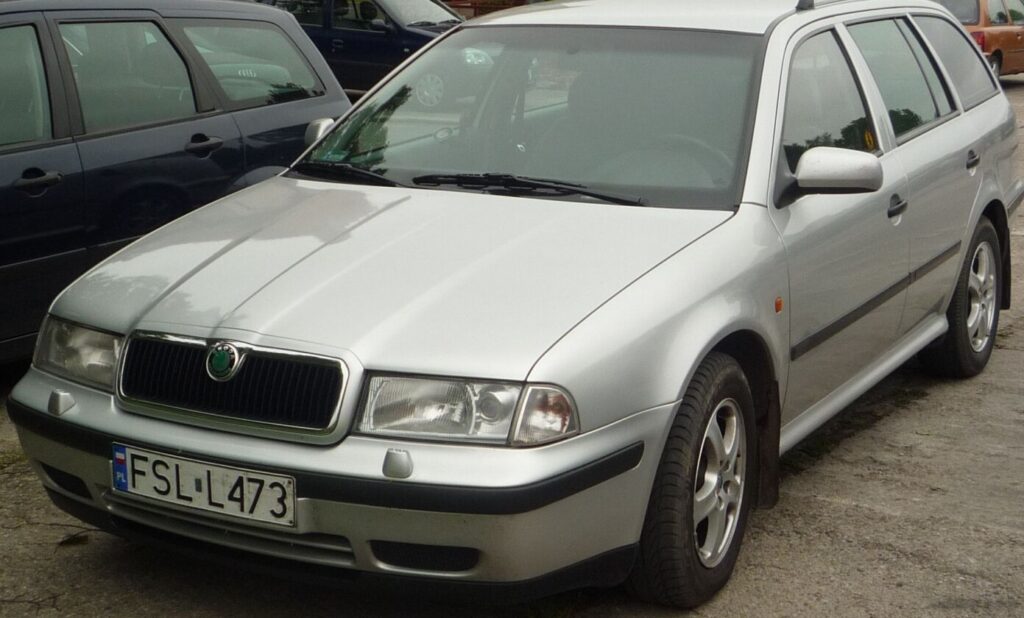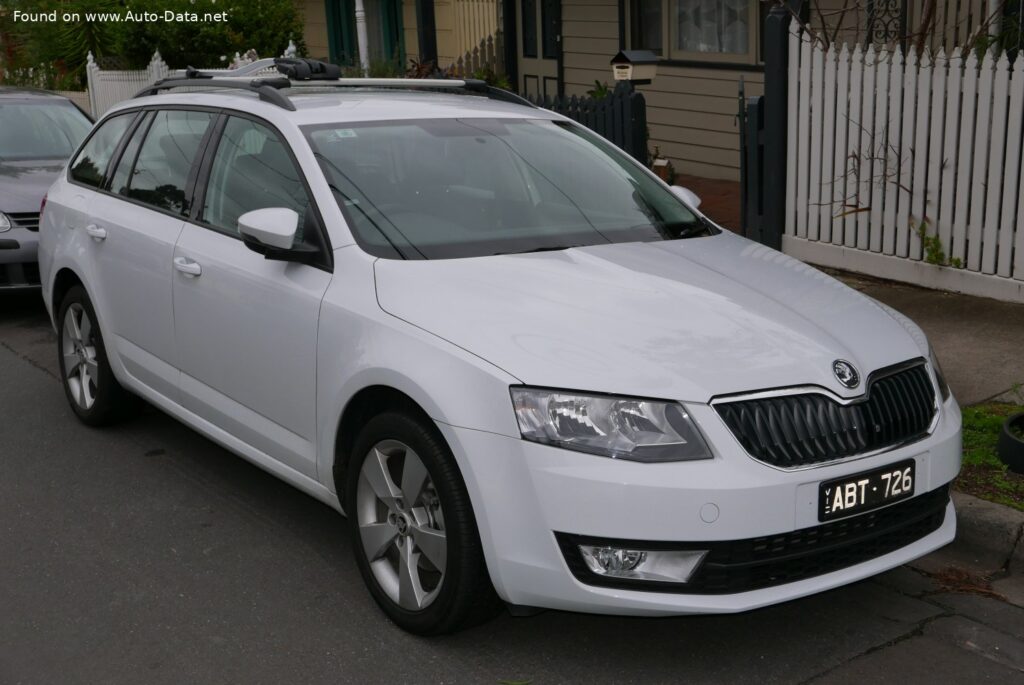
The Skoda Octavia III Combi RS 2.0 TSI (230 Hp) DSG: A Performance Wagon for the European Market
The Skoda Octavia, a cornerstone of the Czech automaker’s lineup, has long been celebrated for its blend of practicality, value, and robust engineering, largely thanks to its Volkswagen Group underpinnings. The third generation, known internally as the Octavia III, further solidified this reputation, offering a refined driving experience and a spacious interior. Among its various iterations, the Skoda Octavia III Combi RS 2.0 TSI (230 Hp) DSG stands out as a particularly compelling package, combining the utility of a station wagon (known as an “estate” in Europe) with genuinely sporty performance. Produced between 2015 and 2017, this model was designed to appeal to European consumers seeking a family-friendly vehicle that didn’t compromise on driving excitement.
While Skoda models are not officially sold in the United States, the Octavia RS, in particular, represents a significant segment in its primary European market: the “hot wagon.” It offers a more accessible alternative to premium performance estates, delivering a potent turbocharged engine, a quick-shifting automatic transmission, and a sport-tuned chassis, all wrapped in a practical, capacious body. This article delves into the technical specifications, design philosophies, and market impact of this unique offering, providing an American expert’s perspective on a European performance gem.
Engine and Performance
At the heart of the Skoda Octavia III Combi RS 2.0 TSI (230 Hp) DSG is a highly regarded powertrain shared with other performance models within the Volkswagen Group. The engine, designated EA888 / CHHA, is a 2.0-liter (1984 cm³ or 121.07 cu. in.) inline four-cylinder unit. This engine utilizes a sophisticated fuel injection system that combines both direct injection and multi-port manifold injection, optimizing both power delivery and fuel efficiency across the rev range. Forced induction comes courtesy of a turbocharger paired with an intercooler, ensuring a dense air charge for maximum power output. The DOHC (Double Overhead Camshaft) valvetrain with four valves per cylinder further enhances breathing and efficiency.
This robust engine generates a healthy 230 horsepower, available across a broad band from 4700 to 6200 rpm, making for flexible and responsive acceleration. Peak torque is an impressive 258.15 lb.-ft. (350 Nm), delivered from a remarkably low 1500 rpm all the way up to 4600 rpm. This wide torque plateau is crucial for the car’s everyday drivability and its ability to pull strongly from low speeds, even when loaded. Power is sent to the front wheels via a six-speed automatic DSG (Direct Shift Gearbox) transmission, renowned for its lightning-fast shifts and smooth operation. This combination allows the Octavia RS Combi to sprint from 0 to 60 mph in a swift 6.7 seconds, with a top speed of 152.24 mph (245 km/h).
Despite its performance credentials, the RS model also demonstrates commendable fuel economy for its class. The combined fuel consumption is rated at 36.8 US mpg (6.4 l/100 km), with urban figures around 29 US mpg (8.1 l/100 km) and extra-urban figures reaching 43.6 US mpg (5.4 l/100 km). CO2 emissions stand at 149 g/km, adhering to the Euro 6 emission standard, reflecting Skoda’s commitment to balancing performance with environmental considerations. The inclusion of a Start & Stop system further aids in reducing fuel consumption and emissions during city driving.
Design and Features
The Skoda Octavia III Combi RS 2.0 TSI (230 Hp) DSG is defined by its station wagon body style, which offers a unique blend of sporty aesthetics and unparalleled practicality. With five doors and seating for five occupants, it serves as an ideal family vehicle that doesn’t shy away from spirited driving. Its exterior design subtly hints at its performance capabilities without being overtly aggressive. RS-specific styling cues typically include unique front and rear bumpers, a distinctive grille, larger alloy wheels (standard 225/45 R17, optional 225/35 R19), and a subtle rear spoiler. The overall silhouette maintains the Octavia Combi’s elegant and functional lines, measuring 184.45 inches (4685 mm) in length, 71.42 inches (1814 mm) in width (79.41 inches or 2017 mm including mirrors), and 57.17 inches (1452 mm) in height. The wheelbase of 105.51 inches (2680 mm) contributes to a stable ride and generous interior space.
Inside, the Octavia RS Combi features a driver-focused cockpit with sporty accents such as bolstered seats, a flat-bottom steering wheel, and RS badging. The emphasis remains on ergonomics and usability, characteristic of Skoda’s design philosophy. The true highlight, however, is its cargo capacity. With the rear seats in place, the trunk offers a cavernous 21.54 cu. ft. (610 liters) of space. Folding down the rear seats expands this to an impressive 61.45 cu. ft. (1740 liters), making it exceptionally versatile for hauling luggage, sports equipment, or even furniture. The curb weight of 3112.93 lbs (1412 kg) underscores its solid build, while a maximum permissible trailer load with brakes of 3527.4 lbs (1600 kg) further enhances its utility.
Mechanically, the RS model benefits from a sport-tuned suspension system. The front features an independent McPherson strut setup with coil springs and an anti-roll bar, while the rear utilizes an independent multi-link spring suspension with a stabilizer. This configuration provides a blend of agile handling and comfortable ride quality. Stopping power is handled by ventilated discs at the front and solid discs at the rear, complemented by an Anti-lock Braking System (ABS) for enhanced safety. The electric power steering system provides precise feedback and easy maneuverability, with a minimum turning circle of 36.52 feet (11.13 meters).
Technical Specifications
| Category | Specification |
|---|---|
| Brand | Skoda |
| Model | Octavia |
| Generation | Octavia III Combi |
| Type (Engine) | RS 2.0 TSI (230 Hp) DSG |
| Production Years | 2015 – 2017 |
| Powertrain Architecture | Internal Combustion Engine (Front-wheel drive) |
| Body Type | Station Wagon (Estate) |
| Seats | 5 |
| Doors | 5 |
| Performance Specs | |
| Fuel Consumption (Urban) | 29 US mpg (8.1 l/100 km) |
| Fuel Consumption (Extra Urban) | 43.6 US mpg (5.4 l/100 km) |
| Fuel Consumption (Combined) | 36.8 US mpg (6.4 l/100 km) |
| CO2 Emissions | 149 g/km |
| Fuel Type | Petrol (Gasoline) |
| Acceleration 0-60 mph | 6.7 sec |
| Maximum Speed | 152.24 mph (245 km/h) |
| Emission Standard | Euro 6 |
| Weight-to-Power Ratio | 6.1 kg/Hp (162.9 Hp/tonne) |
| Weight-to-Torque Ratio | 4 kg/Nm (247.9 Nm/tonne) |
| Engine Specs | |
| Power | 230 Hp @ 4700-6200 rpm |
| Power per Liter | 115.9 Hp/l |
| Torque | 258.15 lb.-ft. (350 Nm) @ 1500-4600 rpm |
| Engine Layout | Front, Transverse |
| Engine Model/Code | EA888 / CHHA |
| Engine Displacement | 121.07 cu. in. (1984 cm³) |
| Number of Cylinders | 4 |
| Engine Configuration | Inline |
| Cylinder Bore | 3.25 in. (82.5 mm) |
| Piston Stroke | 3.65 in. (92.8 mm) |
| Compression Ratio | 9.6:1 |
| Valves per Cylinder | 4 |
| Fuel Injection System | Direct injection and Multi-port manifold injection |
| Engine Aspiration | Turbocharger, Intercooler |
| Valvetrain | DOHC |
| Engine Oil Capacity | 6.02 US qt (5.7 l) |
| Coolant Capacity | 9.09 US qt (8.6 l) |
| Engine Systems | Start & Stop System |
| Space, Volume, and Weights | |
| Kerb Weight | 3112.93 lbs (1412 kg) |
| Max. Weight | 4360.74 lbs (1978 kg) |
| Max Load | 1247.82 lbs (566 kg) |
| Trunk (Boot) Space – Minimum | 21.54 cu. ft. (610 l) |
| Trunk (Boot) Space – Maximum | 61.45 cu. ft. (1740 l) |
| Fuel Tank Capacity | 13.21 US gal (50 l) |
| Max. Roof Load | 165.35 lbs (75 kg) |
| Permitted Trailer Load (with brakes 12%) | 3527.4 lbs (1600 kg) |
| Permitted Trailer Load (without brakes) | 1631.42 lbs (740 kg) |
| Dimensions | |
| Length | 184.45 in. (4685 mm) |
| Width | 71.42 in. (1814 mm) |
| Width (including mirrors) | 79.41 in. (2017 mm) |
| Height | 57.17 in. (1452 mm) |
| Wheelbase | 105.51 in. (2680 mm) |
| Front Track | 60.43 in. (1535 mm) |
| Rear (Back) Track | 59.29 in. (1506 mm) |
| Front Overhang | 35.39 in. (899 mm) |
| Rear Overhang | 43.54 in. (1106 mm) |
| Ride Height (Ground Clearance) | 5 in. (127 mm) |
| Minimum Turning Circle | 36.52 ft. (11.13 m) |
| Approach Angle | 12.8° |
| Departure Angle | 12.3° |
| Drivetrain, Brakes, and Suspension | |
| Drive Wheel | Front Wheel Drive |
| Number of Gears / Gearbox Type | 6 gears, Automatic Transmission DSG |
| Front Suspension | Independent, McPherson with coil spring and anti-roll bar |
| Rear Suspension | Independent multi-link spring suspension with stabilizer |
| Front Brakes | Ventilated Discs |
| Rear Brakes | Disc |
| Assisting Systems | ABS (Anti-lock Braking System) |
| Steering Type | Rack and Pinion |
| Power Steering | Electric Steering |
| Tire Size | 225/45 R17; 225/35 R19 |
| Wheel Rims Size | 7.5J x 17; 7.5J x 19 |
Legacy and Market Impact of the Skoda Octavia III Combi RS 2.0 TSI (230 Hp) DSG
The Skoda Octavia III Combi RS 2.0 TSI (230 Hp) DSG carved out a significant niche in the European automotive landscape. Skoda, often perceived as a value-oriented brand, successfully leveraged its Volkswagen Group resources to offer compelling performance models like the Octavia RS. This particular generation of the RS Combi was praised for its ability to blend the best of both worlds: genuine driving thrills and exceptional everyday usability. It appealed to a demographic that needed the space and practicality of a family car but refused to sacrifice driving engagement.
In its market segment, the Octavia RS Combi faced competition from a variety of rivals. Direct competitors included other performance-oriented wagons such as the Volkswagen Golf R Variant (which offered all-wheel drive and more power but at a higher price point), the Ford Focus ST Wagon, and later, potentially the SEAT Leon Cupra ST. What set the Octavia RS apart was its slightly more understated approach compared to some of its flashier competitors, coupled with its class-leading trunk space and robust build quality. It offered a “sleeper” appeal, delivering surprising performance without drawing excessive attention.
The Octavia RS line, and specifically the third-generation Combi with the 230 Hp engine and DSG transmission, cemented Skoda’s reputation for producing well-engineered, reliable, and genuinely enjoyable cars. It demonstrated that practicality and performance were not mutually exclusive, even within a mainstream brand. Its success contributed to the growing popularity of performance wagons in Europe, showcasing that a family car could indeed be exciting to drive. For enthusiasts in regions where Skoda is not available, like the United States, the Octavia RS remains an intriguing example of European automotive engineering, highlighting how different markets cultivate unique vehicle segments and priorities. Its legacy is one of intelligent design, potent performance, and unmatched utility, making it a highly regarded model among those who appreciate a truly versatile hot wagon.