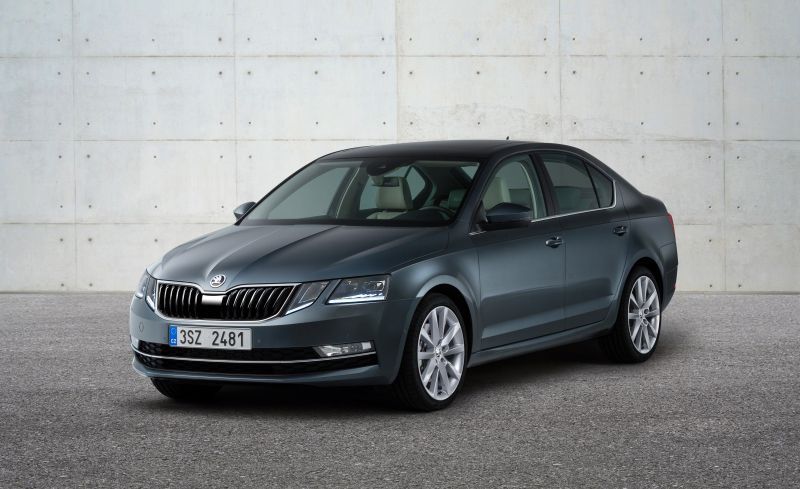
Introduction to the Skoda Octavia III (facelift 2017) 1.4 G-TEC (110 Hp) CNG
The Skoda Octavia, a cornerstone of the Czech automaker’s lineup, has long been celebrated for its pragmatic design, spacious interior, and exceptional value within the European C-segment. The third generation (Type 5E), introduced in 2012, received a significant facelift in 2017, bringing updated styling, enhanced technology, and refined powertrains. Among these, the Skoda Octavia III (facelift 2017) 1.4 G-TEC (110 Hp) CNG variant stood out as a particularly compelling option for efficiency-minded consumers and fleets. While the Skoda brand is not officially sold in the United States, it commands a substantial presence across Europe, offering a sophisticated yet accessible alternative to its Volkswagen Group siblings.
This specific G-TEC model, produced from 2017 to 2018, represented Skoda’s commitment to alternative fuel solutions, blending the practicality of a conventional hatchback with the environmental and economic benefits of compressed natural gas (CNG). Positioned as a smart choice for daily commuting and longer journeys alike, the Octavia G-TEC offered a unique proposition in its segment, combining a powerful yet frugal turbocharged engine with the flexibility of a dual-fuel system, capable of running on both gasoline and CNG. Its introduction underscored a growing trend in Europe towards cleaner, more sustainable automotive options, providing a tangible step towards reduced emissions and lower running costs for its owners.
Engine and Performance of the Skoda Octavia III (facelift 2017) 1.4 G-TEC (110 Hp) CNG
At the heart of the Skoda Octavia III (facelift 2017) 1.4 G-TEC (110 Hp) CNG lies a sophisticated 1.4-liter, inline four-cylinder engine (code CPWA) designed specifically for dual-fuel operation. This turbocharged unit, featuring direct fuel injection and four valves per cylinder, delivers a respectable 110 horsepower (Hp) and a robust 147.51 lb.-ft. of torque, available across a wide and accessible range from 1500 to 3500 rpm. This broad torque band ensures responsive acceleration and confident overtaking maneuvers, making it well-suited for both urban driving and highway cruising.
Power is channeled to the front wheels through a precise 6-speed manual transmission, offering engaging control for the driver. In terms of outright performance, the Octavia G-TEC accelerates from 0 to 60 mph in a competitive 10.4 seconds, with a maximum speed of 121.17 mph. These figures highlight a balanced approach, prioritizing efficiency and usability over raw speed, perfectly aligning with the car’s intended purpose.
The G-TEC’s true innovation lies in its dual-fuel capability. While it can run on conventional gasoline (with a 13.21 US gallon tank), its primary design focus is on CNG. The vehicle is equipped with a 15 kg CNG cylinder capacity, allowing for significant range on the cleaner-burning fuel. When operating on CNG, the Octavia G-TEC achieves impressive fuel economy, with a combined consumption of approximately 5.7 kg/100 km, leading to significantly lower CO2 emissions of just 101 g/km, compared to 131 g/km when running on gasoline. This makes it an attractive option for environmentally conscious drivers looking to reduce their carbon footprint and benefit from lower fuel costs often associated with CNG in European markets. The engine complies with Euro 6 emission standards, underscoring its commitment to modern environmental regulations.
Design and Features
The 2017 facelift brought a refreshed aesthetic to the Skoda Octavia III, enhancing its already reputable design. The Skoda Octavia III (facelift 2017) 1.4 G-TEC (110 Hp) CNG retains the practical and popular hatchback body style, featuring five doors and comfortable seating for five occupants. The updated front fascia included a distinctive split headlight design, giving the Octavia a more assertive and modern appearance. Subtle revisions to the grille and bumper further contributed to its contemporary appeal, while the rear received updated LED taillights, creating a cohesive and sophisticated look.
Measuring 183.86 inches in length, 71.42 inches in width, and 57.4 inches in height, with a wheelbase of 105.51 inches, the Octavia provides ample interior space, a hallmark of Skoda vehicles. The cabin is renowned for its ergonomic layout and high-quality materials, offering a comfortable and intuitive driving experience. Despite housing CNG tanks, the Octavia G-TEC still offers a generous trunk space of 16.24 cubic feet, expandable to a cavernous 51.21 cubic feet with the rear seats folded, maintaining its reputation as a highly practical family vehicle.
Standard features for the era included a range of modern conveniences and safety systems. The vehicle is equipped with front ventilated disc brakes and rear disc brakes, complemented by an Anti-lock Braking System (ABS) for enhanced stopping power and stability. The steering system utilizes a rack and pinion setup with electric power steering, providing a light and responsive feel for maneuverability, particularly beneficial in urban environments with a minimum turning circle of 34.74 feet. While specific infotainment and connectivity features vary by trim level, the facelifted Octavia typically offered options such as touchscreen displays, smartphone integration, and advanced driver-assistance systems, aligning with the expectations of a modern European compact car. Its robust construction and comprehensive safety suite ensured a secure environment for all occupants.
Technical Specifications
| Category | Specification | Value |
|---|---|---|
General Information |
||
| Brand | Skoda | |
| Model | Octavia | |
| Generation | Octavia III (facelift 2017) | |
| Type (Engine) | 1.4 G-TEC (110 Hp) CNG | |
| Start of Production | 2017 year | |
| End of Production | 2018 year | |
| Powertrain Architecture | Internal Combustion engine | |
| Body Type | Hatchback | |
| Seats | 5 | |
| Doors | 5 | |
Performance Specs |
||
| Fuel Consumption (Economy) – Urban (Gasoline) | 7.5 l/100 km | 31.4 US mpg |
| Fuel Consumption (Economy) – Urban (CNG) | 7.4 kg/100 km | |
| Fuel Consumption (Economy) – Extra Urban (Gasoline) | 4.7 l/100 km | 50 US mpg |
| Fuel Consumption (Economy) – Extra Urban (CNG) | 4.6 kg/100 km | |
| Fuel Consumption (Economy) – Combined (Gasoline) | 5.7 l/100 km | 41.3 US mpg |
| Fuel Consumption (Economy) – Combined (CNG) | 5.7 kg/100 km | |
| CO2 Emissions (Gasoline) | 131 g/km | |
| CO2 Emissions (CNG) | 101 g/km | |
| Fuel Type | Petrol / CNG | |
| Acceleration 0 – 60 mph | 10.4 sec | |
| Maximum Speed | 195 km/h | 121.17 mph |
| Emission Standard | Euro 6 | |
| Weight-to-Power Ratio | 12 kg/Hp | 83.4 Hp/tonne |
| Weight-to-Torque Ratio | 6.6 kg/Nm | 151.6 Nm/tonne |
Engine Specs |
||
| Power | 110 Hp | |
| Power per Liter | 78.9 Hp/l | |
| Torque | 200 Nm @ 1500-3500 rpm. | 147.51 lb.-ft. @ 1500-3500 rpm. |
| Engine Layout | Front, Transverse | |
| Engine Model/Code | CPWA | |
| Engine Displacement | 1395 cm3 | 85.13 cu. in. |
| Number of Cylinders | 4 | |
| Engine Configuration | Inline | |
| Cylinder Bore | 74.5 mm | 2.93 in. |
| Piston Stroke | 80 mm | 3.15 in. |
| Compression Ratio | 10.5:1 | |
| Number of Valves per Cylinder | 4 | |
| Fuel Injection System | Direct injection | |
| Engine Aspiration | Turbocharger | |
| Engine Oil Capacity | 4 l | 4.23 US qt |
| Engine Oil Specification | Information not provided | |
Space, Volume and Weights |
||
| Kerb Weight | 1319 kg | 2907.9 lbs. |
| Max. Weight | 1878 kg | 4140.28 lbs. |
| Max Load | 559 kg | 1232.38 lbs. |
| Trunk (Boot) Space – Minimum | 460 l | 16.24 cu. ft. |
| Trunk (Boot) Space – Maximum | 1450 l | 51.21 cu. ft. |
| Fuel Tank Capacity (Gasoline) | 50 l | 13.21 US gal |
| CNG Cylinder Capacity | 15 kg | |
| Max. Roof Load | 75 kg | 165.35 lbs. |
Dimensions |
||
| Length | 4670 mm | 183.86 in. |
| Width | 1814 mm | 71.42 in. |
| Height | 1458 mm | 57.4 in. |
| Wheelbase | 2680 mm | 105.51 in. |
| Front Track | 1543 mm | 60.75 in. |
| Rear (Back) Track | 1549 mm | 60.98 in. |
| Minimum Turning Circle (Turning Diameter) | 10.59 m | 34.74 ft. |
Drivetrain, Brakes and Suspension Specs |
||
| Drivetrain Architecture | The Internal combustion engine (ICE) drives the front wheels of the vehicle. | |
| Drive Wheel | Front wheel drive | |
| Number of Gears and Type of Gearbox | 6 gears, manual transmission | |
| Front Brakes | Ventilated discs | |
| Rear Brakes | Disc | |
| Assisting Systems | ABS (Anti-lock braking system) | |
| Steering Type | Steering rack and pinion | |
| Power Steering | Electric Steering | |
Legacy and Market Impact
The Skoda Octavia has consistently been a pillar of the European automotive market, renowned for its ‘more car for your money’ philosophy. The third-generation facelift, including the Skoda Octavia III (facelift 2017) 1.4 G-TEC (110 Hp) CNG, continued this tradition, solidifying its reputation as a highly competent and practical vehicle. In Europe, the Octavia competes fiercely in the compact segment against established rivals such as the Volkswagen Golf, Ford Focus, Opel Astra, Peugeot 308, and Renault Megane. What sets the Octavia apart is its unique blend of C-segment footprint with D-segment interior space, offering near-midsize practicality at a compact car price point.
The G-TEC variant, in particular, carved out a significant niche for itself. While CNG infrastructure is not as widespread as gasoline stations globally, it is notably robust in several key European markets, making the Octavia G-TEC an incredibly sensible and economical choice where available. Its dual-fuel capability provided peace of mind, allowing drivers to switch to gasoline if CNG stations were scarce, eliminating range anxiety. This flexibility, combined with the lower running costs and reduced environmental impact of CNG, made it an attractive proposition for fleet operators, taxi companies, and private buyers who prioritize long-term value and sustainability.
The Octavia G-TEC demonstrated Skoda’s foresight in addressing evolving environmental concerns and consumer demands for alternative fuels. It underscored the brand’s ability to integrate advanced, cleaner technologies into its mainstream models without compromising on the core values of practicality, reliability, and affordability that define the Octavia line. Its presence in the market helped to normalize CNG as a viable automotive fuel, paving the way for future eco-friendly iterations across the Skoda and wider Volkswagen Group portfolio. Although its production run for this specific facelifted G-TEC model was relatively short (2017-2018), it left a lasting legacy as a testament to Skoda’s ingenuity and commitment to providing diverse, efficient, and well-engineered solutions for the European consumer. The Octavia continues to be a top seller for Skoda, and models like the G-TEC have played a crucial role in building its strong and positive reputation.