Skoda Octavia III (facelift): An International Automotive Perspective
The facelifted third-generation Škoda Octavia, internally designated Type 5E, holds a pivotal position in the contemporary history of the Czech automaker under the stewardship of the Volkswagen Group. Unveiled for the 2017 model year, this significant refresh built upon the resounding commercial and critical success of the pre-facelift third-generation vehicle. It introduced a suite of updated technologies, a refined powertrain lineup, and a notably revised design aesthetic that sparked considerable discussion. The particular variant under review, the Skoda Octavia III (facelift) 1.8 TSI, equipped with 180 horsepower and the efficient DSG transmission, was strategically positioned as a high-performance option just beneath the flagship vRS models. This configuration offered a compelling and often understated blend of everyday practicality, near-executive comfort, and genuinely potent performance.
This unique combination cemented its reputation as a quintessential ‘sleeper’ car—a vehicle whose performance capabilities subtly but significantly exceed its unassuming, family-oriented exterior. For discerning buyers across Europe and other international markets who demanded the generous space and versatile functionality of a large family car, yet yearned for the spirited driving dynamics typically associated with more overtly sporting vehicles, the Skoda Octavia III (facelift) 1.8 TSI DSG presented a uniquely balanced and highly attractive proposition within the fiercely competitive C-segment. It exemplified Škoda’s philosophy of offering exceptional value, intelligent engineering, and surprising capability.
Development and Design Evolution
The original third-generation Octavia, launched in 2012, was a monumental triumph for Škoda. It garnered widespread acclaim for its class-leading interior space, robust build quality, and an unbeatable value proposition. Crucially, it was the first Škoda model to be developed on the Volkswagen Group’s highly versatile and sophisticated modular MQB platform, a foundation shared with illustrious contemporaries such as the Volkswagen Golf Mk7, Audi A3 Mk3, and SEAT León Mk3. This shared architecture underscored its advanced engineering and allowed Škoda to leverage economies of scale while delivering a refined driving experience.
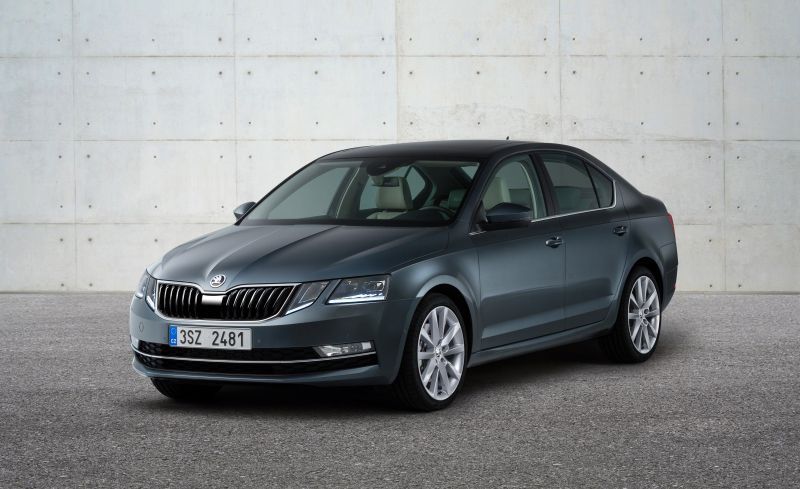
For the 2017 model year, Škoda rolled out a comprehensive facelift that extended beyond mere cosmetic tweaks. The most prominent and widely debated alteration was the complete overhaul of the front fascia, a bold move spearheaded by Škoda’s then-design chief, Jozef Kabaň. The pre-facelift model’s conventional single-piece headlamps were replaced by a distinctive ‘quad’ or split-headlight design. This new visual signature was intended to evoke the brand’s cherished Bohemian crystal heritage and to project a more premium, technologically advanced image for the Octavia. This design decision proved polarizing; some critics and consumers lauded it as an audacious step that imbued the car with a unique identity and a stronger, more assertive road presence, while others found it a needlessly complex departure from the original’s clean, elegant, and universally appealing lines.
Beyond the controversial headlamps, the facelift incorporated a wider, more assertive front grille, subtly redesigned front and rear bumpers, and new housings for the fog lamps. A significant technological upgrade was the availability of full-LED headlights, complete with an Adaptive Front-lighting System (AFS), which superseded the previous bi-xenon units on higher-specification models, enhancing both safety and nighttime visibility. The rear of the vehicle received more subtle revisions, primarily focused on updated LED light graphics within the signature C-shaped taillight clusters. The core body shell, available in both practical five-door liftback and capacious Combi (estate) forms, retained the crisp, taut lines and well-proportioned aesthetics that had defined the model’s initial success and contributed to its widespread appeal.
Interior, Technology, and Practicality
The interior of the facelifted Octavia continued to receive near-universal acclaim for its exemplary ergonomic layout, the discerning use of high-quality materials, and its truly exceptional utilization of interior space. The fundamental cabin architecture remained largely unchanged, steadfastly adhering to Škoda’s philosophy of logical, user-friendly design where all primary controls are intuitively placed and easily accessible. Material quality was a particular standout feature, with extensive application of soft-touch plastics across the dashboard and door cards, durable and attractive fabrics, and precisely engineered switchgear that collectively imparted a tangible sense of longevity and premium feel, often surpassing expectations for its segment.
A significant and welcome enhancement for the 2017 facelift was the introduction of a new generation of sophisticated infotainment systems. The previous units were replaced with sleek, modern glass-fronted capacitive touchscreens that greatly improved the cabin’s technological appeal. The top-tier ‘Columbus’ system now boasted a vibrant 9.2-inch display, while the mid-range ‘Amundsen’ and entry-level ‘Bolero’ systems also received substantial upgrades in both hardware and software. This new infotainment suite brought with it the Škoda Connect suite of advanced online services, providing drivers with invaluable real-time traffic information, seamless Google Earth integration, and convenient remote vehicle access via a dedicated smartphone application, enhancing connectivity and convenience.
However, the Octavia’s enduring and defining characteristic remained its class-leading interior and luggage space. Built on a lengthened version of the MQB platform, its substantial 105.7-inch (2,686 mm) wheelbase provided rear-seat passengers with legroom and headroom that not only comfortably surpassed those of its direct competitors but also rivaled many vehicles from the segment above. The boot capacity was nothing short of immense: the liftback model offered a cavernous 20.8 cubic feet (590 liters) with the rear seats in place, expanding to an astonishing 55.8 cubic feet (1,580 liters) when folded flat. The Combi estate variant was even more capacious, providing 21.5 cubic feet (610 liters) and a truly van-like 61.4 cubic feet (1,740 liters) of cargo volume, respectively, making it an incredibly versatile family hauler.
This sheer volume was thoughtfully complemented by Škoda’s celebrated ‘Simply Clever’ features—a collection of ingenious and practical details designed to enhance everyday usability. These included the signature ice scraper cleverly located in the fuel filler cap, a convenient ticket holder on the A-pillar, a reversible boot mat (carpet on one side, durable rubber on the other for wet or dirty items), and numerous other storage compartments, hooks, and nets strategically placed throughout the cabin, underscoring Škoda’s commitment to practical innovation.
Powertrain and Performance: The Skoda Octavia 1.8 TSI Engine and Chassis
The beating heart of this specific Skoda Octavia III (facelift) model is the Volkswagen Group’s venerable EA888 Generation 3 turbocharged petrol engine. This advanced 1.8-liter, four-cylinder powerplant is widely renowned for its exceptionally smooth power delivery, impressive thermal efficiency, and robust, reliable engineering. It represents a pinnacle of modern four-cylinder engine design.
The EA888 Generation 3 Engine
In this particular application, the 1,798 cc engine features a sophisticated dual injection system, a key technological advancement that combines direct injection (FSI) under high load conditions with multi-port injection (MPI) under partial load. This intelligent system not only enhances fuel efficiency across a wider range of operating conditions but also significantly reduces particulate emissions and, crucially, helps prevent the carbon build-up on the intake valves—a common and often problematic issue associated with earlier direct-injection-only engines. Furthermore, the cylinder head ingeniously integrates the exhaust manifold, a design innovation that allows the engine coolant to rapidly warm the exhaust gases from a cold start. This, in turn, heats the catalytic converter to its optimal operating temperature much faster, reducing emissions during the critical warm-up phase.
The engine produces a maximum power output of 132 kilowatts, equating to 180 PS or 178 horsepower, available across a broad rev range between 5,100 and 6,200 rpm. When seamlessly paired with the quick-shifting 7-speed DSG (Direct Shift Gearbox) transmission, its peak torque is electronically limited to a stout 250 Newton-meters (184 pound-feet), available across an exceptionally broad and flat rev range from just 1,250 rpm all the way up to 5,000 rpm. This remarkably flat torque curve is directly responsible for the car’s effortless and deceptively rapid mid-range acceleration, making overtaking maneuvers swift, confidence-inspiring, and remarkably simple. The liftback model, specifically, could accelerate from 0 to 100 kilometers per hour (0–62 mph) in a brisk 7.3 seconds, with a commendable top speed of 231 km/h (144 mph), solidifying its ‘sleeper’ credentials.
Chassis and Suspension
A critical feature that dynamically distinguished the Skoda Octavia III (facelift) 1.8 TSI from its lesser-powered petrol and diesel siblings was its more sophisticated chassis configuration. While lower-end Octavia models were equipped with a cost-effective and space-efficient torsion beam rear axle, the 1.8 TSI (along with the vRS and 4×4 models) boasted a significantly more advanced multi-link independent rear suspension. This upgrade was a key factor in its superior driving dynamics.
This advanced multi-link setup provides substantial dynamic advantages. It allows for far better control of wheel camber and toe angles during cornering and over uneven road surfaces, ensuring a larger and more consistent tire contact patch with the road at all times. The tangible result is superior handling stability, greater driver confidence on challenging and winding roads, and a more compliant, refined ride quality that effectively absorbs bumps and imperfections with remarkable composure. The vehicle was also fitted with the XDS electronic differential lock as standard, a clever system that subtly brakes the inside front wheel during cornering to mitigate understeer and significantly improve traction when accelerating out of tight bends. For even greater adaptability and driver control, buyers could specify Dynamic Chassis Control (DCC), an adaptive damper system offering selectable modes (Comfort, Normal, Sport) to tailor the suspension’s firmness and overall character precisely to the driver’s preference or prevailing road conditions, further enhancing its versatility and appeal.
Technical Specifications: Skoda Octavia III (facelift) 1.8 TSI (180 Hp) DSG
| Category | Specification |
|---|---|
| Model | Skoda Octavia III (facelift) |
| Variant | 1.8 TSI (180 Hp) DSG |
| Body Type | 5-door Liftback (Combi also available) |
| Engine Type | EA888 Generation 3, Turbocharged Inline-4 Petrol |
| Displacement | 1,798 cc (1.8 Liters) |
| Max Power | 132 kW (180 PS; 178 bhp) @ 5,100-6,200 rpm |
| Max Torque | 250 Nm (184 lb-ft) @ 1,250-5,000 rpm |
| Transmission | 7-speed DSG (Dual-Clutch Automatic) |
| Drive Type | Front-Wheel Drive |
| 0-62 mph (0-100 km/h) | 7.3 seconds |
| Top Speed | 144 mph (231 km/h) |
| Wheelbase | 105.7 inches (2,686 mm) |
| Rear Suspension | Multi-link Independent |
| Front Suspension | MacPherson Struts |
| Boot Capacity (Liftback) | 20.8 cu ft (590 Liters) / 55.8 cu ft (1,580 Liters) with rear seats folded |
| Boot Capacity (Combi) | 21.5 cu ft (610 Liters) / 61.4 cu ft (1,740 Liters) with rear seats folded |
| Safety Features | Full-LED Headlights with AFS, XDS Electronic Differential Lock, Optional DCC |
| Infotainment | Up to 9.2-inch ‘Columbus’ touchscreen with Skoda Connect |
Legacy and Market Impact
The Skoda Octavia III (facelift), particularly in its potent 1.8 TSI guise, significantly reinforced Škoda’s reputation as a purveyor of practical, high-quality, and intelligently engineered vehicles within the highly competitive European C-segment. Despite the polarizing front-end styling of the facelift, the car’s core strengths—its exceptional interior volume, robust build quality, and the sheer ingenuity of its ‘Simply Clever’ features—continued to resonate strongly with consumers.
In its primary markets, the Octavia competed fiercely against a broad spectrum of rivals. Its direct platform siblings, such as the Volkswagen Golf and SEAT León, offered similar underpinnings but the Octavia consistently distinguished itself with its superior interior space and often a more competitive price point. Beyond the VW Group, it squared off against established European heavyweights like the Ford Focus, Opel/Vauxhall Astra, Renault Mégane, and Peugeot 308. What set the Octavia apart was its unique positioning: it offered the practicality of a D-segment car (like the Ford Mondeo or VW Passat) in terms of space, but at a C-segment price, an appealing value proposition that few competitors could match.
The 1.8 TSI variant, with its sophisticated multi-link rear suspension and powerful yet refined EA888 engine, carved out a distinct niche. It appealed to buyers who appreciated performance and dynamic capability but preferred it delivered in a more understated, less overtly sporty package than, for instance, a Golf GTI. This ‘sleeper’ appeal allowed it to attract a demographic that valued substance and versatility over overt styling cues. Its success further solidified Škoda’s transformation from a budget brand into a mainstream, respected European automaker capable of delivering highly desirable vehicles that seamlessly blend technology, efficiency, and genuine driving pleasure.
Historically, the third-generation Octavia, including its facelifted iteration, is seen as a crucial model in Škoda’s modern era. It demonstrated the brand’s ability to consistently leverage Volkswagen Group technology to create vehicles that not only met but often exceeded customer expectations for quality, practicality, and performance. The 1.8 TSI DSG variant, in particular, stands as a testament to Škoda’s engineering prowess, offering a compelling blend of everyday utility and spirited performance that remains highly regarded in the used car market today, showcasing its lasting appeal and impact.