The Skoda Octavia III (facelift 2017): A European Champion of Practicality and Performance
The Skoda Octavia has long stood as a cornerstone of the Czech automaker’s lineup, a brand renowned for delivering exceptional value, robust engineering, and vast practicality under the umbrella of the Volkswagen Group. While the Skoda brand is not officially sold in the United States, the Octavia is a highly successful and critically acclaimed model across Europe and other international markets, recognized for punching above its weight class. The vehicle under review, the Skoda Octavia III (facelift 2017) with the 2.0 TDI (184 Hp) 4×4 6 DSG powertrain, represents a mid-cycle refresh of the third-generation (Type 5E) model, produced between 2017 and 2018. This particular variant showcases the Octavia’s blend of efficiency, spirited performance, and all-weather capability, all wrapped in a practical five-door hatchback body. It cemented the Octavia’s reputation as a smart choice for families and fleet operators seeking a well-rounded and dependable vehicle without the premium price tag often associated with its German counterparts.
Engine and Performance of the Skoda Octavia III (facelift 2017)
At the heart of this particular Skoda Octavia III (facelift 2017) model lies the highly regarded EA288 2.0-liter TDI (Turbocharged Direct Injection) diesel engine. This inline four-cylinder powerplant, known by codes such as CUNA, CUPA, or DJGA, is a testament to modern diesel engineering, balancing impressive power output with remarkable fuel efficiency. It generates a robust 184 horsepower at a versatile rev range of 3500-4000 rpm, providing ample thrust for both highway cruising and brisk acceleration. More significantly for real-world driving, the engine delivers a substantial 280.27 lb.-ft. of torque, available across a broad plateau from 1750 to 3250 rpm. This wide torque band ensures responsive acceleration and effortless overtaking maneuvers, even when the vehicle is fully loaded.
Power is channeled through a sophisticated 6-speed DSG (Direct Shift Gearbox) automatic transmission. This dual-clutch unit is celebrated for its rapid and smooth gear changes, contributing significantly to both the car’s performance and its fuel economy. The Octavia’s dynamic capabilities are further enhanced by its all-wheel-drive (4×4) system. This intelligent drivetrain architecture primarily sends power to the front wheels, but can seamlessly engage the rear wheels via an electrically or mechanically operated clutch when slippage is detected or additional traction is required, such as in adverse weather conditions or on challenging terrain.
In terms of raw performance, the Skoda Octavia III (facelift 2017) 2.0 TDI (184 Hp) is no slouch. It accelerates from 0 to 60 mph in a brisk 6.7 seconds, a figure that rivals many gasoline-powered sports sedans of its era. The top speed is rated at 141.67 mph (228 km/h), demonstrating its capability for sustained high-speed cruising on unrestricted European autobahns. Despite its strong performance, the vehicle maintains excellent fuel economy, with a combined NEDC rating of 46.1 to 48 US mpg (4.9-5.1 l/100 km). This efficiency is aided by features like a Start & Stop system and a particulate filter, ensuring compliance with the stringent Euro 6 emission standard, with CO2 emissions ranging from 129 to 134 g/km.
Design and Features
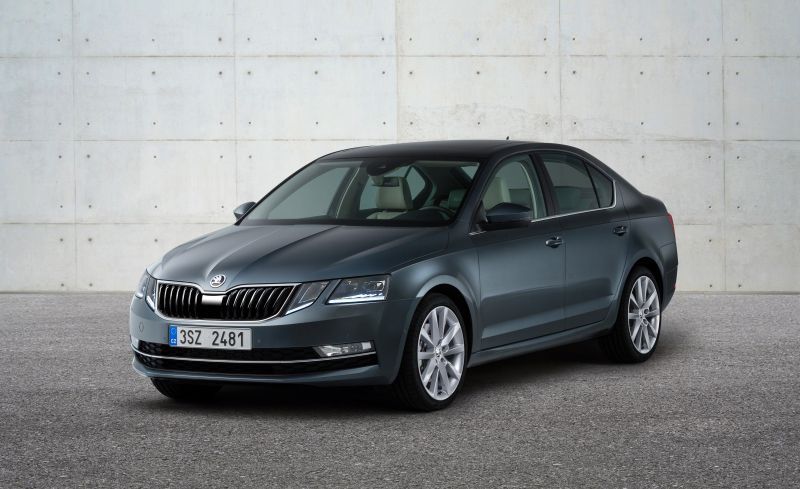
The Skoda Octavia III (facelift 2017) received a visual refresh that modernized its appearance while retaining its characteristic understated elegance. The most notable change was the controversial split-headlight design, which gave the front fascia a distinctive, four-eyed look, differentiating it from its pre-facelift predecessor. Complementing this were revised bumpers, a wider grille, and updated LED taillight graphics, lending the Octavia a more contemporary and assertive stance. The hatchback body style is a core element of the Octavia’s appeal, offering a massive 20.84 cubic feet (590 liters) of trunk space with the rear seats up, expanding to an impressive 55.8 cubic feet (1580 liters) when the seats are folded down. This cavernous cargo capacity is often compared favorably to vehicles in larger segments, underscoring the Octavia’s practicality.
Inside, the facelift brought subtle refinements, including updated infotainment systems with larger screens and enhanced connectivity options, reflecting the increasing demand for integrated technology in modern vehicles. While specific interior features are not detailed, a 2017 model would typically include advanced driver-assistance systems, climate control, multiple airbags, and a high level of fit and finish that is characteristic of Volkswagen Group products. The cabin is designed for five occupants, offering generous headroom and legroom for its class.
Underpinning the Octavia’s composed ride and handling is a well-engineered chassis. The front suspension utilizes an independent McPherson strut setup with coil springs and an anti-roll bar, while the rear features an independent multi-link spring suspension with a stabilizer, providing a comfortable yet engaging driving experience. Braking is handled by ventilated discs at the front and solid discs at the rear, complemented by an Anti-lock Braking System (ABS) for optimal stopping power. The electric power steering system ensures precise control and ease of maneuverability, with a minimum turning circle of 34.74 feet (10.59 meters). The vehicle’s dimensions, measuring 183.86 inches (4670 mm) in length, 71.42 inches (1814 mm) in width, and 57.44 inches (1459 mm) in height, along with a 105.51-inch (2680 mm) wheelbase, contribute to its stable road presence and spacious interior. Aerodynamic efficiency is also a focus, with a drag coefficient (Cd) of 0.296.
Technical Specifications
| Category | Specification | Value |
|---|---|---|
| General Information | ||
| Brand | Skoda | |
| Model | Octavia | |
| Generation | Octavia III (facelift 2017) | |
| Type (Engine) | 2.0 TDI (184 Hp) 4×4 6 DSG | |
| Start of Production | 2017 year | |
| End of Production | 2018 year | |
| Powertrain Architecture | Internal Combustion Engine | |
| Body type | Hatchback | |
| Seats | 5 | |
| Doors | 5 | |
| Performance Specifications | ||
| Fuel Consumption (Urban, NEDC) | 42 – 39.9 US mpg (5.6-5.9 l/100 km) | |
| Fuel Consumption (Extra Urban, NEDC) | 52.3 – 50 US mpg (4.5-4.7 l/100 km) | |
| Fuel Consumption (Combined, NEDC) | 48 – 46.1 US mpg (4.9-5.1 l/100 km) | |
| CO2 Emissions (NEDC) | 129-134 g/km | |
| Fuel Type | Diesel | |
| Acceleration 0 – 60 mph | 6.7 sec | |
| Acceleration 0 – 100 km/h | 7.1 sec | |
| Maximum Speed | 141.67 mph (228 km/h) | |
| Emission Standard | Euro 6 | |
| Weight-to-Power Ratio | 7.5 kg/Hp, 132.6 Hp/tonne | |
| Weight-to-Torque Ratio | 3.7 kg/Nm, 273.8 Nm/tonne | |
| Engine Specifications | ||
| Power | 184 Hp @ 3500-4000 rpm | |
| Power per liter | 93.5 Hp/l | |
| Torque | 280.27 lb.-ft. (380 Nm) @ 1750-3250 rpm | |
| Engine Layout | Front, Transverse | |
| Engine Model/Code | EA288 / CUNA, CUPA, DJGA | |
| Engine Displacement | 120.09 cu. in. (1968 cm3) | |
| Number of Cylinders | 4 | |
| Engine Configuration | Inline | |
| Cylinder Bore | 3.19 in. (81 mm) | |
| Piston Stroke | 3.76 in. (95.5 mm) | |
| Compression Ratio | 15.8:1 | |
| Number of Valves per Cylinder | 4 | |
| Fuel Injection System | Diesel Commonrail | |
| Engine Aspiration | Turbocharger, Intercooler | |
| Valvetrain | DOHC | |
| Engine Oil Capacity | 4.86 US qt (4.6 l) | |
| Engine Systems | Start & Stop System, Particulate filter | |
| Space, Volume, and Weights | ||
| Kerb Weight | 3060.02 – 3454.64 lbs. (1388-1567 kg) | |
| Max. Weight | 4349.72 lbs. (1973 kg) | |
| Max Load | 895.08 – 1289.7 lbs. (406-585 kg) | |
| Trunk (Boot) Space – Minimum | 20.84 cu. ft. (590 l) | |
| Trunk (Boot) Space – Maximum | 55.8 cu. ft. (1580 l) | |
| Fuel Tank Capacity | 14.53 US gal (55 l) | |
| Max. Roof Load | 165.35 lbs. (75 kg) | |
| Permitted Trailer Load with Brakes (12%) | 3968.32 lbs. (1800 kg) | |
| Permitted Trailer Load without Brakes | 1609.37 lbs. (730 kg) | |
| Permitted Towbar Download | 176.37 lbs. (80 kg) | |
| Dimensions | ||
| Length | 183.86 in. (4670 mm) | |
| Width | 71.42 in. (1814 mm) | |
| Width Including Mirrors | 79.41 in. (2017 mm) | |
| Height | 57.44 in. (1459 mm) | |
| Wheelbase | 105.51 in. (2680 mm) | |
| Front Track | 60.75 in. (1543 mm) | |
| Rear (Back) Track | 60.71 in. (1542 mm) | |
| Ride Height (Ground Clearance) | 5.43 in. (138 mm) | |
| Drag Coefficient (Cd) | 0.296 | |
| Minimum Turning Circle (Turning Diameter) | 34.74 ft. (10.59 m) | |
| Approach Angle | 14° | |
| Departure Angle | 12.1° | |
| Drivetrain, Brakes, and Suspension Specs | ||
| Drivetrain Architecture | The Internal combustion engine (ICE) drives the front wheels permanently, and the rear wheels are driven through an electrically or mechanically operated clutch if necessary. | |
| Drive Wheel | All-wheel drive (4×4) | |
| Number of Gears and Type of Gearbox | 6 gears, automatic transmission DSG | |
| Front Suspension | Independent, type McPherson with coil spring and anti-roll bar | |
| Rear Suspension | Independent multi-link spring suspension with stabilizer | |
| Front Brakes | Ventilated discs | |
| Rear Brakes | Disc | |
| Assisting Systems | ABS (Anti-lock braking system) | |
| Steering Type | Steering rack and pinion | |
| Power Steering | Electric Steering | |
| Tires Size | 205/55 R16; 225/45 R17; 225/40 R18 | |
| Wheel Rims Size | 6.5J x 16; 7J x 17; 7.5J x 18 | |
Legacy and Market Impact
The Skoda Octavia, particularly the third generation and its facelifted iteration, has carved out a significant niche in the highly competitive European automotive landscape. It is widely regarded as a benchmark for combining Volkswagen Group engineering prowess with Skoda’s core values of practicality, spaciousness, and affordability. The Skoda Octavia III (facelift 2017) with its potent 2.0 TDI engine and 4×4 DSG drivetrain solidified its position as a versatile workhorse, appealing to a broad spectrum of buyers from private families needing ample space to corporate fleets seeking reliable and efficient transport.
In its primary markets, the Octavia competed fiercely with established rivals such as the Volkswagen Golf, Ford Focus, Opel Astra, and SEAT Leon. What set the Octavia apart was its unique proposition: it offered interior space and trunk capacity that often rivaled vehicles from the class above (e.g., VW Passat, Ford Mondeo), but at a price point closer to compact hatchbacks. This “more car for your money” philosophy has been a cornerstone of Skoda’s success and a major contributor to the Octavia’s enduring popularity.
The 2.0 TDI (184 Hp) 4×4 6 DSG variant specifically catered to buyers who desired a blend of performance, fuel efficiency, and enhanced traction, making it particularly popular in regions with challenging winter conditions or for those who frequently tow. Its reputation for robust build quality, comfortable ride, and dependable mechanicals, inherited from its Volkswagen Group lineage, ensured strong resale