Skoda Octavia III Scout 2.0 TDI (184 Hp) DSG 4×4: A Rugged European Workhorse
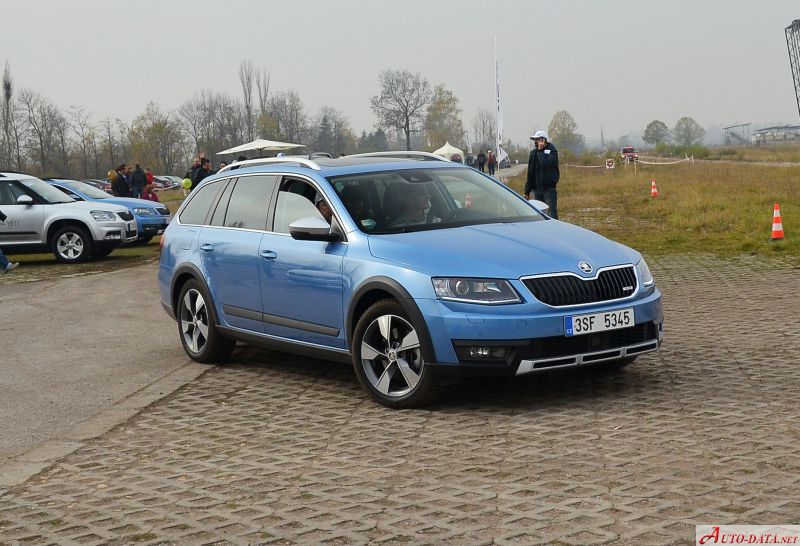
The Skoda Octavia III Scout 2.0 TDI (184 Hp) DSG 4×4 represents a compelling blend of practicality, efficiency, and light off-road capability, firmly establishing its niche within the European automotive landscape. Produced between 2013 and 2017, this third-generation Octavia variant, hailing from the Czech Republic under the Volkswagen Group umbrella, was never officially sold in the United States. However, its engineering prowess and market positioning offer a fascinating look into the preferences and needs of European consumers. Designed as a crossover station wagon, the Octavia Scout capitalized on the growing demand for vehicles that could handle diverse conditions, from urban commuting to unpaved country roads, without sacrificing the fuel economy or driving dynamics of a traditional passenger car.
The “Scout” designation signifies its enhanced ruggedness, featuring increased ground clearance, protective body cladding, and a sophisticated all-wheel-drive system. At its heart, the 2.0-liter TDI diesel engine provided robust performance paired with remarkable fuel efficiency, making it a favorite among families and outdoor enthusiasts across Europe. This particular configuration, with 184 horsepower and a seamless DSG automatic transmission, showcased Skoda’s commitment to delivering high-value, well-engineered vehicles that often punched above their weight in terms of capability and perceived quality.
Engine and Performance: The Power Behind the Skoda Octavia III Scout 2.0 TDI (184 Hp) DSG 4×4
Powering the Skoda Octavia III Scout is a potent 2.0-liter TDI (Turbo Diesel Injection) inline-four engine, a staple of the Volkswagen Group’s powertrain offerings. This particular iteration, identified by engine codes such as EA288, CUNA, CUPA, or DJGA, generated a healthy 184 horsepower (Hp) between 3500 and 4000 rpm. More impressively for a vehicle designed for versatility and towing, it delivered a substantial 280.27 lb.-ft. (380 Nm) of torque, available across a broad and usable range from 1750 to 3000 rpm. This torque output was crucial for its confident acceleration, especially when laden with cargo or pulling a trailer.
The engine’s architecture featured a DOHC (Double Overhead Camshaft) valvetrain and a common rail direct fuel injection system, ensuring precise fuel delivery and optimal combustion. A turbocharger with an intercooler boosted performance significantly, allowing the relatively small 120.09 cubic inch (1968 cm3) engine to behave like a larger displacement unit. With a compression ratio of 15.8:1, typical for modern diesels, the engine was designed for efficiency and durability.
Mated to this robust engine was a sophisticated 6-speed DSG (Direct Shift Gearbox) automatic transmission. This dual-clutch unit was renowned for its rapid and smooth gear changes, contributing to both the vehicle’s lively performance and its fuel efficiency. The drivetrain architecture was an intelligent all-wheel-drive (4×4) system, where the internal combustion engine primarily drove the front wheels. When conditions demanded, such as loss of traction or aggressive acceleration, an electrically or mechanically operated clutch seamlessly engaged the rear wheels, providing enhanced grip and stability. This on-demand system balanced fuel economy with genuine all-weather capability.
Performance figures for the Octavia III Scout 2.0 TDI were quite respectable for its class. It could accelerate from 0 to 60 mph in an estimated 7.4 seconds, with a top speed of 136.08 mph (219 km/h). Fuel economy was a significant selling point, with a combined NEDC rating of 46.1 US mpg (5.1 l/100 km). Urban consumption stood at 40.6 US mpg (5.8 l/100 km) and extra-urban at an impressive 51.1 US mpg (4.6 l/100 km). Furthermore, with CO2 emissions of 134 g/km and adherence to Euro 6 emission standards, the vehicle was an environmentally conscious choice in its market. Features like the Start & Stop System and a particulate filter further underscored its commitment to efficiency and reduced environmental impact.
Design and Features: Form Meets Function
The Skoda Octavia III Scout adopted a distinctive crossover station wagon body type, combining the practicality of a traditional estate car with the rugged aesthetics and some of the capabilities of an SUV. Measuring 184.45 inches in length, 71.42 inches in width (79.41 inches including mirrors), and 60.28 inches in height, it presented a substantial yet manageable footprint. The wheelbase of 105.47 inches contributed to a stable ride and generous interior space.
Visually, the Scout differentiated itself from the standard Octavia wagon with several key design elements. These included robust plastic body cladding around the wheel arches and lower sills, redesigned bumpers with integrated skid plates (or skid plate-like elements), and standard roof rails, all signaling its adventurous intent. The increased ground clearance of 6.73 inches (171 mm) further enhanced its ability to tackle light off-road terrain, while approach and departure angles of 16.7° and 13.8° respectively, provided a respectable degree of obstacle clearance. The drag coefficient (Cd) of 0.32 was competitive for its segment, aiding fuel efficiency and reducing wind noise.
Inside, the Octavia III Scout was designed with practicality and comfort in mind for its five occupants. The cabin offered ample head and legroom, characteristic of Skoda’s focus on spacious interiors. Cargo capacity was a standout feature, with a minimum trunk space of 21.54 cubic feet (610 liters) which could expand to a cavernous 61.45 cubic feet (1740 liters) with the rear seats folded down – making it a highly versatile vehicle for families, sports equipment, or DIY projects.
Key features for this modern vehicle included a robust chassis with independent McPherson struts at the front and an independent multi-link suspension at the rear, both equipped with anti-roll bars, ensuring a comfortable ride and competent handling. Braking duties were handled by ventilated discs at the front and solid discs at the rear, complemented by an Anti-lock Braking System (ABS) for enhanced safety. Electric power steering provided light and precise control, aiding maneuverability in urban settings with a minimum turning circle of 35.96 feet (10.96 meters). The vehicle rode on 225/50 R17 tires mounted on 7J x 17 wheel rims, balancing comfort with grip. Furthermore, the Octavia Scout was a capable hauler, with a permitted trailer load of 3968.32 lbs. (1800 kg) with brakes, making it suitable for towing small boats or caravans.
Technical Specifications
| Category | Specification | Metric / US Equivalent |
|---|---|---|
| Brand | Skoda | |
| Model | Octavia III Scout | |
| Type (Engine) | 2.0 TDI (184 Hp) DSG 4×4 | |
| Production Start | 2013 | |
| Production End | 2017 | |
| Body Type | Station Wagon (Estate), Crossover | |
| Seats | 5 | |
| Doors | 5 | |
| Performance Specs | ||
| Fuel Consumption (Urban, NEDC) | 5.8 l/100 km | 40.6 US mpg |
| Fuel Consumption (Extra Urban, NEDC) | 4.6 l/100 km | 51.1 US mpg |
| Fuel Consumption (Combined, NEDC) | 5.1 l/100 km | 46.1 US mpg |
| CO2 Emissions (NEDC) | 134 g/km | |
| Fuel Type | Diesel | |
| Acceleration 0 – 60 mph | 7.4 sec | |
| Maximum Speed | 219 km/h | 136.08 mph |
| Emission Standard | Euro 6 | |
| Weight-to-Power Ratio | 8.1 kg/Hp | 124 Hp/tonne |
| Weight-to-Torque Ratio | 3.9 kg/Nm | 256.1 Nm/tonne |
| Engine Specs | ||
| Power | 184 Hp @ 3500-4000 rpm | |
| Power per liter | 93.5 Hp/l | |
| Torque | 380 Nm @ 1750-3000 rpm | 280.27 lb.-ft. |
| Engine Layout | Front, Transverse | |
| Engine Model/Code | EA288 / CUNA, CUPA, DJGA | |
| Engine Displacement | 1968 cm3 | 2.0 Liters / 120.09 cu. in. |
| Number of Cylinders | 4 | |
| Engine Configuration | Inline | |
| Cylinder Bore | 81 mm | 3.19 in. |
| Piston Stroke | 95.5 mm | 3.76 in. |
| Compression Ratio | 15.8:1 | |
| Valves per Cylinder | 4 | |
| Fuel Injection System | Diesel Commonrail | |
| Engine Aspiration | Turbocharger, Intercooler | |
| Valvetrain | DOHC | |
| Engine Oil Capacity | 4.6 l | 4.86 US qt |
| Engine Systems | Start & Stop System, Particulate filter | |
| Space, Volume and Weights | ||
| Kerb Weight | 1484 kg | 3271.66 lbs. |
| Max. Weight | 2129 kg | 4693.64 lbs. |
| Max Load | 645 kg | 1421.98 lbs. |
| Trunk (Boot) Space – Minimum | 610 l | 21.54 cu. ft. |
| Trunk (Boot) Space – Maximum | 1740 l | 61.45 cu. ft. |
| Fuel Tank Capacity | 55 l | 14.53 US gal |
| Max. Roof Load | 80 kg | 176.37 lbs. |
| Permitted Trailer Load with Brakes (12%) | 1800 kg | 3968.32 lbs. |
| Permitted Trailer Load without Brakes | 750 kg | 1653.47 lbs. |
| Permitted Towbar Download | 80 kg | 176.37 lbs. |
| Dimensions | ||
| Length | 4685 mm | 184.45 in. |
| Width | 1814 mm | 71.42 in. |
| Width (including mirrors) | 2017 mm | 79.41 in. |
| Height | 1531 mm | 60.28 in. |
| Wheelbase | 2679 mm | 105.47 in. |
| Front Track | 1538 mm | 60.55 in. |
| Rear Track | 1506 mm | 59.29 in. |
| Front Overhang | 899 mm | 35.39 in. |
| Rear Overhang | 1107 mm | 43.58 in. |
| Ride Height (Ground Clearance) | 171 mm | 6.73 in. |
| Drag Coefficient (Cd) | 0.32 | |
| Minimum Turning Circle | 10.96 m | 35.96 ft. |
| Approach Angle | 16.7° | |
| Departure Angle | 13.8° | |
| Drivetrain, Brakes and Suspension Specs | ||
| Drivetrain Architecture | ICE drives front wheels permanently, rear wheels driven via clutch if necessary. | |
| Drive Wheel | All-wheel drive (4×4) | |
| Gearbox Type | 6 gears, automatic transmission DSG | |
| Front Suspension | Independent, McPherson with coil spring and anti-roll bar | |
| Rear Suspension | Independent multi-link spring suspension with stabilizer | |
| Front Brakes | Ventilated discs | |
| Rear Brakes | Disc | |
| Assisting Systems | ABS (Anti-lock braking system) | |
| Steering Type | Steering rack and pinion | |
| Power Steering | Electric Steering | |
| Tire Size | 225/50 R17 | |
| Wheel Rims Size | 7J x 17 | |
Legacy and Market Impact
The Skoda Octavia III Scout 2.0 TDI (184 Hp) DSG 4×4 carved out a significant niche in the highly competitive European market, building upon Skoda’s reputation for delivering exceptional value, robust engineering, and practical solutions. Its legacy is rooted in offering a compelling alternative to more conventional SUVs and crossovers, particularly for consumers who appreciated the driving dynamics and fuel efficiency of a passenger car but required enhanced capability for varied terrain or adverse weather conditions.
Within the Volkswagen Group, the Octavia Scout positioned itself as a more affordable yet equally capable counterpart to vehicles like the Volkswagen Golf Alltrack (known as the SportWagen Alltrack in North America) and the Audi A4 Allroad. Outside the group, it competed with a diverse set of vehicles, including other crossover wagons like the Volvo V60 Cross Country, and compact SUVs such as the Nissan Qashqai or the Ford Kuga (Escape in the US). While the Octavia Scout might not have had the premium badge of some rivals, it consistently won over buyers with its clever packaging, generous interior space, and a no-nonsense approach to utility.
The success of the Scout variant underscored a broader trend in the automotive industry: the hybridization of body styles to meet increasingly diverse consumer demands. By blending the cavernous cargo space of a station wagon with the elevated ride height, protective bodywork, and all-wheel-drive traction of a crossover, Skoda offered a ‘best of both worlds’ solution. This made it particularly popular in regions with challenging winters, rural areas, or among families with active lifestyles that frequently involved outdoor pursuits. Its strong towing capacity further cemented its appeal as a versatile workhorse.
Historically, the Octavia Scout contributed to Skoda’s ongoing transformation from a budget brand to a respected player known for quality and innovation. The third-generation Octavia, in general, was a critical model for Skoda, pushing design, technology, and refinement to new levels. The Scout variant, specifically, demonstrated the brand’s ability to interpret market trends and deliver products that resonated deeply with its target audience. It solidified Skoda’s reputation for smart engineering and practical excellence, proving that a vehicle didn’t need to be flashy or expensive to be exceptionally competent and desirable in its segment. The 2.0 TDI (184 Hp) DSG 4×4 model stands as a testament to this philosophy, offering a powerful, efficient, and highly capable package that left a lasting impact on the European compact family car market.