Introduction to the Skoda Octavia IV Combi 1.5 TSI G-TEC
The
Skoda Octavia IV Combi 1.5 TSI G-TEC
represents a significant offering within the European compact family car segment, blending practicality, efficiency, and a commitment to alternative fuels. Launched in September 2020 as part of the fourth generation of the highly successful Octavia line, this model, specifically in its “Combi” (station wagon) body style, was designed to appeal to families and businesses prioritizing space, economy, and reduced emissions. While Skoda is a brand primarily focused on European and Asian markets and not officially sold in the United States, the Octavia’s engineering prowess and market relevance are universally appreciated by automotive experts.
The Octavia IV Combi builds on a legacy of value and robust engineering, leveraging the Volkswagen Group’s MQB platform to deliver a sophisticated driving experience. The 1.5 TSI G-TEC variant stands out due to its innovative bi-fuel powertrain, capable of running on both gasoline and, primarily, Compressed Natural Gas (CNG). This dual-fuel capability, combined with a smooth 7-speed DSG automatic transmission, positions the
Skoda Octavia IV Combi 1.5 TSI G-TEC
as a forward-thinking option for the environmentally conscious driver during its production run from 2020 to 2022. It embodies Skoda’s philosophy of offering “Simply Clever” solutions, delivering a spacious and well-equipped vehicle with a focus on sustainable mobility in its primary markets.
Powertrain and Performance of the Skoda Octavia IV Combi 1.5 TSI G-TEC
At the heart of the
Skoda Octavia IV Combi 1.5 TSI G-TEC
lies a highly efficient 1.5-liter (91.5 cu in) turbocharged inline-four engine, designated with the model code DHFA. This sophisticated powertrain is engineered for bi-fuel operation, allowing it to run on both conventional gasoline and Compressed Natural Gas (CNG). The primary focus of the G-TEC system is to maximize the use of CNG, a cleaner-burning fuel that contributes to lower CO2 and NOx emissions compared to gasoline.
When operating on CNG, the engine produces a respectable 130 horsepower (Hp) and 200 Newton-meters (Nm) of torque, which translates to approximately 147.5 pound-feet (lb-ft). This power output is channeled to the front wheels via a responsive 7-speed DSG (Direct Shift Gearbox) automatic transmission, known for its smooth and rapid gear changes. This combination ensures a balanced performance, offering sufficient acceleration for daily driving and comfortable cruising on highways. The vehicle’s top speed, when running on CNG, is rated at 212 kilometers per hour, or about 131.7 miles per hour, underscoring its capability for long-distance travel across European road networks.
The engine’s layout is front, transverse, a typical configuration for front-wheel-drive vehicles, optimizing space and weight distribution. It features direct injection and is equipped with both a turbocharger and an intercooler, which are crucial for enhancing power output and efficiency, especially from a relatively small displacement engine. Furthermore, the inclusion of a particulate filter highlights its compliance with stringent European emission standards, reflecting a commitment to environmental responsibility. The engine oil capacity is 4.3 liters (4.54 US quarts), indicating a standard maintenance requirement for this class of vehicle. The G-TEC system’s engineering showcases Skoda’s dedication to offering practical and environmentally conscious mobility solutions without compromising on drivability.
Design, Features, and Practicality
The
Skoda Octavia IV Combi 1.5 TSI G-TEC
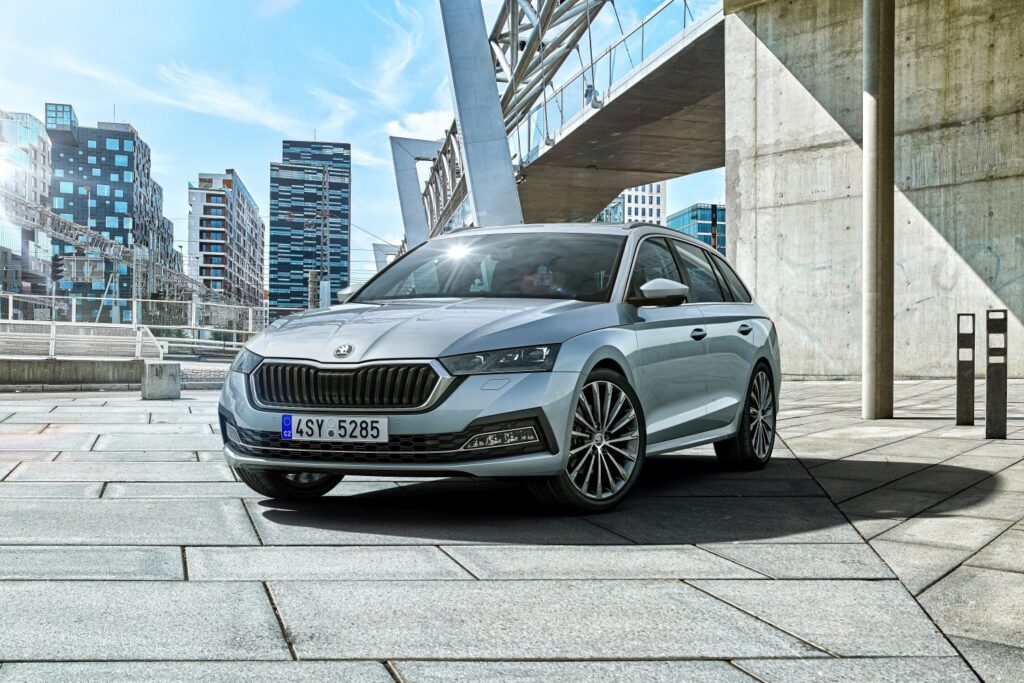
epitomizes the modern station wagon (estate) aesthetic, combining sleek lines with exceptional practicality. Its design language is contemporary, featuring sharp creases, a distinctive grille, and LED lighting that gives it a sophisticated road presence. The “Combi” designation is central to its appeal, signifying a body type that is immensely popular in Europe for its versatility and cavernous cargo capacity.
Measuring 184.61 inches in length, 72.01 inches in width (78.86 inches including mirrors), and 57.8 inches in height, the Octavia IV Combi strikes an excellent balance between exterior maneuverability and interior spaciousness. The generous wheelbase of 105.75 inches contributes significantly to passenger comfort, offering ample legroom for five occupants across its two rows of seating. The vehicle’s aerodynamic profile, indicated by a low drag coefficient of 0.26, not only enhances its visual appeal but also contributes to fuel efficiency and reduced wind noise at higher speeds.
Practicality is a hallmark of the Octavia Combi, and this is most evident in its trunk (boot) space. With a minimum capacity of 640 liters (22.6 cubic feet), it offers class-leading cargo volume, making it an ideal choice for families, vacationers, or those needing to transport bulky items. This impressive capacity can be further expanded by folding down the rear seats.
In terms of features, the Octavia IV Combi is equipped with a robust set of safety and convenience technologies. The braking system comprises ventilated discs at the front and solid discs at the rear, complemented by an Anti-lock Braking System (ABS) for enhanced stopping power and control. Steering is handled by an electric power steering system with a rack and pinion setup, providing precise and effortless maneuverability. While the base model comes with 16-inch wheel rims, higher trims or optional packages often allow for larger sizes. For a modern vehicle produced in the early 2020s, it’s safe to assume a comprehensive suite of modern amenities, including advanced infotainment systems, connectivity features, and additional driver-assistance systems beyond the listed ABS, although these specific details are not provided in the raw data. The inclusion of a small 9-liter (2.38 US gallons) gasoline tank alongside a substantial 17.7 kg (39 lbs) CNG cylinder capacity underscores its primary reliance on natural gas, with gasoline serving as a backup for extended range.
Technical Specifications
| Category | Specification |
|---|---|
| Brand | Skoda |
| Model | Octavia |
| Generation | Octavia IV Combi |
| Type (Engine) | 1.5 TSI G-TEC (130 Hp) CNG DSG |
| Production Start | September, 2020 |
| Production End | August, 2022 |
| Powertrain Architecture | Internal Combustion Engine |
| Body Type | Station wagon (estate) |
| Seats | 5 |
| Doors | 5 |
| Performance Specs | |
| Fuel Type | Petrol / CNG |
| Maximum Speed (CNG) | 212 km/h (131.7 mph) |
| Engine Specs | |
| Power (CNG) | 130 Hp |
| Torque (CNG) | 200 Nm (147.5 lb-ft) |
| Engine Layout | Front, Transverse |
| Engine Model/Code | DHFA |
| Number of Cylinders | 4 |
| Engine Configuration | Inline |
| Fuel Injection System | Direct injection |
| Engine Aspiration | Turbocharger, Intercooler |
| Engine Oil Capacity | 4.3 l (4.54 US qt) |
| Engine Oil Specification | Not publicly available |
| Engine Systems | |
| Particulate Filter | Yes |
| Space, Volume and Weights | |
| Trunk (boot) Space – Minimum | 640 l (22.6 cu. ft.) |
| Fuel Tank Capacity (Petrol) | 9 l (2.38 US gal) |
| CNG Cylinder Capacity | 17.7 kg (39.0 lbs) |
| Dimensions | |
| Length | 4689 mm (184.61 in) |
| Width | 1829 mm (72.01 in) |
| Width Including Mirrors | 2003 mm (78.86 in) |
| Height | 1468 mm (57.8 in) |
| Wheelbase | 2686 mm (105.75 in) |
| Front Track | 1543 mm (60.75 in) |
| Rear (Back) Track | 1535 mm (60.43 in) |
| Front Overhang | 910 mm (35.83 in) |
| Rear Overhang | 1094 mm (43.07 in) |
| Drag Coefficient (Cd) | 0.26 |
| Drivetrain, Brakes and Suspension Specs | |
| Drivetrain Architecture | Internal Combustion engine (ICE) drives the front wheels |
| Drive Wheel | Front wheel drive |
| Number of Gears and Type of Gearbox | 7 gears, automatic transmission DSG |
| Front Brakes | Ventilated discs |
| Rear Brakes | Disc |
| Assisting Systems | ABS (Anti-lock braking system) |
| Steering Type | Steering rack and pinion |
| Power Steering | Electric Steering |
| Wheel Rims Size | 16 inches |
Legacy and Market Impact
The
Skoda Octavia IV Combi 1.5 TSI G-TEC
holds a significant place in its segment, particularly within the European automotive landscape. Skoda, as a brand, has cultivated a reputation for delivering reliable, practical, and well-engineered vehicles that offer exceptional value for money, often benefiting from the advanced technologies of its parent company, the Volkswagen Group. The Octavia, in particular, has consistently been a bestseller, often dubbed the “Czech Golf” due to its similar platform and market positioning, but offering superior space and practicality, especially in Combi form.
In its primary European markets, the Octavia IV Combi 1.5 TSI G-TEC competed fiercely with other popular compact station wagons such as the Volkswagen Golf Variant, Ford Focus Estate, Hyundai i30 Wagon, Kia Ceed Sportswagon, and the Peugeot 308 SW. What set the G-TEC apart was its dedicated focus on Compressed Natural Gas (CNG) as a primary fuel source. This bi-fuel capability was not merely a niche offering but a strategic move to address growing environmental concerns and capitalize on the expanding CNG infrastructure in many European countries.
The market impact of the G-TEC variant was primarily driven by its environmental credentials and lower running costs in regions where CNG is readily available and often subsidized. CNG produces significantly lower CO2 emissions, fewer nitrogen oxides (NOx), and virtually no particulate matter compared to gasoline or diesel engines. This made the Octavia G-TEC an attractive option for environmentally conscious private buyers, as well as fleet operators and taxi companies looking to reduce their carbon footprint and fuel expenses. Its generous 640-liter trunk space, combined with the economic benefits of CNG, reinforced its position as a smart and practical choice for families and businesses alike.
While CNG vehicles represent a smaller segment of the overall market, the Octavia IV Combi 1.5 TSI G-TEC played an important role in showcasing the viability of natural gas as a transitional fuel on the path to broader electrification. It underlined Skoda’s commitment to offering diverse powertrain options to meet varying customer needs and regulatory demands. Although its production run was relatively short (2020-2022), reflecting the rapid shifts in automotive technology and fuel preferences, the G-TEC model contributed to the Octavia’s legacy as a versatile and innovative workhorse that consistently delivered more than expected in its segment. Its influence can be seen in the continued focus on efficiency and practical sustainability within the broader Skoda lineup.