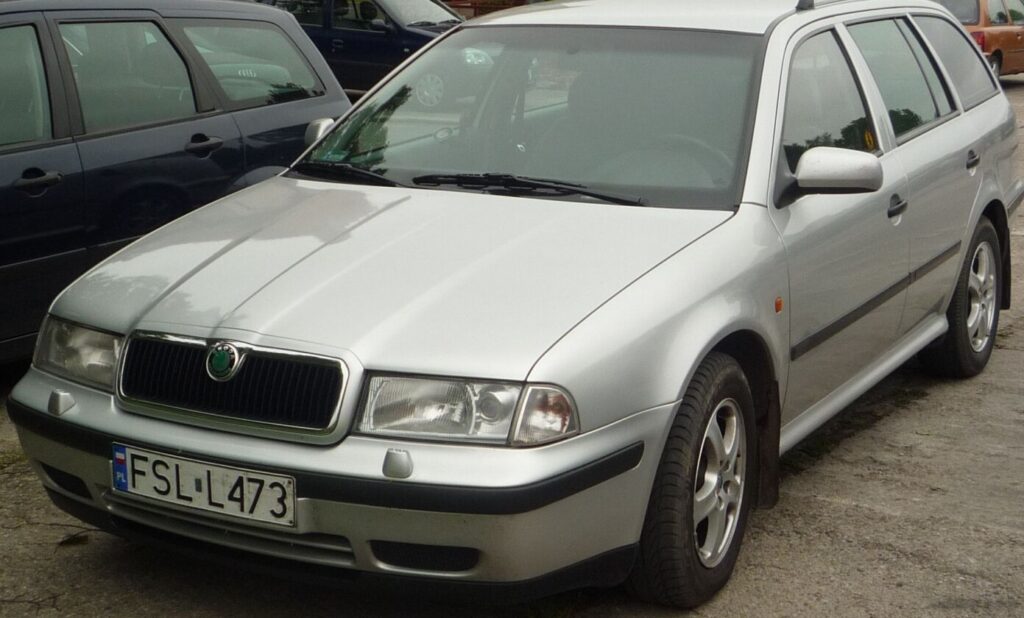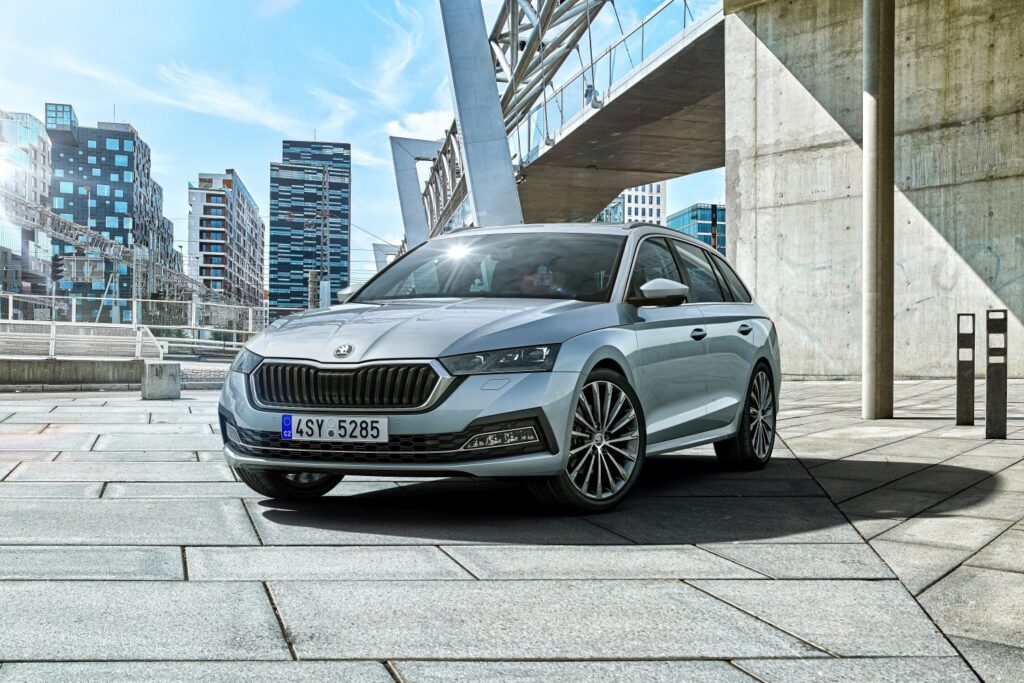
Introduction to the Skoda Octavia IV Combi 2.0 TDI (116 Hp)
The Skoda Octavia, a cornerstone of the Czech automaker’s lineup, represents a blend of practicality, value, and robust engineering derived from its Volkswagen Group parentage. The fourth generation, known internally as the Octavia IV, debuted in 2019, continuing its legacy as a highly popular compact family car in European and other international markets. While the Skoda brand is not officially sold in the United States, the Octavia is a formidable competitor in its segment, particularly known for its expansive interior space and thoughtful “Simply Clever” features. The Skoda Octavia IV Combi 2.0 TDI (116 Hp), the focus of this article, exemplifies the model’s commitment to efficiency and utility within its station wagon (estate) body style.
Launched in 2019 and produced until February 2024, this specific variant of the Octavia IV Combi was designed to offer a compelling package for families and professionals seeking a fuel-efficient and spacious vehicle. Its powertrain architecture relies on an internal combustion engine driving the front wheels, a common and effective setup for vehicles in this class. The Combi, or station wagon, body type is particularly favored in Europe for its versatility, offering significantly more cargo capacity than its sedan counterpart without compromising on driving dynamics or passenger comfort. This particular 2.0 TDI engine variant, with its 116 horsepower output, was positioned as a practical choice, balancing performance with exceptional fuel economy and low emissions, meeting the stringent Euro 6 DG standard.
Powertrain and Performance: The Skoda Octavia IV Combi 2.0 TDI (116 Hp)
Engine Specifications
At the heart of the Skoda Octavia IV Combi 2.0 TDI (116 Hp) lies a refined 2.0-liter (1968 cubic centimeters or 120.09 cubic inches) inline four-cylinder diesel engine. This unit, identified by engine codes DSUD or DTR, is a testament to modern diesel technology, featuring a DOHC (Double Overhead Camshaft) valvetrain and a sophisticated Diesel Commonrail fuel injection system. To enhance both power and efficiency, the engine is equipped with a turbocharger and an intercooler, ensuring optimal air density for combustion.
The engine produces a respectable 116 horsepower, translating to 58.9 horsepower per liter of displacement. More significantly, it generates a robust 300 Newton-meters (221.27 lb.-ft.) of torque, available at lower RPMs. This substantial torque output is characteristic of diesel engines and contributes to the Octavia’s effortless cruising capability and strong pulling power, especially useful when fully loaded or towing. The engine’s layout is front, transverse, contributing to efficient packaging and maximizing interior space. With a compression ratio of 16:1, it is optimized for diesel combustion. The engine also features a particulate filter, a crucial component for meeting modern emission standards.
Performance Metrics and Fuel Economy
Paired with a 6-speed manual transmission, the 2.0 TDI engine propels the Octavia IV Combi from 0 to 60 mph in a calculated 9.9 seconds (0 to 100 km/h in 10.4 seconds). While not designed for outright speed, this acceleration is more than adequate for daily driving and highway merging. The top speed is rated at 127.38 mph (205 km/h), demonstrating its capability for long-distance travel on European highways.
Where the Skoda Octavia IV Combi 2.0 TDI (116 Hp) truly shines is in its fuel economy. Under the WLTP (Worldwide Harmonized Light Vehicles Test Procedure) cycle, combined fuel consumption ranges from an impressive 3.9 to 5.1 liters per 100 kilometers, which translates to an outstanding 60.3 to 46.1 US miles per gallon. The NEDC (New European Driving Cycle) figures are even more optimistic, with a combined economy of 3.5-3.6 l/100 km (67.2 – 65.3 US mpg). Urban consumption is rated at 4.2 l/100 km (56 US mpg), and extra-urban (highway) at a remarkable 3.2 l/100 km (73.5 US mpg). These figures underscore the efficiency of the diesel powertrain, making it a highly economical choice for high-mileage drivers. CO2 emissions are equally low, ranging from 102-135 g/km (WLTP) and 93-94 g/km (NEDC), well within the Euro 6 DG emission standard.
Design, Practicality, and Features
The Skoda Octavia IV Combi adopts a sleek and contemporary design, characterized by sharp lines, a distinctive grille, and a well-proportioned silhouette that belies its substantial cargo capacity. Measuring 184.61 inches (4689 mm) in length, 72.01 inches (1829 mm) in width (78.86 inches or 2003 mm including mirrors), and 57.8 inches (1468 mm) in height, the Octavia Combi offers a commanding presence without being overly bulky. Its wheelbase of 105.75 inches (2686 mm) contributes to a stable ride and generous interior dimensions. The vehicle’s drag coefficient (Cd) of 0.276 is notably low for a station wagon, aiding both fuel efficiency and reducing wind noise at higher speeds.
As a station wagon, practicality is paramount. The Octavia IV Combi excels in this regard, offering a cavernous trunk (boot) space of 22.6 cubic feet (640 liters) with the rear seats in place. This expands to an enormous 60.03 cubic feet (1700 liters) when the rear seats are folded down, making it one of the most capacious vehicles in its class. This versatility is ideal for families, outdoor enthusiasts, or anyone requiring significant cargo volume. The maximum payload capacity ranges from 859.8 to 1278.68 lbs (390-580 kg), and it can tow up to 3306.93 lbs (1500 kg) with brakes, further enhancing its utility.
Inside, the Octavia IV Combi provides seating for five adults with a focus on ergonomics and comfort. The cabin features a modern design with high-quality materials and intuitive controls. While specific interior features are not detailed in the provided data, modern Skoda vehicles, especially the Octavia, are known for their advanced infotainment systems, connectivity options, and a comprehensive suite of safety features. These typically include multiple airbags, ABS (Anti-lock Braking System) as standard, and often a range of driver-assistance systems such as adaptive cruise control, lane-keeping assist, and automatic emergency braking, depending on the trim level. The steering system is an electric rack and pinion setup, providing precise control and ease of maneuvering. The vehicle rides on 16-inch wheels, offering a good balance of ride comfort and handling.
The suspension system is designed for a comfortable yet engaging ride, featuring an independent McPherson strut setup with coil springs and an anti-roll bar at the front, and an independent multi-link spring suspension with a stabilizer at the rear. This sophisticated suspension ensures good body control and ride quality, even on varied road surfaces. Braking is handled by ventilated discs at the front and solid discs at the rear, providing confident stopping power.
Technical Specifications: Skoda Octavia IV Combi 2.0 TDI (116 Hp)
| Category | Specification | US Equivalent |
|---|---|---|
| General Information | ||
| Brand | Skoda | |
| Model | Octavia | |
| Generation | Octavia IV Combi | |
| Type (Engine) | 2.0 TDI (116 Hp) | |
| Production Start | 2019 year | |
| Production End | February, 2024 year | |
| Powertrain Architecture | Internal Combustion engine | |
| Body Type | Station wagon (estate) | |
| Seats | 5 | |
| Doors | 5 | |
| Performance Specs | ||
| Combined Fuel Consumption (WLTP) | 3.9-5.1 l/100 km | 60.3 – 46.1 US mpg |
| CO2 Emissions (WLTP) | 102-135 g/km | |
| Fuel Consumption (Urban, NEDC) | 4.2 l/100 km | 56 US mpg |
| Fuel Consumption (Extra Urban, NEDC) | 3.2 l/100 km | 73.5 US mpg |
| Fuel Consumption (Combined, NEDC) | 3.5-3.6 l/100 km | 67.2 – 65.3 US mpg |
| CO2 Emissions (NEDC) | 93-94 g/km | |
| Fuel Type | Diesel | |
| Acceleration 0 – 60 mph | 9.9 sec (Calculated) | |
| Acceleration 0 – 100 km/h | 10.4 sec | |
| Maximum Speed | 205 km/h | 127.38 mph |
| Emission Standard | Euro 6 DG | |
| Weight-to-Power Ratio | 11.8 kg/Hp | 26.01 lbs/Hp |
| Weight-to-Torque Ratio | 4.6 kg/Nm | |
| Engine Specs | ||
| Power | 116 Hp | |
| Power per liter | 58.9 Hp/l | |
| Torque | 300 Nm | 221.27 lb.-ft. |
| Engine Layout | Front, Transverse | |
| Engine Model/Code | DSUD, DTR | |
| Engine Displacement | 1968 cm3 | 120.09 cu. in. |
| Number of Cylinders | 4 | |
| Engine Configuration | Inline | |
| Cylinder Bore | 81 mm | 3.19 in. |
| Piston Stroke | 95.5 mm | 3.76 in. |
| Compression Ratio | 16:1 | |
| Fuel Injection System | Diesel Commonrail | |
| Engine Aspiration | Turbocharger, Intercooler | |
| Valvetrain | DOHC | |
| Engine Oil Capacity | 5.5 l | 5.81 US qt |
| Coolant Capacity | 8 l | 8.45 US qt |
| Engine Systems | Particulate filter | |
| Space, Volume and Weights | ||
| Kerb Weight | 1370-1560 kg | 3020.33 – 3439.21 lbs. |
| Max. Weight (Gross Vehicle Weight) | 1950 kg | 4299.01 lbs. |
| Max Load | 390-580 kg | 859.8 – 1278.68 lbs. |
| Trunk (boot) Space – Minimum | 640 l | 22.6 cu. ft. |
| Trunk (boot) Space – Maximum | 1700 l | 60.03 cu. ft. |
| Fuel Tank Capacity | 45 l | 11.89 US gal |
| Max. Roof Load | 75 kg | 165.35 lbs. |
| Permitted Trailer Load with Brakes (8%) | 1500 kg | 3306.93 lbs. |
| Permitted Trailer Load with Brakes (12%) | 1500 kg | 3306.93 lbs. |
| Permitted Trailer Load without Brakes | 720 kg | 1587.33 lbs. |
| Permitted Towbar Download | 80 kg | 176.37 lbs. |
| Dimensions | ||
| Length | 4689 mm | 184.61 in. |
| Width | 1829 mm | 72.01 in. |
| Width including Mirrors | 2003 mm | 78.86 in. |
| Height | 1468 mm | 57.8 in. |
| Wheelbase | 2686 mm | 105.75 in. |
| Front Track | 1543 mm | 60.75 in. |
| Rear (Back) Track | 1535 mm | 60.43 in. |
| Front Overhang | 910 mm | 35.83 in. |
| Rear Overhang | 1094 mm | 43.07 in. |
| Ride Height (Ground Clearance) | 142 mm | 5.59 in. |
| Drag Coefficient (Cd) | 0.276 | |
| Minimum Turning Circle | 10.4 m | 34.12 ft. |
| Approach Angle | 14.3° | |
| Departure Angle | 13° | |
| Drivetrain, Brakes and Suspension Specs | ||
| Drivetrain Architecture | Internal combustion engine (ICE) drives the front wheels. | |
| Drive Wheel | Front wheel drive | |
| Number of Gears and Type of Gearbox | 6 gears, manual transmission | |
| Front Suspension | Independent, type McPherson with coil spring and anti-roll bar | |
| Rear Suspension | Independent multi-link spring suspension with stabilizer | |
| Front Brakes | Ventilated discs | |
| Rear Brakes | Disc | |
| Assisting Systems | ABS (Anti-lock braking system) | |
| Steering Type | Steering rack and pinion | |
| Power Steering | Electric Steering | |
| Wheel Rims Size | 16 inches | |
Legacy and Market Impact
The Skoda Octavia has long been considered the backbone of Skoda’s sales in Europe, consistently ranking among the continent’s best-selling compact cars. The fourth-generation Octavia IV Combi, particularly with efficient diesel powertrains like the 2.0 TDI (116 Hp), continued this tradition by offering an unbeatable combination of space, practicality, and low running costs. In a market segment crowded with established players, the Octavia carved out a niche by providing Volkswagen Group engineering and quality at a more accessible price point.
Its primary competitors in the European market include other compact station wagons such as the Volkswagen Golf Variant (sharing much of its underlying MQB platform), Ford Focus Estate, Peugeot 308 SW, and Opel Astra Sports Tourer. The Octavia consistently outperforms many of these rivals in terms of sheer cargo volume and rear passenger space, a significant selling point for families. The 2.0 TDI (116 Hp) variant specifically appealed to fleet buyers and private customers who prioritize long-distance comfort and minimal fuel expenses, especially in countries where diesel fuel remains popular and cost-effective for high-mileage drivers.
The Octavia’s reputation for reliability and solid build quality has further cemented its place in the market. Its “Simply Clever” features, such as an umbrella stored in the door, an ice scraper in the fuel filler flap, and various cargo management solutions, underscore Skoda’s understanding of everyday usability. These small but impactful details contribute to a highly positive ownership experience.
While diesel powertrains faced increasing scrutiny and declining sales in some markets during the Octavia IV’s production run, the 2.0 TDI (116 Hp) remained a vital option for its exceptional efficiency and torque delivery. It represented a mature and refined diesel offering, demonstrating that internal combustion engines, when optimized, could still deliver impressive environmental and economic performance. The Octavia IV Combi, with its blend of modern design, advanced technology (for its segment), and unparalleled practicality, leaves a legacy as a highly successful and influential model, reinforcing Skoda’s position as a smart choice for value-conscious European consumers. Its consistent evolution showcases Skoda’s ability to adapt and thrive within the competitive compact segment, offering a compelling alternative to more premium-badged stablemates.