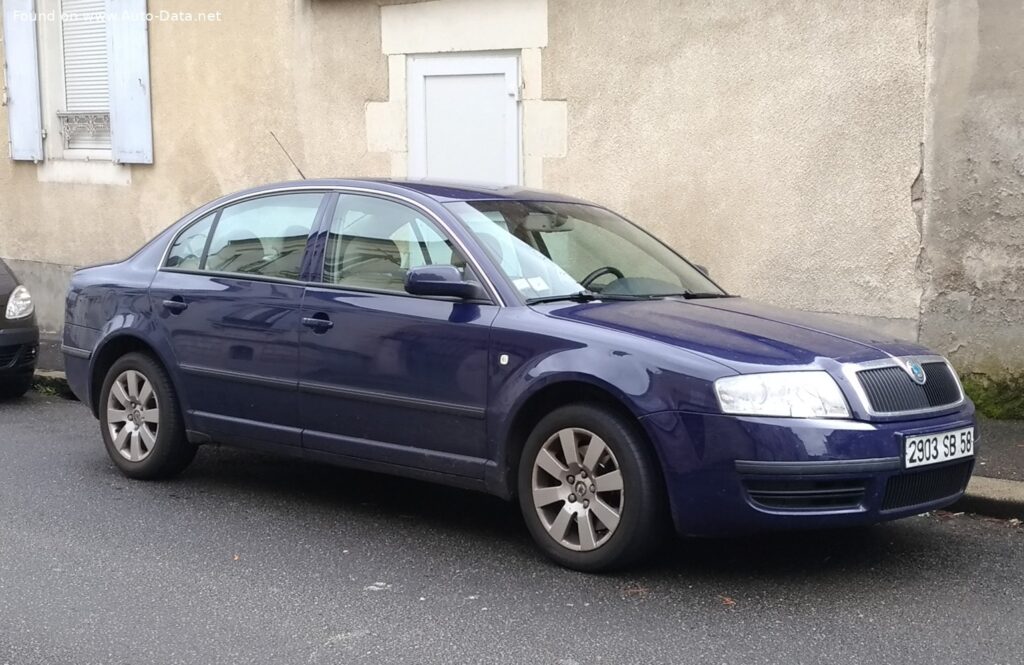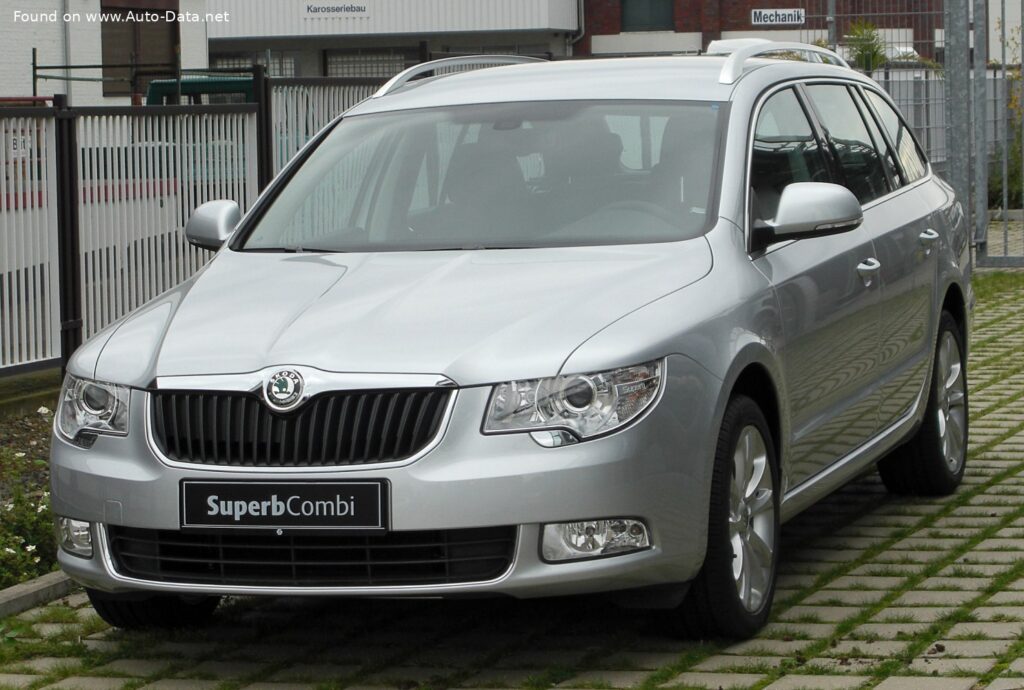
The Skoda Superb II Combi 2.0 TDI CR (138 Hp) DPF represents a compelling offering from the Czech automaker, Skoda, during a pivotal period in its modern history. Introduced in February 2010, this specific variant of the second-generation Superb Combi, or station wagon, was a testament to Skoda’s commitment to providing spacious, practical, and efficient vehicles for the European market. While not officially sold in the United States, the Superb II Combi carved out a significant niche across Europe, offering executive-class space and refinement at a more accessible price point than its German counterparts within the Volkswagen Group. This particular model, characterized by its 2.0-liter Common Rail Turbo Diesel engine and Diesel Particulate Filter (DPF), was produced for a brief window, concluding in May 2010, likely indicating a specific model year update or a transitional offering within the broader Superb II generation. It embodied the brand’s philosophy of “Simply Clever,” combining intelligent design with robust engineering, making it a popular choice for families and business users alike who prioritized value, economy, and practicality.
Engine and Performance: The Skoda Superb II Combi 2.0 TDI CR (138 Hp) DPF Powertrain
At the heart of the Skoda Superb II Combi 2.0 TDI CR (138 Hp) DPF lies a highly efficient and well-regarded 2.0-liter (1968 cm3 or 120.09 cu. in.) inline four-cylinder turbo-diesel engine. Designated with the code EA189 / CFFB, this powerplant was transversely mounted at the front, driving the front wheels. It delivered a respectable 138 horsepower at 4000 rpm, translating to a power-per-liter figure of 70.1 HP/l, a solid output for a diesel engine of its era. More critically for a family station wagon, the engine produced a robust 236.02 lb.-ft. (320 Nm) of torque, available across a broad and usable rev range from 1800 to 2500 rpm. This ample torque ensured strong acceleration and effortless cruising, particularly when the vehicle was laden with passengers and cargo.
The engine’s “CR” designation signifies its Common Rail direct injection system, a technology that was instrumental in improving fuel efficiency, reducing emissions, and enhancing refinement compared to older diesel injection methods. Coupled with a turbocharger and intercooler, the engine delivered a responsive power delivery characteristic of modern diesels. Performance figures for the Superb II Combi 2.0 TDI CR (138 Hp) DPF highlighted its competence as a practical performer. It accelerated from 0 to 60 mph in a brisk 9.8 seconds, with 0 to 100 km/h achieved in 10.3 seconds. The maximum speed was rated at 127.38 mph (205 km/h), making it perfectly capable of sustained highway speeds across Europe.
Fuel economy was a key selling point for this diesel variant. The combined cycle fuel consumption was an impressive 38.6 US mpg (6.1 l/100 km), demonstrating the inherent efficiency of the TDI engine. Urban driving yielded 30.5 US mpg (7.7 l/100 km), while extra-urban (highway) driving pushed efficiency to an excellent 46.1 US mpg (5.1 l/100 km). These figures underscored the vehicle’s suitability for long-distance travel and its economic operation. Furthermore, the inclusion of a Diesel Particulate Filter (DPF) and compliance with the Euro 5 emission standard showcased Skoda’s commitment to environmental responsibility, a crucial factor in the European automotive landscape of the early 2010s. The powertrain was mated to a precise 6-speed manual transmission, offering engaging control for the driver while optimizing fuel consumption across various driving scenarios.
Design and Practicality
The Skoda Superb II Combi, with its station wagon (estate) body type, was a masterclass in functional design and practicality. Measuring 190.47 inches (4838 mm) in length, 71.54 inches (1817 mm) in width, and 59.45 inches (1510 mm) in height, the Superb Combi was a substantial vehicle, offering generous interior space for five occupants and their luggage. Its extensive 108.7-inch (2761 mm) wheelbase was a major contributor to its remarkable rear-seat legroom, often lauded as class-leading even against more expensive executive sedans. The five-door configuration, coupled with a large tailgate, provided excellent access to the cargo area, which was a defining feature of the Combi variant.
The exterior design of the Superb II Combi was characterized by clean, understated lines, reflecting Skoda’s evolution towards a more sophisticated aesthetic. While not overtly flashy, its proportions were well-balanced, conveying a sense of solidity and purpose. The vehicle’s kerb weight of 3459.05 lbs (1569 kg) underscored its robust construction, contributing to a stable and secure driving experience. With a maximum permissible weight of 4700.26 lbs (2132 kg) and a maximum load capacity of 1241.2 lbs (563 kg), the Superb Combi was engineered to handle substantial loads, making it an ideal choice for families and those requiring significant cargo versatility. The 15.85 US gallon (60-liter) fuel tank capacity ensured an excellent driving range, further enhancing its long-distance touring credentials.
Underneath its practical exterior, the Superb II Combi featured a well-engineered chassis designed for comfort and confident handling. The front suspension utilized an independent McPherson strut setup with coil springs and an anti-roll bar, providing precise steering response and good body control. At the rear, an independent multi-link suspension system was employed, which effectively absorbed road imperfections and maintained composure, even when fully loaded. This sophisticated suspension arrangement contributed significantly to the Superb’s reputation for a refined and comfortable ride quality, a hallmark of its segment. Braking performance was handled by disc brakes at both the front and rear, complemented by an Anti-lock Braking System (ABS) for enhanced safety during emergency stops. Steering was managed by an electric power steering system operating a rack and pinion setup, offering light effort at low speeds for easy maneuvering and more resistance at higher speeds for greater stability. The vehicle was typically fitted with 205/55 R16 tires on 7.0J x 16 wheel rims, with an option for 225/45 R17 tires, balancing ride comfort with adequate grip. The minimum turning circle of 37.73 feet (11.5 m) indicated decent maneuverability for a vehicle of its size.
Technical Specifications
| Brand | Skoda |
| Model | Superb |
| Generation | Superb II Combi |
| Type (Engine) | 2.0 TDI CR (138 Hp) DPF |
| Start of Production | February, 2010 year |
| End of Production | May, 2010 year |
| Powertrain Architecture | Internal Combustion engine |
| Body Type | Station wagon (estate) |
| Seats | 5 |
| Doors | 5 |
| Fuel Consumption (economy) – urban | 7.7 l/100 km (30.5 US mpg) |
| Fuel Consumption (economy) – extra urban | 5.1 l/100 km (46.1 US mpg) |
| Fuel Consumption (economy) – combined | 6.1 l/100 km (38.6 US mpg) |
| Fuel Type | Diesel |
| Acceleration 0 – 60 mph | 9.8 sec |
| Acceleration 0 – 100 km/h | 10.3 sec |
| Maximum Speed | 205 km/h (127.38 mph) |
| Emission Standard | Euro 5 |
| Weight-to-power ratio | 11.4 kg/Hp (88 Hp/tonne) |
| Weight-to-torque ratio | 4.9 kg/Nm (204 Nm/tonne) |
| Power | 138 Hp @ 4000 rpm |
| Power per liter | 70.1 Hp/l |
| Torque | 320 Nm @ 1800-2500 rpm (236.02 lb.-ft.) |
| Engine Layout | Front, Transverse |
| Engine Model/Code | EA189 / CFFB |
| Engine Displacement | 1968 cm3 (120.09 cu. in.) |
| Number of Cylinders | 4 |
| Engine Configuration | Inline |
| Fuel Injection System | Diesel Commonrail |
| Engine Aspiration | Turbocharger, Intercooler |
| Engine Oil Capacity | 4.3 l (4.54 US qt) |
| Coolant Capacity | 8.4 l (8.88 US qt) |
| Engine Systems | Particulate filter |
| Kerb Weight | 1569 kg (3459.05 lbs) |
| Max. Weight (GVWR) | 2132 kg (4700.26 lbs) |
| Max Load | 563 kg (1241.2 lbs) |
| Fuel Tank Capacity | 60 l (15.85 US gal) |
| Length | 4838 mm (190.47 in.) |
| Width | 1817 mm (71.54 in.) |
| Height | 1510 mm (59.45 in.) |
| Wheelbase | 2761 mm (108.7 in.) |
| Front Track | 1545 mm (60.83 in.) |
| Rear (Back) Track | 1517 mm (59.72 in.) |
| Minimum Turning Circle (diameter) | 11.5 m (37.73 ft.) |
| Drivetrain Architecture | Front wheel drive, Internal Combustion engine |
| Drive Wheel | Front wheel drive |
| Number of Gears and Type of Gearbox | 6 gears, manual transmission |
| Front Suspension | Independent, type McPherson with coil spring and anti-roll bar |
| Rear Suspension | Independent multi-link suspension |
| Front Brakes | Disc |
| Rear Brakes | Disc |
| Assisting Systems | ABS (Anti-lock braking system) |
| Steering Type | Steering rack and pinion |
| Power Steering | Electric Steering |
| Tires Size | 205/55 R16; 225/45 R17 |
| Wheel Rims Size | 7.0J x 16 |