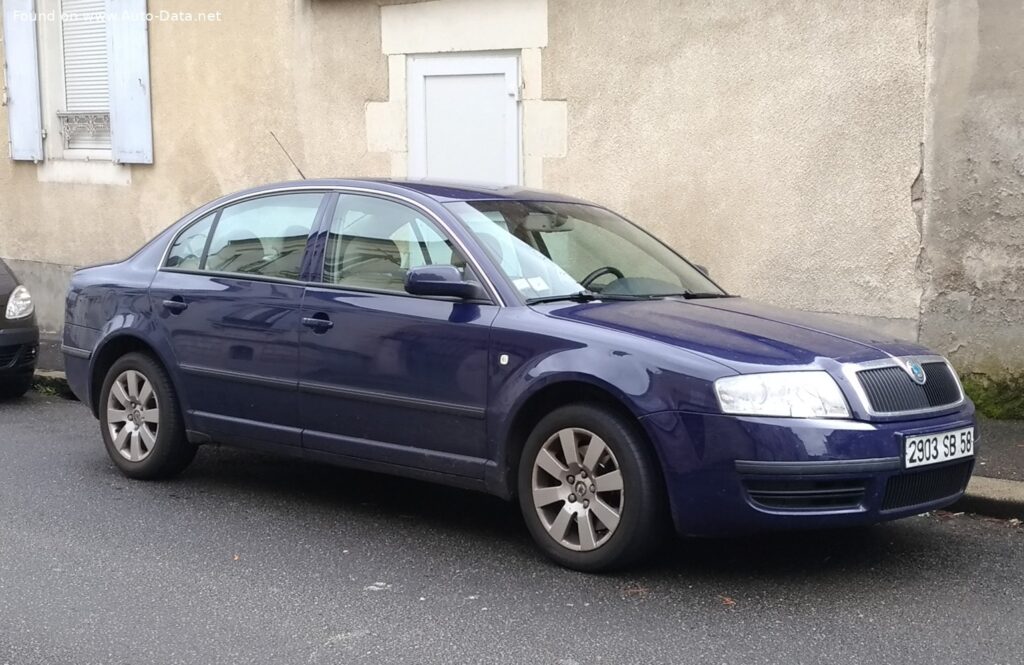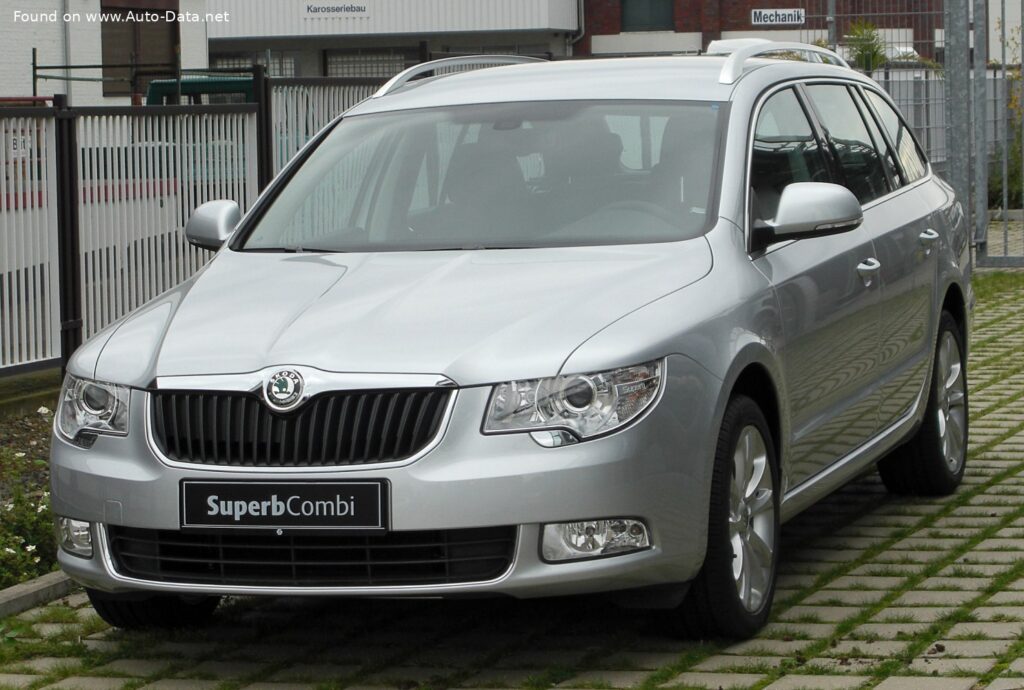
The Skoda Superb II Combi 2.0 TSI (197 Hp) represents a significant offering from the Czech automaker Skoda, a brand renowned for its practical, well-engineered, and value-oriented vehicles within the Volkswagen Group. Launched in May 2010 and produced until May 2013, this particular iteration belonged to the second generation of the Superb, a model that carved out a strong niche in the European D-segment (large family car) market. While not officially sold in the United States, the Superb Combi, or station wagon as it’s known in North America, was a highly respected contender in its primary European and Asian markets, lauded for its expansive interior, sophisticated engineering derived from its VW Group siblings, and compelling overall package. This specific variant, powered by a 2.0-liter turbocharged gasoline engine, provided a blend of performance and practicality, making it an attractive option for families and business users seeking a spacious and capable estate car without the premium price tag of some competitors.
Engine and Performance of the Skoda Superb II Combi 2.0 TSI (197 Hp)
At the heart of the Skoda Superb II Combi 2.0 TSI (197 Hp) lies a robust and well-regarded EA888 series engine, specifically the CCZA code, a 1984 cm3 (121.07 cu. in.) inline four-cylinder powertrain. This engine, a staple across numerous Volkswagen Group models, features a sophisticated architecture with direct fuel injection and forced induction via a turbocharger and intercooler. These technologies work in concert to deliver an impressive 197 horsepower at a broad rev range of 5100-6000 rpm, ensuring strong acceleration across the power band. More critically for a family vehicle, the engine generates a substantial 206.52 lb.-ft. of torque, available from a remarkably low 1700 rpm and sustained up to 5000 rpm. This wide torque plateau translates into excellent real-world drivability, providing ample pulling power for overtaking maneuvers and comfortable cruising, even when the vehicle is fully loaded.
The powertrain architecture is a front, transverse engine layout, driving the front wheels through a smooth and efficient 6-speed automatic transmission. This combination ensures a refined driving experience, characteristic of Skoda’s focus on comfort and ease of use. Performance figures for the Skoda Superb II Combi 2.0 TSI (197 Hp) are quite respectable for a vehicle of its size and class. It can accelerate from 0 to 60 mph in a swift 7.5 seconds, and its top speed is rated at 145.4 mph. These figures underscore its capability to handle long highway journeys with ease, maintaining high speeds comfortably. Despite its performance potential, Skoda also engineered this model with efficiency in mind. The combined fuel economy is rated at 29.4 US mpg, a commendable figure for a powerful gasoline engine in a large station wagon from this era. Urban consumption stands at 22 US mpg, while extra-urban driving yields an impressive 36.8 US mpg. Furthermore, the vehicle adheres to the Euro 5 emission standard, reflecting its compliance with contemporary European environmental regulations during its production run.
The engine’s overall design, including its 4.6-liter (4.86 US qt) engine oil capacity and 8.6-liter (9.09 US qt) coolant capacity, points to a focus on durability and thermal management, essential for a turbocharged unit. The weight-to-power ratio of 8 kg/Hp (124.9 Hp/tonne) and a weight-to-torque ratio of 5.6 kg/Nm (177.6 Nm/tonne) further highlight the effective balance between the vehicle’s curb weight of 3476.69 lbs and its robust power delivery, contributing to its agile and responsive feel on the road.
Design and Features
The Skoda Superb II Combi is defined by its practical and elegant station wagon (estate) body type, offering five doors and comfortable seating for five occupants. Its design language, while perhaps more understated than some contemporaries, emphasized clean lines, a substantial road presence, and an unmistakable air of solidity. Dimensionally, the Superb Combi is a generously sized vehicle, measuring 190.47 inches in length, 71.54 inches in width, and 59.45 inches in height. The substantial 108.7-inch wheelbase is a key contributor to its exceptional interior volume, particularly for rear-seat passengers, a characteristic for which the Superb line has always been highly praised. The generous dimensions also translate into a cavernous cargo area, making it an ideal choice for families, travelers, or anyone requiring significant hauling capacity.
Underneath its practical exterior, the Superb II Combi benefits from a well-engineered chassis designed for comfort and predictable handling. The front suspension employs an independent McPherson strut setup with coil springs and an anti-roll bar, providing precise steering response and effective damping. At the rear, an independent multi-link suspension system ensures a refined ride quality, excellent road holding, and minimal intrusion into the cargo space. Braking is handled by disc brakes at both the front and rear, complemented by an Anti-lock Braking System (ABS) as a standard assisting system, ensuring confident stopping power in various conditions. The steering system is a rack and pinion type, augmented by electric power steering, which offers light effort at low speeds for easy maneuvering and a more weighted feel at higher speeds for stability.
The vehicle’s kerb weight stands at 3476.69 lbs, with a maximum permissible weight of 4717.89 lbs, allowing for a substantial maximum load of 1241.2 lbs. This capability, combined with a fuel tank capacity of 15.85 US gallons, underscores its suitability for long-distance travel with passengers and luggage. The minimum turning circle of 37.73 ft further enhances its maneuverability in urban environments, belying its generous dimensions. Standard tire sizes typically included 205/55 R16, with an option for 225/45 R17, mounted on 7.0J x 16 wheel rims, providing a good balance of grip, ride comfort, and aesthetic appeal. While specific interior features like infotainment systems and advanced driver-assistance systems would have been typical for its era, the fundamental design principles of spaciousness, comfort, and reliability were paramount for the Skoda Superb II Combi, cementing its reputation as a highly competent and versatile family vehicle.
Technical Specifications
| Brand | Skoda |
| Model | Superb |
| Generation | Superb II Combi |
| Type (Engine) | 2.0 TSI (197 Hp) |
| Start of production | May, 2010 year |
| End of production | May, 2013 year |
| Powertrain Architecture | Internal Combustion engine |
| Body type | Station wagon (estate) |
| Seats | 5 |
| Doors | 5 |
| Fuel consumption (economy) – urban | 22 US mpg (10.7 l/100 km) |
| Fuel consumption (economy) – extra urban | 36.8 US mpg (6.4 l/100 km) |
| Fuel consumption (economy) – combined | 29.4 US mpg (8 l/100 km) |
| Fuel Type | Petrol (Gasoline) |
| Acceleration 0 – 60 mph | 7.5 sec |
| Maximum speed | 145.4 mph (234 km/h) |
| Emission standard | Euro 5 |
| Weight-to-power ratio | 8 kg/Hp, 124.9 Hp/tonne |
| Weight-to-torque ratio | 5.6 kg/Nm, 177.6 Nm/tonne |
| Power | 197 Hp @ 5100-6000 rpm |
| Power per litre | 99.3 Hp/l |
| Torque | 206.52 lb.-ft. @ 1700-5000 rpm (280 Nm) |
| Engine layout | Front, Transverse |
| Engine Model/Code | EA888 / CCZA |
| Engine displacement | 121.07 cu. in. (1984 cm3) |
| Number of cylinders | 4 |
| Engine configuration | Inline |
| Fuel injection system | Direct injection |
| Engine aspiration | Turbocharger, Intercooler |
| Engine oil capacity | 4.86 US qt (4.6 l) |
| Coolant | 9.09 US qt (8.6 l) |
| Kerb Weight | 3476.69 lbs (1577 kg) |
| Max. weight | 4717.89 lbs (2140 kg) |
| Max load | 1241.2 lbs (563 kg) |
| Fuel tank capacity | 15.85 US gal (60 l) |
| Length | 190.47 in. (4838 mm) |
| Width | 71.54 in. (1817 mm) |
| Height | 59.45 in. (1510 mm) |
| Wheelbase | 108.7 in. (2761 mm) |
| Front track | 60.83 in. (1545 mm) |
| Rear (Back) track | 59.72 in. (1517 mm) |
| Minimum turning circle (turning diameter) | 37.73 ft (11.5 m) |
| Drivetrain Architecture | The Internal combustion engine (ICE) drives the front wheels of the vehicle. |
| Drive wheel | Front wheel drive |
| Number of gears and type of gearbox | 6 gears, automatic transmission |
| Front suspension | Independent, type McPherson with coil spring and anti-roll bar |
| Rear suspension | Independent multi-link suspension |
| Front brakes | Disc |
| Rear brakes | Disc |
| Assisting systems | ABS (Anti-lock braking system) |
| Steering type | Steering rack and pinion |
| Power steering | Electric Steering |
| Tires size | 205/55 R16; 225/45 R17 |
| Wheel rims size | 7.0J x 16 |