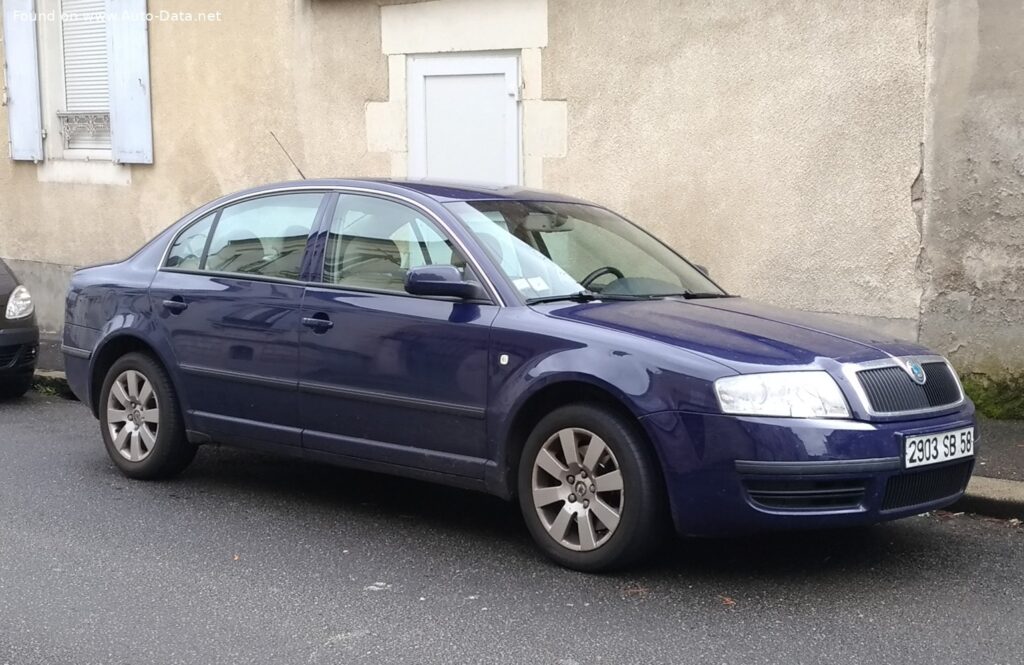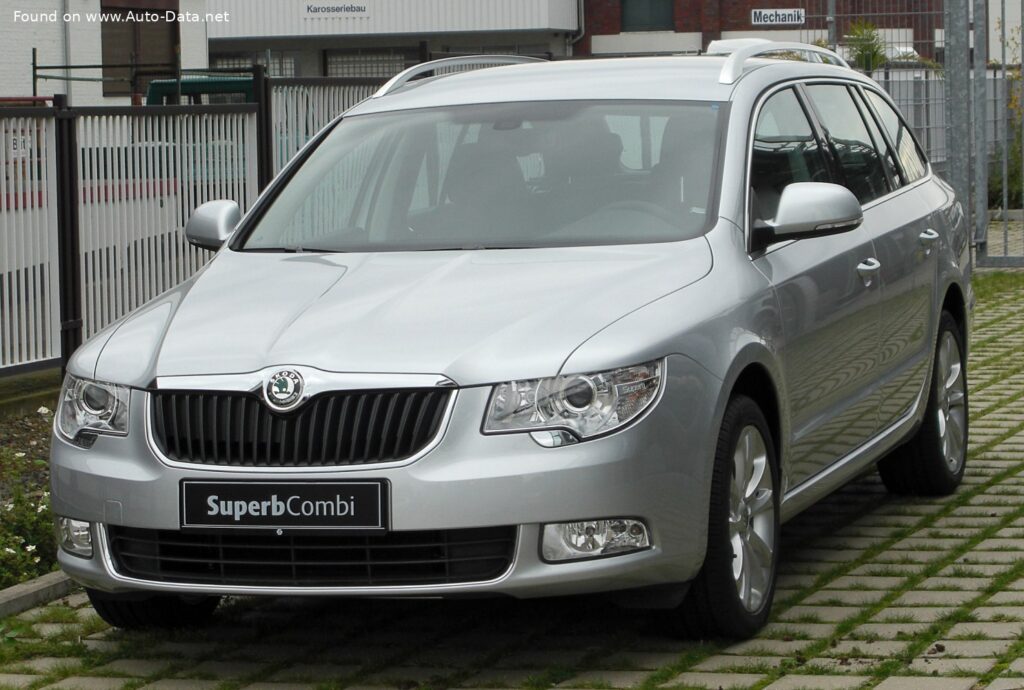
The Skoda Superb II Combi 3.6 FSI (260 Hp) 4×4 DSG represents a significant offering from the Czech automaker, Skoda, during its production run from 2009 to May 2013. Positioned as the flagship model within Skoda’s lineup, the Superb II Combi was a sophisticated and practical station wagon (often referred to as an estate in European markets) that carved out a niche in the executive segment, particularly across Europe and parts of Asia. While Skoda vehicles are not typically sold in the United States, this particular variant showcased the brand’s capability to deliver a premium driving experience, combining robust performance with exceptional utility. The second generation Superb, launched in 2008, was praised for its spacious interior, refined ride, and value proposition, leveraging the advanced technologies and platforms from its parent company, the Volkswagen Group. The 3.6 FSI 4×4 DSG model, in particular, stood out as the performance-oriented pinnacle, offering a powerful V6 engine, an advanced all-wheel-drive system, and a quick-shifting automatic transmission, all wrapped in a practical five-door, five-seat body style.
Engine and Performance of the Skoda Superb II Combi 3.6 FSI (260 Hp) 4×4 DSG
At the heart of the performance-focused Skoda Superb II Combi 3.6 FSI (260 Hp) 4×4 DSG lies a potent 3.6-liter (3597 cm3 or 219.5 cu. in.) naturally aspirated V6 engine, identified by the EA390 / CDVA engine code. This sophisticated powertrain, featuring direct fuel injection and a DOHC (Double Overhead Camshaft) valvetrain with four valves per cylinder, was engineered to deliver a compelling blend of power and refinement. It produces a robust 260 horsepower (Hp) at 6000 rpm, translating to an impressive power-per-liter output of 72.3 Hp/l. Torque figures are equally impressive, with 350 Newton-meters (Nm), or 258.15 pound-feet (lb.-ft.), available across a broad rev range from 2500 to 5000 rpm. This wide torque band ensures strong, responsive acceleration and effortless highway cruising.
Mated to this V6 engine is a highly regarded 6-speed automatic DSG (Direct-Shift Gearbox) transmission. The DSG system, known for its rapid and smooth gear changes, contributes significantly to the vehicle’s dynamic performance and efficiency. Power is channeled to all four wheels via a sophisticated all-wheel-drive (4×4) system. This architecture primarily drives the front wheels, with the rear wheels engaging through an electrically or mechanically operated clutch when additional traction is required, such as during spirited driving or in adverse weather conditions. This Haldex-based system ensures optimal grip and stability, enhancing both safety and driving enjoyment.
The combination of the powerful 3.6-liter V6, the quick DSG transmission, and the all-wheel-drive system allows the Superb II Combi 3.6 FSI to achieve impressive acceleration figures. It sprints from 0 to 62 miles per hour (0-100 km/h) in a swift 6.6 seconds, with a calculated 0-60 mph time of approximately 6.3 seconds. The vehicle’s top speed is electronically limited to 153.48 mph (247 km/h), firmly placing it in the realm of high-performance family vehicles. Despite its performance capabilities, Skoda also aimed for reasonable efficiency for its class. The NEDC (New European Driving Cycle) fuel consumption figures indicate a combined economy of 10.2 liters per 100 kilometers (equivalent to 23.1 US mpg or 27.7 UK mpg). Urban consumption is rated at 14.4 l/100 km (16.3 US mpg), while extra-urban driving yields 7.8 l/100 km (30.2 US mpg). CO2 emissions stand at 237 g/km, adhering to the Euro 5 emission standard prevalent during its production period. The vehicle’s weight-to-power ratio of 6.7 kg/Hp (149.8 Hp/tonne) and a weight-to-torque ratio of 5 kg/Nm (201.6 Nm/tonne) underscore its balanced performance characteristics for a vehicle of its size and class.
Design and Features
The Skoda Superb II Combi, with its station wagon (estate) body type, was designed to marry executive elegance with unparalleled practicality. Measuring 190.47 inches (4838 mm) in length, 71.54 inches (1817 mm) in width (79.09 inches or 2009 mm including mirrors), and 59.45 inches (1510 mm) in height, the Superb Combi presented a substantial and commanding presence. Its generous 108.7-inch (2761 mm) wheelbase was a key factor in providing exceptional interior space, particularly for rear passengers, a hallmark of the Superb lineup. The design language, while conservative, exuded a timeless sophistication, featuring clean lines, a distinctive grille, and well-integrated lighting elements that contributed to its premium appeal in its target markets.
Practicality was a cornerstone of the Superb Combi’s design. The five-door configuration provided easy access to both the passenger cabin and the cavernous cargo area. With all five seats occupied, the trunk offered a substantial 22.35 cubic feet (633 liters) of space. Folding down the rear seats expanded this volume to an impressive 65.86 cubic feet (1865 liters), making it one of the most capacious vehicles in its segment and an ideal choice for families, travelers, or those requiring significant cargo capacity. The vehicle also boasted a maximum roof load of 220.46 lbs (100 kg) and impressive towing capabilities, with a permitted trailer load of 4409.25 lbs (2000 kg) with brakes, further emphasizing its utility.
Beyond its spaciousness, the Superb II Combi featured a well-appointed interior designed for comfort and convenience. While specific trim levels and features are not detailed in the provided data, a flagship model of this era and segment would typically include premium upholstery, advanced climate control systems, a sophisticated infotainment system (for its time), and a comprehensive suite of power accessories. Safety was also a priority, with standard features like ABS (Anti-lock Braking System) ensuring stable braking performance. The suspension system was engineered for a compliant yet controlled ride, utilizing an independent McPherson strut setup with coil springs and an anti-roll bar at the front, complemented by an independent multi-link suspension at the rear. Braking duties were handled by ventilated discs at the front and solid discs at the rear, providing ample stopping power. The electric power steering system, with a rack and pinion setup, offered precise control and a comfortable steering feel, aiding maneuverability with a minimum turning circle of 37.73 feet (11.5 meters). The vehicle was fitted with tire sizes ranging from 205/55 R16 to 225/45 R17, mounted on corresponding wheel rims, balancing ride comfort with handling dynamics.
Technical Specifications
| Brand | Skoda |
| Model | Superb |
| Generation | Superb II Combi |
| Type (Engine) | 3.6 FSI (260 Hp) 4×4 DSG |
| Start of production | 2009 year |
| End of production | May, 2013 year |
| Powertrain Architecture | Internal Combustion engine |
| Body type | Station wagon (estate) |
| Seats | 5 |
| Doors | 5 |
| Fuel consumption (economy) – urban (NEDC) | 14.4 l/100 km (16.3 US mpg) |
| Fuel consumption (economy) – extra urban (NEDC) | 7.8 l/100 km (30.2 US mpg) |
| Fuel consumption (economy) – combined (NEDC) | 10.2 l/100 km (23.1 US mpg) |
| CO2 emissions (NEDC) | 237 g/km |
| Fuel Type | Petrol (Gasoline) |
| Acceleration 0 – 100 km/h | 6.6 sec |
| Acceleration 0 – 60 mph (Calculated) | 6.3 sec |
| Maximum speed | 247 km/h (153.48 mph) |
| Emission standard | Euro 5 |
| Weight-to-power ratio | 6.7 kg/Hp (149.8 Hp/tonne) |
| Weight-to-torque ratio | 5 kg/Nm (201.6 Nm/tonne) |
| Power | 260 Hp @ 6000 rpm |
| Power per litre | 72.3 Hp/l |
| Torque | 350 Nm @ 2500-5000 rpm (258.15 lb.-ft.) |
| Engine layout | Front, Transverse |
| Engine Model/Code | EA390 / CDVA |
| Engine displacement | 3597 cm3 (219.5 cu. in.) |
| Number of cylinders | 6 |
| Engine configuration | V-engine |
| Cylinder Bore | 89 mm (3.5 in.) |
| Piston Stroke | 96.4 mm (3.8 in.) |
| Compression ratio | 11.4:1 |
| Number of valves per cylinder | 4 |
| Fuel injection system | Direct injection |
| Engine aspiration | Naturally aspirated engine |
| Valvetrain | DOHC |
| Engine oil capacity | 5.5 l (5.81 US qt) |
| Engine oil specification | Not specified in data |
| Coolant | 9 l (9.51 US qt) |
| Kerb Weight | 1736 kg (3827.22 lbs.) |
| Max. weight | 2297 kg (5064.02 lbs.) |
| Max load | 561 kg (1236.79 lbs.) |
| Trunk (boot) space – minimum | 633 l (22.35 cu. ft.) |
| Trunk (boot) space – maximum | 1865 l (65.86 cu. ft.) |
| Fuel tank capacity | 60 l (15.85 US gal) |
| Max. roof load | 100 kg (220.46 lbs.) |
| Permitted trailer load with brakes (12%) | 2000 kg (4409.25 lbs.) |
| Permitted trailer load without brakes | 750 kg (1653.47 lbs.) |
| Permitted towbar download | 80 kg (176.37 lbs.) |
| Length | 4838 mm (190.47 in.) |
| Width | 1817 mm (71.54 in.) |
| Width including mirrors | 2009 mm (79.09 in.) |
| Height | 1510 mm (59.45 in.) |
| Wheelbase | 2761 mm (108.7 in.) |
| Front track | 1545 mm (60.83 in.) |
| Rear (Back) track | 1517 mm (59.72 in.) |
| Front overhang | 964 mm (37.95 in.) |
| Rear overhang | 1113 mm (43.82 in.) |
| Ride height (ground clearance) | 141 mm (5.55 in.) |
| Minimum turning circle (turning diameter) | 11.5 m (37.73 ft.) |
| Approach angle | 14.5° |
| Departure angle | 12° |
| Drivetrain Architecture | ICE drives front wheels permanently; rear wheels driven via clutch if necessary. |
| Drive wheel | All wheel drive (4×4) |
| Number of gears and type of gearbox | 6 gears, automatic transmission DSG |
| Front suspension | Independent, type McPherson with coil spring and anti-roll bar |
| Rear suspension | Independent multi-link suspension |
| Front brakes | Ventilated discs |
| Rear brakes | Disc |
| Assisting systems | ABS (Anti-lock braking system) |
| Steering type | Steering rack and pinion |
| Power steering | Electric Steering |
| Tires size | 205/55 R16; 225/45 R17 |
| Wheel rims size | 7J x 16; 7.5J x 17 |