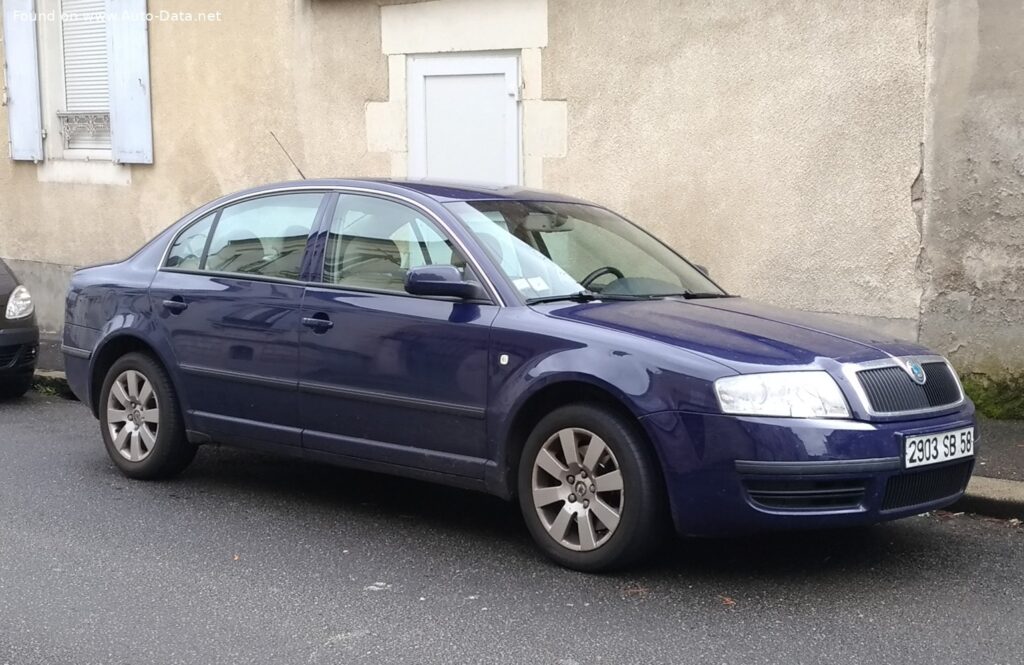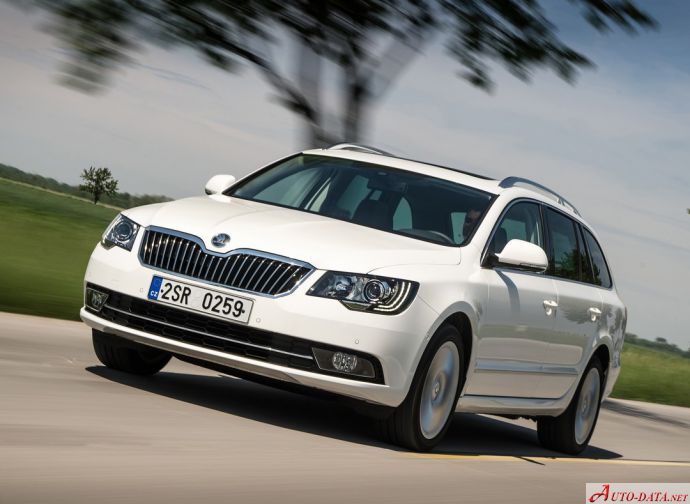
The Skoda Superb II Combi (facelift 2013) 1.4 TSI (125 Hp) represents a compelling blend of practicality, efficiency, and sophisticated engineering within the European mid-size segment. As a product of the Czech Republic’s venerable Skoda brand, a key member of the Volkswagen Group, the Superb series has consistently carved out a niche for offering exceptional interior space and value. This particular iteration, introduced in April 2013 as part of a significant mid-cycle refresh for the second generation, brought updated aesthetics, enhanced technology, and refined powertrains to the market before its production concluded in May 2015. Positioned as a family-friendly station wagon (known as an estate in Europe), the Superb Combi, and specifically this 1.4 TSI variant, aimed to provide a sensible yet capable option for buyers prioritizing fuel economy without sacrificing versatility or driving comfort in its primary European and Asian markets, where Skoda enjoys strong recognition and sales.
Engine and Performance of the Skoda Superb II Combi (facelift 2013)
At the heart of the Skoda Superb II Combi (facelift 2013) 1.4 TSI (125 Hp) lies a meticulously engineered turbocharged gasoline engine, designed to deliver a harmonious balance of spirited performance and commendable fuel efficiency. The 1.4-liter (1390 cubic centimeters or 84.82 cubic inches) EA111 / CAXC inline-four cylinder engine utilizes direct injection and a turbocharger with an intercooler, technologies crucial for extracting significant power from a relatively small displacement. This setup allows the engine to produce a respectable 125 horsepower (Hp) at an impressive 89.9 Hp per liter, ensuring confident acceleration for daily driving scenarios.
Torque output is equally impressive for an engine of this size, peaking at 200 Newton-meters, which translates to approximately 147.51 pound-feet, available across a broad rev range from 1500 to 4000 rpm. This wide torque band contributes significantly to the vehicle’s drivability, providing strong pull from low engine speeds and reducing the need for frequent downshifts. Power is channeled to the front wheels through a precise 6-speed manual transmission, offering engaging control for the driver. The powertrain architecture is a front, transverse layout, typical for front-wheel-drive vehicles in this segment, optimizing packaging and interior space.
In terms of performance metrics, the Skoda Superb II Combi 1.4 TSI demonstrates its capability with an acceleration time from 0 to 60 mph in a calculated 10.1 seconds (0-100 km/h in 10.6 seconds). While not designed as a sports car, this figure is more than adequate for merging onto highways and overtaking maneuvers. The vehicle’s top speed is rated at 203 km/h, or approximately 126.14 mph, further underscoring its competence for sustained highway cruising. Fuel economy figures are particularly noteworthy, with a combined rating of 6.1 liters per 100 kilometers, equating to an excellent 38.6 US miles per gallon. Urban driving yields approximately 29.4 US mpg (8 l/100 km), while extra-urban conditions can see figures as high as 47 US mpg (5 l/100 km), making it an economical choice for long-distance travel. With CO2 emissions of 142 g/km, this model meets the Euro 5 J emission standard, reflecting its commitment to environmental responsibility for its production era.
Design and Features of the Skoda Superb II Combi (facelift 2013)
The Skoda Superb II Combi (facelift 2013) embodied a design philosophy centered on understated elegance, spaciousness, and practicality, hallmarks of the Skoda brand. The “Combi” designation, signifying a station wagon body type, immediately highlights its primary function as a highly versatile family and cargo hauler. The facelift introduced subtle yet impactful revisions to the exterior, including redesigned headlights, a refreshed grille, and updated bumper styling, lending the vehicle a more modern and assertive presence on the road. Despite these updates, the Superb retained its characteristic clean lines and proportionate silhouette, which contributed to its timeless appeal.
Measuring 190.28 inches (4833 mm) in length, 71.54 inches (1817 mm) in width, and 59.49 inches (1511 mm) in height, the Superb Combi commands a significant footprint, which translates directly into its class-leading interior volume. A generous wheelbase of 108.7 inches (2761 mm) is instrumental in providing exceptional legroom for all five occupants, a feature for which the Superb is particularly renowned. The five-door configuration ensures easy access to both front and rear seating areas, while the large tailgate opens to reveal an cavernous trunk (boot) space. With the rear seats in place, the trunk offers a remarkable 22.35 cubic feet (633 liters) of capacity, expanding to an enormous 65.86 cubic feet (1865 liters) when the rear seats are folded down. This makes the Superb Combi an ideal choice for families, travelers, or anyone needing to transport substantial amounts of luggage or equipment.
Inside, the Superb II Combi provided a cabin that was both ergonomic and well-appointed, reflecting Skoda’s commitment to quality and user-friendliness. While specific luxury features would vary by trim level, the focus remained on functionality and comfort. Standard safety features for its time included an Anti-lock Braking System (ABS), which was crucial for maintaining control during emergency braking. The steering system utilized a rack and pinion setup, offering precise and predictable handling. The vehicle’s robust construction and thoughtful design contributed to a kerb weight of 3282.68 lbs (1489 kg), with a maximum permissible weight of 4523.89 lbs (2052 kg), allowing for a substantial maximum load of 1241.2 lbs (563 kg). The 15.85 US gallon (60 liter) fuel tank further enhanced its long-distance touring capabilities. The Superb II Combi (facelift 2013) continues to be appreciated for its blend of practical design, comfortable interior, and solid build quality, making it a highly desirable used vehicle in its target markets.
Technical Specifications: Skoda Superb II Combi (facelift 2013) 1.4 TSI (125 Hp)
| Brand | Skoda |
| Model | Superb |
| Generation | Superb II Combi (facelift 2013) |
| Type (Engine) | 1.4 TSI (125 Hp) |
| Start of production | April, 2013 year |
| End of production | May, 2015 year |
| Powertrain Architecture | Internal Combustion engine |
| Body type | Station wagon (estate) |
| Seats | 5 |
| Doors | 5 |
| Fuel consumption (economy) – urban | 8 l/100 km (29.4 US mpg) |
| Fuel consumption (economy) – extra urban | 5 l/100 km (47 US mpg) |
| Fuel consumption (economy) – combined | 6.1 l/100 km (38.6 US mpg) |
| CO2 emissions | 142 g/km |
| Fuel Type | Petrol (Gasoline) |
| Acceleration 0 – 60 mph | 10.1 sec |
| Acceleration 0 – 100 km/h | 10.6 sec |
| Maximum speed | 203 km/h (126.14 mph) |
| Emission standard | Euro 5 J |
| Weight-to-power ratio | 11.9 kg/Hp (83.9 Hp/tonne) |
| Weight-to-torque ratio | 7.4 kg/Nm (134.3 Nm/tonne) |
| Power | 125 Hp |
| Power per litre | 89.9 Hp/l |
| Torque | 200 Nm @ 1500-4000 rpm (147.51 lb.-ft.) |
| Engine layout | Front, Transverse |
| Engine Model/Code | EA111 / CAXC |
| Engine displacement | 1390 cm3 (84.82 cu. in.) |
| Number of cylinders | 4 |
| Engine configuration | Inline |
| Compression ratio | 10:1 |
| Fuel injection system | Direct injection |
| Engine aspiration | Turbocharger, Intercooler |
| Engine oil capacity | 3.6 l (3.8 US qt) |
| Coolant | 7.7 l (8.14 US qt) |
| Kerb Weight | 1489 kg (3282.68 lbs) |
| Max. weight | 2052 kg (4523.89 lbs) |
| Max load | 563 kg (1241.2 lbs) |
| Trunk (boot) space – minimum | 633 l (22.35 cu. ft.) |
| Trunk (boot) space – maximum | 1865 l (65.86 cu. ft.) |
| Fuel tank capacity | 60 l (15.85 US gal) |
| Length | 4833 mm (190.28 in.) |
| Width | 1817 mm (71.54 in.) |
| Height | 1511 mm (59.49 in.) |
| Wheelbase | 2761 mm (108.7 in.) |
| Front track | 1545 mm (60.83 in.) |
| Rear (Back) track | 1517 mm (59.72 in.) |
| Minimum turning circle (turning diameter) | 11.69 m (38.35 ft.) |
| Drivetrain Architecture | The Internal combustion engine (ICE) drives the front wheels of the vehicle. |
| Drive wheel | Front wheel drive |
| Number of gears and type of gearbox | 6 gears, manual transmission |
| Assisting systems | ABS (Anti-lock braking system) |
| Steering type | Steering rack and pinion |