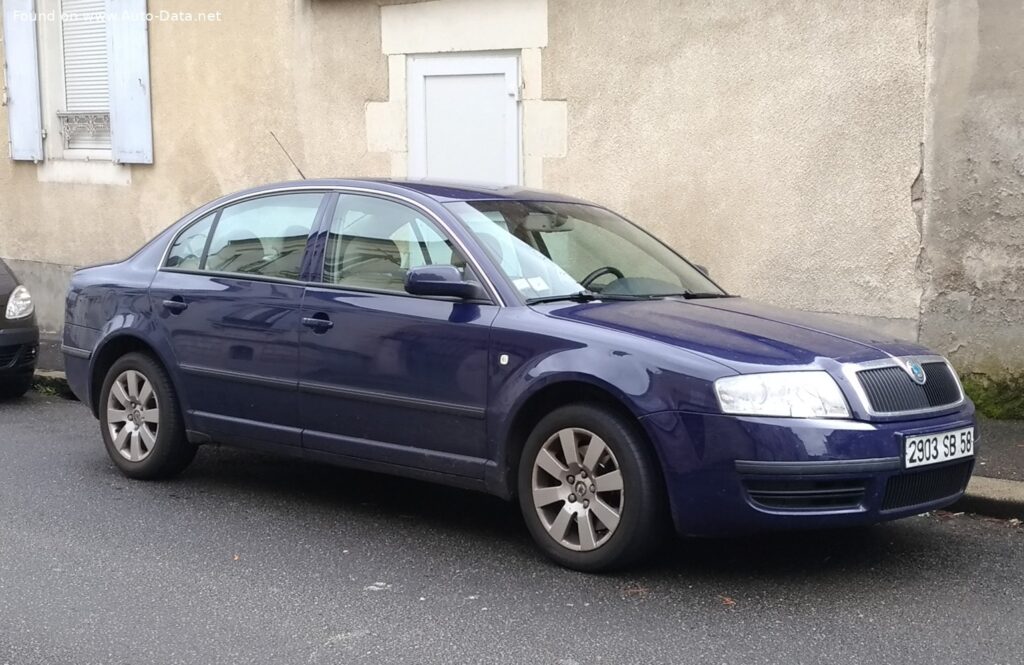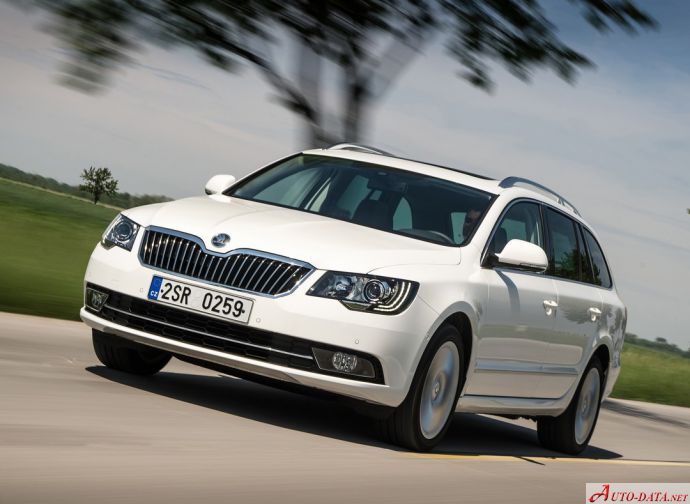
The Skoda Superb II Combi (facelift 2013) 1.8 TSI (160 Hp) DSG represents a significant offering from the Czech automaker within the European D-segment, also known as the mid-size segment. As a member of the second generation of Skoda’s flagship model, this particular iteration benefits from a mid-cycle refresh introduced in April 2013, enhancing its appeal before its production concluded in May 2015. Known for its exceptional interior space, robust build quality, and value-for-money proposition, the Superb Combi carved out a strong niche, particularly among family buyers and business fleets across the continent. While the Skoda brand has limited presence in the United States, its vehicles, like the Superb, are highly regarded in their primary markets for embodying the Volkswagen Group’s engineering prowess in a more accessible package. This specific model, featuring the popular 1.8-liter TSI engine paired with a dual-clutch DSG automatic transmission, offered a compelling blend of performance, efficiency, and practicality in its segment.
Engine and Performance of the Skoda Superb II Combi (facelift 2013)
At the heart of the Skoda Superb II Combi (facelift 2013) lies the well-regarded 1.8 TSI engine, a direct-injection, turbocharged, and intercooled inline four-cylinder unit. This powertrain, identified by the EA888 / CDAA engine code, is a testament to the Volkswagen Group’s commitment to delivering strong performance alongside commendable fuel economy. With a displacement of 1798 cubic centimeters (109.72 cu. in.), the engine generates a robust 160 horsepower, equating to an impressive 89 horsepower per liter. More critically for everyday driving, it produces 250 Newton-meters of torque, which translates to a substantial 184.39 pound-feet. This peak torque is available across a broad rev range, from 1500 to 4500 rpm, ensuring excellent responsiveness and effortless acceleration in various driving conditions.
Power is efficiently delivered to the front wheels via a sophisticated 7-speed automatic DSG (Direct Shift Gearbox) transmission. This dual-clutch system is renowned for its rapid and smooth gear changes, contributing significantly to both the vehicle’s performance and its fuel efficiency. The Superb II Combi 1.8 TSI DSG can accelerate from 0 to 60 mph in a brisk 8.1 seconds, with a 0 to 100 km/h sprint taking 8.5 seconds. Its top speed is rated at 137.32 mph (221 km/h), making it a capable cruiser on European highways. Despite its performance capabilities, the vehicle maintains a focus on efficiency. Its combined fuel consumption is an impressive 33.1 US mpg (7.1 l/100 km), breaking down to 25 US mpg (9.4 l/100 km) in urban settings and an even more economical 41.3 US mpg (5.7 l/100 km) during extra-urban driving. This efficiency is further underscored by CO2 emissions of 164 g/km, allowing it to meet the Euro 5 J emission standard, reflecting its environmental consciousness for the era.
The engine layout, front and transverse, is typical for a front-wheel-drive vehicle, optimizing packaging and interior space. With a compression ratio of 9.8:1, the engine is designed for efficient combustion, further aided by its direct injection fuel system. The kerb weight of 3373.07 pounds (1530 kg) results in a favorable weight-to-power ratio of 9.6 kg/Hp (104.6 Hp/tonne) and a weight-to-torque ratio of 6.1 kg/Nm (163.4 Nm/tonne), indicating a well-balanced power-to-weight characteristic that contributes to its agile feel despite its size. The engine requires 4.6 liters (4.86 US quarts) of engine oil, and the cooling system holds 8.6 liters (9.09 US quarts) of coolant, emphasizing the robust engineering designed for reliability and longevity.
Design and Features
The Skoda Superb II Combi (facelift 2013) is defined by its versatile and capacious station wagon (estate) body type, which is a cornerstone of its appeal in markets prioritizing practicality. Measuring 190.28 inches (4833 mm) in length, 71.54 inches (1817 mm) in width, and 59.49 inches (1511 mm) in height, the Superb Combi offers substantial road presence. Its generous 108.7-inch (2761 mm) wheelbase is a key factor in its legendary rear-seat legroom, a feature often compared to luxury sedans from higher segments. The facelift introduced subtle but effective design changes, typically involving revised front and rear fascias, updated lighting signatures, and new wheel designs, all contributing to a more contemporary and refined aesthetic.
Designed to comfortably accommodate five occupants, the Superb Combi features five doors, enhancing accessibility for both passengers and cargo. The interior is characterized by its ergonomic layout, high-quality materials, and intelligent storage solutions. However, the most compelling aspect of its design is its cargo capacity. With the rear seats in place, the trunk (boot) offers a cavernous 22.35 cubic feet (633 liters) of space. When the rear seats are folded down, this expands dramatically to an impressive 65.86 cubic feet (1865 liters), positioning it among the class leaders for cargo volume. This makes the Superb Combi an ideal vehicle for families, those with active lifestyles, or individuals requiring substantial carrying capability.
Safety features for the 2013 model year included standard Anti-lock Braking System (ABS), a fundamental active safety system designed to prevent wheel lock-up during hard braking, maintaining steering control. While not explicitly detailed in the provided data, vehicles of this segment and era typically came equipped with a comprehensive suite of passive safety features, including multiple airbags, electronic stability control (ESC), and traction control, all designed to protect occupants in the event of a collision and prevent accidents from occurring. The steering system utilizes a precise rack and pinion setup, providing predictable and responsive handling. With a minimum turning circle of 38.35 feet (11.69 meters), the large estate car remains surprisingly maneuverable in urban environments. The Superb Combi’s design philosophy successfully blends executive-level comfort and space with the practical utility of a station wagon, making it a highly versatile and appealing choice in its market segment.
Technical Specifications
| Brand | Skoda |
| Model | Superb |
| Generation | Superb II Combi (facelift 2013) |
| Type (Engine) | 1.8 TSI (160 Hp) DSG |
| Start of production | April, 2013 year |
| End of production | May, 2015 year |
| Powertrain Architecture | Internal Combustion engine |
| Body type | Station wagon (estate) |
| Seats | 5 |
| Doors | 5 |
| Fuel consumption (economy) – urban | 9.4 l/100 km (25 US mpg) |
| Fuel consumption (economy) – extra urban | 5.7 l/100 km (41.3 US mpg) |
| Fuel consumption (economy) – combined | 7.1 l/100 km (33.1 US mpg) |
| CO2 emissions | 164 g/km |
| Fuel Type | Petrol (Gasoline) |
| Acceleration 0 – 100 km/h | 8.5 sec |
| Acceleration 0 – 62 mph | 8.5 sec |
| Acceleration 0 – 60 mph (Calculated) | 8.1 sec |
| Maximum speed | 221 km/h (137.32 mph) |
| Emission standard | Euro 5 J |
| Weight-to-power ratio | 9.6 kg/Hp (104.6 Hp/tonne) |
| Weight-to-torque ratio | 6.1 kg/Nm (163.4 Nm/tonne) |
| Power | 160 Hp |
| Power per litre | 89 Hp/l |
| Torque | 250 Nm @ 1500-4500 rpm (184.39 lb.-ft. @ 1500-4500 rpm) |
| Engine layout | Front, Transverse |
| Engine Model/Code | EA888 / CDAA |
| Engine displacement | 1798 cm3 (109.72 cu. in.) |
| Number of cylinders | 4 |
| Engine configuration | Inline |
| Compression ratio | 9.8:1 |
| Fuel injection system | Direct injection |
| Engine aspiration | Turbocharger, Intercooler |
| Engine oil capacity | 4.6 l (4.86 US qt) |
| Coolant | 8.6 l (9.09 US qt) |
| Kerb Weight | 1530 kg (3373.07 lbs.) |
| Max. weight | 2093 kg (4614.28 lbs.) |
| Max load | 563 kg (1241.2 lbs.) |
| Trunk (boot) space – minimum | 633 l (22.35 cu. ft.) |
| Trunk (boot) space – maximum | 1865 l (65.86 cu. ft.) |
| Fuel tank capacity | 60 l (15.85 US gal) |
| Length | 4833 mm (190.28 in.) |
| Width | 1817 mm (71.54 in.) |
| Height | 1511 mm (59.49 in.) |
| Wheelbase | 2761 mm (108.7 in.) |
| Front track | 1545 mm (60.83 in.) |
| Rear (Back) track | 1517 mm (59.72 in.) |
| Minimum turning circle (turning diameter) | 11.69 m (38.35 ft.) |
| Drivetrain Architecture | The Internal combustion engine (ICE) drives the front wheels of the vehicle. |
| Drive wheel | Front wheel drive |
| Number of gears and type of gearbox | 7 gears, automatic transmission DSG |
| Assisting systems | ABS (Anti-lock braking system) |
| Steering type | Steering rack and pinion |