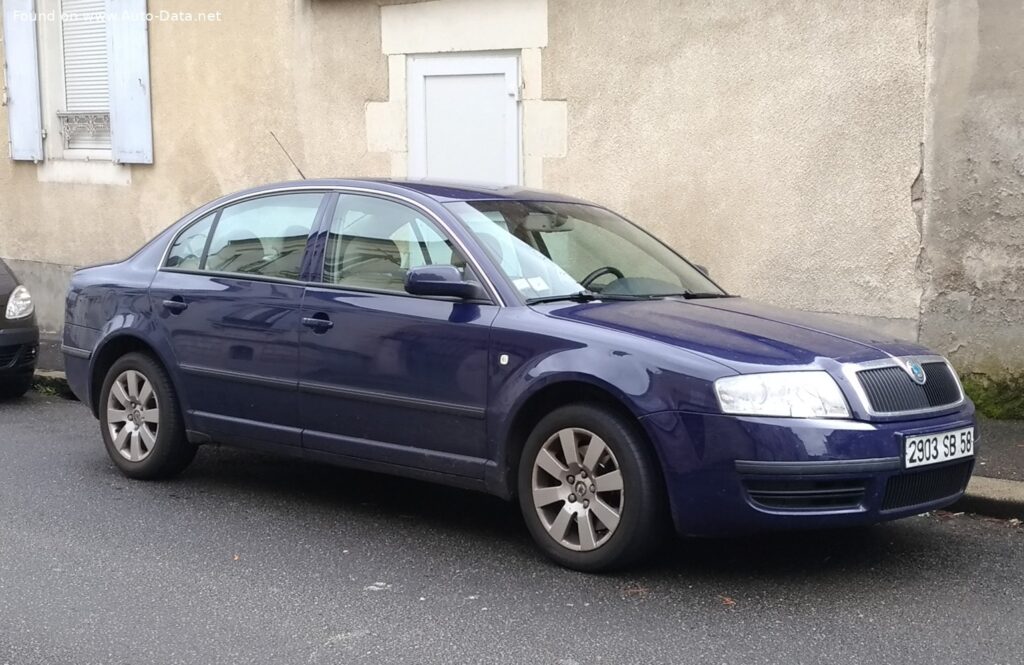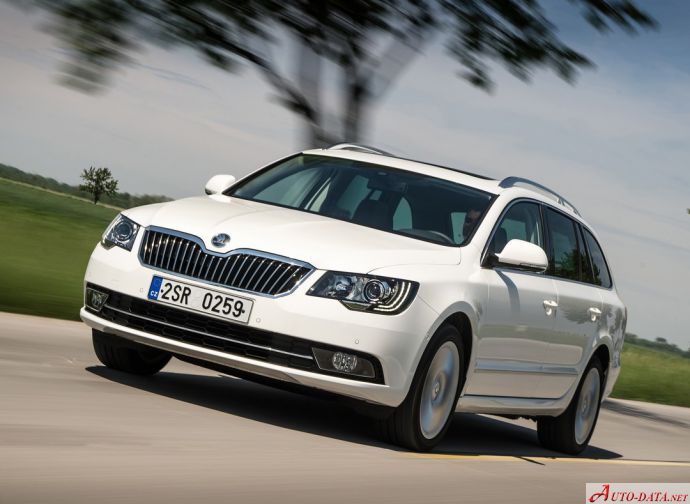
The Skoda Superb II Combi (facelift 2013) 2.0 TDI (170 Hp) 4×4 DSG DPF represents a significant offering in the European executive and large family car segment. While the Skoda brand is not typically sold in the United States, it holds a prominent position in its primary markets, particularly across Europe and parts of Asia, as a value-oriented yet sophisticated member of the Volkswagen Group. This particular iteration, part of the second generation Superb Combi, benefited from a mid-cycle refresh in 2013, enhancing its aesthetic appeal and refining its technical specifications for the 2014 and 2015 model years. The ‘Combi’ designation signifies its station wagon body style, a highly popular choice for its practicality and versatility in many international markets. Equipped with a robust 2.0-liter TDI diesel engine, a sophisticated 4×4 all-wheel-drive system, and a quick-shifting DSG automatic transmission, this variant of the Skoda Superb II Combi (facelift 2013) was engineered to deliver a compelling blend of performance, fuel efficiency, and all-weather capability, making it a strong contender for discerning buyers seeking a spacious and well-appointed vehicle without the premium price tag of its German counterparts within the VW Group.
Engine and Performance of the Skoda Superb II Combi (facelift 2013)
At the heart of the Skoda Superb II Combi (facelift 2013) 2.0 TDI (170 Hp) 4×4 DSG DPF lies a highly efficient and potent 2.0-liter turbocharged direct injection (TDI) diesel engine, bearing the internal code EA189 / CFGB. This inline four-cylinder powerplant, configured in a front, transverse layout, boasts a displacement of 1968 cubic centimeters (120.09 cubic inches). With a compression ratio of 16:1 and a state-of-the-art Commonrail fuel injection system, it generates a respectable 170 horsepower. The engine’s power delivery is further enhanced by a turbocharger and an intercooler, ensuring optimal performance across the rev range. This robust engine produces a substantial 258.15 lb.-ft. of torque, available broadly between 1750 and 2500 rpm, providing excellent pulling power and effortless cruising capabilities. This impressive torque-to-weight ratio of 4.7 kg/Nm (211.4 Nm/tonne) translates into dynamic acceleration for a vehicle of its size.
Performance figures for the Skoda Superb II Combi (facelift 2013) are quite impressive, especially considering its family-friendly station wagon configuration and all-wheel-drive system. It can accelerate from 0 to 60 mph in a swift 8.4 seconds, with a 0-100 km/h sprint completed in 8.8 seconds. The top speed is rated at 135.46 mph (218 km/h), making it well-suited for sustained highway speeds. Power is efficiently transmitted to all four wheels via a sophisticated 6-speed DSG automatic transmission. This dual-clutch gearbox is renowned for its rapid, seamless shifts and contributes significantly to both the vehicle’s sporty performance and its remarkable fuel economy. The 4×4 all-wheel-drive system provides enhanced traction and stability, particularly beneficial in adverse weather conditions or on challenging road surfaces, further cementing its appeal as a versatile and reliable family hauler.
Fuel efficiency is a strong suit for this diesel-powered Superb, a key factor in its European market success. The combined fuel consumption is an impressive 41.3 US mpg (5.7 l/100 km). Urban driving yields 34.6 US mpg (6.8 l/100 km), while extra-urban conditions see figures as high as 46.1 US mpg (5.1 l/100 km). These figures highlight the economic advantages of modern diesel powertrains. The vehicle adheres to the Euro 5 J emission standard, indicating its compliance with stringent European environmental regulations for its production period, aided by a standard Diesel Particulate Filter (DPF) system to reduce harmful emissions. With a fuel tank capacity of 15.85 US gallons (60 liters), the Skoda Superb II Combi offers an excellent driving range, minimizing stops at the pump.
Design and Features of the Skoda Superb II Combi (facelift 2013)
The design of the Skoda Superb II Combi (facelift 2013) embodies a blend of understated elegance and practical functionality, a hallmark of Skoda’s philosophy. As a five-door station wagon (often referred to as an “estate” in Europe), it prioritizes interior space and cargo capacity, making it an ideal choice for families and professionals requiring ample room. The facelift introduced in 2013 brought subtle yet impactful changes, primarily to the front and rear fascias, aligning the Superb with Skoda’s evolving design language. These updates included revised headlights, a refreshed grille, and updated taillight clusters, giving the vehicle a more contemporary and sharper appearance that maintained its dignified presence on the road. The exterior dimensions are substantial, with a length of 190.28 inches (4833 mm), a width of 71.54 inches (1817 mm), and a height of 59.49 inches (1511 mm). A generous wheelbase of 108.7 inches (2761 mm) contributes significantly to both interior volume and a stable, comfortable ride.
Inside, the Superb II Combi offers seating for five occupants, with a focus on comfort and high-quality materials, reflecting its position as a near-premium offering. The cabin is known for its ergonomic layout and thoughtful touches, characteristic of Skoda’s “Simply Clever” ethos. One of the most compelling features of the Superb Combi is its cavernous cargo capacity. With the rear seats in place, it provides a minimum trunk space of 22.35 cubic feet (633 liters), which is exceptionally generous for its class. When the rear seats are folded down, this expands dramatically to a maximum of 65.86 cubic feet (1865 liters), allowing for the transport of large items or extensive luggage. This versatility is a major selling point, distinguishing it from many sedans and even some SUVs in terms of usable space.
Beyond its spaciousness, the Skoda Superb II Combi (facelift 2013) incorporated a range of features designed for safety, convenience, and driving dynamics. Standard safety systems included ABS (Anti-lock Braking System), a crucial active safety feature. The steering system is a precise rack and pinion setup, offering responsive handling and a respectable minimum turning circle of 38.35 feet (11.69 meters) for a vehicle of its size, aiding maneuverability in urban environments. The kerb weight of the vehicle stands at 3650.86 lbs. (1656 kg), with a maximum permissible weight of 4892.06 lbs. (2219 kg), allowing for a substantial maximum payload of 1241.2 lbs. (563 kg). This robust construction and thoughtful engineering underscore the Superb’s capability as a reliable and practical vehicle for diverse needs, from daily commutes to long-distance family trips.
Technical Specifications
| Brand | Skoda |
| Model | Superb |
| Generation | Superb II Combi (facelift 2013) |
| Type (Engine) | 2.0 TDI (170 Hp) 4×4 DSG DPF |
| Start of production | April, 2014 year |
| End of production | May, 2015 year |
| Powertrain Architecture | Internal Combustion engine |
| Body type | Station wagon (estate) |
| Seats | 5 |
| Doors | 5 |
| Fuel consumption (economy) – urban | 6.8 l/100 km (34.6 US mpg) |
| Fuel consumption (economy) – extra urban | 5.1 l/100 km (46.1 US mpg) |
| Fuel consumption (economy) – combined | 5.7 l/100 km (41.3 US mpg) |
| CO2 emissions | 149 g/km |
| Fuel Type | Diesel |
| Acceleration 0 – 60 mph | 8.4 sec |
| Acceleration 0 – 100 km/h | 8.8 sec |
| Maximum speed | 218 km/h (135.46 mph) |
| Emission standard | Euro 5 J |
| Weight-to-power ratio | 9.7 kg/Hp, 102.7 Hp/tonne |
| Weight-to-torque ratio | 4.7 kg/Nm, 211.4 Nm/tonne |
| Power | 170 Hp |
| Power per litre | 86.4 Hp/l |
| Torque | 350 Nm (258.15 lb.-ft.) @ 1750-2500 rpm |
| Engine layout | Front, Transverse |
| Engine Model/Code | EA189 / CFGB |
| Engine displacement | 1968 cm3 (120.09 cu. in.) |
| Number of cylinders | 4 |
| Engine configuration | Inline |
| Compression ratio | 16:1 |
| Fuel injection system | Diesel Commonrail |
| Engine aspiration | Turbocharger, Intercooler |
| Engine oil capacity | 4.3 l (4.54 US qt) |
| Coolant | 8.4 l (8.88 US qt) |
| Engine systems | Particulate filter |
| Kerb Weight | 1656 kg (3650.86 lbs.) |
| Max. weight | 2219 kg (4892.06 lbs.) |
| Max load | 563 kg (1241.2 lbs.) |
| Trunk (boot) space – minimum | 633 l (22.35 cu. ft.) |
| Trunk (boot) space – maximum | 1865 l (65.86 cu. ft.) |
| Fuel tank capacity | 60 l (15.85 US gal) |
| Length | 4833 mm (190.28 in.) |
| Width | 1817 mm (71.54 in.) |
| Height | 1511 mm (59.49 in.) |
| Wheelbase | 2761 mm (108.7 in.) |
| Front track | 1545 mm (60.83 in.) |
| Rear (Back) track | 1517 mm (59.72 in.) |
| Minimum turning circle (turning diameter) | 11.69 m (38.35 ft.) |
| Drive wheel | All wheel drive (4×4) |
| Number of gears and type of gearbox | 6 gears, automatic transmission DSG |
| Assisting systems | ABS (Anti-lock braking system) |
| Steering type | Steering rack and pinion |