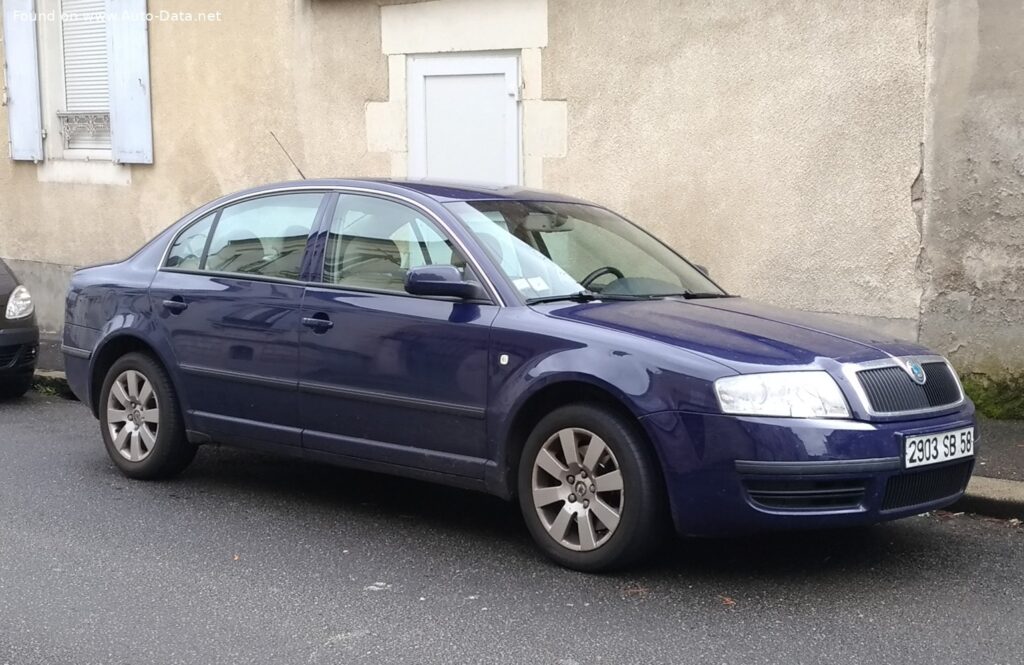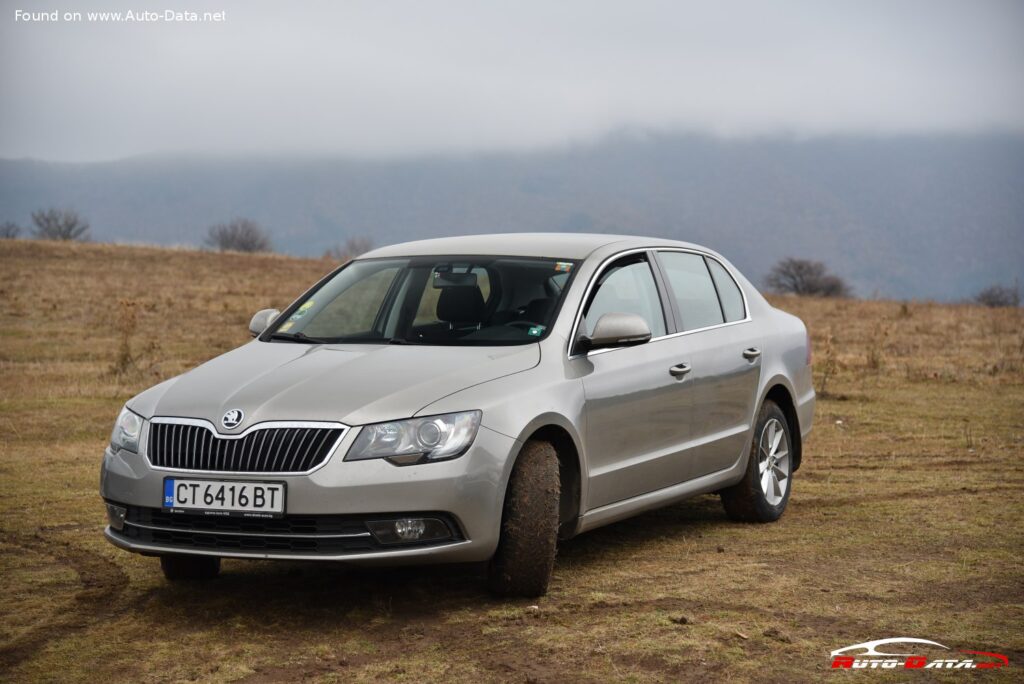
The Skoda Superb II, particularly the facelifted model introduced in April 2013, represents a significant offering in the European large family car and executive sedan segment. As a proud member of the Volkswagen Group, Skoda has long been recognized for delivering exceptional value, cavernous interior space, and robust engineering, qualities epitomized by the Superb. The specific variant under review, the Skoda Superb II (facelift 2013) 1.8 TSI (160 Hp) 4×4, stood out for its blend of a potent yet efficient turbocharged gasoline engine, a sophisticated all-wheel-drive system, and a remarkably practical liftback body style. While not directly offered in the North American market, this model played a crucial role in solidifying Skoda’s reputation for intelligent design and accessible premium features across its primary European and select Asian markets from its production start in 2013 until its conclusion in May 2015. It catered to a demographic seeking the comfort and executive presence of a traditional sedan combined with the versatility of a hatchback, all underpinned by reliable German-engineered mechanicals.
Engine and Performance: The Heart of the Skoda Superb II (facelift 2013) 1.8 TSI (160 Hp) 4×4
At the core of this particular Skoda Superb variant is the highly regarded 1.8-liter TSI (Turbocharged Stratified Injection) inline-four engine, identified by the EA888 / CDAA engine code. This direct-injection gasoline unit, augmented by a turbocharger and intercooler, was engineered to deliver a compelling balance of power, refinement, and fuel efficiency. It generates a respectable 160 horsepower (Hp) at a specific but unspecified RPM, translating to an impressive 89 Hp per liter of displacement. More critically for real-world driving, the engine produces a substantial 184.39 lb.-ft. of torque, available across a broad and usable rev range from 1500 to 4500 RPM. This wide torque band ensures responsive acceleration and flexible cruising, making the car feel effortless in various driving conditions, from urban commutes to highway journeys.
The powertrain architecture is a conventional internal combustion engine setup, with the engine mounted transversely at the front. Power is efficiently transferred to all four wheels via an advanced all-wheel-drive (4×4) system, providing enhanced traction and stability, especially beneficial in adverse weather conditions or on challenging road surfaces. This is paired with a precise 6-speed manual transmission, offering drivers an engaging and direct connection to the vehicle’s mechanics. The combination of the turbocharged engine and all-wheel-drive system allows the Superb to achieve a brisk 0 to 60 mph acceleration time of just 8 seconds, with a maximum speed of 136.08 mph. These figures are competitive for a vehicle of its size and class, demonstrating Skoda’s ability to extract dynamic performance from its platforms.
Despite its robust performance, the 1.8 TSI engine also demonstrates a commendable focus on fuel economy and emissions. The combined fuel consumption is rated at 29.4 US mpg, a respectable figure for an all-wheel-drive vehicle of this size and power. Urban driving yields 23.3 US mpg, while extra-urban conditions can see efficiency rise to 37.3 US mpg. These figures were instrumental in achieving an Emission Standard of Euro 5 J, with CO2 emissions pegged at 185 g/km, reflecting a commitment to environmental considerations prevalent in the European market during its production run. The engine’s design, including its 9.8:1 compression ratio and direct injection system, plays a crucial role in optimizing combustion for both power output and fuel efficiency.
Design and Features: Practicality Meets Sophistication
The Skoda Superb II (facelift 2013) is distinguished by its unique and highly practical liftback body type. Unlike a conventional sedan, which has a separate trunk lid, the Superb’s liftback design integrates the rear window into the trunk lid, allowing for a much larger and more accessible opening, akin to a hatchback. This design choice, combined with its generous overall dimensions, bestows the Superb with an outstanding level of versatility. Measuring 190.28 inches in length, 71.54 inches in width, and 57.56 inches in height, with a substantial 108.7-inch wheelbase, the Superb offers exceptional interior space, particularly for rear passengers, where it often rivals vehicles from a class above. The design emphasizes clean lines and a dignified, understated elegance that appeals to a broad range of buyers.
The facelift introduced in 2013 brought subtle yet effective enhancements to the Superb’s exterior styling, ensuring it remained fresh and competitive. While specific aesthetic updates are not detailed in the provided data, typical facelifts involve revised front and rear bumpers, updated lighting signatures, and potentially new wheel designs. The overall aesthetic remained one of sophisticated practicality, reflecting Skoda’s brand identity. Inside, the focus was squarely on comfort, ergonomics, and intelligent features. With seating for five occupants across five doors, the Superb was designed as a capable family hauler or a comfortable executive transport.
One of the most compelling features of the Superb is its cargo capacity. The liftback configuration provides a minimum trunk space of 21.01 cubic feet, which is already generous for its class. When the rear seats are folded, this expands dramatically to a cavernous 60.03 cubic feet, making it exceptionally versatile for transporting large items, luggage, or sports equipment. This practicality is a significant differentiator for the Superb against more traditional sedan rivals. Furthermore, the vehicle’s substantial 15.85 US gallon fuel tank capacity ensures a long cruising range, an important consideration for European long-distance travel. The vehicle also boasts a respectable maximum load capacity of 1241.2 lbs, further underscoring its utility. In terms of safety and driving dynamics, the Superb came equipped with essential assisting systems like ABS (Anti-lock Braking System) and utilized a precise steering rack and pinion system, ensuring confident handling and braking capabilities commensurate with a car of its stature and purpose.
Technical Specifications
| Brand | Skoda |
| Model | Superb |
| Generation | Superb II (facelift 2013) |
| Type (Engine) | 1.8 TSI (160 Hp) 4×4 |
| Start of production | April, 2013 year |
| End of production | May, 2015 year |
| Powertrain Architecture | Internal Combustion engine |
| Body type | Liftback |
| Seats | 5 |
| Doors | 5 |
| Fuel consumption (economy) – urban | 10.1 l/100 km (23.3 US mpg) |
| Fuel consumption (economy) – extra urban | 6.3 l/100 km (37.3 US mpg) |
| Fuel consumption (economy) – combined | 8 l/100 km (29.4 US mpg) |
| CO2 emissions | 185 g/km |
| Fuel Type | Petrol (Gasoline) |
| Acceleration 0 – 100 km/h | 8.4 sec |
| Acceleration 0 – 62 mph | 8.4 sec |
| Acceleration 0 – 60 mph (Calculated) | 8 sec |
| Maximum speed | 219 km/h (136.08 mph) |
| Emission standard | Euro 5 J |
| Weight-to-power ratio | 9.9 kg/Hp, 100.8 Hp/tonne |
| Weight-to-torque ratio | 6.3 kg/Nm, 157.5 Nm/tonne |
| Power | 160 Hp |
| Power per litre | 89 Hp/l |
| Torque | 250 Nm (184.39 lb.-ft.) @ 1500-4500 rpm. |
| Engine layout | Front, Transverse |
| Engine Model/Code | EA888 / CDAA |
| Engine displacement | 1798 cm3 (109.72 cu. in.) |
| Number of cylinders | 4 |
| Engine configuration | Inline |
| Compression ratio | 9.8:1 |
| Fuel injection system | Direct injection |
| Engine aspiration | Turbocharger, Intercooler |
| Engine oil capacity | 4.6 l (4.86 US qt) |
| Coolant | 8.6 l (9.09 US qt) |
| Kerb Weight | 1587 kg (3498.74 lbs.) |
| Max. weight | 2150 kg (4739.94 lbs.) |
| Max load | 563 kg (1241.2 lbs.) |
| Trunk (boot) space – minimum | 595 l (21.01 cu. ft.) |
| Trunk (boot) space – maximum | 1700 l (60.03 cu. ft.) |
| Fuel tank capacity | 60 l (15.85 US gal) |
| Length | 4833 mm (190.28 in.) |
| Width | 1817 mm (71.54 in.) |
| Height | 1462 mm (57.56 in.) |
| Wheelbase | 2761 mm (108.7 in.) |
| Front track | 1545 mm (60.83 in.) |
| Rear (Back) track | 1518 mm (59.76 in.) |
| Minimum turning circle (turning diameter) | 11.69 m (38.35 ft.) |
| Drive wheel | All wheel drive (4×4) |
| Number of gears and type of gearbox | 6 gears, manual transmission |
| Assisting systems | ABS (Anti-lock braking system) |
| Steering type | Steering rack and pinion |