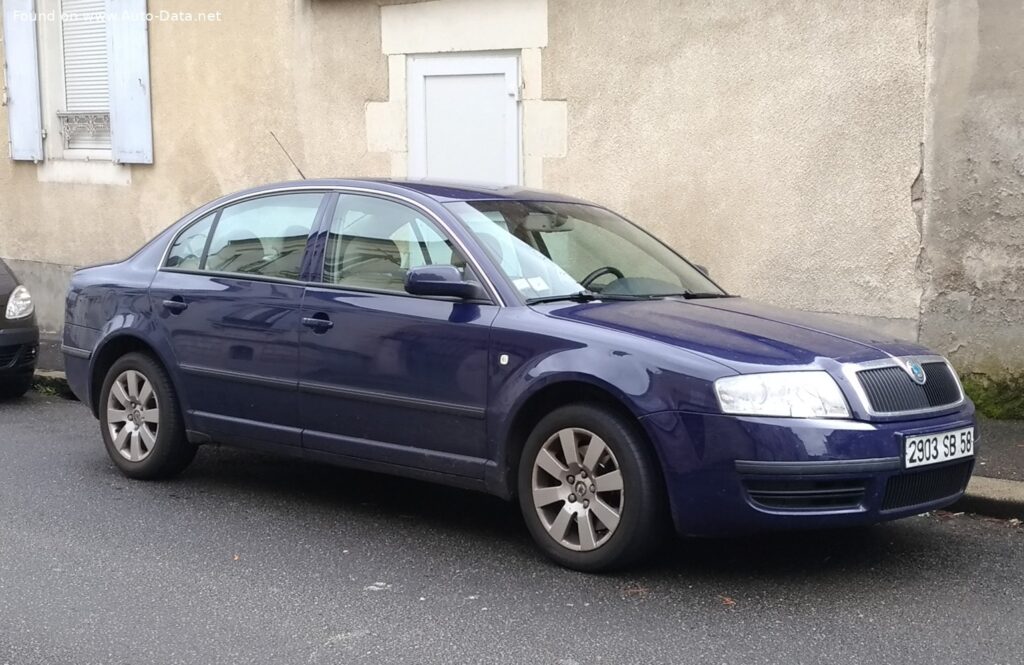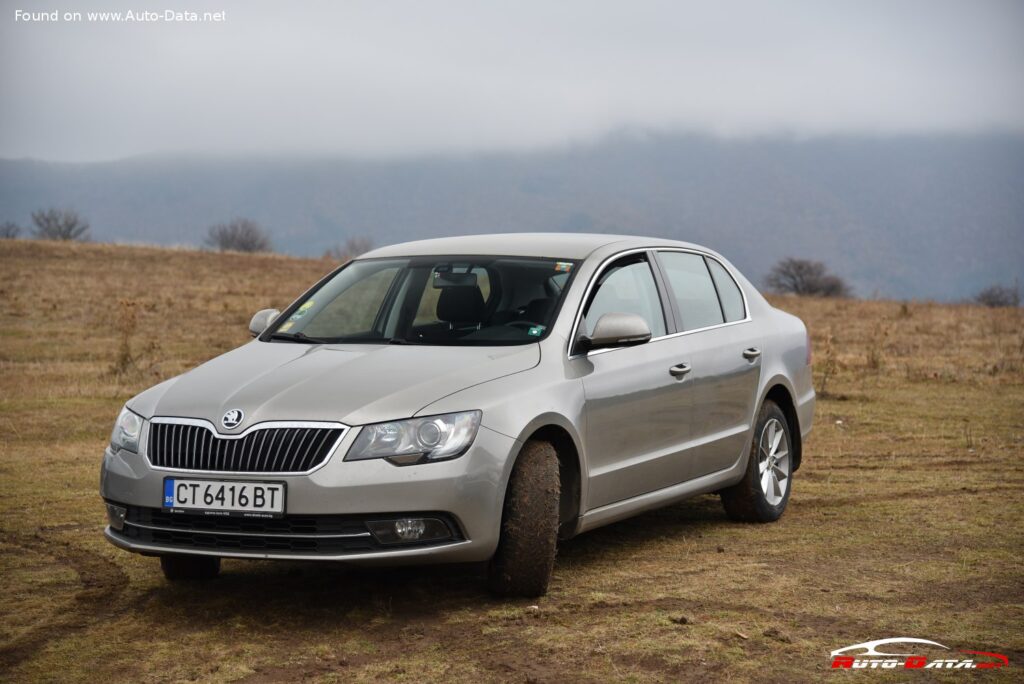
The Skoda Superb II (facelift 2013) 2.0 TDI (170 Hp) DPF represents a significant iteration of Skoda’s flagship model, cementing its position as a highly competitive offering in the European executive and large family car segment. Produced by the Czech automaker Skoda Auto, a subsidiary of the Volkswagen Group, the Superb has long been lauded for its exceptional space, build quality, and value proposition, particularly in markets outside North America where the brand is not officially sold. The second-generation Superb, launched in 2008, received a comprehensive facelift in April 2013, which brought refreshed styling, enhanced technology, and improved efficiency to an already successful platform. This particular variant, powered by the robust 2.0-liter TDI diesel engine, was available until May 2015, appealing to a demographic prioritizing economical long-distance travel without compromising on comfort or practicality. Its unique liftback body style, combining the elegant profile of a sedan with the versatile cargo access of a hatchback, further distinguished it in a crowded market.
The Skoda Superb II (facelift 2013) 2.0 TDI (170 Hp) DPF: Engineering for Efficiency and Performance
At the heart of this particular Skoda Superb II model lies the highly regarded EA189 / CFGB 2.0-liter TDI diesel engine, a powerplant synonymous with the Volkswagen Group’s commitment to efficient and torque-rich diesel technology. This inline four-cylinder engine, positioned transversely at the front, delivers a respectable 170 horsepower, translating to a power output of 86.4 horsepower per liter. More significantly for a diesel, it generates a substantial 258.15 lb.-ft. of torque, available across a broad and usable rev range from 1750 to 2500 rpm. This ample torque ensures strong acceleration and effortless overtaking, particularly beneficial for highway cruising, which is a primary use case for vehicles in this segment across Europe.
The performance figures underscore the engine’s capability, with the Skoda Superb II (facelift 2013) 2.0 TDI (170 Hp) DPF accelerating from 0 to 60 mph in a brisk 8.2 seconds. Its maximum speed of 141.67 mph further confirms its competence as a long-distance cruiser. Despite these performance credentials, the Superb truly excels in its fuel economy. The combined fuel consumption is an impressive 51.1 US mpg, dropping to 57.4 US mpg in extra-urban driving conditions. Even in urban environments, it achieves a commendable 43.6 US mpg. These figures were class-leading for its time, making it an attractive option for both private owners and fleet operators seeking to minimize running costs.
Environmental considerations were also paramount, with the engine featuring a Diesel Particulate Filter (DPF) as standard, helping it meet the stringent Euro 5 J emission standard. The common rail fuel injection system, coupled with a turbocharger and intercooler, optimizes combustion efficiency and reduces emissions. Power is delivered to the front wheels via a precise 6-speed manual transmission, offering engaging control for the driver while maximizing fuel efficiency through carefully selected gear ratios. The engine’s compression ratio of 16:1 is typical for a modern diesel, balancing power output with fuel efficiency and emissions control. With an engine oil capacity of 4.54 US quarts and a coolant capacity of 8.88 US quarts, maintenance requirements are straightforward, contributing to the overall ownership experience.
Design and Features of the Skoda Superb II (facelift 2013)
The design philosophy behind the Skoda Superb II (facelift 2013) centered on understated elegance, practicality, and an abundance of interior space, characteristics that defined the brand’s appeal. The facelift brought subtle yet effective updates to the exterior, including a revised grille, redesigned headlights with optional bi-xenon and LED daytime running lights, and updated taillights, lending the Superb a more modern and sophisticated appearance. The overall silhouette remained largely unchanged, retaining its distinctive and highly practical liftback body style. This five-door, five-seat configuration cleverly combines the formal appeal of a traditional sedan with the immense versatility of a hatchback, offering a vast loading aperture for bulky items.
Dimensionally, the Superb II is a substantial vehicle, measuring 190.28 inches in length, 71.54 inches in width, and 57.56 inches in height. The generous 108.7-inch wheelbase is a key factor in its renowned interior spaciousness, particularly for rear-seat passengers who benefit from limousine-like legroom. The trunk space is cavernous, starting at an impressive 21.01 cubic feet with the rear seats in place, and expanding to an enormous 60.03 cubic feet when the rear seats are folded down. This practicality, combined with a 15.85 US gallon fuel tank capacity, makes the Superb an ideal choice for long family trips or business travel requiring significant luggage capacity.
Inside, the Superb offered a comfortable and well-appointed cabin, characterized by logical ergonomics and durable materials. While specific interior features are not detailed, a vehicle of this segment and era would typically include automatic climate control, a comprehensive infotainment system, and a range of convenience features. Safety was a significant consideration, with the vehicle incorporating a robust chassis and standard features such as ABS (Anti-lock Braking System). While not explicitly listed, modern vehicles of this caliber from the VW Group would also feature multiple airbags, electronic stability control (ESC), and traction control systems to ensure occupant safety and vehicle stability under various driving conditions. The steering system, a conventional rack and pinion setup, provided precise and predictable handling, complemented by a relatively tight minimum turning circle of 38.35 feet for a car of its size, aiding maneuverability in urban environments.
The Superb’s drivetrain architecture is front-wheel drive, a common and efficient layout for vehicles in this class, contributing to both fuel economy and predictable handling characteristics. With a kerb weight of 3395.12 lbs. and a maximum permissible weight of 4636.32 lbs., the Superb is a solid and stable platform, capable of carrying a significant load of 1241.2 lbs. The weight-to-power ratio of 9.1 kg/Hp (110.4 Hp/tonne) and a weight-to-torque ratio of 4.4 kg/Nm (227.3 Nm/tonne) highlight the effective utilization of its powertrain, ensuring that the vehicle feels responsive and capable in various driving scenarios, from city commuting to high-speed highway travel. The Skoda Superb II (facelift 2013) 2.0 TDI (170 Hp) DPF solidified its reputation as a smart, practical, and economical choice for discerning buyers in its primary markets.
Technical Specifications
| Brand | Skoda |
| Model | Superb |
| Generation | Superb II (facelift 2013) |
| Type (Engine) | 2.0 TDI (170 Hp) DPF |
| Start of production | April, 2013 year |
| End of production | May, 2015 year |
| Powertrain Architecture | Internal Combustion engine |
| Body type | Liftback |
| Seats | 5 |
| Doors | 5 |
| Fuel consumption (economy) – urban | 43.6 US mpg |
| Fuel consumption (economy) – extra urban | 57.4 US mpg |
| Fuel consumption (economy) – combined | 51.1 US mpg |
| CO2 emissions | 120 g/km |
| Fuel Type | Diesel |
| Acceleration 0 – 60 mph | 8.2 sec |
| Maximum speed | 141.67 mph |
| Emission standard | Euro 5 J |
| Weight-to-power ratio | 9.1 kg/Hp, 110.4 Hp/tonne |
| Weight-to-torque ratio | 4.4 kg/Nm, 227.3 Nm/tonne |
| Power | 170 Hp |
| Power per liter | 86.4 Hp/l |
| Torque | 258.15 lb.-ft. @ 1750-2500 rpm. |
| Engine layout | Front, Transverse |
| Engine Model/Code | EA189 / CFGB |
| Engine displacement | 120.09 cu. in. (1968 cm3) |
| Number of cylinders | 4 |
| Engine configuration | Inline |
| Compression ratio | 16:1 |
| Fuel injection system | Diesel Commonrail |
| Engine aspiration | Turbocharger, Intercooler |
| Engine oil capacity | 4.54 US qt |
| Coolant | 8.88 US qt |
| Engine systems | Particulate filter |
| Kerb Weight | 3395.12 lbs. |
| Max. weight | 4636.32 lbs. |
| Max load | 1241.2 lbs. |
| Trunk (boot) space – minimum | 21.01 cu. ft. |
| Trunk (boot) space – maximum | 60.03 cu. ft. |
| Fuel tank capacity | 15.85 US gal |
| Length | 190.28 in. |
| Width |

|