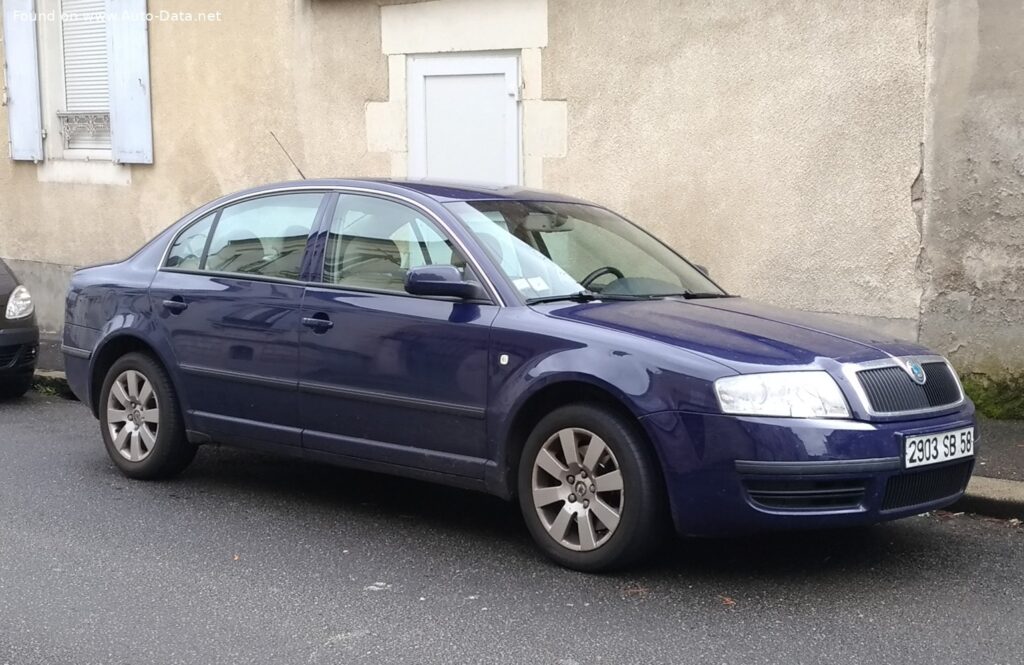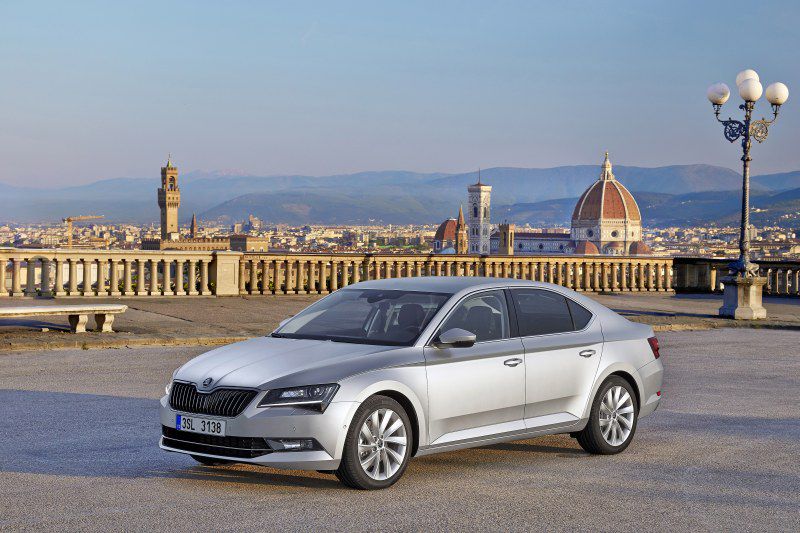
The Skoda Superb III 2.0 TDI (150 Hp) 4×4, produced between March 2015 and 2018, represents a significant offering from the Czech automaker within the highly competitive European D-segment. While Skoda is a well-established brand globally and a subsidiary of the Volkswagen Group, this particular model, like much of Skoda’s lineup, was not officially sold in the United States market. Instead, it carved out a niche in Europe and other international markets as a compelling alternative to more premium German rivals, offering exceptional space, sophisticated engineering, and remarkable value. The third generation Superb, often lauded for its ‘Simply Clever’ philosophy, combined elegant design with practical functionality, positioning itself as a flagship model that redefined expectations for the brand. This specific variant, featuring a robust diesel engine and an all-wheel-drive system, aimed to deliver a blend of performance, efficiency, and enhanced traction, catering to drivers seeking a versatile and capable vehicle for various driving conditions.
Engine and Performance of the Skoda Superb III
At the heart of the Skoda Superb III 2.0 TDI (150 Hp) 4×4 lies a potent 2.0-liter (1968 cm3 or 120.09 cu. in.) turbocharged inline-four diesel engine, designated by the model code EA288/CRLB. This powerplant is a testament to modern diesel engineering, delivering a healthy 150 horsepower at a range of 3500-4000 revolutions per minute. More critically for a diesel, it produces a substantial 250.77 lb.-ft. (340 Nm) of torque, available across a broad and usable band from 1750 to 3000 rpm. This ample torque ensures strong low-end acceleration and effortless cruising, particularly beneficial for highway driving and when the vehicle is loaded or towing.
The engine’s architecture features a DOHC (Double Overhead Camshaft) valvetrain with four valves per cylinder, optimizing airflow and combustion efficiency. Fuel is delivered via a sophisticated Diesel Commonrail injection system, which precisely controls fuel atomization for cleaner and more efficient burning. Further enhancing its performance and efficiency is a turbocharger coupled with an intercooler, ensuring a dense air charge for maximum power output across the rev range. With a compression ratio of 16.2:1, the engine is finely tuned for diesel operation.
Performance figures for the Superb III 2.0 TDI (150 Hp) 4×4 are respectable for a family-oriented liftback. It can accelerate from 0 to 60 mph in an estimated 8.6 seconds (0-100 km/h in 9 seconds), demonstrating a brisk pace for its class. The top speed is rated at 133.59 mph (215 km/h), allowing for confident long-distance travel. The power-to-weight ratio stands at 98 Hp per tonne (10.2 kg/Hp), while the torque-to-weight ratio is 222.2 Nm per tonne (4.5 kg/Nm), indicating well-balanced performance characteristics. This model also boasts Euro 6 emission compliance, a testament to its commitment to environmental standards, aided by a particulate filter and a Start & Stop system that further reduces fuel consumption and emissions in urban environments.
Fuel economy, a key selling point for diesel engines, is impressive. The combined NEDC cycle ratings are 4.5-4.8 liters per 100 km, which translates to a remarkable 52.3 – 49 US mpg. Urban consumption ranges from 40.6 to 42.8 US mpg, while extra-urban driving can yield an exceptional 54.7 to 60.3 US mpg. These figures highlight the vehicle’s efficiency, making it an economical choice for both daily commutes and extended journeys. The 66-liter (17.44 US gallon) fuel tank provides a considerable driving range between fill-ups.
The drivetrain architecture is a sophisticated all-wheel-drive (4×4) system. The internal combustion engine primarily drives the front wheels, with power routed to the rear wheels via an electrically or mechanically operated clutch only when necessary, such as during slippage or spirited driving. This on-demand system optimizes fuel efficiency by disengaging the rear axle when not needed, yet provides the added security and traction of all-wheel drive when conditions demand it. Power is managed through a precise 6-speed manual transmission, offering engaging control for the driver.
Design and Features of the Skoda Superb III
The Skoda Superb III, launched in 2015, marked a significant leap forward in design for the brand, adopting a sharper, more angular aesthetic inspired by the VisionC concept car. The 2.0 TDI (150 Hp) 4×4 variant inherits this sophisticated liftback body type, a distinctive feature that combines the sleek profile of a sedan with the practicality of a hatchback. With five doors and seating for five occupants, it offers remarkable versatility and passenger comfort, making it an ideal choice for families and business professionals alike.
Measuring 191.38 inches (4861 mm) in length, 73.39 inches (1864 mm) in width (79.96 inches or 2031 mm including mirrors), and 57.8 inches (1468 mm) in height, the Superb III is a substantial vehicle, rivaling executive-class offerings in terms of sheer presence. Its generous 111.85-inch (2841 mm) wheelbase contributes directly to its legendary interior space, particularly for rear-seat passengers, a hallmark of the Superb lineage. The front track is 62.36 inches (1584 mm) and the rear track is 61.89 inches (1572 mm), providing a stable and composed ride. With a ground clearance of 5.83 inches (148 mm), it offers a good balance between road holding and utility.
The liftback design is not just aesthetically pleasing but also supremely functional. The trunk (boot) space is cavernous, offering a minimum of 22.07 cubic feet (625 liters) with the rear seats up, expanding to an enormous 62.15 cubic feet (1760 liters) when the rear seats are folded down. This positions the Superb III as one of the most practical vehicles in its segment, capable of swallowing considerable luggage or cargo. The maximum load capacity is 1554.26 lbs (705 kg), and it can tow a braked trailer of up to 4850.17 lbs (2200 kg), further underscoring its utility.
Beyond its dimensions, the Superb III came equipped with a range of modern features for its production era. Safety was a paramount concern, with standard Anti-lock Braking System (ABS) and a robust chassis. The suspension setup comprises an independent McPherson strut system with coil springs and an anti-roll bar at the front, paired with an independent multi-link spring suspension with a stabilizer at the rear. This configuration ensures a comfortable ride quality while maintaining precise handling. Braking is handled by ventilated discs at the front and solid discs at the rear, providing strong stopping power. The steering system is an electric power-assisted rack and pinion unit, offering light steering at low speeds for maneuverability and increased weighting at higher speeds for stability. The turning circle is a respectable 38.39 feet (11.7 meters), aiding urban navigation.
Aerodynamics also played a role in the car’s efficiency and refinement, evidenced by a low drag coefficient (Cd) of 0.296. The vehicle could be fitted with various tire and wheel sizes, including 215/60 R16, 215/55 R17, and 235/45 R18, mounted on corresponding wheel rims of 6.5J x 16, 7J x 17, and 8J x 18, respectively. These options allowed for customization in terms of ride comfort and handling characteristics. The combination of its sophisticated design, advanced features, and practical considerations solidified the Skoda Superb III 2.0 TDI (150 Hp) 4×4’s reputation as a highly competent and desirable vehicle in its target markets.
Technical Specifications
| Brand | Skoda |
| Model | Superb |
| Generation | Superb III |
| Type (Engine) | 2.0 TDI (150 Hp) 4×4 |
| Start of production | March, 2015 year |
| End of production | 2018 year |
| Powertrain Architecture | Internal Combustion engine |
| Body type | Liftback |
| Seats | 5 |
| Doors | 5 |
| Fuel consumption (economy) – urban (NEDC) | 5.5-5.8 l/100 km (40.6 – 42.8 US mpg) |
| Fuel consumption (economy) – extra urban (NEDC) | 3.9-4.3 l/100 km (54.7 – 60.3 US mpg) |
| Fuel consumption (economy) – combined (NEDC) | 4.5-4.8 l/100 km (49 – 52.3 US mpg) |
| CO2 emissions (NEDC) | 117-125 g/km |
| Fuel Type | Diesel |
| Acceleration 0 – 100 km/h | 9 sec |
| Acceleration 0 – 62 mph | 9 sec |
| Acceleration 0 – 60 mph (Calculated) | 8.6 sec |
| Maximum speed | 215 km/h (133.59 mph) |
| Emission standard | Euro 6 |
| Weight-to-power ratio | 10.2 kg/Hp (98 Hp/tonne) |
| Weight-to-torque ratio | 4.5 kg/Nm (222.2 Nm/tonne) |
| Power | 150 Hp @ 3500-4000 rpm |
| Power per liter | 76.2 Hp/l |
| Torque | 340 Nm @ 1750-3000 rpm (250.77 lb.-ft.) |
| Engine layout | Front, Transverse |
| Engine Model/Code | EA288 / CRLB |
| Engine displacement | 1968 cm3 (120.09 cu. in.) |
| Number of cylinders | 4 |
| Engine configuration | Inline |
| Cylinder Bore | 81 mm (3.19 in.) |
| Piston Stroke | 95.5 mm (3.76 in.) |
| Compression ratio | 16.2:1 |
| Number of valves per cylinder | 4 |
| Fuel injection system | Diesel Commonrail |
| Engine aspiration | Turbocharger, Intercooler |
| Valvetrain | DOHC |
| Engine oil capacity | 4.7 l (4.97 US qt) |
| Coolant | 8 l (8.45 US qt) |
| Engine systems | Start & Stop System, Particulate filter |
| Kerb Weight | 1530-1555 kg (3373.07 – 3428.19 lbs) |
| Max. weight | 2235-2260 kg (4927.33 – 4982.45 lbs) |
| Max load | 705 kg (1554.26 lbs) |
| Trunk (boot) space – minimum | 625 l (22.07 cu. ft.) |
| Trunk (boot) space – maximum | 1760 l (62.15 cu. ft.) |
| Fuel tank capacity | 66 l (17.44 US gal) |
| Max. roof load | 100 kg (220.46 lbs) |
| Permitted trailer load with brakes (8%) | 2200 kg (4850.17 lbs) |
| Permitted trailer load with brakes (12%) | 2200 kg (4850.17 lbs) |
| Permitted trailer load without brakes | 750 kg (1653.47 lbs) |
| Permitted towbar download | 90 kg (198.42 lbs) |
| Length | 4861 mm (191.38 in.) |
| Width | 1864 mm (73.39 in.) |
| Width including mirrors | 2031 mm (79.96 in.) |
| Height | 1468 mm (57.8 in.) |
| Wheelbase | 2841 mm (111.85 in.) |
| Front track | 1584 mm (62.36 in.) |
| Rear (Back) track | 1572 mm (61.89 in.) |
| Front overhang | 897 mm (35.31 in.) |
| Rear overhang | 1123 mm (44.21 in.) |
| Ride height (ground clearance) | 148 mm (5.83 in.) |
| Drag coefficient (Cd) | 0.296 |
| Minimum turning circle (turning diameter) | 11.7 m (38.39 ft.) |
| Approach angle | 14° |
| Departure angle | 12.2° |
| Drivetrain Architecture | ICE drives front wheels permanently, rear wheels driven through clutch if necessary. |
| Drive wheel | All wheel drive (4×4) |
| Number of gears and type of gearbox | 6 gears, manual transmission |
| Front suspension | Independent, McPherson with coil spring and anti-roll bar |
| Rear suspension | Independent multi-link spring suspension with stabilizer |
| Front brakes | Ventilated discs |
| Rear brakes | Disc |
| Assisting systems | ABS (Anti-lock braking system) |
| Steering type | Steering rack and pinion |
| Power steering | Electric Steering |
| Tires size | 215/60 R16; 215/55 R17; 235/45 R18 |
| Wheel rims size | 6.5J x 16; 7J x 17; 8J x 18 |